Stop-Limit Orders: Definition, How They Work
Master stop-limit orders: Combine stop and limit features for precise trade execution and risk management.
Understanding Stop-Limit Orders
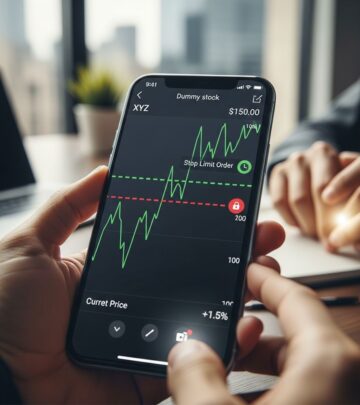
A stop-limit order is a conditional order that combines the features of both a stop order and a limit order. This powerful trading tool allows investors and traders to specify both a trigger price (the stop) and a desired execution price (the limit). When used correctly, stop-limit orders can help protect investments from significant losses while ensuring trades are executed at favorable prices. However, they also come with unique risks and limitations that traders must understand before implementing them in their investment strategy.
The primary advantage of a stop-limit order is that it gives traders greater control over the price at which their trades are executed. Unlike market orders that execute immediately at the best available price, or simple stop orders that convert to market orders, stop-limit orders ensure that trades only happen at or better than a specified price level. This makes them particularly valuable in volatile market conditions where prices can swing dramatically within seconds.
How Stop-Limit Orders Work
Understanding the mechanics of stop-limit orders requires breaking them down into two distinct components: the stop price and the limit price. Each component serves a specific function in controlling when and how a trade executes.
The Stop Price Component
The stop price, also known as the trigger price, is the price level at which your order becomes active. It functions as a threshold that must be crossed for your order to enter the market. For sell orders, the stop price is typically set below the current market price, creating a safety net that activates when prices fall. For buy orders, the stop price is usually set above the current market price to capitalize on upward momentum. Once the stock trades at or through the stop price, the order is triggered and becomes a live limit order in the market.
The Limit Price Component
The limit price is the maximum (for buy orders) or minimum (for sell orders) price at which you are willing to execute the trade. This price acts as a guardrail, ensuring that your order will only fill at your specified price or better. For buyers, this means the stock must trade at or below the limit price. For sellers, the stock must trade at or above the limit price. The limit price provides protection against adverse price movements but also introduces the risk that your order may not fill at all if the price never reaches your limit.
Execution Sequence
The execution sequence of a stop-limit order involves two distinct phases. First, the market price must reach or pass the stop price, which activates the order. Second, once activated, the order becomes a limit order that will only execute if the stock reaches the specified limit price. This two-step process means that a stop-limit order can fail in two ways: the stock never reaches the stop price, or it reaches the stop price but never reaches the limit price, leaving your order unfilled.
Stop Orders vs. Limit Orders vs. Stop-Limit Orders
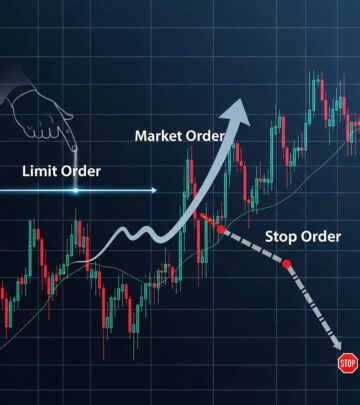
Comparing these three order types helps clarify the unique characteristics and use cases for each:
| Order Type | Trigger Mechanism | Execution Price | Risk Level | Best For |
|---|---|---|---|---|
| Stop Order | Activates at stop price | Best available market price | High slippage risk in volatile markets | Quick exits, strong conviction |
| Limit Order | Active immediately | Specified limit price or better | Non-execution risk | Patience, specific price targets |
| Stop-Limit Order | Activates at stop price, then applies limit | Specified limit price or better | Both slippage and non-execution risk | Precise entry/exit, volatile markets |
Advantages of Stop-Limit Orders
Price Control
The primary advantage of stop-limit orders is the dual layer of price control they provide. Traders specify exactly at what price they want to enter or exit a position, eliminating the uncertainty associated with market orders or standard stop orders. This is particularly valuable for traders working with limited capital or those managing large positions where even small price differences can significantly impact profitability.
Emotional Discipline
By setting predetermined entry and exit prices, stop-limit orders help remove emotion from trading decisions. Once the parameters are set, the order executes automatically when conditions are met, preventing traders from second-guessing themselves or making impulsive decisions during market turbulence. This mechanical approach can lead to more consistent trading results over time.
Risk Management in Volatile Markets
During periods of high market volatility, stop-limit orders protect traders from experiencing significant slippage. When prices gap down or spike unexpectedly, traders using stop-limit orders won’t execute at drastically worse prices than intended. This makes them especially valuable during earnings announcements, economic data releases, or other high-impact events.
Disadvantages and Risks
Non-Execution Risk
The most significant drawback of stop-limit orders is that they may never execute. If the market price never touches your limit price after triggering the stop, your order remains unfilled. In rapidly declining markets, this can be particularly problematic. Imagine a stock that gaps down through both your stop and limit prices due to bad news. Your intended exit order won’t fill, leaving you holding a position in a stock that may continue falling.
Slippage Despite Protections
While stop-limit orders reduce slippage compared to stop orders, they still face slippage risks during extremelyvolatile conditions. When markets move rapidly,multiple orders may queue up at your limit price,and you might only receive partial fills at yourspecific price before the price moves away. Theremainder of your order could be partially filled atworse prices or not executed at all.
Complexity and Timing Issues
Stop-limit orders require traders to predict price action accurately. Setting the stop price too close to the current market price can result in premature triggering due to normal market fluctuations. Setting it too far away reduces its effectiveness as a risk management tool. Similarly, misjudging the limit price can result in no execution or execution at unfavorable moments.
Practical Examples
Using a Stop-Limit Order to Sell
Suppose you purchase shares of ABC Corporation at $50 per share. Due to recent earnings concerns, you want to limit losses but also ensure you don’t miss potential recovery. You place a stop-limit order with a stop price of $45 and a limit price of $44. If the stock declines to $45, the order activates and becomes a limit order. If the price then falls to $44 or below, your shares sell at $44 or better. However, if the stock gaps down from $46 to $43, your order never executes, and you remain holding the position.
Using a Stop-Limit Order to Buy
You’ve been watching XYZ stock, currently trading at $75, and believe it’s worth $70. You’re willing to buy if it dips to that level but want to ensure you don’t pay more than $70. You set a stop-limit order with a stop price of $71 and a limit price of $70. When the stock drops to $71, the order activates. If it then declines to $70, you purchase at $70 or better. If the stock bounces back to $72 without ever reaching $70, your order never fills.
When to Use Stop-Limit Orders
Optimal Market Conditions
Stop-limit orders work best in moderately volatile markets with consistent trading activity. They’re ideal for liquid stocks with many buyers and sellers, ensuring orders can fill at specified prices. They’re less suitable for thinly traded securities where large price gaps between trades are common.
Appropriate Trading Scenarios
Stop-limit orders are particularly useful for swing traders who have identified specific entry and exit points based on technical analysis. They work well for traders managing multiple positions simultaneously who want automated execution without constantly monitoring prices. They’re also valuable for investors setting long-term stop-loss levels to protect against catastrophic losses while maintaining upside potential through the limit price.
Position Sizing Considerations
Stop-limit orders are most effective for smaller to medium-sized positions. For large institutional orders, the rigid price constraints may make execution unlikely. Conversely, for very small positions, the added complexity may not justify the execution risk.
Comparison with Other Order Types
Market Orders
Market orders execute immediately at the best available price but offer no price protection. They’re simple and reliable for investors prioritizing execution speed over price precision. Stop-limit orders sacrifice speed for price control.
Trailing Stop Orders
Trailing stop orders automatically adjust as prices move favorably, protecting profits while allowing upside participation. Stop-limit orders remain fixed, making them better for specific price targets but less adaptable to changing market conditions.
Good-Till-Cancelled Orders
Good-till-cancelled (GTC) orders remain active until either executed or manually cancelled. Stop-limit orders can be combined with GTC instructions, allowing them to remain active across multiple trading sessions until conditions are met.
Common Mistakes to Avoid
Traders frequently make several mistakes when using stop-limit orders:
Setting stops too close to current price: This can trigger orders due to normal market noise, resulting in unnecessary trades.
Ignoring volatility: In high-volatility environments, wider stop and limit ranges are often necessary to achieve execution.
Forgetting to monitor orders: Market conditions change. Orders that made sense yesterday may be counterproductive today.
Assuming guaranteed execution: Stop-limit orders can fail to execute, leaving traders exposed to unwanted positions.
Neglecting to set expiration dates: Orders left open indefinitely can execute at inconvenient times when circumstances have changed.
Advanced Stop-Limit Strategies
Brackets and One-Cancels-Other Orders
Advanced traders often combine multiple stop-limit orders using bracket orders or one-cancels-other (OCO) structures. These allow traders to simultaneously place profit-taking limit orders and stop-loss orders, with the system automatically cancelling the remaining order once one executes.
Algorithmic Execution
Modern trading platforms offer algorithmic tools that can adjust stop and limit prices dynamically based on market conditions. These tools help overcome some traditional stop-limit order limitations by automatically adapting parameters to current volatility and liquidity levels.
Frequently Asked Questions
Q: What is the main difference between a stop order and a limit order?
A: A stop order is triggered at a specific price and becomes a market order, executing at the best available price. A limit order specifies the exact price at which you’re willing to buy or sell and remains active until that price is reached or the order is cancelled.
Q: Can a stop-limit order be partially filled?
A: Yes. If there aren’t enough shares available at your limit price, your order may only partially fill. The remainder stays in the queue, waiting for more shares to become available at your specified price.
Q: Is there a guarantee that my stop-limit order will execute?
A: No. Stop-limit orders have no execution guarantee. If the price never reaches your limit after triggering the stop, your order will not execute, and you’ll remain in or out of the position depending on your original status.
Q: How long does a stop-limit order remain active?
A: By default, most stop-limit orders expire at the end of the trading day. However, many brokers allow you to set them as good-till-cancelled (GTC) orders, which remain active until either executed or manually cancelled.
Q: Are stop-limit orders suitable for day traders?
A: Yes, day traders use stop-limit orders extensively to manage risk and lock in profits. However, they require active monitoring and frequent adjustment throughout the trading day.
Q: What happens if a stock gaps through both my stop and limit prices?
A: Your order won’t execute. The stock must trigger your stop price first, then reach your limit price. If both prices are bypassed due to a gap, your order remains inactive and unfilled.
References
- Investopedia: Stop-Limit Order — Investopedia. 2025. https://www.investopedia.com/terms/s/stop-limitorder.asp
- U.S. Securities and Exchange Commission: Order Types and Conditions — SEC Office of Investor Education and Advocacy. 2024. https://www.sec.gov/investor/alerts/orderalerts.htm
- FINRA: Understanding Order Types and Conditions — Financial Industry Regulatory Authority. 2024. https://www.finra.org/investors/learn-to-invest/types-orders
- CME Group: Trading Best Practices — CME Group. 2024. https://www.cmegroup.com/education/
Similar Articles








Read full bio of medha deb