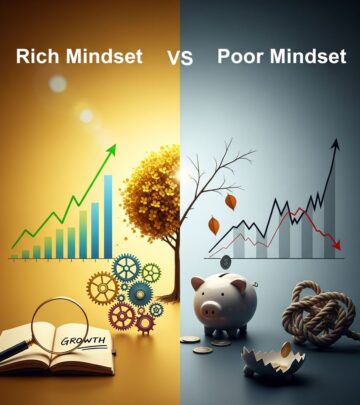
Stop Feeling Poor: Transform Your Money Mindset
Change how you feel about money with perspective shifts and actionable financial strategies.

How Feeling Poor Hurts You—and How to Stop It
Feeling poor can be just as damaging to your wellbeing as actually being poor. Psychological research demonstrates that our subjective perception of wealth has a profound impact on our happiness, stress levels, and overall quality of life. Even when you have enough money to meet your basic needs, constant feelings of financial inadequacy can lead to anxiety, depression, and a pervasive sense of dissatisfaction.
The paradox is that knowing feeling poor is harmful doesn’t automatically make the feeling disappear. If you’re surrounded by people who are better off than you, or constantly exposed to images of wealth and luxury through social media, it’s easy to fall into the trap of comparative thinking. Your brain naturally measures your situation against those around you rather than against absolute standards of poverty or wealth.
However, there is good news. Through deliberate practice and strategic thinking, you can transform how you feel about your financial situation. This transformation involves three interconnected approaches: shifting your perspective to recognize your actual abundance, taking concrete steps to improve your financial future, and adopting behaviors that create feelings of wealth in your present circumstances.
1. Change Your Perspective on What You Have
One of the most powerful tools for overcoming feelings of poverty is a fundamental shift in perspective. The reason you feel poor often has nothing to do with your actual financial situation and everything to do with who you’re comparing yourself to. When your reference group consists of wealthy individuals, naturally you’ll feel inadequate. But when you expand your view to include the billions of people living in genuine poverty worldwide, your situation looks dramatically different.
Practice Gratitude Through Comparison
Try this powerful exercise: spend time researching or learning about how people in developing nations live. Look at statistics about global income distribution. Understand that more than half the world’s population lives on less than $10 per day. When you see what real poverty looks like—lacking clean water, healthcare, or reliable food sources—you begin to recognize the abundance already present in your life.
This isn’t about guilt or dismissing your own financial struggles. Rather, it’s about calibrating your internal reference point. The same $40,000 annual income that feels inadequate when you’re comparing yourself to your neighbor earning $150,000 feels like genuine prosperity when you realize it places you in the global top 10 percent of earners.
The One-Day Poverty Challenge
For those already living on minimum wage, consider an even more striking exercise: spend one complete day living as if you have no cash at all. Walk everywhere or use public transportation. Skip meals or eat only what’s in your pantry. This isn’t about self-punishment but about visceral understanding. Having to walk miles because you can’t afford transportation, or feeling genuine hunger because you’ve made a different choice about your resources, quickly illuminates how much worse your situation could be—and therefore how fortunate you currently are.
Volunteer and Serve Others
Another transformative perspective-shifter is volunteering at a homeless shelter, food pantry, or soup kitchen. Serving people who lack basic necessities provides immediate, emotional context for gratitude. You’ll witness firsthand the struggles of genuine poverty while simultaneously engaging in meaningful work that boosts your own sense of purpose and value. This dual benefit—gaining perspective while helping others—creates a powerful psychological shift that often eliminates feelings of deprivation more effectively than any amount of intellectual understanding.
2. Improve Your Financial Future
While changing your perspective addresses your emotional relationship with money, taking concrete action to improve your financial situation addresses the rational component. Psychology shows that people feel significantly better about their circumstances when they perceive genuine improvement over time. This means that beyond perspective shifts, you need to take measurable steps toward financial progress.
The confidence that comes from watching your financial situation actually improve is powerful medicine for feelings of poverty. When you can point to concrete evidence that you’re making progress—whether it’s increasing your income, reducing your debt, or building savings—your psychological state shifts from scarcity to possibility.
Increase Your Income
The most direct path to financial improvement is earning more money. This might involve asking for a raise at your current job, seeking a higher-paying position, or developing side income streams. While these steps require effort and sometimes courage, they address the fundamental equation: you need income to exceed expenses to achieve financial security.
Build Passive Income Streams
A longer-term strategy involves creating passive income sources that generate money with minimal ongoing effort. Rental income from property, royalties from creative work, dividend income from investments, or affiliate commissions from digital products can all contribute to financial growth. These income streams are particularly valuable because they create a sense of money working on your behalf rather than your working constantly for money.
Eliminate Debt Strategically
Once you’ve identified extra money in your budget, prioritize paying down debt. Debt is a psychological weight as much as a financial burden. Each dollar applied to debt reduction represents a direct decrease in your future obligations and a corresponding increase in your financial freedom. High-interest debt particularly deserves priority attention, as it compounds your obligations over time.
Consider consulting with a financial advisor who can help you develop a debt elimination strategy tailored to your specific situation. Professional guidance can accelerate your progress and help you avoid common pitfalls.
Track Your Progress Visually
Here’s the fun part: watching your progress unfold. Create a chart that tracks your net worth over time. Plot your quarterly investment statements. Watch as the numbers gradually increase. This visual representation of progress creates a powerful psychological boost. As the line on your chart creeps upward, so will your mood and confidence. Seeing tangible evidence that you’re actually getting ahead transforms your internal narrative from “I’ll never have enough” to “I’m genuinely making progress.”
3. Make Yourself Feel Rich Right Now
Building wealth for the future is important, but not if it requires suffering in the present. There’s a false economy in depriving yourself completely in pursuit of financial goals. If you’re eating rice and beans every single night, never treating yourself to anything nice, never doing anything enjoyable—you won’t feel wealthy. You’ll feel broke, miserable, and resentful toward your own financial plan.
The key is balance: build wealth for your future self while also ensuring your present self feels reasonably satisfied and occasionally pampered.
Budget for Small Luxuries
Set aside a small sum each month—even if it’s just $10 or $20—specifically designated for cheap luxuries that make you feel pampered. This isn’t frivolous spending; it’s psychological maintenance. Treating yourself to a great cup of coffee, a bottle of quality champagne, fresh flowers, a favorite snack, or a small item you’ve been wanting creates an immediate sense of abundance. You’re not depriving yourself completely; you’re intentionally choosing small pleasures that make life feel richer without derailing your financial goals.
Practice Strategic Generosity
Counterintuitively, one of the most powerful ways to feel wealthy is to give money away. Set aside a portion of your budget—even a modest amount—for charitable giving. Donating to causes you care about creates a psychological shift from scarcity to abundance. When you have enough to give to others, you experience yourself as wealthy by definition.
This isn’t just feel-good philosophy; research supports it. A 2008 study published in Science found that when people were given money to spend on others, they reported greater happiness at day’s end compared to those given the same amount to spend on themselves. A subsequent analysis of data from 136 countries, published in the Journal of Personality and Social Psychology in 2013, found that in 120 of those countries, people who gave away money reported significantly higher happiness levels.
Redefine Wealth Beyond Money
Perhaps the most important perspective shift of all is recognizing that wealth extends far beyond dollar amounts in a bank account. True wealth includes your health, relationships, freedom, time, skills, and the ability to live according to your values. If you’re living the life you genuinely want—spending time with people you love, doing work that matters to you, engaging in activities that bring joy—you are already wealthy regardless of your bank balance.
The Psychology of Abundance Thinking
These three strategies—changing perspective, improving finances, and creating present-moment satisfaction—work together to create a genuine shift in your relationship with money. The goal isn’t to deny financial challenges or pretend lack doesn’t exist. Rather, it’s to calibrate your reference points accurately, take meaningful action toward improvement, and refuse to sacrifice present wellbeing entirely for future security.
When you combine these approaches, something profound happens. You stop feeling poor not because your income has doubled, but because you’ve developed a more accurate and generous assessment of your actual situation. You’ve taken concrete steps that prove to yourself that improvement is possible. And you’ve learned that wealth and happiness aren’t binary states waiting to be achieved someday—they’re conditions you can create and experience today.
Frequently Asked Questions
Q: Is it wrong to focus on feeling rich while I still have debt?
A: No. Feeling wealthy and paying off debt aren’t mutually exclusive. In fact, incorporating small satisfactions while working on debt is psychologically sustainable. Complete deprivation often leads to abandoning financial goals. Balance matters—work toward debt elimination while also allowing yourself small pleasures that maintain motivation.
Q: How much should I allocate to “feel good” spending?
A: Start with whatever amount won’t destabilize your budget—even $10 or $20 monthly. The psychological benefit of intentional indulgence often exceeds its cost. Adjust based on your circumstances and financial goals, but prioritize consistency over amount.
Q: Can perspective changes actually reduce financial anxiety?
A: Absolutely. Research in positive psychology shows that gratitude practice and perspective shifting significantly reduce anxiety and depression. By recalibrating what you consider abundance, you address the emotional root of feeling poor, not just surface symptoms.
Q: What if my financial situation is genuinely dire?
A: These strategies remain valuable even in difficult circumstances. Start with perspective work and volunteer opportunities, which cost nothing. Focus on small income improvements and seek professional help if needed. Feeling less poor, even while improving actual circumstances, provides psychological resilience.
Q: How long does it take to stop feeling poor?
A: Perspective shifts can occur immediately once you engage with them genuinely. However, sustained changes in how you feel typically develop over weeks and months as you practice consistently. Seeing financial progress unfolds over quarters and years. Be patient with the process.
References
- How Feeling Poor Hurts You—and How to Stop It — Money Crashers. Accessed 2025-11-29. https://www.moneycrashers.com/stop-feeling-poor/
- Emotional Well-Being and Income: Is There a Curve? — Journal of Personality and Social Psychology. 2013. Data analysis across 136 countries examining relationship between charitable giving and happiness.
- Spending Money on Others Promotes Happiness — Science. 2008. Research demonstrating prosocial spending increases subjective well-being more than personal expenditures.
Similar Articles








Read full bio of medha deb