Stock Symbol: Definition, Purpose, and How to Use
Master stock symbols: Learn how ticker abbreviations identify securities and simplify trading.

What Is a Stock Symbol?
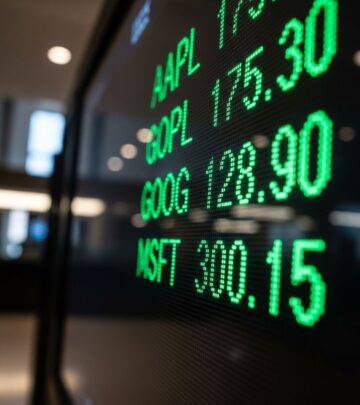
A stock symbol, also known as a ticker symbol, is a unique abbreviation or combination of letters and numbers used to identify a specific stock or security traded on a particular stock exchange. These symbols serve as shorthand references that allow investors, traders, and analysts to quickly identify, purchase, and research securities without having to use the company’s full legal name. Stock symbols are fundamental to modern securities trading, enabling efficient communication and transaction execution across financial markets worldwide.
The concept of ticker symbols originated in 1867 following the invention of the ticker tape machine by Edward Calahan, which was first used to identify shares of the Union Pacific Railroad Company. The original symbols were intentionally kept short to minimize the number of characters that needed to be printed on ticker tape, making it easier for traders and investors to recognize securities quickly during fast-paced trading sessions.
How Stock Symbols Work
Stock symbols function as unique identifiers assigned to each security traded on a particular market. When you want to buy or sell a stock, you enter its ticker symbol into your brokerage system, which instantly locates and displays the correct security. The system uses this symbol to match your trade order with corresponding buy or sell orders from other investors, ensuring that the right security is being transacted.
Different stock exchanges maintain their own allocation of symbols and formatting conventions. In the United States, stock tickers typically consist of one to four letters and are designed to represent the company name whenever possible. For example, Apple Inc. trades on the NASDAQ under the symbol AAPL, while Ford Motor Company trades on the New York Stock Exchange (NYSE) under the single-letter ticker F. This standardization makes it easier for market participants to locate and trade securities efficiently.
Purpose and Importance of Stock Symbols
Stock symbols serve several critical functions in modern financial markets. First, they provide a standardized method for identifying securities across trading platforms and exchanges. This universality allows investors, whether they are individual traders or institutional investors, to access consistent information about a particular stock regardless of which brokerage or trading platform they use.
Second, ticker symbols enable quick access to comprehensive stock information. Once you know a company’s ticker symbol, you can easily locate financial data, earnings reports, dividend information, stock split announcements, and historical price data through financial websites, trading platforms, and market data providers. This accessibility is crucial for investors conducting due diligence before making investment decisions.
Third, stock symbols facilitate efficient communication among market professionals. Traders, analysts, and investors can discuss securities using their ticker symbols in a concise, universally understood manner. Instead of saying “the shares of the Apple Computer company,” market participants simply refer to “AAPL,” saving time and reducing confusion.
Structure and Format of Stock Symbols
United States Stock Symbols
In the United States, stock symbols follow specific conventions that vary between the NYSE and NASDAQ. NYSE-listed stocks typically use one to three letters, while NASDAQ symbols generally use four letters or more. The symbols are chosen to reflect the company name when possible, making them memorable and intuitive for investors.
Additional suffix codes are sometimes appended to U.S. stock symbols to convey additional information about the security. These extensions indicate factors such as the class of shares, bankruptcy status, security type, or other relevant characteristics that distinguish one listing from another.
International Stock Symbols
Different countries and exchanges employ varying conventions for stock symbol formatting. For example, if a company lists its shares on multiple exchanges, it will typically have different ticker symbols on each exchange. This is illustrated by Dr. Reddy’s Laboratories, an Indian pharmaceutical firm, which trades under the symbol DRREDDY on India’s National Stock Exchange (NSE) but uses the symbol RDY when trading on the New York Stock Exchange.
Understanding Ticker Symbol Suffixes and Codes
Many stock exchanges use suffix codes appended to or incorporated into ticker symbols to communicate specific information about the security being traded. These codes help investors and traders quickly understand important characteristics of the stock without needing to conduct additional research.
Common U.S. Stock Symbol Extensions
The following table outlines frequently used ticker symbol suffixes in U.S. markets:
| Code | Meaning |
|---|---|
| A–B | Class of shares |
| D | New issue or reverse split |
| E | Delinquent SEC filings |
| F | Foreign (over-the-counter market) |
| G | First convertible bond |
| N | Third class preferred shares |
| O | Second class preferred shares |
| P | First class preferred shares |
| Q | In bankruptcy |
| R | Rights |
| S | Shares of beneficial interest |
| T | With warrants or rights |
| X | Mutual fund |
| Y | American depositary receipt (ADR) |
| Z | Miscellaneous situations |
Canadian Stock Symbol Codes
Canadian stock exchanges use different conventions for conveying security information. Common Canadian ticker suffixes include A–B for different share classes, PR for preferred shares, W for warrants, UN for units, and WT for warrants. These codes help Canadian investors quickly identify the specific type of security they are considering.
Multiple Classes of Shares and Ticker Symbols
Some companies issue multiple classes of shares with different voting rights, dividend policies, or other distinguishing features. When this occurs, each class typically receives its own distinct ticker symbol to prevent investor confusion and ensure clear identification of share characteristics.
Alphabet Inc., the parent company of Google, provides a clear example of this practice. The company trades under two different symbols: GOOGL represents Class A shares, which carry full voting rights, while GOOG represents Class C shares, which have no voting rights. This distinction is crucial for investors who want to understand exactly what rights they will receive when purchasing shares.
Similarly, Berkshire Hathaway trades under two ticker symbols on the NYSE: BRK.A for Class A shares and BRK.B for Class B shares. Class A shares provide shareholders with significantly more voting rights compared to Class B shares, making the distinction important for investors concerned about corporate governance and voting power.
How Ticker Symbols Relate to Stock Exchanges
Historically, it was possible to determine which stock exchange listed a particular security simply by examining its ticker symbol. However, this convention changed in July 2007 when the Securities and Exchange Commission (SEC) approved a rule change that allowed companies to move from the New York Stock Exchange to NASDAQ while retaining their three-letter symbols. DirecTV was among the first companies to make this transition, retaining its symbol even after changing its primary exchange listing.
This regulatory change means that investors can no longer automatically assume which exchange a stock trades on based solely on the length or format of its ticker symbol. Instead, investors must verify the exchange listing through their broker or financial data provider to ensure they are trading the security on the correct market.
Stock Market Index Symbols
While ticker symbols primarily identify individual securities that can be bought and sold, stock market indices are sometimes assigned symbols as well, even though the indices themselves cannot be directly traded in most cases. Index symbols are typically distinguished by special characters such as a circumflex (^) or a dot placed in front of the name. For example, Reuters lists the NASDAQ Composite index under the symbol ^.IXIC. These symbols allow investors to quickly identify and track major market benchmarks.
Examples of Common U.S. Stock Symbols
Understanding how companies choose their ticker symbols can help investors remember and identify stocks more easily. Here are some notable examples of U.S. stock symbols:
- A – Agilent Technologies
- AAPL – Apple Inc.
- BRK.A/BRK.B – Berkshire Hathaway (Class A or B shares)
- C – Citigroup Inc.
- GOLF – Acushnet Holdings (golf equipment company)
- GOOG/GOOGL – Alphabet Inc. (Google’s parent company)
Some companies choose creative symbols that relate to their business. For instance, Acushnet Holdings, which manufactures golf equipment and runs golf courses, trades under the symbol GOLF, making it memorable and directly connected to the company’s primary business.
International Securities Identification Numbers (ISINs)
In addition to ticker symbols, securities are also identified using International Securities Identification Numbers (ISINs), which provide a standardized global identification system. An ISIN is a 12-character alphanumeric code that uniquely identifies a security for trading and settlement purposes. ISINs cover various security types including stocks, bonds, commercial paper, and warrants. While ISINs do not contain information characterizing the specific financial instruments, they serve the critical function of uniform identification across international markets.
Why Investors Need to Know Stock Symbols
Understanding stock symbols and how to interpret them is essential for successful investing. Ticker symbols enable investors to quickly locate securities, access financial information, place trades accurately, and communicate efficiently with financial professionals. Without stock symbols, the modern financial system would be far less efficient, as participants would need to use full legal company names for every transaction and inquiry.
For beginning investors, learning to recognize common stock symbols is one of the first steps in developing market literacy. As you develop your investment knowledge, you will become familiar with the symbols of companies in industries that interest you, making it easier to research and trade those securities.
Frequently Asked Questions (FAQs)
Q: How many characters can a stock symbol contain?
A: U.S. stock symbols typically contain between one and four letters. NASDAQ symbols can be longer, while NYSE symbols are usually shorter. The number of characters varies by exchange and country.
Q: Can two different companies have the same stock symbol?
A: No, stock symbols are unique identifiers for each security on a particular exchange. However, the same company may use different symbols on different exchanges when listing internationally.
Q: What does it mean if a stock symbol has a suffix code?
A: Suffix codes provide additional information about the security, such as its share class, bankruptcy status, warrant attachment, or other distinguishing characteristics that affect the security’s rights or features.
Q: How can I find a company’s stock symbol?
A: You can find stock symbols by searching on financial websites like Yahoo Finance, Google Finance, your broker’s platform, or the stock exchange’s official website. Most financial platforms provide a symbol lookup tool.
Q: Why do some companies have multiple stock symbols?
A: Companies with multiple share classes offering different voting rights or dividend policies use different symbols for each class. This prevents investor confusion about which rights they receive when purchasing shares.
Q: Are stock symbols the same worldwide?
A: No, stock symbols are exchange-specific. A company listed on multiple exchanges will have different ticker symbols for each exchange where it trades. The same company may use entirely different symbols depending on the country and exchange.
References
- Ticker Symbol — Wikipedia. Accessed November 2025. https://en.wikipedia.org/wiki/Ticker_symbol
- Ticker – Definition, Symbols, Purpose, Examples — Corporate Finance Institute. Accessed November 2025. https://corporatefinanceinstitute.com/resources/wealth-management/what-is-ticker/
- SEC Rule Changes on Ticker Symbols and Exchange Listings — U.S. Securities and Exchange Commission. 2007. https://www.sec.gov/
Similar Articles








Read full bio of medha deb