Stock Split: Definition, Types, and Impact on Investors
Understanding stock splits: How companies increase shares and what it means for your investments.

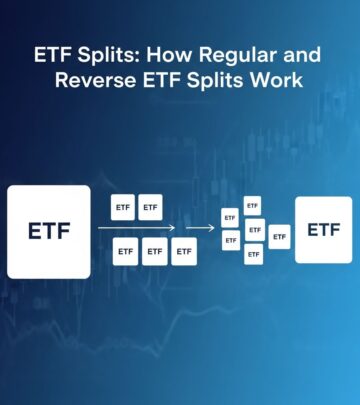
A stock split is a corporate action where a company increases the number of outstanding shares by issuing new shares to existing shareholders in a predetermined ratio. When a stock price becomes exceptionally high, a company’s board of directors may decide to split the stock to make it more accessible to a broader range of investors. Rather than changing the fundamental value of the company, a stock split simply divides existing shares into a greater number of shares, each with a proportionally lower price.
The mechanics of a stock split are straightforward but often misunderstood by novice investors. When a company announces a stock split, each shareholder receives additional shares based on the split ratio, while the total value of their investment remains unchanged. For example, in a 2-for-1 split, an investor holding 10 shares worth $100 each would receive 20 shares worth approximately $50 each after the split. The total investment value remains $1,000 before and after the split, and similarly, the company’s market capitalization—calculated by multiplying the number of outstanding shares by the stock price—stays constant.
Why Companies Perform Stock Splits
Companies pursue stock splits for several strategic reasons, primarily centered on investor psychology and market accessibility. One of the most significant reasons is addressing what financial professionals call a psychological barrier. A very high stock price can intimidate potential investors who perceive limited room for growth or who cannot afford to purchase the standard trading unit of 100 shares. By lowering the per-share price through a split, companies make their stock more accessible to retail investors, potentially increasing trading liquidity and broadening their shareholder base.
Higher liquidity can have several beneficial effects for both the company and existing shareholders. Increased trading volume typically leads to tighter bid-ask spreads, making it easier to buy and sell shares at favorable prices. Additionally, a lower stock price may attract more institutional investors who establish minimum share price thresholds for their portfolios. The perception of affordability and growth potential associated with a lower stock price can also enhance investor confidence, though it’s important to note that stock splits do not guarantee price appreciation.
Another consideration for companies is maintaining visibility and prestige in the market. Stocks trading at extremely high prices may seem less attractive to average investors, even though the total investment required to purchase 100 shares might be substantial. By splitting the stock, companies can maintain a more moderate per-share price that appeals to a wider audience without diminishing the company’s value or market standing.
Common Stock Split Ratios
Stock splits come in various forms, with specific ratios determining how shares are divided. The most common stock split ratios include 2-for-1, 3-for-2, and 3-for-1 splits, though companies may implement other ratios based on their strategic objectives.
2-for-1 Split: In this most common type, each shareholder receives two shares for every one share owned. If you held 100 shares at $200 each, you would receive 200 shares at approximately $100 each following the split.
3-for-2 Split: Shareholders receive three shares for every two shares owned. If you held 100 shares at $150 each, you would receive 150 shares at approximately $100 each.
3-for-1 Split: Shareholders receive three shares for every one share owned. If you held 100 shares at $300 each, you would receive 300 shares at approximately $100 each.
The choice of split ratio depends on the company’s target stock price and strategic objectives. Companies typically aim for a post-split price that falls within a range considered optimal for retail investor participation, often between $50 and $150 per share.
Understanding Reverse Stock Splits
While conventional stock splits increase the number of shares and decrease per-share price, reverse stock splits work in the opposite direction. A reverse stock split occurs when a company reduces the number of outstanding shares to increase the per-share price. This corporate action is typically employed by smaller companies facing different market challenges than those driving conventional splits.
Companies pursue reverse stock splits primarily to maintain listing status on major stock exchanges, which often have minimum per-share price requirements. If a stock’s price falls below the exchange’s minimum threshold, the company risks delisting—removal from the exchange and loss of trading privileges. A reverse split can quickly elevate the per-share price above the minimum requirement, preserving the company’s market listing and continued access to public capital markets.
Reverse splits also serve as a tool for companies seeking to improve their image or attract certain categories of investors. A stock trading at extremely low prices—often referred to as a penny stock—may carry a stigma suggesting financial distress or high risk. By consolidating shares through a reverse split, companies can present a more substantial stock price that appears more respectable and potentially attracts institutional investors who have minimum per-share price requirements or avoid trading penny stocks.
How Reverse Stock Splits Work
The mechanics of a reverse split mirror those of a conventional split but operate in the opposite direction. For example, in a 200-to-1 reverse split, shareholders receive one share for every 200 shares they own. If an investor held 5,000 shares trading at $0.10 per share (total value of $500), they would receive 25 shares worth approximately $20 each following the split, maintaining the same $500 total investment value.
Although the total investment value remains unchanged, reverse splits often signal financial distress or significant challenges within the company. Reverse splits frequently occur among companies trading in over-the-counter (OTC) markets, where regulatory oversight is less stringent than on major exchanges. These stocks typically carry higher risk profiles, and investors should exercise caution when a reverse split is announced. A reverse split resulting in a dramatically higher per-share price may indicate severe previous stock price depreciation, suggesting underlying business problems rather than healthy corporate restructuring.
Regulatory Framework and Shareholder Approval
The authority and process for implementing stock splits, particularly reverse splits, are governed by state corporate law and each company’s articles of incorporation and bylaws. Depending on these governing documents, companies may need to obtain shareholder approval before proceeding with a split, or in some cases, the board of directors may possess the authority to declare a split independently.
For companies required to file reports with the Securities and Exchange Commission (SEC), shareholders must be notified of proposed stock splits through official SEC filings. These notifications typically appear on Forms 8-K (for current events), 10-Q (quarterly reports), or 10-K (annual reports). Investors can access these filings through the SEC’s EDGAR (Electronic Data Gathering, Online Real-time) search system.
Over-the-counter companies must follow additional notification procedures with the Financial Industry Regulatory Authority (FINRA). While FINRA does not approve reverse splits, it processes them as part of its corporate actions functions in the OTC market. OTC companies must submit notification to FINRA at least 10 days prior to the record or effective date of the corporate action. Once processed, the reverse split information is posted to the OTC Daily List, informing investors of the corporate action alongside other company events such as mergers, acquisitions, dividend payments, and dissolutions.
Historical Examples of Stock Splits
Examining real-world stock splits illustrates their practical application and effects on investors. One of the most notable examples occurred in June 2014 when Apple implemented a 7-for-1 stock split. Prior to the split, Apple had approximately 861 million outstanding shares trading at around $645 per share, giving the company a market capitalization of roughly $555 billion. Following the split, Apple had approximately 6 billion shares trading at around $92 per share, maintaining the same market capitalization. An investor who owned one share worth $645 before the split would own seven shares worth approximately $92 each after the split, preserving their $645 investment value.
In contrast, American International Group (AIG) implemented a 1-for-20 reverse split in July 2009 during the financial crisis. This reverse split was designed to stabilize AIG’s severely depressed stock price. Investors holding 20 shares valued at approximately $1 each before the split received one share worth roughly $20 afterward. However, despite management’s hope that the higher share price would attract investors and reduce volatility, AIG’s stock continued declining, illustrating that reverse splits cannot override negative business fundamentals or market conditions.
Impact on Investment Value and Portfolio
A critical point for investors to understand is that stock splits do not change the fundamental value of their investment or the company’s market value. While the number of shares increases or decreases and the per-share price adjusts accordingly, the total value remains constant. This principle applies whether an investor holds the stock before or after the split takes effect.
However, stock splits can indirectly influence stock performance through their impact on investor psychology and trading volume. A lower share price following a conventional split may attract new investors, increasing demand and potentially driving price appreciation. Conversely, a reverse split often signals financial problems and may trigger negative investor sentiment, potentially leading to further price declines despite the mechanical effect of increasing the per-share price.
Investors should avoid making investment decisions based solely on stock splits. The long-term performance of a stock depends on numerous factors including the company’s financial health, competitive position, industry trends, management quality, and overall market conditions—not on how its shares are divided. A stock split is a purely mechanical corporate action that does not alter the company’s earnings, revenue, market position, or growth prospects.
Frequently Asked Questions
Q: What is the primary reason companies perform stock splits?
A: The primary reason is to lower an excessively high stock price to make it more accessible to retail investors and increase trading liquidity. High stock prices can intimidate investors and limit the number of shares they can purchase, while lower prices encourage broader participation and potentially enhance market appeal.
Q: Does a stock split change the value of my investment?
A: No. A stock split does not change the total value of your investment. If you owned shares worth $1,000 before a split, those shares will remain worth approximately $1,000 after the split, though you will own more shares at a lower per-share price.
Q: What is a reverse stock split and why do companies perform them?
A: A reverse stock split consolidates shares to increase the per-share price. Companies typically perform reverse splits to maintain listing status on exchanges with minimum price requirements or to improve their market image. Reverse splits often indicate financial distress rather than healthy corporate restructuring.
Q: Should I buy a stock immediately after it announces a split?
A: Stock splits do not guarantee price appreciation. While lower prices may attract more investors and increase liquidity, the stock’s future performance depends on the company’s financial health, competitive position, and market conditions—not on the split itself.
Q: How do I know about upcoming stock splits?
A: For SEC-reporting companies, stock split announcements appear in SEC filings (Forms 8-K, 10-Q, or 10-K) accessible through the SEC’s EDGAR system. OTC companies must notify FINRA, with information posted to the OTC Daily List.
Q: Do stock splits affect my tax liability?
A: Stock splits generally do not create taxable events since they do not change your total ownership percentage or total investment value. Your cost basis per share adjusts proportionally to reflect the split ratio.
References
- Stock Splits — FINRA (Financial Industry Regulatory Authority). 2025. https://www.finra.org/investors/investing/investment-products/stocks/stock-splits
- Stock Splits Explained — Charles Schwab. November 4, 2023. https://www.youtube.com/watch?v=1JTqsCheVY0
Similar Articles








Read full bio of medha deb