Stock Options: Definition, Types, and Trading Strategies
Master stock options trading with comprehensive guide covering calls, puts, and strategies.
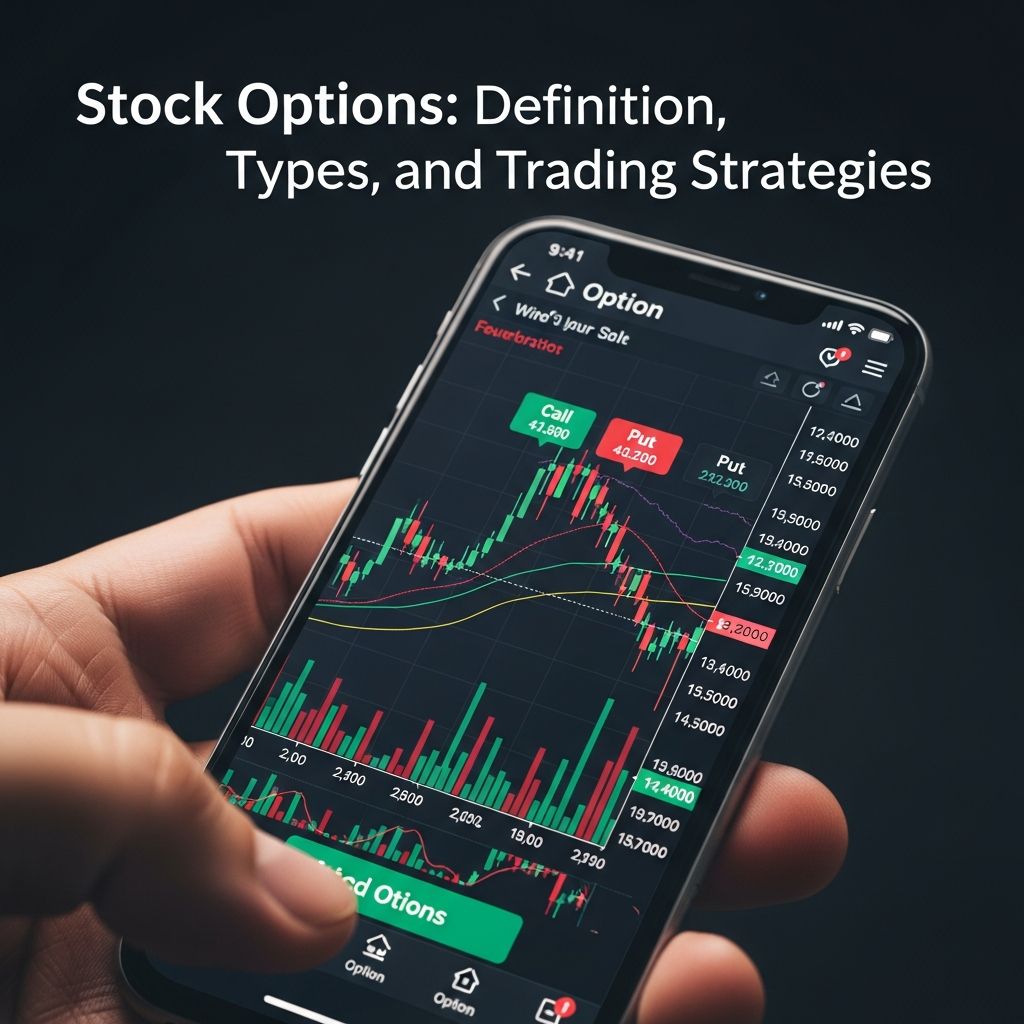
Understanding Stock Options
A stock option is a contract that grants the holder the right, but not the obligation, to buy or sell a specific quantity of shares of an underlying stock at a predetermined price, known as the strike price, on or before a specified expiration date. Stock options represent one of the most versatile financial instruments available to investors and traders, offering opportunities for both hedging and speculation.
Options are derivative securities, meaning their value is derived from the value of an underlying asset—in this case, a stock or stock index. Unlike buying or selling stock directly, options provide leverage and flexibility, allowing investors to control a larger position with a smaller capital outlay. This characteristic makes options attractive to both conservative investors seeking to protect their portfolios and aggressive traders looking to maximize returns.
What Are the Key Components of a Stock Option?
Understanding the fundamental components of a stock option is essential for anyone looking to trade or invest in these instruments. Each stock option contract specifies several critical elements that define the rights and obligations of both parties:
Strike Price (Exercise Price)
The strike price is the predetermined price at which the option holder can buy or sell the underlying stock. This price is set when the option contract is created and remains fixed throughout the life of the option, regardless of how the actual stock price fluctuates in the market.
Expiration Date
The expiration date represents the last day on which the option can be exercised. After this date, the option becomes worthless if it has not been exercised. Most stock options expire on the third Friday of the expiration month, though weekly and monthly options are also available.
Premium
The premium is the price paid by the option buyer to acquire the option contract. This represents the cost of obtaining the right to buy or sell the underlying stock. The premium is determined by market forces and depends on various factors including the stock price, strike price, time to expiration, volatility, and interest rates.
Underlying Asset
The underlying asset is the specific stock on which the option is based. The contract specifies the number of shares (typically 100 shares per standard contract) and the exact security involved.
Types of Stock Options
Stock options are divided into two primary categories based on the rights they convey to the holder:
Call Options
A call option grants the holder the right to buy the underlying stock at the strike price on or before the expiration date. Call buyers profit when the stock price rises above the strike price plus the premium paid. For example, if an investor purchases a call option with a strike price of $50 and pays a $2 premium, the stock must rise above $52 for the buyer to achieve a profit. Call options are typically purchased by investors who are bullish on a stock and expect the price to increase.
Put Options
A put option grants the holder the right to sell the underlying stock at the strike price on or before the expiration date. Put buyers profit when the stock price falls below the strike price minus the premium paid. Put options are typically purchased by investors who are bearish on a stock or who want to protect an existing long position against significant declines.
How Stock Options Trading Works
For Call Option Buyers
When an investor purchases a call option, they are betting that the underlying stock’s price will rise. The buyer pays a premium upfront to acquire this right. If the stock price rises above the strike price plus the premium, the option becomes profitable. The buyer can then exercise the option, sell the option at a profit, or let it expire worthless if it ends up out of the money.
For Call Option Sellers (Writers)
The seller of a call option, also known as a call writer, receives the premium from the buyer but assumes the obligation to sell the stock at the strike price if the buyer exercises the option. Call sellers profit when the stock price remains below the strike price, allowing them to keep the premium. However, if the stock price rises significantly above the strike price, the call writer’s losses can be substantial or unlimited.
For Put Option Buyers
When an investor purchases a put option, they are betting that the underlying stock’s price will fall. The buyer pays a premium to acquire the right to sell at the strike price. If the stock price falls below the strike price minus the premium, the option becomes profitable.
For Put Option Sellers (Writers)
The seller of a put option receives the premium but assumes the obligation to buy the stock at the strike price if the buyer exercises the option. Put sellers profit when the stock price remains above the strike price, allowing them to keep the premium.
Option Valuation and Pricing Factors
The value of a stock option is decomposed into two main components: intrinsic value and time value. Understanding how these components work is crucial for making informed trading decisions.
Intrinsic Value
Intrinsic value represents the amount by which an option is in the money. For a call option, intrinsic value equals the stock price minus the strike price (if positive). For a put option, intrinsic value equals the strike price minus the stock price (if positive). Intrinsic value can never be negative; the minimum intrinsic value is zero.
Time Value
Time value represents the additional amount that traders will pay for an option above its intrinsic value, reflecting the potential for the option to become more profitable before expiration. As expiration approaches, time value decreases, a phenomenon known as time decay. Several factors influence the time value of an option:
Factors Affecting Option Prices
Several key factors influence option pricing and should be carefully considered by options traders:
| Factor | Impact on Call Options | Impact on Put Options |
|---|---|---|
| Stock Price Increase | Increases value | Decreases value |
| Volatility Increase | Increases value | Increases value |
| Time to Expiration | More time = more value | More time = more value |
| Interest Rates | Rising rates increase value | Rising rates decrease value |
| Dividend Yield | Increases decrease value | Dividend increases increase value |
Common Stock Option Strategies
Long Call
A long call strategy involves purchasing a call option with the expectation that the stock price will rise significantly above the strike price before expiration. This is the most straightforward bullish options strategy and offers unlimited profit potential with limited risk (limited to the premium paid).
Long Put
A long put strategy involves purchasing a put option with the expectation that the stock price will fall below the strike price before expiration. This strategy is useful for bearish investors or those seeking downside protection on a stock position.
Covered Call
A covered call involves owning stock and selling call options against that position. This generates income from the premium but caps upside potential if the stock price rises above the strike price.
Protective Put
A protective put involves owning stock and purchasing put options to protect against significant downside risk. While this strategy requires paying a premium, it provides downside protection similar to insurance.
Spreads
Spread strategies involve simultaneously buying and selling options of the same type (call spread or put spread) or different types (call/put spread). Spreads reduce premium costs and define both maximum profit and maximum loss.
Where Are Stock Options Traded?
Stock options are traded on organized exchanges and over-the-counter markets. The Chicago Board Options Exchange (CBOE) is the largest options exchange in the United States and lists options on thousands of stocks and stock indexes. Options contracts are standardized, meaning each contract typically represents the right to buy or sell 100 shares of the underlying stock. This standardization ensures liquidity and transparency in the options markets.
Most stock options trades occur electronically through designated market makers and trading firms that maintain active bid-ask spreads throughout the trading day.
American vs. European Options
Stock options differ in terms of when they can be exercised. American-style options can be exercised at any time before or on the expiration date, providing greater flexibility for the option holder. European-style options can only be exercised on the expiration date itself. Most stock options traded in the United States are American-style, while many index options are European-style.
The Role of Options in Portfolio Management
Options serve multiple purposes in investment portfolios. Conservative investors use options for hedging—protecting existing positions against adverse price movements. Aggressive investors use options for speculation, seeking to profit from anticipated price movements with leveraged positions. Sophisticated investors combine options with stocks and bonds to create customized risk-return profiles that match their specific investment objectives.
Advantages and Disadvantages of Stock Options
Advantages
- Leverage: Control large stock positions with small capital outlay
- Flexibility: Multiple strategies for different market outlooks
- Risk Management: Protection against adverse price movements
- Income Generation: Premium collection through covered calls
- Lower Capital Requirements: Compared to buying stocks outright
Disadvantages
- Time Decay: Options lose value as expiration approaches
- Complexity: Understanding options requires significant knowledge
- Unlimited Losses: Potential for substantial losses, especially for sellers
- Volatility Risk: Price swings can rapidly erode option value
- Expiration Risk: Options become worthless if not exercised
Frequently Asked Questions
Q: What is the difference between a call option and a put option?
A: A call option grants the right to buy stock at a specified price, while a put option grants the right to sell stock at a specified price. Call buyers profit when prices rise; put buyers profit when prices fall.
Q: How much profit can an options trader make?
A: Profit potential varies by strategy. Call and put buyers’ profits are unlimited for calls (theoretically) or limited to the strike price minus premium for puts. Sellers’ profits are limited to premiums received but losses can be substantial.
Q: What happens if I don’t exercise my option before expiration?
A: If you don’t exercise an option by expiration, it expires worthless and you lose the entire premium paid (if you were the buyer).
Q: Can options be traded before expiration?
A: Yes, most options are traded on exchanges before expiration. You can buy to close an option you’ve sold or sell to close an option you’ve bought.
Q: What is implied volatility and why does it matter?
A: Implied volatility reflects market expectations of future price movements. Higher implied volatility increases option premiums, making both buying and selling options more expensive.
Q: Are stock options suitable for beginners?
A: While options offer powerful tools, they require significant understanding of pricing, strategies, and risk management. Beginners should start with basic strategies and thoroughly educate themselves before trading.
References
- Option (finance) — Wikipedia. 2025. https://en.wikipedia.org/wiki/Option_(finance)
Similar Articles








Read full bio of Sneha Tete