Stock Markets vs Economy: Key Differences
Discover why stock market trends often diverge from economic reality and how investors can use this knowledge to make smarter decisions.
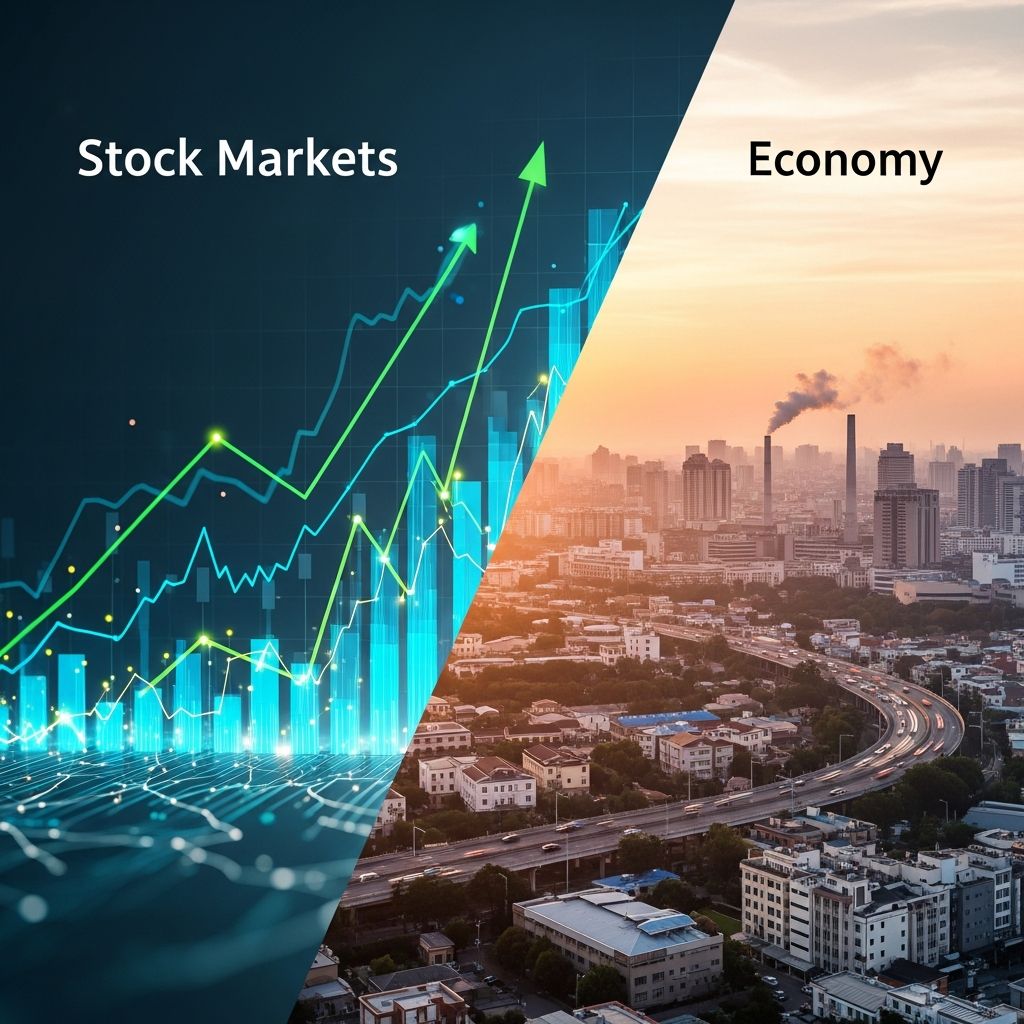
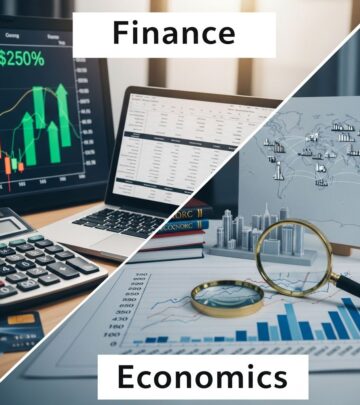
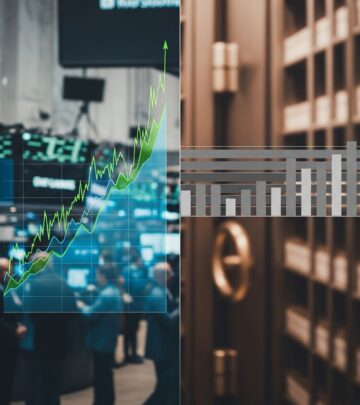
Financial markets and the overall economy operate on distinct principles, often moving in opposite directions despite their interconnectedness. While the economy measures real-world production and consumption, stock markets reflect investor expectations about future profitability. This divergence creates opportunities and risks for investors who understand the underlying dynamics.
Defining the Core Concepts
The economy encompasses the total value of goods and services produced within a country, typically tracked through metrics like Gross Domestic Product (GDP). It captures everyday activities from manufacturing to services, influenced by consumer spending, business investments, and government policies. In contrast, stock markets aggregate the perceived value of publicly traded companies based on share prices, driven by supply and demand for equities rather than current output.
A market economy relies on private ownership and competition to allocate resources efficiently. Prices signal where resources should flow, with supply increasing as prices rise and demand adjusting accordingly. This system underpins both economic growth and market valuations, but markets anticipate future conditions while the economy reports past performance.
How Financial Markets Function Independently
Stock exchanges serve as platforms where investors buy and sell ownership stakes in companies. Prices fluctuate based on earnings forecasts, interest rates, and global events, not immediate economic data. For instance, during expansions, markets may plateau if investors fear recessions ahead, while in downturns, stocks can rally on recovery hopes.
- Price Discovery: Buyers and sellers negotiate values daily, creating a real-time barometer of sentiment.
- Liquidity Provision: High trading volumes ensure quick transactions, detached from slow economic cycles.
- Forward-Looking Nature: Valuations incorporate six-to-twelve-month projections, leading to decoupling from quarterly GDP reports.
This independence stems from decentralized decision-making, where millions of participants vote with their capital, fostering innovation and efficiency absent in centrally planned systems.
Mechanisms Driving Market-Economy Divergences
Several factors explain why markets and the economy don’t always align. Central banks manipulate interest rates to stimulate borrowing, boosting asset prices before widespread economic gains materialize. Corporate profits, a key market driver, can grow through cost-cutting or share buybacks even as employment lags.
| Factor | Impact on Markets | Impact on Economy |
|---|---|---|
| Interest Rates | Lower rates inflate valuations via discounted cash flows | Slower transmission to consumer spending |
| Investor Sentiment | Optimism drives rallies independent of data | Limited direct influence on production |
| Global Events | Quick repricing on news | Lagged effects through trade |
| Corporate Actions | Buybacks boost EPS | Minimal GDP contribution |
Supply and demand govern both but at different speeds. In markets, demand surges on hype, pushing prices up; in the economy, supply chains adjust gradually to demand shifts.
Historical Examples of Decoupling
Throughout history, markets have led economic turns. In 2009, U.S. stocks bottomed months before GDP growth resumed, anticipating stimulus effects. Conversely, the 2022 bear market coincided with lingering inflation despite robust job growth, as investors priced in rate hikes.
During the 2020 pandemic, markets plunged then soared on vaccine news while economies contracted sharply. This pattern repeats because markets discount future cash flows, embodying Adam Smith’s ‘invisible hand’ where self-interest aligns with collective efficiency.
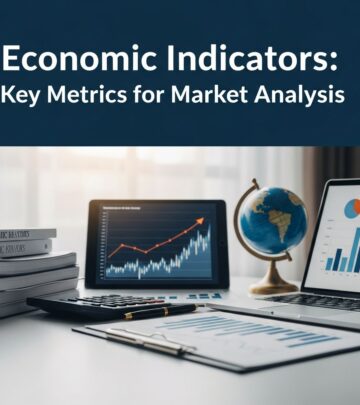
Key Indicators to Watch
Investors bridge the gap by monitoring leading indicators that markets react to first:
- Yield Curve: Inversions signal recessions six to eighteen months ahead.
- Consumer Confidence: Drops precede spending slowdowns.
- Corporate Earnings: Revisions guide 70% of market moves.
- Unemployment Trends: Rising claims pressure stocks before GDP dips.
Government data like GDP follows with a lag, confirming what markets already priced in. Mixed economies blend market forces with regulations to curb excesses, ensuring stability without stifling competition.
Risks of Confusing the Two
Misinterpreting market surges as economic booms leads to over-leveraging, as seen in 2007. Bear markets amid growth, like 2018, tempt panic selling at lows. Behavioral biases amplify disconnects: fear sells assets irrationally, greed inflates bubbles.
Limited government intervention preserves market purity but invites volatility. Regulations prevent monopolies, maintaining competitive pressures that drive quality and innovation.
Investment Strategies for Divergent Times
Diversification across asset classes mitigates risks from misalignments. Value investing focuses on undervalued firms poised for economic recovery. Growth strategies bet on sectors leading rebounds, like technology post-downturns.
- Assess macroeconomic cycles quarterly.
- Rebalance portfolios based on leading indicators.
- Maintain cash reserves for market dips.
- Ignore short-term noise; focus on long-term trends.
Understanding profit motives and price signals empowers better decisions in this self-regulating system.
The Global Perspective
In a connected world, U.S. markets influence global flows, but local economies vary. Emerging markets decouple further due to commodity dependence. Globalization pressures convergence toward market-oriented policies, blending efficiency with social safeguards.
Future Trends and Considerations
Technological advances like AI could widen gaps, boosting corporate margins before broad productivity gains. Climate policies may drag energy sectors while greentech surges. Persistent divergences underscore the need for nuanced analysis over simplistic correlations.
Frequently Asked Questions
Why do stocks rise during recessions?
Markets anticipate recoveries, pricing in stimulus and pent-up demand before official data confirms improvement.
Is the stock market a reliable economic predictor?
Often yes, as a leading indicator, but false signals occur due to exogenous shocks.
How does government policy affect this relationship?
Fiscal and monetary tools influence both but impact markets faster through liquidity.
Should I invest based on GDP growth?
No; focus on corporate fundamentals and market cycles for superior returns.
What role does competition play?
It ensures resources flow to efficient producers, sustaining long-term growth.
References
- Market economy | Economics | Research Starters — EBSCO. 2023. https://www.ebsco.com/research-starters/economics/market-economy
- Market Economy vs. Command Economy: Understanding Economic … — Plus500. 2024-01-15. https://us.plus500.com/newsandmarketinsights/market-economy-vs-command-economy-guide
- Understanding How a Market Economy Works — Indeed. 2025-05-20. https://www.indeed.com/career-advice/career-development/market-economy
- Market economy — Wikipedia. 2026-02-01. https://en.wikipedia.org/wiki/Market_economy
- Supply and Demand: Why Markets Tick — International Monetary Fund. 2023-06-10. https://www.imf.org/en/publications/fandd/issues/series/back-to-basics/supply-and-demand
- What’s the relationship between the stock market and the economy? — RBC Global Asset Management. 2024-11-12. https://www.rbcgam.com/en/ca/learn-plan/investment-basics/whats-the-relationship-between-the-stock-market-and-the-economy/detail
Similar Articles








Read full bio of medha deb