Stock Market Crash of 2008: Causes, Impact & Recovery
Understanding the 2008 financial crisis: triggers, consequences, and lessons learned.
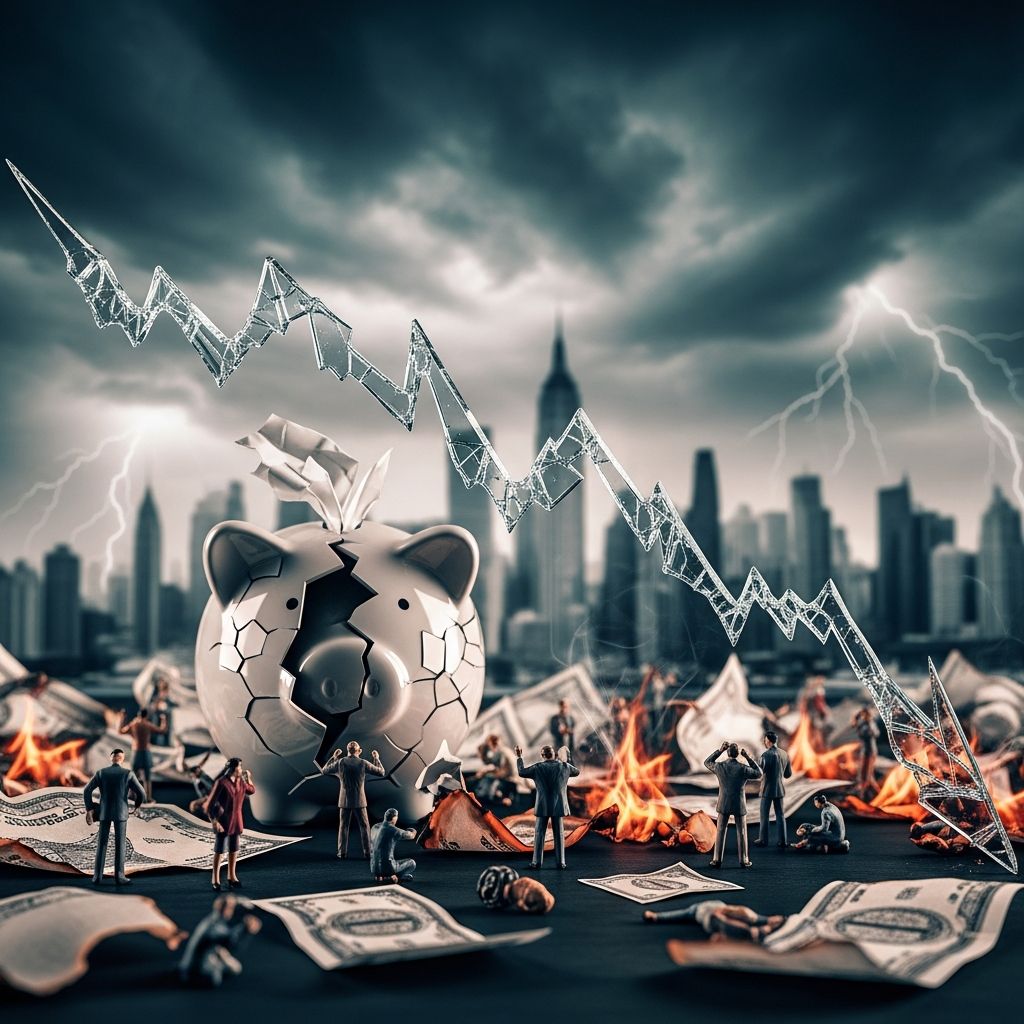
The Stock Market Crash of 2008: Understanding the Great Recession
The stock market crash of 2008 represents one of the most significant financial disasters in modern history, triggering the Great Recession and reshaping the global economy. This catastrophic collapse didn’t occur in isolation but rather resulted from years of risky financial practices, inadequate regulation, and structural vulnerabilities in the financial system. Understanding the events of 2008 is essential for investors, policymakers, and citizens seeking to prevent similar crises in the future.
What Caused the 2008 Stock Market Crash?
The 2008 financial crisis stemmed from multiple interconnected factors that accumulated throughout the early 2000s. The most prominent trigger was the collapse of the subprime mortgage market, which exposed deep vulnerabilities throughout the financial system. As housing prices began to decline in 2007, the prospect of significant losses on residential mortgage loans to subprime borrowers became apparent, initiating the cascade of financial failures.
The Subprime Mortgage Problem
Financial institutions aggressively expanded lending to subprime borrowers—those with poor credit histories and limited ability to repay loans. These risky mortgages were then bundled into mortgage-backed securities (MBS) and collateralized debt obligations (CDOs) and sold to investors worldwide. The complexity and opacity of these financial instruments masked their underlying risk. Rating agencies, which investors relied upon heavily, inaccurately assessed the credit quality of these securities, providing false confidence to buyers.
The Role of Financial Innovation and Complexity
Major financial institutions including Bear Stearns, Lehman Brothers, Merrill Lynch, and Morgan Stanley fundamentally transformed their business models. These conglomerates became mortgage lenders, creators of mortgage-backed securities, underwriters, and servicers simultaneously—profiting at every step through fees while holding massive amounts of these risky securities in their own investment portfolios. By summer 2007, UBS held $50 billion in high-risk MBS or CDO securities, Citigroup $43 billion, Merrill Lynch $32 billion, and Morgan Stanley $11 billion.
Deteriorated Lending Standards
The “originate to distribute” model created perverse incentives throughout the lending chain. Mortgage originators had no long-term responsibility for loan performance since they immediately sold loans to financial institutions. This eliminated accountability and contributed to significantly deteriorated underwriting standards. Down payment requirements declined, exotic mortgage instruments proliferated, and predatory lending targeted consumers who didn’t fully understand the risks embedded in their loans.
Excessive Leverage and Risk Mismanagement
Financial institutions borrowed enormous amounts to purchase and hold mortgage-backed securities and other risky assets. This leverage magnified both potential profits and potential losses. When housing prices fell, these overleveraged institutions incurred catastrophic losses. Additionally, major financial firms displayed inadequate risk diversification, with losses concentrated rather than dispersed broadly among investors. Risk-management weaknesses pervaded the financial system at institutions large and small.
Timeline of the 2008 Financial Crisis
The financial crisis unfolded in distinct phases:
| Period | Key Events |
|---|---|
| 2000-2006 | Housing boom, declining lending standards, rapid expansion of subprime lending and securitization |
| 2006-2007 | Housing prices peak and begin declining; defaults on subprime mortgages increase |
| June 2007 | “Sudden stop” in syndicated lending to large corporate borrowers; funding crisis begins |
| August 2007 | Credit markets begin freezing; interbank lending dries up |
| September 2008 | Lehman Brothers bankruptcy; credit freeze intensifies; government emergency interventions begin |
| Late 2008-2009 | Stock market collapse; unemployment surges; government bailouts and stimulus implemented |
The Cascade of Financial Failures
Once housing prices began declining, the chain linking homebuyers to investors proved only as strong as its weakest link. As mortgage defaults rose, every link in the chain deteriorated. Investors and creditors lost confidence in financial markets as they observed devastating write-downs in mortgage asset values and corporate bankruptcies. The credit markets froze almost entirely.
Overleveraged financial institutions were forced to sell assets at fire-sale prices to raise capital, further reducing liquidity and accelerating price declines. The failure of Lehman Brothers in September 2008 and near-failures of other large, complex financial firms significantly worsened the crisis and recession. The interconnectedness of major financial institutions meant that problems at one firm threatened the stability of the entire system.
Economic Impact and Consequences
Unemployment and Job Losses
The Great Recession that began in 2008 led to some of the highest recorded rates of unemployment in the United States since the Great Depression. As businesses faced collapsing demand and uncertain financing, they reduced expenses and investments dramatically. Widespread layoffs and forced reductions in hours eliminated millions of jobs. Unemployment climbed from approximately 4.7 percent in November 2007 to peak at 10 percent in October 2009, affecting approximately 15 million Americans.
Housing Crisis and Foreclosures
The financial crisis triggered a wave of home foreclosures unprecedented since the Great Depression. Homeowners faced plummeting property values while carrying mortgages that exceeded their homes’ worth. Many defaulted on loans they could no longer afford, particularly those with adjustable-rate mortgages or exotic mortgage instruments that reset to higher rates.
Stock Market Collapse
The stock market experienced a severe bear market, with major indices declining approximately 50 percent from peak to trough. Retirement savings, investment portfolios, and college education funds were devastated. Consumer confidence evaporated as household wealth disappeared.
Credit Market Freezing
Banks’ doubt about each other’s solvency led to an interbank credit freeze, impairing the ability of even financially healthy banks to extend credit to healthy businesses. This credit freeze spread contagion throughout the real economy. Small and large businesses struggled to access working capital, leading to additional business failures and job losses beyond the financial sector.
Global Contagion
The financial crisis spread internationally. Financial institutions and investors worldwide held significant quantities of mortgage-backed securities and other toxic assets. The crisis disrupted credit markets globally, impacting businesses and economies across Europe, Asia, and other regions.
Government Response and Bailouts
Federal policymakers implemented emergency interventions to prevent complete financial system collapse:
– The Federal Reserve provided emergency liquidity facilities and dramatically expanded its balance sheet- The Treasury Department deployed the $700 billion Troubled Asset Relief Program (TARP) to purchase toxic assets and inject capital into failing banks- The Federal Reserve reduced interest rates to near-zero levels- Congress passed the American Recovery and Reinvestment Act stimulus package to support economic recovery- Prominent failing institutions including Bear Stearns, AIG, and Citigroup received government assistance or emergency financing
Structural Vulnerabilities That Enabled the Crisis
Regulatory Gaps
Significant gaps in prudential regulation allowed excessive risk-taking to accumulate throughout the financial system. Derivatives markets operated with minimal oversight. Shadow banking activities proceeded largely unregulated. Conflicts of interest between different business lines within financial conglomerates went unaddressed.
Credit Rating Agency Failures
Credit rating agencies provided AAA ratings to mortgage-backed securities and CDOs that proved to be extremely risky. Investors relied excessively on these ratings, which masked true credit risks. The rating agencies faced conflicts of interest, as the financial institutions creating these securities—and paying for ratings—were also their clients.
Opacity and Complexity
The securitization system became increasingly opaque and complex, with mortgages re-securitized into multiple layers of financial products. Even institutions that owned these securities couldn’t easily track the underlying mortgages or assess true risk exposure. Structured financial products with embedded derivatives magnified leverage beyond what balance sheets revealed.
The Recovery Process
Recovery from the 2008 financial crisis proved slow and challenging. Unemployment remained elevated for years. Housing prices continued declining through 2012 before recovering. The financial system required years to deleverage and rebuild capital. Government policies including low interest rates, quantitative easing, and continued stimulus supported economic recovery through the early 2010s.
Lessons Learned and Regulatory Reform
The 2008 crisis prompted significant regulatory reforms, including the Dodd-Frank Wall Street Reform and Consumer Protection Act. These reforms established the Consumer Financial Protection Bureau, implemented stress testing requirements for large banks, and created living wills for orderly resolution of failing firms. However, debates continue regarding whether reforms adequately addressed vulnerabilities or went too far in restricting financial innovation.
Frequently Asked Questions
Q: What was the primary cause of the 2008 stock market crash?
A: The primary cause was the collapse of the subprime mortgage market. As housing prices declined, defaults on subprime mortgages increased, causing investors to lose confidence in mortgage-backed securities and other complex financial instruments built on these loans. This loss of confidence spread throughout the financial system, triggering bank failures and a credit freeze.
Q: How many people lost their jobs during the Great Recession?
A: The unemployment rate nearly doubled from approximately 4.7 percent in November 2007 to 10 percent in October 2009, affecting roughly 15 million Americans. Job losses were concentrated in construction, manufacturing, and financial services but spread throughout the economy.
Q: Why did banks fail if they received government bailouts?
A: Not all banks received bailouts; some failed despite government assistance. Others received emergency support through TARP or Federal Reserve lending programs. The government prioritized preventing systemic collapse by supporting institutions deemed too important to fail. Smaller banks and mortgage lenders that weren’t systemically critical did fail.
Q: How long did it take the economy to recover from the 2008 crisis?
A: Recovery was gradual. Unemployment didn’t return to pre-crisis levels until 2016. Housing prices didn’t fully recover until 2012-2013 depending on the region. Stock markets recovered by 2013. Complete economic recovery took approximately 5-8 years depending on the metric used.
Q: Could the 2008 financial crisis have been prevented?
A: Many experts believe the crisis could have been prevented or significantly mitigated through better regulation, more stringent lending standards, stronger risk management, and oversight of the shadow banking system. However, preventing all financial crises entirely remains impossible in market economies.
Q: What role did Lehman Brothers play in the crisis?
A: Lehman Brothers was a major financial institution deeply involved in mortgage securitization and derivatives trading. Its failure in September 2008 marked a critical turning point, significantly worsening the crisis and leading to more aggressive government interventions.
References
- What Really Caused the Great Recession? — Institute for Research on Labor and Employment, UC Berkeley. 2010. https://irle.berkeley.edu/publications/irle-policy-brief/what-really-caused-the-great-recession/
- Causes of the Recent Financial and Economic Crisis — Ben S. Bernanke, Federal Reserve. September 2, 2010. https://www.federalreserve.gov/newsevents/testimony/bernanke20100902a.htm
- Origins of the Crisis — Federal Deposit Insurance Corporation. 2012. https://www.fdic.gov/media/18636
- Great Recession: Causes, Effects, Statistics, & Facts — Britannica. Accessed November 2025. https://www.britannica.com/money/great-recession
- The Global Financial Crisis Explainer — Reserve Bank of Australia. Education Resources. https://www.rba.gov.au/education/resources/explainers/the-global-financial-crisis.html
Similar Articles








Read full bio of Sneha Tete