Stock Market Crash of 1929: Causes, Effects, and Facts
Exploring the pivotal 1929 stock market crash: its causes, devastating effects, and lasting historical significance.

The stock market crash of October 1929 stands as one of the most significant financial events in American history, marking the beginning of the Great Depression and triggering a decade of economic hardship for millions of Americans. This catastrophic collapse fundamentally altered the nation’s economic landscape and forever changed how Americans viewed wealth, investment, and the role of government in regulating financial markets. Understanding the causes, effects, and facts surrounding this pivotal event provides crucial insights into financial stability, market psychology, and economic policy.
Understanding the Stock Market Crash of 1929
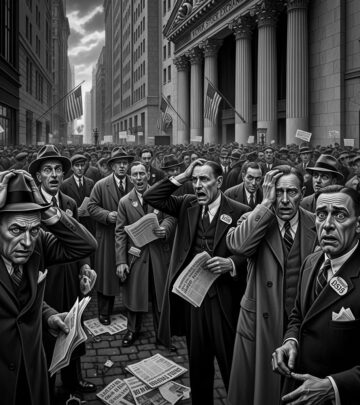
The stock market crash of 1929 was not a sudden, isolated event but rather the culmination of years of unsustainable financial practices and underlying economic weaknesses. While the dramatic collapse captured headlines and created panic among investors, the crash itself served as a trigger that exposed fundamental problems in the American economy that had been building for years. By October 1929, the Dow Jones Industrial Average had reached a peak of 381 points in September before plummeting dramatically as panic selling consumed the market. Within one month, the market lost close to 40 percent of its value, devastating investors who had poured their life savings into stock purchases.
Primary Causes of the 1929 Stock Market Crash
Rampant Speculation and Margin Buying
The most prominent cause of the 1929 crash was the widespread speculation that characterized the 1920s investment climate. Millions of Americans, fueled by optimism about the American economy and dreams of quick wealth, invested their savings or borrowed money to purchase stocks. This widespread participation in the market created an unsustainable bubble as prices climbed to unrealistic levels divorced from actual company values and earnings. By mid-1929, approximately 300 million shares of stock were being carried on margin, meaning investors had borrowed money to purchase securities they could not otherwise afford. When prices began to decline, margin investors faced devastating losses not only on their initial investment but also owed money to brokers who had provided the loans.
Federal Reserve Policy Changes
The Federal Reserve’s monetary policy decisions in 1929 contributed significantly to the market’s vulnerability. In August 1929, the Federal Reserve raised the discount rate from 5 percent to 6 percent, tightening credit availability throughout the economy. This increase in interest rates made borrowing more expensive and reduced the money available for investment and consumption. Additionally, the Federal Reserve had pursued monetary policies that were expansive when prices were rising but deflationary when prices began to fall, amplifying the economic cycle rather than moderating it. These policy decisions came at a critical moment when the economy was already showing signs of weakness.
Economic Recession Conditions
Before the October crash, the American economy had already begun to show signs of stress. A mild recession that started in the summer of 1929 contributed to gradual declines in stock prices throughout September and October. This recession reflected deeper structural problems in the economy, including weak consumer demand, overproduction of goods, and declining purchasing power among workers and farmers. The slackening of automotive and building industries was particularly symptomatic of these underlying economic problems.
Structural Economic Weaknesses
Beyond the immediate triggers, the American economy suffered from fundamental structural imbalances that made it vulnerable to collapse. Income distribution was highly inequitable, with wealthy investors accumulating large profits while workers’ wages failed to keep pace with increases in productivity. This inequality meant that the mass purchasing power necessary to sustain economic growth was declining. Additionally, seven years of high-rate fixed capital investment had overbuilt productive capacity beyond what consumers could actually purchase, saturating the economy with unsold goods. Financial practices in the securities market had become increasingly irresponsible, with the stock exchange functioning more as a “gaming-house” for speculation than as a legitimate securities market.
International Economic Factors
International economic conditions also played a role in creating the conditions for the crash. High tariff policies, particularly the protectionist measures that would later be embodied in the Smoot-Hawley Tariff, disrupted international trade patterns. American loans to foreign countries were often the only prop supporting American export trade, creating a fragile international financial structure that could not withstand economic stress.
Timeline of the Crash
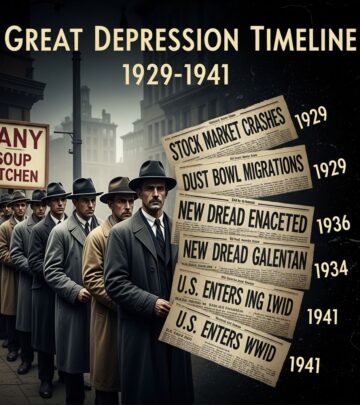
The stock market crash developed over several weeks in the fall of 1929. Stock prices had been declining gradually in September after peaking at 381 points on the Dow Jones Industrial Average. The crisis intensified in October with panic selling accelerating as investors rushed to exit the market. The crash reached its peak intensity in the days surrounding October 24 (Black Thursday) and October 29 (Black Tuesday), when massive selling pressure overwhelmed the market. Within a single month, the market had lost approximately 40 percent of its value, erasing billions of dollars in wealth.
Immediate Effects of the Stock Market Crash
Personal Financial Devastation
The immediate effects of the crash were devastating for millions of Americans who had invested in the stock market. Men and women lost their life savings, watched their life’s earnings evaporate in days, and faced an uncertain financial future. Even though only approximately 10 percent of American households held stock investments, the effects of the crash spread far beyond this small percentage of the population. Those who had bought stocks on margin faced the worst consequences, losing not only their investment but owing money to brokers who had financed their purchases. People sold their Liberty Bonds and mortgaged their homes to pay back broker loans or simply defaulted on these obligations.
Banking System Collapse
The crash triggered a collapse in the banking system that magnified the economic disaster. Banks had invested customers’ deposits in the stock market, and when the market crashed, banks lost millions of dollars. In response to these losses, many banks began foreclosing on business and personal loans, demanding repayment from customers who often lacked the cash to comply. A number of banks failed outright, taking their customers’ deposits with them. This banking crisis meant that people lost not only their stock market investments but also their savings held in banks, multiplying the financial devastation.
Consumer Confidence and Economic Psychology
Perhaps most importantly, the crash shattered consumer and investor confidence in the American economy. The contagion effect of panic played a crucial role in transforming the crash into a prolonged depression. For much of the 1920s, the public had felt confident that prosperity would continue forever, creating a self-fulfilling prophecy as optimism fueled investment and consumption. Once the panic began, however, it spread quickly with opposite cyclical results—people worried the market would continue falling, so they sold their stock, which caused the market to fall further. This psychological shift from unbounded optimism to deep fear and uncertainty would define the economic landscape for the next decade.
Long-Term Effects on the American Economy
Employment and Income Decline
The economic damage from the crash extended far beyond the stock market itself. Employers began laying off workers almost immediately as demand for goods and services collapsed. Unemployment tripled from 1.5 million at the end of 1929 to 4.5 million by the end of 1930. The country’s gross national product declined by over 25 percent within a year, while wages and salaries declined by $4 billion. Even industrial titans like Henry Ford, who had championed high minimum wages during the 1920s, began cutting wages by as much as a dollar a day. Agricultural workers fared even worse, with Southern cotton planters paying workers only twenty cents for every hundred pounds of cotton picked.
Industrial Shutdown and Manufacturing Decline
The automobile and construction industries, which had been crucial to American economic growth during the 1920s, collapsed after the crash. With no money available for auto purchases or major construction projects, these industries suffered dramatically, laying off workers and cutting wages and benefits. Factories were shut down, mills and mines were abandoned, and production slowed to a crawl. This industrial contraction spread throughout the economy, affecting suppliers, transportation, and countless service industries dependent on manufacturing activity.
Agricultural Crisis
American farmers, already struggling with depressed prices for agricultural products, suffered catastrophically after the crash. Farm income fell approximately 50 percent, pushing many farm families into bankruptcy. By 1933, the economic situation had become so dire that many farmers lost their land to foreclosure, and agricultural communities faced humanitarian crises.
Unprecedented Unemployment and Poverty
By 1933, approximately one out of every four Americans was unemployed, representing the worst unemployment crisis in American history. This mass unemployment created widespread poverty, hunger, and social disruption. The relationship between the crash and the subsequent depression, while not direct, involved complex interactions between the crash and underlying economic weaknesses. Though only 10 percent of Americans held stock investments, nearly a third would lose their lifelong savings and jobs in the ensuing depression.
Key Facts About the Stock Market Crash
Several important facts provide context for understanding the magnitude and significance of the 1929 crash:
– By 1933, the value of stock on the New York Stock Exchange was less than one-fifth of what it had been at its peak in 1929.- The market lost almost one-half its value in the fall of 1929.- Approximately 300 million shares were being carried on margin by mid-summer 1929.- The Dow Jones Industrial Average reached a peak of 381 points in September 1929 before the crash.- Only approximately 10 percent of American households held stock investments, yet the crash affected the entire population.- Business houses closed their doors, and countless factories shut down in the months following the crash.- Despite the crash’s severity, politicians and industry leaders initially continued issuing optimistic predictions for economic recovery.- The crash was not a singular event but rather a trigger for exposing deeper weaknesses in the banking and financial systems.
Government Response and Policy Failures
In the immediate aftermath of the crash, the government was confident that the economy would rebound with minimal intervention. This belief reflected the prevailing economic philosophy of the era, which held that markets were self-correcting and that government intervention was unnecessary and potentially harmful. However, this faith in automatic recovery proved tragically misplaced. The federal government’s policies before the crash had actually contributed to the economic vulnerability. Tax policies had contributed to over-saving, tariff policies had restricted international trade, and policies toward monopolies had fostered economic concentration and market rigidity. By focusing exclusively on business interests and neglecting the fundamental imbalances between farm and business income and between wage increases and productivity increases, the government had missed critical economic warning signs.
Frequently Asked Questions About the 1929 Stock Market Crash
Q: What was Black Thursday and Black Tuesday?
A: Black Thursday (October 24, 1929) and Black Tuesday (October 29, 1929) were the most catastrophic trading days of the crash, characterized by massive panic selling and record trading volumes that overwhelmed market mechanisms.
Q: Could the crash have been prevented?
A: While complete prevention may not have been possible, more responsible policies regarding speculation, margin requirements, and banking practices, combined with different monetary and fiscal policies, could have significantly mitigated the crash’s severity.
Q: Why did only 10 percent of Americans own stocks, yet the entire country suffered?
A: The crash devastated the entire economy because banks had invested deposits in the market, financial institutions collapsed, unemployment spread as businesses failed, and consumer confidence evaporated, affecting everyone regardless of stock ownership.
Q: How long did it take the stock market to recover from the crash?
A: The stock market did not recover to pre-crash levels for approximately 25 years, not returning to 1929 peak values until the 1950s, reflecting the severity of the economic damage.
Q: What were the main structural weaknesses exposed by the crash?
A: The crash exposed fundamental problems including inadequate banking regulations, irresponsible securities market practices, income inequality, overproduction relative to consumer demand, and insufficient safeguards against financial speculation.
Legacy and Historical Significance
The 1929 stock market crash marked the end of an era characterized by blind faith in American exceptionalism and the beginning of one in which citizens increasingly questioned long-held American values about wealth accumulation and economic management. The crash and subsequent Great Depression prompted fundamental reforms in financial regulation, including the establishment of the Securities and Exchange Commission and new banking regulations designed to prevent similar crises. The crash demonstrated the crucial importance of financial oversight, the dangers of excessive speculation, and the interconnectedness of the financial system with the broader economy. Understanding the causes and effects of the 1929 crash remains essential for policymakers, investors, and citizens seeking to prevent future financial disasters and maintain a stable, equitable economy.
References
- Stock Market Crash of October 1929 — Social Welfare History Project, Virginia Commonwealth University. Accessed from https://socialwelfare.library.vcu.edu/eras/great-depression/beginning-of-great-depression-stock-market-crash-of-october-1929/
- Stock Market Crash of 1929: Summary, Causes, & Facts — Britannica. https://www.britannica.com/event/stock-market-crash-of-1929
- The Stock Market Crash of 1929 — US History II, Pima Community College Open Educational Resources. https://pimaopen.pressbooks.pub/ushistory2/chapter/the-stock-market-crash-of-1929/
- Stock Market Crash of 1929 — Federal Reserve History. https://www.federalreservehistory.org/essays/stock-market-crash-of-1929
- Great Depression Facts — FDR Presidential Library & Museum. https://www.fdrlibrary.org/great-depression-facts
- What Caused the Great Depression? — Federal Reserve Bank of St. Louis. https://www.stlouisfed.org/the-great-depression/curriculum/economic-episodes-in-american-history-part-5
Similar Articles








Read full bio of Sneha Tete