Stochastic Oscillator vs Stochastic Momentum Index
Compare stochastic oscillator and momentum index indicators for informed trading decisions.
Stochastic Oscillator vs. Stochastic Momentum Index: Understanding the Key Differences
Technical analysis provides traders with numerous tools to identify potential market opportunities and make informed trading decisions. Among the most widely used momentum indicators are the stochastic oscillator and the stochastic momentum index (SMI). While these two indicators share similarities in their purpose and application, they differ significantly in their calculation methods, range of values, and overall effectiveness in filtering out false signals. Understanding these differences is crucial for traders seeking to optimize their trading strategies and improve their accuracy in identifying market trends.
What Is the Stochastic Oscillator?
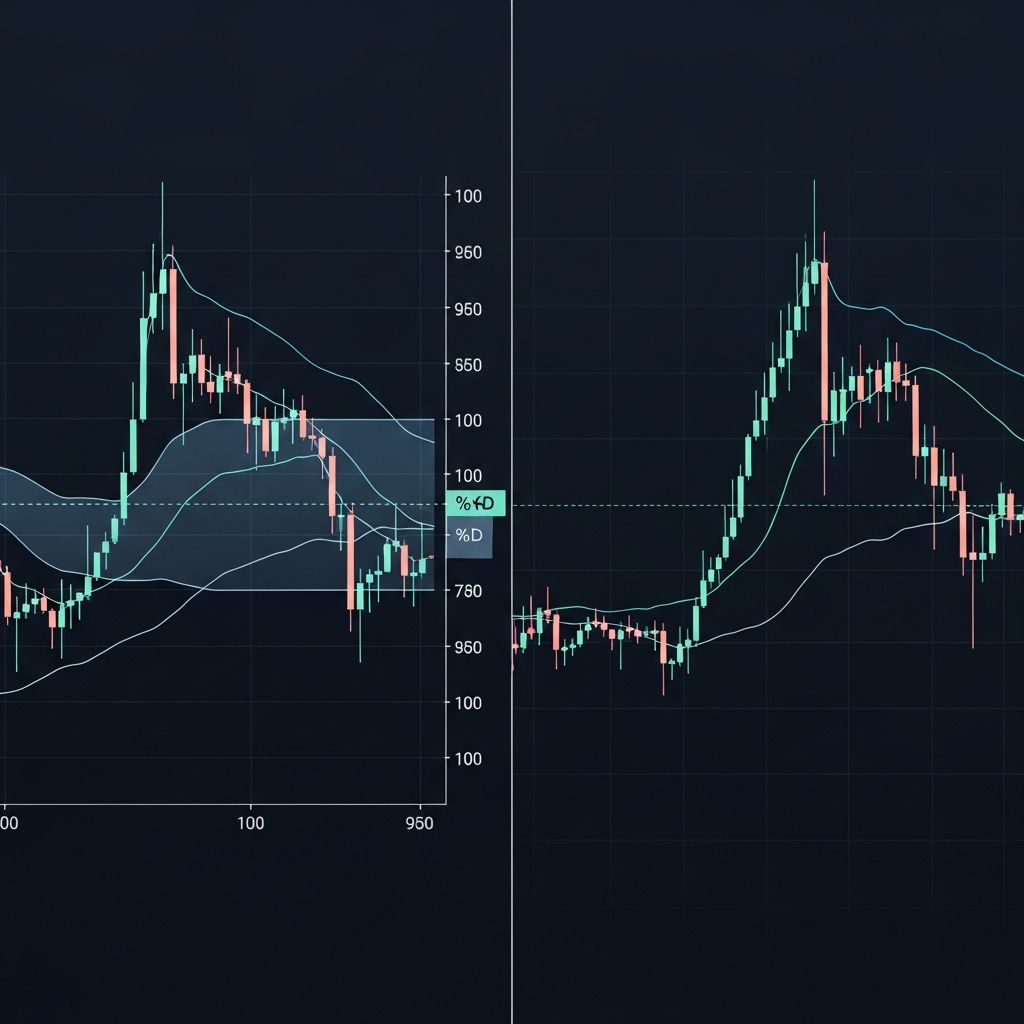
The stochastic oscillator is a momentum indicator that measures the position of a security’s closing price relative to its high-low price range over a specified period, typically 14 trading days. This indicator generates two lines: the %K line and the %D line. The %K line represents the current closing price as a percentage of the price range over the specified period, while the %D line is a moving average of the %K line, usually calculated as a 3-day simple moving average.
The stochastic oscillator oscillates between 0 and 100, providing traders with a clear visual representation of overbought and oversold conditions. When the indicator rises above 80, it typically signals overbought conditions, suggesting that a security may be due for a pullback. Conversely, readings below 20 indicate oversold conditions, potentially signaling a buying opportunity. Traders use the stochastic oscillator to identify short-term reversals and capture quick trading signals based on the movement of these two lines.
Introduction to the Stochastic Momentum Index
The Stochastic Momentum Index (SMI) was created by William Blau in 1993 as an enhanced version of the traditional stochastic oscillator. The SMI refines the stochastic oscillator by measuring the distance between the closing price and the midpoint of the high-low range, rather than measuring against the full range itself. This fundamental difference in calculation methodology results in a smoother indicator with fewer false signals, making it a preferred choice for many professional traders seeking greater precision in their technical analysis.
Key Differences Between the Two Indicators
Calculation Methodology
The primary distinction between the stochastic oscillator and the stochastic momentum index lies in their calculation approach. The traditional stochastic oscillator calculates the distance between a security’s closing price and the lowest price within the specified period, then divides this by the range (highest price minus lowest price) multiplied by 100. This means the indicator measures how close the current closing price is to the bottom of the range.
In contrast, the SMI uses a more sophisticated approach by measuring the distance between the closing price and the midpoint of the high-low range. This refined calculation centers the indicator around zero, providing a more nuanced view of momentum. The formula for SMI is expressed as: (PCDS / APCDS) × 100, where PCDS represents the price closing distance smoothed and APCDS represents the absolute price closing distance smoothed.
Value Range
Another critical difference between these indicators is their operational range. The stochastic oscillator oscillates between 0 and 100, with the midpoint at 50. This range can be less intuitive for traders attempting to identify momentum direction, as positive and negative values are not distinctly separated.
The SMI, meanwhile, operates on a range of -100 to +100, with zero serving as the midpoint. Positive values indicate that the closing price is higher than the midpoint of the high-low range, suggesting increasing upside momentum. Negative values suggest that downside momentum is increasing as prices close below the midpoint of the range. This centered approach makes it easier for traders to quickly assess whether momentum is bullish or bearish at a glance.
Smoothing and Signal Quality
The SMI incorporates double smoothing into its calculation, which significantly reduces noise and filtering false signals. The traditional stochastic oscillator does not use smoothing in its base calculation, making it more susceptible to whipsaw signals and rapid fluctuations that may not represent genuine trend changes. Because the SMI applies smoothing techniques, it generates cleaner, more reliable signals that traders can use with greater confidence.
Traders often find that the SMI produces fewer false signals compared to the traditional stochastic oscillator over the same time period, making it particularly valuable in choppy or volatile market conditions where false breakouts are common. The smoother nature of the SMI allows traders to distinguish between genuine momentum shifts and temporary price noise.
Comparing SMI to Other Momentum Indicators
SMI vs. Relative Strength Index (RSI)
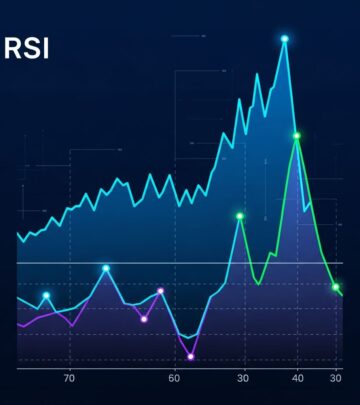
When comparing the SMI to the Relative Strength Index (RSI), several important distinctions emerge. The SMI is a smoother momentum oscillator that generates fewer false signals than the RSI. The RSI is more sensitive to price movements and experiences more fluctuating swings, which can lead to premature entry or exit decisions. The difference in performance stems from their calculation methodologies: the SMI uses double smoothing, while the RSI does not employ any smoothing at all. This makes the SMI a more refined tool for traders seeking stability and reliability in their technical analysis.
SMI vs. SMI Ergodic Oscillator
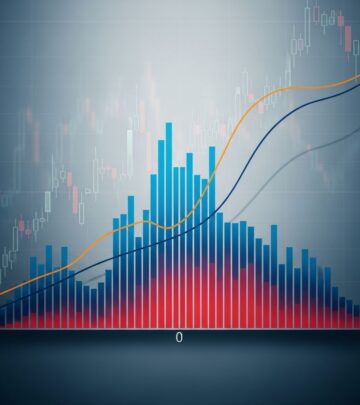
The SMI Ergodic Oscillator represents another evolution in momentum indicator technology. This variant uses a histogram format to display the difference between the SMI line and its signal line, oscillating around zero. The SMI Ergodic Oscillator is more sensitive to changes in closing prices and uses a broader range of values, making it less prone to false signals than the standard SMI. Additionally, it incorporates overbought and oversold levels to provide comprehensive momentum analysis, though it generates more lines than the traditional SMI, requiring traders to process additional information when making decisions.
Practical Applications and Trading Strategies
Identifying Overbought and Oversold Conditions
Both the stochastic oscillator and SMI can be used to identify overbought and oversold conditions. With the traditional stochastic oscillator, readings above 80 suggest overbought conditions, while readings below 20 indicate oversold conditions. For the SMI, similar thresholds apply to the -100 to +100 scale, with values above 50 suggesting overbought conditions and values below -50 indicating oversold conditions.
Divergence Trading
Traders frequently use both indicators to identify divergences, which occur when price moves in one direction while the indicator moves in another. These divergences often precede trend reversals and provide valuable trading signals. The SMI’s smoother nature makes divergences easier to spot visually, reducing the likelihood of mistaking normal oscillations for genuine divergence patterns.
Entry and Exit Point Identification
The SMI can help traders refine their entry and exit points, particularly when trading breakouts or reversals. By providing clearer momentum signals with less noise, the SMI allows traders to execute trades with greater confidence and precision. The indicator’s centered range around zero makes it particularly useful for identifying momentum acceleration points where traders might increase position sizes or add to existing trades.
Advantages and Limitations
Advantages of the Stochastic Oscillator
The stochastic oscillator remains popular among traders for several reasons. It is simple to understand and interpret, making it accessible to beginning traders. The indicator responds quickly to price changes, helping traders capture short-term momentum shifts. Its long history and widespread adoption mean that many traders are familiar with its signals and thresholds, potentially creating self-fulfilling prophecies as traders react to common levels.
Advantages of the Stochastic Momentum Index
The SMI offers several advantages over the traditional stochastic oscillator. It provides smoother signals with reduced false signals, making it more reliable for confirming trends and identifying momentum direction. The SMI’s doubled smoothing reduces whipsaws, allowing traders to maintain positions through minor market noise without unnecessary exits. The centered range around zero provides intuitive momentum direction, and the indicator’s advanced design makes it particularly valuable for professional traders and automated trading systems.
Limitations to Consider
Despite their effectiveness, both indicators have limitations. The SMI’s smoothing can cause slight signal delays in fast-moving markets, potentially causing traders to enter positions slightly later than optimal. Over-optimization of indicator parameters can lead traders to curve-fit their strategies to historical data without improving future performance. Additionally, neither indicator should be used in isolation; traders should always employ multiple confirmation tools before executing trades to verify signals and manage risk effectively.
Choosing the Right Indicator for Your Trading Style
Selecting between the stochastic oscillator and SMI depends on your individual trading style, market conditions, and experience level. For beginners, the stochastic oscillator offers simplicity and accessibility, providing straightforward overbought and oversold signals. However, as traders gain experience and seek greater accuracy, the SMI’s refined calculations and smoother signals often prove more valuable.
In trending markets, the SMI excels at confirming trend strength and identifying momentum acceleration. In choppy, sideways markets, the SMI’s reduced false signals prevent costly whipsaws. The SMI Ergodic Oscillator works best for traders seeking to identify rapid momentum changes in volatile conditions, though its histogram format requires additional interpretation skill.
Implementation Tips for Maximum Effectiveness
To maximize the effectiveness of either indicator, combine them with other technical analysis tools. Use support and resistance levels to confirm signals, apply trendlines to validate momentum direction, and incorporate volume analysis to confirm the strength of price movements. Set appropriate overbought and oversold thresholds based on your specific security and timeframe rather than relying on default settings. Monitor indicator behavior during different market regimes to understand how your chosen indicator performs in various conditions, and maintain detailed trading logs to track which signals produce the most profitable outcomes for your strategy.
Frequently Asked Questions
Q: What is the main difference between stochastic oscillator and SMI?
A: The main difference is their calculation method and range. The stochastic oscillator measures closing price relative to the full high-low range and oscillates between 0 and 100, while the SMI measures closing price relative to the midpoint of the high-low range and oscillates between -100 and +100. The SMI also incorporates double smoothing for cleaner signals.
Q: Is the SMI better than the stochastic oscillator?
A: The SMI is considered a refinement of the stochastic oscillator rather than strictly better. It produces smoother, more reliable signals with fewer false positives, making it preferable for many traders. However, the stochastic oscillator’s simplicity and faster responsiveness make it suitable for certain trading styles.
Q: What do positive and negative SMI values indicate?
A: Positive SMI values indicate that the closing price is above the midpoint of the high-low range, suggesting increasing upside momentum. Negative values indicate that the closing price is below the midpoint, suggesting increasing downside momentum.
Q: Can I use SMI and stochastic oscillator together?
A: Yes, many traders use both indicators together to gain a more complete understanding of market conditions and to confirm signals across multiple momentum perspectives, though this approach requires additional analysis and interpretation.
Q: Which indicator is better for beginners?
A: The stochastic oscillator is generally considered more beginner-friendly due to its simpler calculation and more intuitive 0-100 range. However, as traders gain experience, the SMI’s refined signals often become preferable.
Conclusion
Both the stochastic oscillator and stochastic momentum index serve important roles in technical analysis, helping traders identify momentum shifts and potential entry and exit points. The traditional stochastic oscillator remains valuable for its simplicity and widespread recognition, while the SMI represents an important evolution in indicator design, offering smoother signals with reduced false signals through its refined calculation methodology and double smoothing approach. The choice between these indicators depends on your trading style, experience level, and market conditions. Professional traders often incorporate both tools into their analysis arsenal, using them in combination with other technical indicators to maximize trading accuracy and reduce risk. Regardless of which indicator you choose, remember that no single tool guarantees profitable trading, and successful traders always employ multiple confirmation methods before executing trades.
References
- Stochastic Momentum Index (SMI) – Rules, Settings, Strategy, Returns — Quantified Strategies. Retrieved from https://www.quantifiedstrategies.com/stochastic-momentum-index/
- The Stochastic Momentum Index (SMI): A Refined Indicator for Traders — TrendSpider Learning Center. Retrieved from https://trendspider.com/learning-center/the-stochastic-momentum-index-smi-a-refined-indicator-for-traders/
- SMI vs. Stochastic: Which One Gives You the Edge? — TradingView. Retrieved from https://www.tradingview.com/chart/ETHUSDT.P/7uWV91mn-SMI-vs-Stochastic-Which-One-Gives-You-the-Edge/
- StochasticMomentumIndex — thinkorswim Learning Center. Retrieved from https://toslc.thinkorswim.com/center/reference/Tech-Indicators/studies-library/R-S/StochasticMomentumIndex
- What is the Stochastic Momentum Index (SMI)? — MarketBeat. Retrieved from https://www.marketbeat.com/financial-terms/what-is-stochastic-momentum-index/
- SMI Ergodic Oscillator: SMI Indicator vs Oscillator — LuxAlgo. Retrieved from https://www.luxalgo.com/blog/smi-ergodic-oscillator-smi-indicator-vs-oscillator/
Similar Articles








Read full bio of Sneha Tete