Stevens Institute of Technology: Premier Engineering Education
Discover why Stevens ranks among America's top colleges with exceptional ROI and career outcomes.
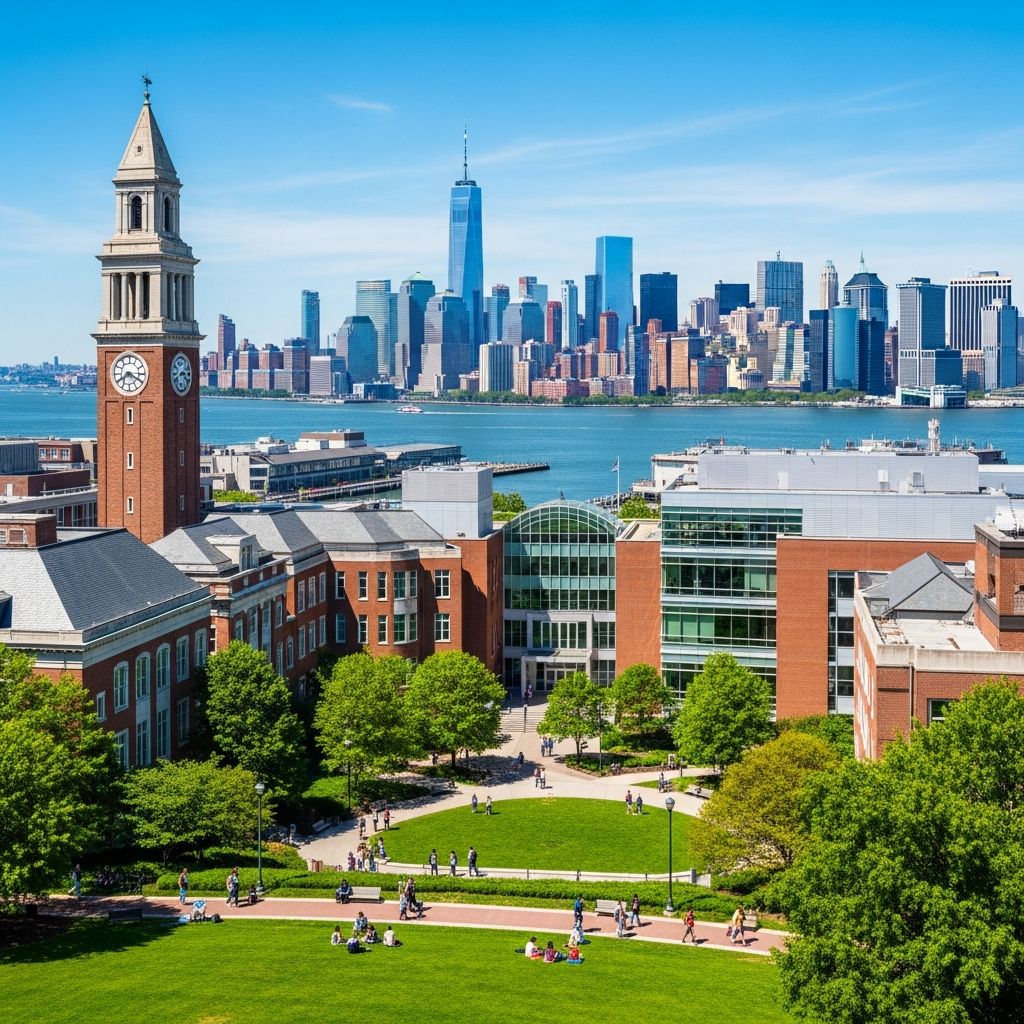
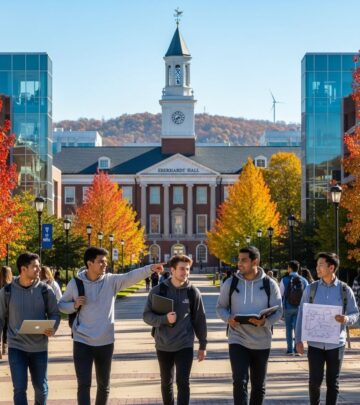
Stevens Institute of Technology stands as one of America’s most respected technological universities, consistently recognized for its exceptional academic quality, innovative research programs, and outstanding career outcomes for graduates. Founded in 1870 and established through an 1868 bequest from Edwin Augustus Stevens, this private research institution has evolved from a small engineering college into a comprehensive technological university with over 8,000 students representing 47 states and 60 countries. Positioned in Hoboken, New Jersey, just minutes from New York City, Stevens offers students unparalleled access to internships, networking opportunities, and a vibrant professional ecosystem.
Academic Excellence and Institutional Recognition
Stevens Institute of Technology has earned significant recognition in national college rankings, reflecting its commitment to academic rigor and student success. The institution ranked No. 36 nationally among the 2024 Best Colleges in the U.S., demonstrating its position among the nation’s elite educational institutions. This recognition encompasses multiple dimensions of institutional excellence, including the quality of academic programs, faculty expertise, student outcomes, and overall learning environment.
The university’s strength lies in its integrated approach to technology-based education combined with liberal arts and business training. Stevens comprises three main academic schools: the Charles V. Schaefer Jr. School of Engineering and Science, the School of Business, and the School of Humanities, Arts and Social Sciences. Additionally, the university operates the College of Online and Professional Education, providing flexible learning opportunities for working professionals.
Comprehensive Academic Offerings
Stevens offers an extensive range of undergraduate and graduate programs designed to prepare students for careers in an increasingly technology-driven world. The university provides 35 undergraduate majors through its various schools, with a favorable 12:1 student-to-faculty ratio that enables personalized attention and mentorship. This intimate educational environment contrasts sharply with large research universities, allowing faculty to engage deeply with student learning and development.
At the graduate level, Stevens provides exceptional depth and specialization. The institution offers more than 50 graduate degree designations, including graduate certificates, master’s degrees, and Ph.D. programs across engineering, science, systems, management, and liberal arts disciplines. Graduate students can pursue 20 Ph.D. programs, 58 master’s programs, and 194 certificate programs, offering tremendous flexibility for advanced study.
Outstanding Student Outcomes and Career Success
One of Stevens’ most compelling attributes is its exceptional track record of graduate employment and starting salaries. According to official statistics, 96.8% of the Class of 2024 secured their desired outcomes within six months of graduation, with an impressive average starting salary of $84,800. This exceptional employment rate significantly exceeds national averages and reflects the strong demand for Stevens graduates in the job market.
These outcomes reflect Stevens’ institutional focus on student success, which comprises 70% of the Wall Street Journal ranking methodology. The university’s dedication to producing career-ready graduates stems from multiple integrated initiatives, including cooperative education programs, research opportunities, industry partnerships, and career services support.
The Cooperative Education Advantage
Stevens’ cooperative education programs represent a critical differentiator in its educational model. These programs provide students with substantial real-world experience before graduation, allowing them to apply classroom learning directly to professional settings. Cooperative education experiences not only develop vital technical and professional skills but also significantly enhance return on investment (ROI) by providing income opportunities and building robust professional networks.
The co-op model has proven particularly effective for Stevens students, as employers specifically seek graduates with hands-on experience. Students gain practical skills, industry contacts, and often secure employment offers from their co-op employers before graduation. This pathway has become a hallmark of the Stevens educational experience.
Research Excellence and Innovation Centers
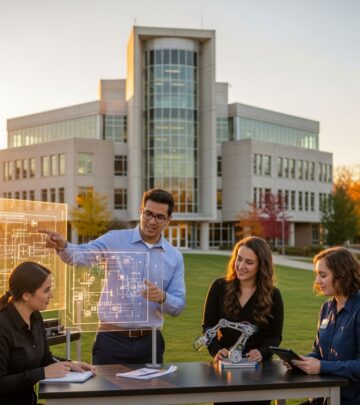
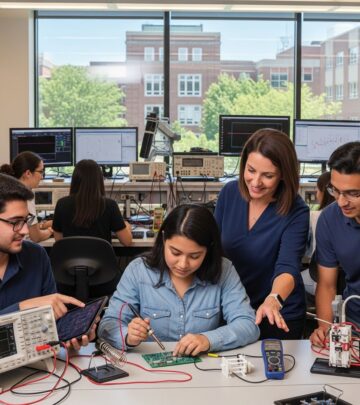
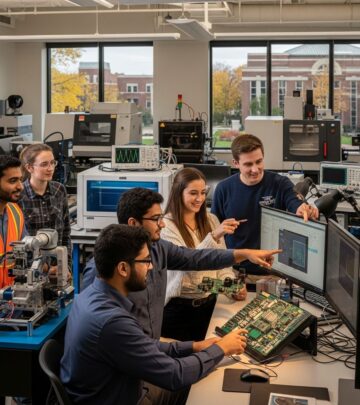
Stevens operates as a research university with substantial research activity and state-of-the-art facilities. The institution has established national research centers of excellence that advance knowledge and attract leading faculty and students. Notable research centers include the Center for the Advancement of Secure Systems and Information Assurance (CASSIA) and the Systems Engineering Research Center (SERC).
These research centers support investigations in critical areas including quantum computing, artificial intelligence, resilience engineering, robotics, complex systems, healthcare, biomedical research, brain research, and fintech. This research orientation attracts ambitious students interested in contributing to technological advancement while pursuing their education.
Campus Modernization and Infrastructure
Stevens has invested significantly in modernizing its campus facilities to support contemporary education and research. Since 2010, the university has completed substantial infrastructure improvements, including technology upgrades to 100% of classrooms with advanced audiovisual and IT systems. Major new facilities include the Gateway Academic Center, a 89,500-square-foot teaching and research facility that opened in 2019, and the University Center Complex, which opened in 2022 and provides residential housing for approximately 1,000 students along with collaborative learning spaces, dining facilities, and recreational amenities.
Diverse and Inclusive Learning Community
Stevens prioritizes diversity and inclusion as essential elements of the educational experience. The university’s commitment to building a varied and welcoming student body contributes 10% to its national ranking score, reflecting the importance of diverse perspectives in higher education. With students representing 47 states and 60 countries throughout Asia, Europe, and Latin America, Stevens cultivates a genuinely global learning community.
This diversity enriches classroom discussions, research collaborations, and student life. International and domestic students bring varied perspectives, cultural backgrounds, and professional experiences that enhance the educational environment for all community members.
Admission and Enrollment Information
Stevens maintains selective admissions standards reflecting its competitive academic environment. For Fall 2024 admission, the university received 10,673 applications and admitted 48% of applicants, with 1,054 new students enrolling. Admitted students demonstrated strong academic achievement, with an SAT score range of 1380-1505 (middle 50%) and an average high school GPA of 3.86.
Graduate admissions remain similarly competitive, with 10,862 Fall 2024 applicants and 2,772 full-time graduate students enrolled, while spring 2025 saw 5,954 graduate applicants. This selective admissions process ensures that Stevens maintains high academic standards while building a cohesive community of motivated scholars.
Distinctive Educational Philosophy
Stevens’ educational approach uniquely blends rigorous technological education with applied learning opportunities, preparing students specifically for an AI-integrated future. The university recognizes that automation will handle routine tasks, making human capabilities in creative problem-solving, human-AI collaboration, and entrepreneurial innovation increasingly valuable. This forward-thinking orientation ensures that Stevens graduates possess skills that remain relevant and in-demand regardless of technological disruption.
The institution actively seeks students motivated by ingenuity and inventiveness who pursue interdisciplinary interests. Stevens celebrates students who are engineers with musical talents, artists with programming skills, and financial experts with literary interests. This embrace of diverse intellectual pursuits cultivates well-rounded professionals capable of innovative thinking and cross-disciplinary collaboration.
21st-Century Curriculum Innovation
In Fall 2024, Stevens launched an innovative undergraduate core curriculum initiative called SUCCESS (Stevens Undergraduate Core Curriculum: Essential Skills for Success). This forward-thinking program equips students with critical skills required to excel in the 21st-century job market, including communication, leadership, ethics, diversity, computing, entrepreneurship, and technology. The Foundation Program, taught within the School of Humanities, Arts and Social Sciences, anchors this comprehensive skill-building initiative.
Strategic Location and Career Opportunities
Stevens’ location in Hoboken, New Jersey provides extraordinary advantages for student career development. Positioned minutes from New York City, students access one of the world’s most vibrant professional and financial centers. This proximity enables students to pursue internships at leading technology companies, financial institutions, and innovative startups while maintaining their academic commitments. The NYC metropolitan area’s concentration of Fortune 500 companies, venture capital firms, and emerging technology companies creates unparalleled networking and employment opportunities.
Additionally, the beautiful Hoboken campus location offers residential students proximity to urban cultural, entertainment, and professional opportunities while maintaining a distinct institutional identity and supportive campus community.
Specialized Program Rankings
Beyond overall institutional rankings, Stevens’ specialized programs earn recognition for distinctive excellence. The university’s online engineering and technology programs rank among the nation’s best, with the No. 6 ranking in Best Online Master’s in Industrial (Systems) Engineering Programs and No. 19 in Best Online Master’s in Information Technology Programs. These rankings reflect program quality accessible to geographically dispersed working professionals.
Accreditation and Program Quality Assurance
Stevens maintains accreditation from leading accrediting bodies that verify educational quality and program excellence. The university holds accreditation from the Middle States Commission on Higher Education, the Accreditation Board for Engineering and Computer Science Programs, the American Chemical Society, the Association to Advance Collegiate Schools of Business, and the Program Management Institute. These multiple accreditations ensure that Stevens programs meet rigorous national standards across engineering, sciences, business, and other disciplines.
Why Stevens Excels: Key Success Factors
Strong Graduate Employment and Salaries: Stevens’ focus on student outcomes, comprising 70% of ranking methodology, drives the institution’s success. The university delivers high graduate employment rates and strong starting salaries that directly reflect employer demand for Stevens graduates.
Quality Learning Environment: High faculty-to-student ratios, small class sizes, and abundant resources create an ideal educational setting. Faculty members know students personally and provide substantial mentorship and guidance.
Cooperative Education: Co-op programs provide essential real-world experience, enabling students to gain practical skills, earn income, and build professional networks before graduation.
Research and Innovation: Stevens’ investment in research centers and state-of-the-art laboratories attracts leading scholars and students while advancing knowledge in critical technological fields.
Diversity and Inclusion: A global student body representing numerous countries enriches the learning community and prepares students for careers in international contexts.
Frequently Asked Questions
Q: What makes Stevens’ location valuable for students?
A: Stevens’ Hoboken campus is minutes from New York City, providing exceptional access to internships, networking opportunities, and employment prospects with leading technology companies, financial institutions, and startups in the world’s premier professional center.
Q: How selective is Stevens’ admissions process?
A: Stevens maintains highly selective admissions with a 48% acceptance rate for Fall 2024, requiring strong academic credentials including SAT scores of 1380-1505 and average high school GPAs of 3.86.
Q: What percentage of Stevens graduates secure employment within six months?
A: 96.8% of the Class of 2024 secured their desired outcomes within six months of graduation, significantly exceeding national averages and reflecting strong employer demand for Stevens graduates.
Q: What academic schools comprise Stevens?
A: Stevens comprises the Charles V. Schaefer Jr. School of Engineering and Science, the School of Business, and the School of Humanities, Arts and Social Sciences, plus the College of Online and Professional Education for distance learners.
Q: What is the average starting salary for Stevens graduates?
A: The Class of 2024 achieved an average starting salary of $84,800, reflecting the strong market demand for Stevens-trained professionals in technology and engineering fields.
Q: How does the cooperative education program benefit Stevens students?
A: Cooperative education provides students with substantial real-world experience, practical skill development, income opportunities, and professional networking that significantly enhances employment prospects and return on investment.
References
- Stevens Institute of Technology Ranking: WSJ Top 36 in 2024 — Crowley Law LLC. 2024. https://www.crowleylawllc.com/stevens-tech-shines-in-2024-college-rankings/
- Stevens Institute of Technology — Wikipedia — Wikimedia Foundation. 2024. https://en.wikipedia.org/wiki/Stevens_Institute_of_Technology
- Facts and Statistics — Stevens Institute of Technology. 2024. https://www.stevens.edu/discover-stevens/stevens-by-the-numbers/facts-statistics
- Why Stevens — Stevens Institute of Technology. 2024. https://www.stevens.edu/info-for/why-stevens
- Stevens Institute of Technology Overview — CollegeData. 2024. https://www.collegedata.com/college-search/Stevens-Institute-of-Technology
- Stevens Institute of Technology — Niche — Niche Inc. 2024. https://www.niche.com/colleges/stevens-institute-of-technology/
- HASS’s 2024 Year-in-Review — Stevens Institute of Technology. 2024. https://www.stevens.edu/page-chapter/hass2024
Similar Articles








Read full bio of Sneha Tete