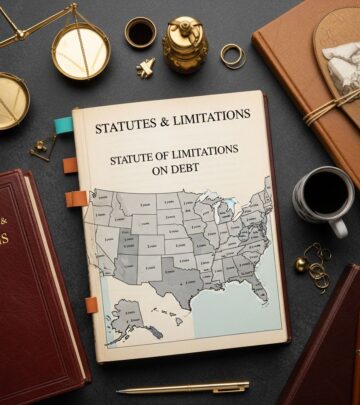
Statute of Limitations: Definition, Types & Examples
Understanding legal deadlines: How statutes of limitations protect defendants and ensure fair prosecution.

What is a Statute of Limitations?
A statute of limitations is a law that establishes the maximum time period within which legal proceedings—either civil or criminal—can be initiated after an alleged offense or wrongdoing occurs. Once this time period expires, the plaintiff or prosecution can no longer file a lawsuit or criminal charges against the defendant, even if evidence of wrongdoing exists. The statute of limitations serves as a legal deadline that protects defendants from facing prosecution or legal action indefinitely.
The concept is known in civil law systems as a prescriptive period and exists in nearly all jurisdictions worldwide, though the specific time limits vary significantly depending on the type of claim, the jurisdiction, and whether the case is civil or criminal in nature. These laws are designed to balance the rights of plaintiffs and prosecutors with the fundamental fairness protections afforded to defendants.
Understanding How Statutes of Limitations Work
The mechanics of a statute of limitations are straightforward in principle but can become complex in application. When an alleged offense occurs, the clock typically begins to run from the date of the offense or, in some cases, from the date when the offense was discovered or reasonably should have been discovered. This distinction is crucial because it determines when the deadline actually begins.
Once the time period specified by the statute expires, no legal action related to that alleged offense can be brought against the defendant. If a plaintiff or prosecutor attempts to file a lawsuit or criminal charges after this deadline has passed, the defendant can raise the statute of limitations as an affirmative defense. The court will then dismiss the case as time-barred, meaning the claim is legally precluded from proceeding regardless of its merits.
In criminal cases, when a statute of limitations expires, the courts no longer have jurisdiction to hear the case. This means that even if compelling evidence of guilt emerges years later, prosecution becomes impossible if the limitations period has passed. However, certain serious crimes may not have any time limitations at all.
Types of Statutes of Limitations
Civil Statutes of Limitations
Nearly all civil actions are subject to statutes of limitations. Civil cases encompass a wide range of disputes between private parties, businesses, or individuals seeking monetary damages or other remedies. The time limits for civil cases vary considerably depending on the type of claim:
- Personal injury claims: Typically range from one to six years, depending on the state. Many states allow two to three years from the date of injury or discovery of injury.
- Medical malpractice: Often falls under a special discovery rule, allowing claims to be filed from when the injury was discovered or should have been discovered.
- Breach of contract: Usually between three to six years from the date of breach.
- Property damage: Commonly three to six years depending on jurisdiction.
- Defamation: Typically one to three years from publication or discovery of the defamatory statement.
- Unpaid debts and credit card fraud: Often three to six years from the date of default.
Criminal Statutes of Limitations
Criminal statutes of limitations protect defendants from being prosecuted for crimes too long after they were committed. However, the application varies dramatically based on crime severity. Serious criminal offenses, such as murder, sexual assault, or other violent felonies, may not be subject to any statute of limitations whatsoever, allowing prosecution at any time.
Less serious crimes typically have defined time limits that correspond to the severity of the offense. For example, federal crimes generally have a five-year statute of limitations, though this can vary. Misdemeanors often have shorter periods, sometimes as little as one to three years, while felonies may have longer periods.
The Purpose and Reasons for Statutes of Limitations
Although victims of wrongdoing may sometimes feel that statutes of limitations deny them justice, these laws exist for important and well-established reasons that benefit the entire legal system. Understanding these purposes illuminates why virtually every jurisdiction has adopted some form of statute of limitations:
Protection Against Unfair Prosecution: The primary purpose of statutes of limitations is to protect defendants from being subjected to unfair prosecution or legal action after an unreasonable amount of time has passed. Without these limitations, a person could face criminal charges or lawsuits decades after an alleged incident, making it impossible to mount an effective defense or locate witnesses.
Preservation of Evidence: As time passes, evidence deteriorates, becomes lost, or is destroyed. Witnesses’ memories fade, documents are discarded, and physical evidence degrades. By requiring legal action within a reasonable timeframe, statutes of limitations ensure that cases are litigated when evidence is fresher and more reliable, leading to more just outcomes.
Prompt Resolution of Disputes: These laws encourage plaintiffs and prosecutors to act with reasonable diligence in pursuing their claims. By establishing clear deadlines, statutes of limitations promote the timely resolution of disputes and ensure that the legal system processes cases while circumstances are still fresh in parties’ minds.
Finality and Certainty: Statutes of limitations provide finality, allowing individuals and organizations to eventually close the book on past events and move forward with their lives. Without such limitations, people would face indefinite legal exposure.
Variations in Statutes of Limitations by Jurisdiction
One of the most important aspects of statutes of limitations is that they vary significantly by jurisdiction. In the United States, each state and the federal government have their own statutes of limitations. What applies in one state may be entirely different in another:
| Claim Type | Typical Time Limit | Notes |
|---|---|---|
| Personal Injury (Civil) | 1-6 years | Varies by state; often 2-3 years |
| Medical Malpractice | 1-4 years | May use discovery rule |
| Breach of Contract | 3-10 years | Written contracts often longer |
| Fraud | 2-6 years | Often from discovery date |
| Felony (Criminal) | 3-10 years | Serious crimes often unlimited |
| Misdemeanor (Criminal) | 1-3 years | Varies significantly by jurisdiction |
| Murder | No limit | No statute of limitations |
Starting Points: When Does the Clock Begin?
Determining when a statute of limitations period begins is critical, as it directly determines the deadline for filing. Two primary rules govern this:
The Standard Rule
Under the standard rule, the statute of limitations clock begins when “the plaintiff has a complete and present cause of action.” This rule has been in place since the 1830s and remains the default in most jurisdictions. For example, in a personal injury case from a car accident, the clock typically begins on the date of the accident.
The Discovery Rule
In many cases, particularly involving medical malpractice and fraud, the discovery rule applies. Under this rule, the statute of limitations begins to run when the harmful event is discovered or reasonably should have been discovered, not when it actually occurred. This is critical in medical malpractice cases where an injury might not be immediately apparent to the patient.
For example, if a surgeon leaves a surgical instrument inside a patient during surgery in 2020 but the patient doesn’t discover it until 2023, the statute of limitations clock typically begins in 2023, not 2020.
Tolling and Exceptions
While statutes of limitations establish clear deadlines, the law recognizes certain circumstances where the clock may pause or be interrupted. This process is called tolling.
Common Tolling Situations
- Minority of the victim: When an offense is committed against a minor, the statute of limitations clock is typically paused until the victim reaches legal age, at which point it begins to run.
- Mental incapacity: If the plaintiff is mentally incompetent, tolling may apply.
- Defendant’s absence: In some jurisdictions, if the defendant flees the state or jurisdiction, the statute may be tolled.
- Continuing violations: If a defendant commits a series of related illegal acts, the statute may continue to run from the last violation rather than the first.
Statute of Repose
Related to statutes of limitations is the concept of a statute of repose. A statute of repose limits the time within which an action may be brought based on when a particular event occurred—such as the completion of construction or the date of product manufacture—and does not permit extensions. Unlike statutes of limitations, statutes of repose cannot typically be paused or extended.
Statutes of Limitations in Business Transactions
In commercial transactions, the Uniform Commercial Code establishes specific rules for statutes of limitations. Parties to a contract for the sale of goods may contractually agree to limit legal proceedings to a timeframe as short as one year, but they cannot contractually extend the time of liability beyond the statutes of limitations established by law. This protects both buyers and sellers by establishing reasonable boundaries for dispute resolution in commerce.
Frequently Asked Questions
Q: What happens if I file a lawsuit after the statute of limitations has expired?
A: If you file a lawsuit after the statute of limitations has passed, the defendant can raise this as an affirmative defense, and the court will likely dismiss your case. The statute of limitations becomes a complete bar to your claim, regardless of whether you have valid evidence or a strong case on the merits.
Q: Do all crimes have statutes of limitations?
A: No. Serious crimes, particularly murder and sexual offenses, typically have no statute of limitations in most jurisdictions, allowing prosecution at any time. Lesser crimes have defined periods that vary by jurisdiction and severity.
Q: Can the statute of limitations be extended?
A: In civil cases, statutes of limitations may sometimes be extended through tolling provisions if certain circumstances apply, such as the plaintiff’s minority or mental incapacity. In criminal cases, the statute may be tolled if the defendant flees the jurisdiction. However, these extensions are limited and depend on specific legal circumstances.
Q: How do I know which statute of limitations applies to my case?
A: The applicable statute of limitations depends on your jurisdiction (state or federal) and the type of claim you have. You should consult with an attorney in your jurisdiction to determine the specific deadline for your situation.
Q: What is the discovery rule, and how does it work?
A: The discovery rule allows the statute of limitations to begin running from when an injury or wrongdoing is discovered, rather than when it occurred. This is commonly used in medical malpractice and fraud cases where the harm may not be immediately apparent.
Q: Can parties agree to shorten the statute of limitations?
A: In civil matters, parties may generally agree to shorten the statue of limitations, though they cannot extend it beyond the legal limit. In commercial contracts for the sale of goods, parties may reduce the period to as short as one year but cannot extend it beyond existing law.
Conclusion
Statutes of limitations represent a fundamental balance in the legal system between ensuring justice and protecting fairness. By establishing clear deadlines for legal action, these laws protect defendants from indefinite legal exposure while encouraging prompt resolution of disputes based on fresh evidence and reliable testimony. Understanding how statutes of limitations work in your jurisdiction is essential for anyone involved in legal matters, whether as a plaintiff, defendant, or business participant. When facing a potential legal claim or considering filing one, consulting with a qualified attorney about applicable statutes of limitations should be among your first steps.
References
- Statute of Limitations – Definition, Types, and Example — Corporate Finance Institute. Accessed November 2025. https://corporatefinanceinstitute.com/resources/wealth-management/statute-of-limitations/
- Statute of Limitations — Wikipedia. Accessed November 2025. https://en.wikipedia.org/wiki/Statute_of_limitations
- Statute of Limitations — LegalZoom Business & Legal Glossary. Accessed November 2025. https://www.legalzoom.com/business-glossary/statute-of-limitations
- Statute of Limitations — Cornell Law School Legal Information Institute. Accessed November 2025. https://www.law.cornell.edu/wex/statute_of_limitations
- Statute of Limitations Definition — Nolo Legal Dictionary. Accessed November 2025. https://dictionary.nolo.com/statute-of-limitations-term.html
- Statute of Limitation in Federal Criminal Cases: An Overview — Congressional Research Service. U.S. Congress. Accessed November 2025. https://www.congress.gov/crs-product/RL31253
Similar Articles








Read full bio of medha deb