States Without Income Tax: 9 Key Facts In 2025
Discover the 9 states with no income tax and how their alternative tax systems work.
Understanding States Without Income Tax
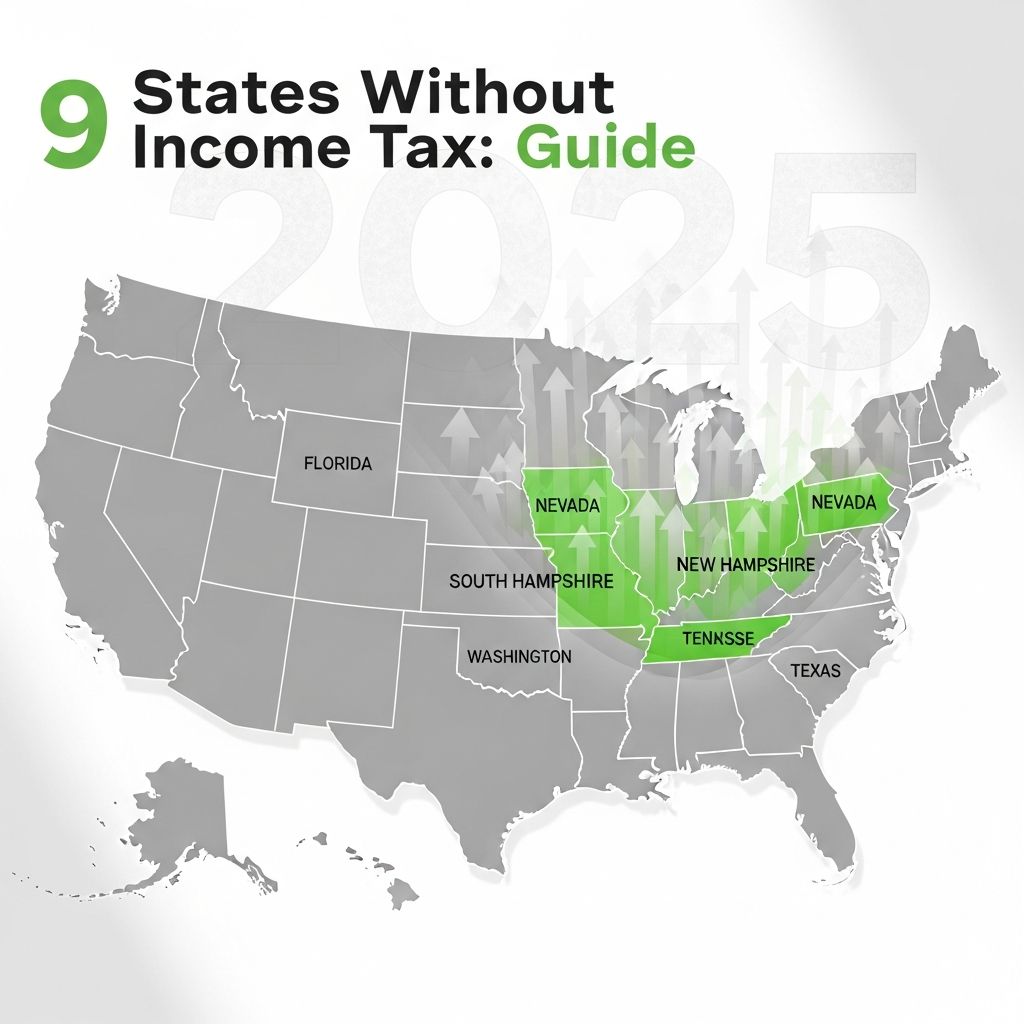
Nine U.S. states currently do not levy a personal income tax on their residents. These states are Alaska, Florida, Nevada, New Hampshire, South Dakota, Tennessee, Texas, Washington, and Wyoming. While the absence of state income tax might seem attractive, it’s important to understand that these states employ alternative methods to generate revenue for public services and infrastructure. The decision to move to one of these states requires careful consideration of the complete tax picture, including sales taxes, property taxes, and other state-specific levies.
Residents of these states still pay federal income taxes to the U.S. government. Additionally, one state—Washington—implements a capital gains tax on certain high-income residents, which serves as a partial income tax replacement. Understanding how each state funds its operations helps potential residents or businesses evaluate whether relocating to a no-income-tax state will genuinely reduce their overall tax burden.
The Nine States Without Income Tax
Alaska
Alaska stands as the only state with neither a personal income tax nor a state sales tax. The Last Frontier repealed its income tax in 1980, making it one of the earliest states to eliminate this revenue source. While Alaska has no statewide sales tax, some municipalities do impose local sales taxes ranging up to 7.5%. Property taxes in Alaska vary by jurisdiction but are partially offset by a statewide property tax exemption on the first $150,000 of assessed property value for primary residences.
Alaska’s tax advantage extends further with its Alaska Permanent Fund Corporation, which distributes extra money annually to every resident. This oil wealth redistribution program makes Alaska particularly attractive for those seeking maximum tax benefits. However, Alaska’s overall affordability ranking remains low due to high costs for essentials like housing, utilities, and groceries in many areas.
Florida
Florida repealed its personal income tax in 1855, making it one of the longest-standing no-income-tax states. However, this does not mean Florida is tax-free. Residents pay corporate income taxes, sales taxes, and property taxes. Florida’s property taxes are higher than in most other states, which can significantly impact housing affordability despite the lack of income tax.
The state benefits from robust tourism revenue and strong economic activity in major metropolitan areas. While Florida offers lower property taxes compared to some other no-income-tax states, the high cost of living in popular metro areas like Miami, Tampa, and Orlando can offset the income tax savings. Potential residents should carefully evaluate property values and sales taxes in their specific communities.
Nevada
Nevada operates successfully without personal or corporate income taxes, relying instead on revenue from its massive tourism and gaming industries. The Silver State collects nearly a billion dollars annually from gambling taxes and fees, along with high sales taxes that exceed 8% in some areas. Sin taxes on alcohol and tobacco products also contribute to the state’s revenue base.
Nevada combines no income tax with low property tax rates and minimal local taxes, creating a favorable tax environment. However, the state’s low affordability ranking suggests that high costs of living in popular areas may require residents to spend more on basics like childcare, transportation, utilities, and groceries. The cost of living in Las Vegas and other major cities can be substantial despite the low tax rates.
New Hampshire
New Hampshire is unique among no-income-tax states, as it has neither a sales tax nor a personal income tax. However, the state does impose a property tax that ranks among the highest of all no-income-tax states. New Hampshire previously taxed interest and dividend income at a 5% rate, which was reduced to 3% in 2024 and completely repealed as of January 1, 2025, making it fully income-tax free.
Property taxes in New Hampshire vary by locality and can be substantial, along with higher housing and utility costs. These expenses significantly impact the state’s affordability ranking and cost of living metrics. Potential residents should thoroughly research property tax rates in their specific towns, as they vary considerably across the state.
South Dakota
South Dakota stands out for maintaining overall low tax pressure across its tax system. The state repealed its income tax in 1943, and all subsequent attempts to reinstate it have failed. South Dakota features low property tax rates and modest sales and local taxes, creating a genuinely tax-efficient environment compared to other no-income-tax states.
To fund state services, South Dakota levies specific taxes on cigarettes and alcoholic beverages, along with unique revenue sources like coin-operated laundromat license fees. This combination of taxes generates sufficient revenue without burdening residents with high general sales or property taxes. South Dakota’s strong cost of living and affordability scores make it particularly attractive for those prioritizing overall tax efficiency.
Tennessee
Tennessee does not tax any forms of income, including wages, investment income, dividends, and interest. This comprehensive income tax exemption is relatively recent—the state’s Hall Income Tax on investment income was eliminated in 2021 after being gradually reduced starting in 2016. Tennessee’s income tax elimination represents a significant shift toward a more business-friendly tax environment.
Despite the absence of income tax, Tennessee has one of the highest combined state and local tax rates in the entire U.S., ranking second among all states. This high overall tax burden results from elevated sales taxes and other state levies. While property taxes are relatively low, they only partially offset the substantial sales tax burden, resulting in only middling affordability scores.
Texas
Texas maintains no personal income tax, making it attractive for high-income earners. However, the state compensates through above-average property taxes and sales taxes. Property tax rates in Texas can be substantial, particularly impacting homeownership costs. The above-average sales tax means residents pay more for daily purchases and everyday expenses.
Texas’s strong economy and business-friendly policies have attracted numerous corporations and individuals. However, potential residents should carefully calculate their total tax burden, as property taxes and sales taxes can offset much of the income tax savings. Major metropolitan areas like Houston, Austin, and Dallas have experienced significant population growth due to the no-income-tax advantage.
Washington
Washington has no personal income tax but does levy a 7.0% capital gains tax on certain high-income residents, making it technically not entirely income-tax free. This capital gains tax represents a significant difference from truly comprehensive no-income-tax states. The state features moderate property taxes that help offset relatively high sales and excise taxes.
Despite the capital gains tax, Washington ranks at the bottom of no-income-tax states for cost of living and affordability. Tax exposure from the combination of sales, excise, and property taxes can accumulate significantly. Residents should carefully evaluate whether the lack of traditional income tax translates to actual savings given the state’s other tax obligations.
Wyoming
Wyoming offers one of the most favorable tax environments among no-income-tax states, with no personal or corporate income taxes and no taxes on retirement income. The Cowboy State maintains low sales tax rates averaging just under 5.5% and an exceptionally low average effective property tax rate of approximately 0.58%. This combination creates genuinely tax-efficient operations for residents and businesses.
Wyoming’s strong performance in cost of living and affordability metrics makes it particularly attractive for those prioritizing lower fixed costs. The state’s commitment to maintaining low overall taxes has made it increasingly popular with retirees and businesses seeking to minimize tax obligations. Residents benefit from a truly comprehensive low-tax environment without hidden costs in alternative tax categories.
How No-Income-Tax States Generate Revenue
States without income taxes must develop alternative revenue sources to fund essential public services, infrastructure, education, and healthcare. These alternatives typically fall into several categories: sales taxes, property taxes, excise taxes, and industry-specific taxes or fees.
Sales Tax Approach: Many no-income-tax states rely heavily on sales taxes to generate revenue. These taxes are typically higher than in income-tax states to compensate for lost revenue. Sales taxes apply to purchases of goods and sometimes services, affecting everyday expenses for all residents regardless of income level.
Property Tax Approach: Some states emphasize property taxes as their primary revenue source. Property taxes directly fund local services, schools, and infrastructure. While property ownership is optional, the tax burden on homeowners can be substantial.
Industry-Specific Taxes: States like Nevada leverage gaming and tourism revenue through specialized taxes on casinos, hotels, and gambling operations. Tennessee and South Dakota use excise taxes on alcohol and tobacco. These targeted taxes allow states to distribute the tax burden across specific industries and behaviors.
Natural Resource Revenue: Alaska benefits from oil wealth redistributed through the Alaska Permanent Fund, while other states may generate revenue from natural resources or environmental fees.
Comparing Total Tax Burdens
The absence of state income tax does not automatically mean lower total tax obligations. Residents must evaluate combined sales, property, excise, and local taxes to determine actual tax burden. For example, Tennessee ranks second nationally in combined state and local tax rates despite having no income tax, while Wyoming maintains genuinely low overall taxes across all categories.
A comprehensive tax comparison requires analyzing:
- State and local sales tax rates
- Property tax rates and assessment values
- Excise taxes on specific goods or services
- Fees and other state-specific charges
- Local tax variations within each state
High-income earners may benefit significantly from eliminating state income taxes, as they avoid taxes on substantial income. However, those with significant property holdings or high consumption levels may pay more through alternative taxes. Retirees living on investment income may find no-income-tax states particularly attractive if the state does not tax retirement distributions.
Tax Implications for Retirees and Investors
Retirees and investment-focused individuals should carefully evaluate how no-income-tax states treat retirement distributions and investment income. All nine no-income-tax states exempt retirement account distributions from state taxation, making them particularly attractive for retirees. This includes distributions from 401(k)s, traditional IRAs, and similar retirement accounts.
However, treatment of Social Security, pension income, and investment income varies significantly. Social Security is generally not taxed in these states, providing additional retirement income protection. Some states like New Hampshire previously taxed investment income but have eliminated or are eliminating these taxes.
For investors, capital gains treatment is important. Washington’s capital gains tax on high-income residents represents a significant consideration for investment-focused individuals. Most other no-income-tax states do not tax capital gains as part of the income tax system.
Considerations Before Relocating
Moving to a no-income-tax state requires more analysis than simply comparing income tax rates. Potential relocators should evaluate:
Cost of Living: Many no-income-tax states have high costs of living due to popularity, natural limitations, or industry concentration. Alaska’s remote location drives up prices for groceries and utilities. Florida’s popular metros command high property values. Nevada’s tourist-driven economy elevates prices in major cities.
Public Services Quality: States with lower overall tax burdens may provide fewer or lower-quality public services. Education funding, infrastructure maintenance, and social services can be impacted by limited tax revenue. Research specific areas’ school systems, roads, and community services.
Business Environment: No-income-tax states often attract businesses and entrepreneurs. This can create economic growth but also increase competition and cost pressures. Understanding local economic conditions helps assess long-term financial viability.
Housing Market: Popular no-income-tax states may have competitive housing markets with rising property values. Property appreciation potential must be weighed against current prices and property tax obligations.
Frequently Asked Questions
Q: Do residents of no-income-tax states still pay federal income tax?
A: Yes, all U.S. residents, including those in no-income-tax states, must pay federal income taxes to the federal government. The absence of state income tax only eliminates state-level income tax obligations.
Q: Which no-income-tax state has the lowest overall tax burden?
A: Wyoming consistently ranks among the lowest for overall tax burden, with no income tax, low property tax rates (approximately 0.58%), and low sales taxes (approximately 5.5%). The state also exempts retirement income from taxation.
Q: Does having no income tax mean automatically lower taxes?
A: No. States without income tax compensate through higher sales, property, or excise taxes. Tennessee ranks second nationally in combined state and local taxes despite having no income tax. Careful analysis of all tax categories is essential.
Q: Can I claim residency in a no-income-tax state if I work remotely?
A: Residency rules vary by state and depend on factors like domicile, property ownership, and days spent in-state. Remote workers should verify specific residency requirements with state tax authorities before relocating.
Q: Which no-income-tax states are best for retirees?
A: All nine no-income-tax states exempt retirement account distributions from state taxes. Alaska and Wyoming offer additional benefits through property tax exemptions for seniors and generally lower overall tax burdens.
Q: Does Washington tax capital gains?
A: Yes, Washington implements a 7.0% capital gains tax on certain high-income residents. This makes Washington technically not a completely income-tax-free state, as capital gains are a form of income.
References
- States with no income tax: Complete guide for 2025 — Rippling. 2025. https://www.rippling.com/blog/what-states-dont-have-income-tax
- 9 States with No Income Tax — TurboTax, Intuit. 2025. https://turbotax.intuit.com/tax-tips/fun-facts/9-states-with-no-income-tax/
- 9 States With No Income Tax — SmartAsset. 2025. https://smartasset.com/taxes/states-with-no-income-tax
- States With No Income Tax — H&R Block Tax Center. 2025. https://www.hrblock.com/tax-center/filing/states/states-with-no-income-tax/
- 9 States With No Income Tax — AARP. 2025. https://www.aarp.org/money/taxes/states-without-an-income-tax/
- States With No Income Tax in 2025: 9 Tax-Free States — Raisin. 2025. https://www.raisin.com/en-us/taxes/states-with-no-income-tax/
Similar Articles








Read full bio of Sneha Tete