States With No Car Insurance Requirements 2025
Which states don't require car insurance? Only New Hampshire stands alone.
States With No Car Insurance Requirements
For most drivers across the United States, purchasing auto insurance is a legal requirement. However, there is one notable exception to this rule. Understanding which states require auto insurance and which do not is essential for drivers who are relocating or simply want to know their state’s specific regulations. This comprehensive guide explores the landscape of car insurance requirements across all states and highlights the unique position of the single state that does not mandate traditional auto insurance coverage.
The Only State Without Car Insurance Requirements
New Hampshire stands alone as the only state in the United States that does not require drivers to carry auto insurance. This distinctive position makes New Hampshire unique among all 50 states and the District of Columbia. However, this does not mean that New Hampshire drivers can operate vehicles without any form of financial protection or accountability.
While New Hampshire does not mandate traditional auto insurance policies, the state still maintains strict financial responsibility laws. Drivers in New Hampshire must demonstrate their ability to cover potential damages resulting from accidents they cause. This requirement exists to protect both drivers and potential victims of accidents from financial hardship.
Financial Responsibility Requirements in New Hampshire
In lieu of mandatory auto insurance, New Hampshire offers drivers several alternatives to demonstrate financial responsibility. These options allow drivers to meet state requirements without purchasing a traditional insurance policy. The alternatives include:
- Cash deposit: Drivers can deposit cash with the Department of Motor Vehicles that covers the minimum insurance amount required by the state.
- Certificate of deposit: A CD can be pledged to the state as proof of financial responsibility.
- Surety bond: Drivers can obtain a surety bond that guarantees coverage of potential accident damages.
- Self-insurance certificate: For commercial fleet operators and certain high-net-worth individuals, self-insurance may be an option.
These alternatives provide flexibility for New Hampshire residents while still ensuring that drivers maintain financial responsibility on the road. The specific amount required varies based on the state’s minimum liability coverage standards, though New Hampshire drivers who choose to purchase insurance must still meet standard liability requirements.
Why New Hampshire Is Different
New Hampshire’s approach to auto insurance reflects a philosophy of personal responsibility and freedom of choice. The state has historically resisted mandating insurance, instead focusing on ensuring that drivers have the financial means to cover damages they cause. This approach stands in contrast to the philosophy of all other states, which view mandatory insurance as a necessary protection for the general public.
The lack of a mandatory insurance requirement in New Hampshire does not mean the state ignores accident liability. Drivers who cause accidents are still held financially responsible for damages, regardless of whether they maintain an insurance policy. However, without insurance, drivers bear the full financial burden of any accidents they cause, which can be substantial.
All Other States Require Car Insurance
Every other state in the nation requires drivers to maintain some form of auto insurance coverage. The specific requirements vary significantly from state to state, but the fundamental principle remains consistent: drivers must carry minimum liability coverage. This requirement applies to all 49 other states and the District of Columbia.
The universal requirement for auto insurance (except in New Hampshire) reflects a broader policy goal of protecting the driving public. Mandatory insurance ensures that victims of accidents have a potential source of compensation and protects drivers from catastrophic financial liability. Insurance companies are regulated by state insurance departments to ensure they remain solvent and can pay claims.
Minimum Coverage Requirements by State
While all states except New Hampshire require auto insurance, the specific minimum coverage amounts vary considerably. States typically require three types of liability coverage: bodily injury liability per person, bodily injury liability per accident, and property damage liability. The minimums range from very modest amounts in some states to significantly higher requirements in others.
For example, some states maintain relatively low minimum coverage requirements, making insurance more affordable for budget-conscious drivers. Other states, particularly those that have recently updated their requirements, mandate much higher coverage limits. California increased its minimum coverage requirements effective January 1, 2025, marking the first increase in 56 years, with new minimums of 30/60/15 (bodily injury per person/per accident and property damage). Virginia’s requirements increased to 50/100/25 in 2025, while North Carolina’s minimums rose to 50/100/50 effective July 1, 2025, making it the state with the highest property damage minimum limit.
No-Fault States and At-Fault States
Beyond the requirement to carry insurance, states are also classified as either no-fault states or at-fault states, which affects how insurance claims are handled and who pays for damages.
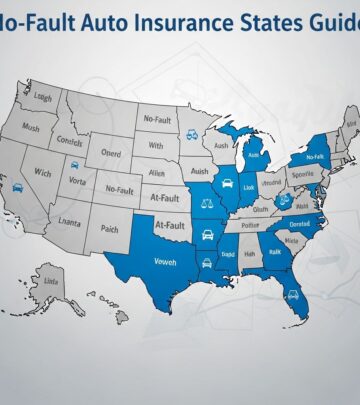
No-Fault States: In no-fault states, each driver’s insurance company pays for that driver’s medical expenses and lost wages, regardless of who caused the accident. This system is designed to reduce litigation and speed up claims processing. No-fault states include Florida, Hawaii, Kansas, Massachusetts, Michigan, Minnesota, New York, North Dakota, and Utah. Some states, such as Kentucky and New Jersey, offer drivers a choice between no-fault and at-fault coverage options.
At-Fault States: In at-fault states, the driver determined to be responsible for an accident must pay for damages. Their insurance company typically covers these costs up to policy limits, and the insurance company of the at-fault driver may pursue subrogation (recovering costs from the responsible party). Most states operate under an at-fault system.
Florida’s Unique Position
Florida deserves special mention as it is the only state that does not require bodily injury liability coverage, though it does require personal injury protection (PIP) coverage. Drivers in Florida must carry at least $10,000 in PIP coverage, but can drive without bodily injury liability insurance. This unusual requirement reflects Florida’s no-fault insurance system, where PIP coverage protects the insured driver’s medical expenses regardless of fault.
State-by-State Minimum Requirements Overview
The variation in minimum car insurance requirements across states is substantial. To help drivers understand their obligations, here is a representative sampling of minimum requirements across different states:
| State | System Type | Bodily Injury Liability (Per Person) | Bodily Injury Liability (Total) | Property Damage Liability |
|---|---|---|---|---|
| California | At-Fault | $30,000 (as of Jan 1, 2025) | $60,000 | $15,000 |
| Florida | No-Fault | Not Required | Not Required | $10,000 PIP |
| New York | No-Fault | $25,000 | $50,000 | $25,000 |
| Texas | At-Fault | $30,000 | $60,000 | $25,000 |
| Virginia | At-Fault | $50,000 (as of Jan 1, 2025) | $100,000 | $25,000 |
| North Carolina | At-Fault | $50,000 (as of Jul 1, 2025) | $100,000 | $50,000 |
Recent Changes to Insurance Requirements
Several states have recently updated their auto insurance requirements, and drivers should be aware of these changes, particularly if they are relocating or renewing their policies. California’s 2025 increase marked a historic moment, as it was the first minimum coverage increase in more than half a century. This change was authorized by Senate Bill 1107, the Protect California Drivers Act, signed into law in 2022. California has already scheduled another increase for January 2035, when minimums will rise to 50/100/25.
Virginia’s insurance requirements evolved significantly when the state eliminated its uninsured motorist fee option in July 2024, making insurance mandatory for the first time. Beginning January 1, 2025, Virginia drivers who do purchase insurance must meet the new minimum coverage limits of 50/100/25.
Utah and North Carolina have also increased their minimum coverage requirements, reflecting a broader trend toward higher insurance minimums as repair costs and medical expenses have risen.
Why States Require Car Insurance
The near-universal requirement for auto insurance across the United States serves several important policy objectives. First, it ensures that accident victims have a potential source of compensation for medical expenses, lost wages, and property damage. Without mandatory insurance, many accident victims would face severe financial hardship. Second, it protects insured drivers from catastrophic financial liability. A serious accident can result in hundreds of thousands of dollars in damages, which could bankrupt an individual driver without insurance. Third, mandatory insurance creates a system where insurers bear some of the risk of accidents, incentivizing them to promote safe driving through premium discounts and loss prevention programs.
Proof of Insurance Requirements
In states where auto insurance is required, drivers typically must provide proof of coverage in several circumstances. When registering a vehicle with the state, drivers must show proof of active insurance. If pulled over by law enforcement, drivers must be able to produce proof of insurance. In the event of an accident, drivers must provide proof of insurance to other involved parties and to insurance companies.
Failure to provide proof of insurance can result in significant penalties, including fines, license suspension, and in some cases, vehicle impoundment. Drivers should keep proof of insurance readily available and maintain consistent coverage to avoid these consequences.
The Cost of Not Having Insurance in Required States
Driving without insurance in a state where it is required carries substantial risks and penalties. Beyond the legal fines and license suspension, uninsured drivers face severe financial exposure in the event of an accident. If an uninsured driver causes an accident, they may be personally liable for all damages, which can amount to hundreds of thousands of dollars. This liability can lead to wage garnishment, asset seizure, and long-term financial consequences.
Additionally, uninsured drivers may face difficulty obtaining insurance in the future, as being uninsured is viewed as a major risk factor by insurance companies. When they do obtain insurance, they can expect to pay significantly higher premiums for years.
Frequently Asked Questions
Q: Is auto insurance required in every state?
A: No. New Hampshire is the only state that does not require auto insurance. However, New Hampshire drivers must still demonstrate financial responsibility through cash deposits, bonds, or certificates of deposit.
Q: What are the consequences of driving without insurance where it is required?
A: Consequences include fines, license suspension, vehicle impoundment, and personal liability for accident damages. You may also face difficulty obtaining insurance in the future and must pay higher premiums when coverage becomes available.
Q: Are minimum insurance requirements the same in all states?
A: No. Minimum coverage requirements vary significantly by state. Some states have relatively modest requirements, while others require much higher coverage limits. Several states have recently increased their requirements.
Q: What is the difference between a no-fault and at-fault state?
A: In no-fault states, each driver’s insurance covers their own damages regardless of who caused the accident. In at-fault states, the driver responsible for an accident must pay for damages through their insurance or personal resources.
Q: Can I get a car registered without proof of insurance?
A: In most states, you must provide proof of insurance to register a vehicle. New Hampshire allows alternatives like cash deposits, but all other states require active insurance policies or equivalent financial responsibility documentation.
Q: What happened to Virginia’s uninsured motorist option?
A: Virginia eliminated its optional uninsured motorist fee program in July 2024, making auto insurance mandatory for all drivers beginning that date. This was a significant change in state policy.
Q: Will minimum insurance requirements change again in the future?
A: Yes, several states have scheduled future increases. California, for example, plans another increase in 2035. As vehicle repair costs and medical expenses rise, states periodically increase minimum coverage requirements.
References
- Minimum Car Insurance Requirements By State (2025) — 1800 Lion Law. 2025. https://1800lionlaw.com/minimum-car-insurance-requirements-by-state/
- States With New Minimum Car Insurance Laws in 2025 — Bankrate. 2025. https://www.bankrate.com/insurance/car/state-minimum-coverage-increases-2025/
- Minimum Car Insurance by State in 2025 — Experian. 2025. https://www.experian.com/blogs/ask-experian/minimum-car-insurance-by-state/
- The Minimum Required Car Insurance by State — NerdWallet. 2025. https://www.nerdwallet.com/insurance/auto/learn/minimum-car-insurance-requirements
- States With No Auto Insurance Requirement — Auto Insurance. 2025. https://www.autoinsurance.com/articles/states-no-requirement/
Similar Articles








Read full bio of Sneha Tete