States That Exempt Social Security Benefits in 2025
Complete guide to which states don't tax Social Security benefits and how to maximize your retirement income.
One of the most significant factors in retirement planning is understanding how your state taxes Social Security benefits. For millions of retirees across the United States, state income tax can substantially reduce the value of their Social Security payments. However, the good news is that a substantial majority of states have chosen to exempt Social Security income from state taxation, allowing retirees to keep more of their hard-earned benefits. As of 2025, understanding which states offer these exemptions can make a considerable difference in your overall retirement income strategy.
Social Security benefits represent a crucial source of income for approximately 70 million Americans. While the federal government has specific rules about taxing Social Security benefits, individual states maintain the authority to determine whether they will impose additional state income taxes on these payments. This patchwork of different state policies creates a complex landscape that retirees must navigate. The distinction between states that tax Social Security and those that don’t can result in thousands of dollars of difference in annual retirement income, making this an important consideration for anyone planning their retirement years.
The National Landscape: 41 States Exempt Social Security
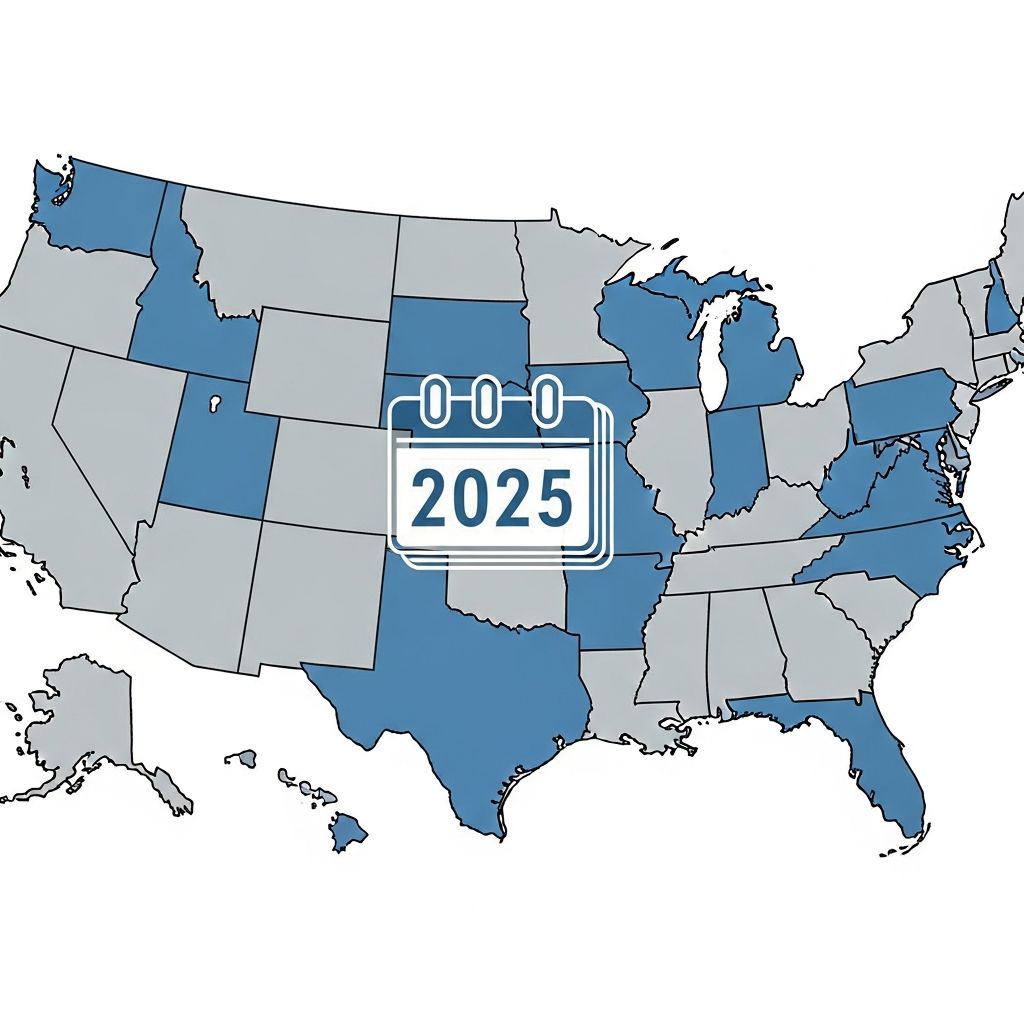
The overwhelming majority of American states have recognized the importance of protecting retirees’ Social Security income from state taxation. Currently, 41 states plus the District of Columbia do not tax Social Security income for retirees. This represents a significant shift in state tax policy over recent years, as more states have come to understand that taxing retirees’ Social Security benefits creates financial hardship for a vulnerable population.
The movement toward exempting Social Security from state taxation has gained considerable momentum. Recent legislative victories in states like Kansas, Missouri, and Nebraska demonstrate a growing national consensus that Social Security income should receive special tax protection. These recent changes reflect broader recognition among state lawmakers that retirees deserve tax breaks on income they’ve already paid taxes on throughout their working years.
Complete List of States That Don’t Tax Social Security
The following 41 states, along with Washington D.C., do not tax Social Security benefits:
Alabama, Alaska, Arizona, Arkansas, California, Delaware, Florida, Georgia, Hawaii, Idaho, Illinois, Indiana, Iowa, Kansas, Kentucky, Louisiana, Maine, Maryland, Massachusetts, Michigan, Mississippi, Missouri, Nebraska, Nevada, New Hampshire, New Jersey, New York, North Carolina, North Dakota, Ohio, Oklahoma, Oregon, Pennsylvania, South Carolina, South Dakota, Tennessee, Texas, Virginia, Washington, Wisconsin, and Wyoming.
States That Still Tax Social Security: The Nine Exceptions
While the majority of states exempt Social Security from taxation, nine states continue to impose state income taxes on at least some Social Security benefits. These states are Colorado, Connecticut, Minnesota, Montana, New Mexico, Rhode Island, Utah, Vermont, and West Virginia. However, it’s important to note that the tax treatment in these states varies significantly, with some offering substantial exemptions based on income thresholds and others phasing out their taxes entirely.
Colorado: Tax on Social Security with Age-Based Exemptions
Colorado currently taxes Social Security benefits, but many older retirees receive significant tax relief. The state has a flat income tax rate of 4.4% but allows important deductions for seniors. Individuals aged 65 and older can deduct all federally taxed Social Security benefits from their state taxes. However, younger beneficiaries between ages 55 and 64 whose income falls below certain thresholds may also qualify for partial deductions. Those under 55 typically pay taxes on their Social Security benefits unless they meet other qualifying criteria. This age-tiered approach in Colorado means that many of the state’s oldest residents enjoy complete exemption from Social Security taxation.
Connecticut: Income Thresholds Protect Many Retirees
Connecticut uses an income-based approach to determine Social Security taxation. Retirees in Connecticut only pay state taxes on Social Security benefits if their adjusted gross income exceeds specific thresholds. For individual filers, the threshold is $75,000, while married couples filing jointly must have income over $100,000 to face Social Security taxation. Even for those who do exceed these thresholds, only 75% of benefits are subject to state tax, providing some protection. This means many middle-class retirees in Connecticut avoid Social Security taxation entirely.
Minnesota: Progressive Tax with Income Limits
Minnesota provides substantial protection for lower and middle-income retirees through income-based exemptions. Married couples filing jointly with income below $108,320 completely avoid taxes on Social Security benefits. For single filers, the cutoff is $84,490. These relatively generous thresholds mean that most Minnesota retirees avoid Social Security taxation. Additionally, state lawmakers have been considering legislation to eliminate all taxation of Social Security benefits, reflecting growing recognition that the current system creates unfair burdens on retirees.
Montana: Limited Tax on Social Security
Montana generally applies its income tax to Social Security benefits, though the specific rules and thresholds govern how taxation applies to individual retirees. The state’s approach creates some complexity for tax planning purposes, requiring retirees to carefully calculate their total income to determine their tax liability.
New Mexico: Generous Income Thresholds Protect Most Retirees
New Mexico has implemented some of the most generous Social Security tax exemptions among the nine states that still tax these benefits. In 2022, lawmakers passed legislation allowing most retirees to avoid Social Security taxation entirely. Single residents earning under $100,000 and married couples earning under $150,000 can fully deduct Social Security payments from their taxable income. Only those exceeding these substantial thresholds face state income tax on their benefits, and even then, they only pay tax rates ranging from 1.7% to 5.9%. These high income thresholds mean that many New Mexico retirees effectively avoid Social Security taxation.
Rhode Island: Full Retirement Age Benefits
Rhode Island provides tax exemptions for Social Security benefits to retirees who have reached full retirement age and stay within income limits. As of 2024, single filers with income below $104,200 and joint filers with income below $130,250 can avoid taxes on Social Security. Retirees exceeding these thresholds pay state income taxes ranging from 3.75% to 5.99%. The requirement that beneficiaries reach full retirement age adds an additional layer of qualification beyond income thresholds.
Utah: Tax Credits Offset Most Taxes for Lower-Income Retirees
Utah taxes Social Security benefits at its flat 4.55% state income tax rate. However, the state provides a Social Security benefits credit that completely offsets this tax for lower-income households. Some households earning over $90,000 remain subject to Social Security taxes. Governor Spencer Cox previously advocated for eliminating the tax entirely, describing it as his “most popular proposal,” noting it could save certain households nearly $1,000 per year. The current system, while still technically taxing Social Security, effectively exempts lower-income beneficiaries from any actual tax burden.
Vermont: Income Thresholds with Growing Pressure for Change
Vermont employs income-based thresholds to determine Social Security taxation. Individual taxpayers are typically exempt from taxes on benefits if their income falls below $50,000, while married couples with income under $65,000 avoid taxation. As income rises between these thresholds and the upper limits ($60,000 for individuals and $75,000 for couples), taxes begin to phase in progressively. However, a substantial group of over 60 lawmakers, including Democrats and some Republicans, has been pushing to increase these income thresholds significantly, reflecting growing bipartisan recognition that the current system is too restrictive.
West Virginia: Phasing Out Taxes Completely by 2026
West Virginia stands out as the state closest to eliminating Social Security taxation entirely. The Mountain State is actively phasing out its taxes on Social Security benefits through a systematic approach. In 2025, beneficiaries can subtract 65% of Social Security benefits from their adjusted gross income. By 2026, the state will eliminate Social Security taxation entirely by allowing 100% of Social Security benefits to be deducted from state income tax calculations. Higher-earning beneficiaries who were previously subject to these taxes have already seen them reduced by 65%, with complete elimination coming in just one more year.
Special Protections: States That Don’t Tax Any Retirement Income
In addition to states that specifically exempt Social Security from taxation, four states offer even broader protections by exempting all forms of retirement income from state taxation. These states are Illinois, Iowa, Mississippi, and Pennsylvania. In Illinois, for example, the state charges a flat income tax of 4.95%, but all retirement income—including pensions, 401(k) distributions, IRAs, and Social Security payments—receives complete exemption. This comprehensive approach provides maximum tax protection for all retirees, regardless of the source of their retirement income.
Planning Strategies for Retirement Income
Understanding Social Security taxation at the state level should play an important role in retirement planning decisions. Retirees considering relocating after retirement should factor in state Social Security tax policies along with other considerations like cost of living, healthcare availability, and proximity to family. For those already in high-tax states, even relocating specifically for tax benefits can make financial sense, particularly for individuals with substantial Social Security income.
Tax planning strategies may also include managing the timing of other income to stay below state income thresholds for Social Security taxation. In states with income-based exemptions, retirees should carefully consider how other income sources—such as pensions, investment income, or part-time work—might push them over these thresholds and trigger Social Security taxation.
Recent Legislative Trends Favoring Retirees
The national trend clearly favors reducing or eliminating Social Security taxation at the state level. The recent passage of legislation in Kansas, Missouri, and Nebraska to eliminate or phase out Social Security taxes demonstrates that this movement continues to gain momentum. State lawmakers increasingly recognize that their constituents view Social Security taxation as unfair to a population that has already paid taxes throughout their careers. This shifting political landscape suggests that additional states may join the ranks of those exempting Social Security from taxation in coming years.
Federal vs. State Taxation of Social Security
It’s important to distinguish between federal and state Social Security taxation. At the federal level, up to 85% of Social Security benefits may be subject to federal income tax depending on a beneficiary’s combined income (which includes adjusted gross income, non-taxable interest, and half of Social Security benefits). Individual states maintain complete independence in setting their own policies regarding Social Security taxation. The federal rules don’t constrain state choices—states that choose to tax Social Security do so in addition to any federal taxes owed.
Frequently Asked Questions About Social Security Taxation
Q: How many states currently tax Social Security benefits?
A: As of 2025, nine states tax Social Security benefits: Colorado, Connecticut, Minnesota, Montana, New Mexico, Rhode Island, Utah, Vermont, and West Virginia. However, West Virginia is phasing out this tax completely by 2026.
Q: Can I reduce my state income taxes by moving to a state that doesn’t tax Social Security?
A: Yes, moving to a state that doesn’t tax Social Security could potentially save you thousands of dollars annually, particularly if you have substantial Social Security income. However, consider all factors including cost of living, property taxes, and other taxes before making a relocation decision.
Q: Do I have to pay federal taxes on my Social Security even if my state doesn’t?
A: Yes, federal taxation of Social Security is independent of state taxation. You may owe federal taxes on Social Security benefits even in states that completely exempt Social Security from state taxation.
Q: What income thresholds determine Social Security taxation in my state?
A: Income thresholds vary significantly by state. In Connecticut, the threshold is $75,000 for individuals and $100,000 for joint filers. In New Mexico, it’s $100,000 for individuals and $150,000 for joint filers. Consult your state’s tax authority or a tax professional for specific thresholds in your state.
Q: Will more states eliminate Social Security taxation?
A: Based on current trends, it’s likely that additional states will eliminate or reduce Social Security taxation in coming years. The recent actions in Kansas, Missouri, and Nebraska suggest growing momentum for protecting retirees’ Social Security income.
Q: How does Social Security taxation affect early retirees versus those receiving full retirement age benefits?
A: Some states apply different rules based on age or retirement status. For example, Colorado provides full exemptions for those 65 and older, while Vermont and Rhode Island consider whether recipients have reached full retirement age. Check your specific state’s rules.
Making Your Retirement Decision
Understanding which states exempt Social Security from taxation represents just one element of comprehensive retirement planning. While tax implications matter, they should be balanced against other important factors including healthcare quality, cost of living, climate preferences, and family proximity. For many retirees, particularly those with substantial Social Security income, however, state taxation policies can make a meaningful difference in retirement lifestyle and financial security. By understanding the current landscape of state Social Security taxation and planning accordingly, you can make informed decisions that maximize your retirement income.
References
- 9 States That Still Tax Social Security Benefits in 2025 — Money.com. 2025. https://money.com/social-security-state-taxes-2025/
- 13 States That Don’t Tax Your Retirement Income — Bankrate. 2025. https://www.bankrate.com/retirement/states-that-dont-tax-retirement-income/
- States That Tax Social Security Benefits in 2025 — Kiplinger. 2025. https://www.kiplinger.com/retirement/social-security/603803/states-that-tax-social-security-benefits
- Is Social Security Income Taxed? — Fidelity Investments. 2025. https://www.fidelity.com/learning-center/personal-finance/is-social-security-taxed
- Which States Don’t Tax Retirement Income? — Empower. 2025. https://www.empower.com/the-currency/money/states-that-dont-tax-retirement-income
- Provisions Affecting Taxation of Benefits — Social Security Administration. https://www.ssa.gov/oact/solvency/provisions/taxbenefit.html
Similar Articles








Read full bio of Sneha Tete