States That Tax Groceries, Diapers, and Period Products
Discover which states still charge sales tax on groceries, diapers, and period products, and how recent legislative changes are impacting affordability.
States That Still Charge Sales Tax on Groceries, Diapers, and Period Products
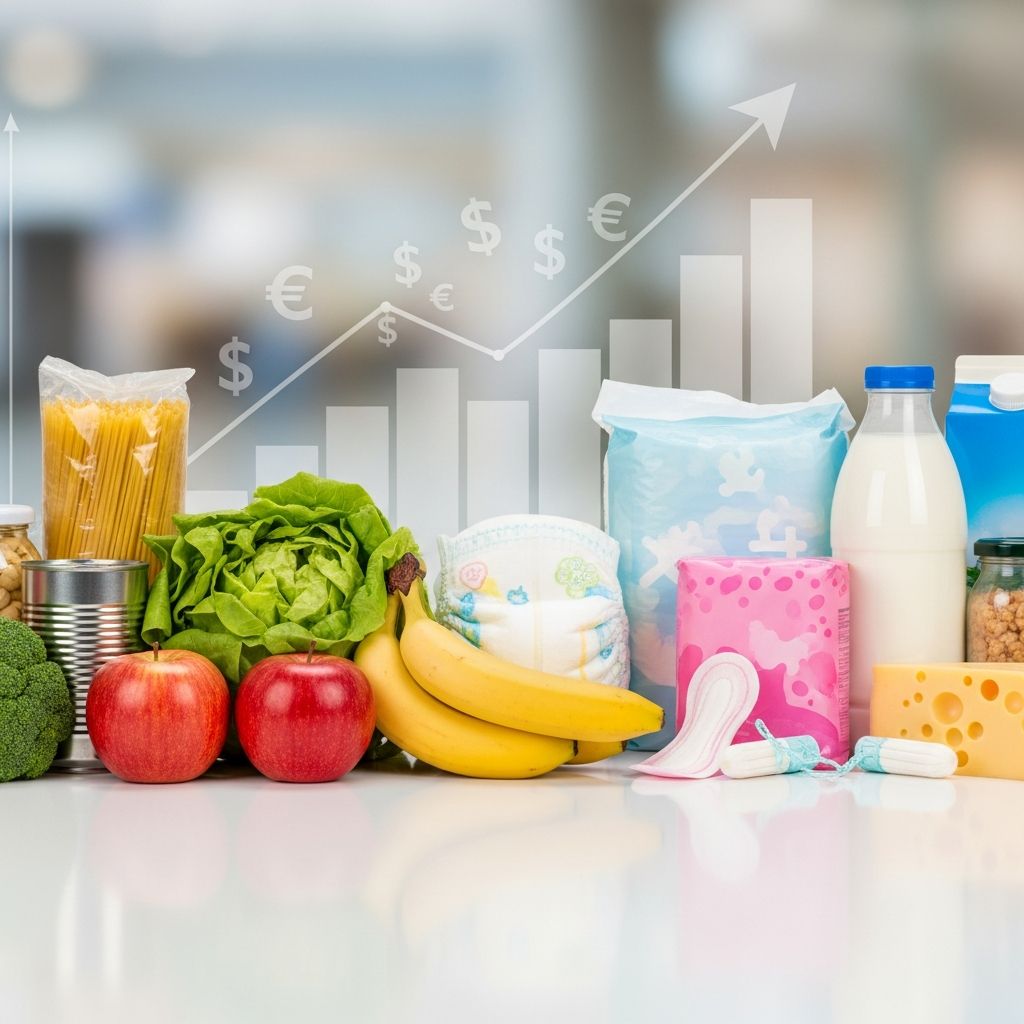
Over half of U.S. states continue to impose sales tax on essential items such as groceries, diapers, and period products. As inflation has surged in recent years, many families have faced increased financial strain, particularly those who must pay additional taxes on these necessities. Advocacy groups and policymakers have pushed for reforms to eliminate or reduce these taxes, but progress has been uneven across the country.
States with Sales Tax on Groceries, Diapers, and Period Products
Most states still charge sales tax on one or more of these essential products. The rates and exemptions vary widely, creating a patchwork of tax policies that can significantly impact household budgets.
Groceries
As of 2025, seven states charge a standard sales tax rate on groceries, with Idaho and Mississippi imposing the highest rate at 6%. Six states apply reduced sales tax rates for food, but Alabama, South Dakota, Hawaii, Idaho, Kansas, and Oklahoma currently impose a standard sales tax rate of 4% on groceries. In contrast, most states exempt groceries from sales tax, recognizing them as essential items.
Diapers
Residents in 23 states pay sales tax on diapers, with rates ranging from 4% to 7%. Mississippi and Tennessee charge the highest base sales taxes on diapers at 7%. In 19 states, local taxes on diapers can be even higher, reaching up to 11% in Oklahoma and 10.9% in Missouri. Washington, Arizona, South Carolina, Kansas, Tennessee, and Alabama allow local taxes on diapers to go as high as 9% to 10%.
Period Products
Period products are taxed in 21 states, with Indiana, Tennessee, and Mississippi charging the highest “tampon tax” at 7%. According to the Alliance for Period Supplies, many states tax period products as luxury items, similar to makeup and electronics. The average cost of period products is about $20 per cycle, making the tax a significant burden for many women.
Recent Legislative Changes
In recent years, several states have taken steps to eliminate or reduce sales taxes on essential products. Since 2021, seven states have exempted diapers from sales tax or lowered the rate. North Dakota ended its diaper tax on June 30, 2023. Advocacy groups like the National Diaper Bank Network are supporting proposals to end diaper taxes in several other states, including Alabama, Tennessee, Kansas, South Carolina, Missouri, Georgia, and South Carolina.
Ten states have passed laws or amended their tax codes to reduce or eliminate taxes on period products, and 11 more are considering legislation to do the same this year. In June 2023, Nevada passed a bill to exempt diapers from sales tax, and Texas did the same for both period products and diapers. Nevada residents voted on the exemption in a ballot measure in November 2024, and the diaper tax officially ended on January 1, 2025. Texas’ exemptions went into effect on September 1, 2023.
For groceries, Kansas, Virginia, Illinois, Idaho, and Tennessee either eliminated or reduced sales taxes on groceries in 2023. Oklahoma, Hawaii, Missouri, Utah, Alabama, and Kansas are either advancing legislation or considering proposals to reduce or eliminate grocery taxes.
Impact on Families
These taxes are regressive and disproportionately impact low-wage families and those living in poverty, as they pay a higher share of their income in taxes. According to the National Diaper Bank Network, about one in three U.S. families cannot afford enough diapers, with a month’s worth of diapers costing $70 to $80 per baby. Reducing the sales tax on diapers can help families buy more diapers for the same amount of money, improving hygiene and reducing financial stress.
State-by-State Overview
| State | Groceries | Diapers | Period Products |
|---|---|---|---|
| Alabama | 4% | Temporary exemption (2025-2028) | 7% |
| Idaho | 6% | 7% | 7% |
| Mississippi | 6% | 7% | 7% |
| Tennessee | 4% | 7% | 7% |
| Nevada | Exempt | Exempt | Exempt |
| Texas | Exempt | Exempt | Exempt |
| Ohio | Exempt | Exempt | Exempt |
| Virginia | Exempt | Exempt | Exempt |
| Indiana | Exempt | Exempt | 7% |
| New York | Exempt | Exempt | Exempt |
Frequently Asked Questions (FAQs)
Q: Why do some states still tax groceries, diapers, and period products?
A: Some states continue to tax these items because they are classified as non-essential or luxury goods, despite their necessity for daily life. The tax revenue helps fund state budgets, but it disproportionately affects low-income families.
Q: How much can families save by eliminating these taxes?
A: Families can save a significant amount. For example, eliminating the diaper tax can save an adult who uses four or five diapers a day about $18 a month, according to a clinic analysis.
Q: What are the main arguments for eliminating these taxes?
A: The main arguments include reducing financial strain on low-income families, improving access to essential items, and recognizing the necessity of these products for daily life.
Q: Are there any states that have completely eliminated sales tax on all three items?
A: Yes, states like Nevada, Texas, Ohio, Virginia, Indiana, and New York have eliminated sales tax on groceries, diapers, and period products.
References
- States That Charge Sales Tax on Groceries, Diapers and More — Money.com. 2023-09-13. https://money.com/states-sales-tax-groceries-diapers-period-products/
- Diaper Tax — National Diaper Bank Network. 2025-07-11. https://nationaldiaperbanknetwork.org/diaper-tax/
- Sales Tax Exemptions for Diapers and Menstrual Products — California Legislative Analyst’s Office. 2019-05-12. https://lao.ca.gov/Publications/Report/4040
Similar Articles








Read full bio of Sneha Tete