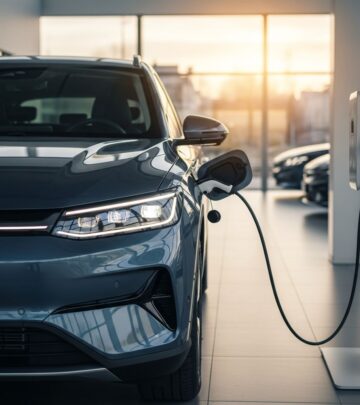
States Banning Gas-Powered Cars: The EV Revolution
Discover which U.S. states are phasing out gas-powered vehicles and transitioning to zero-emission transportation.
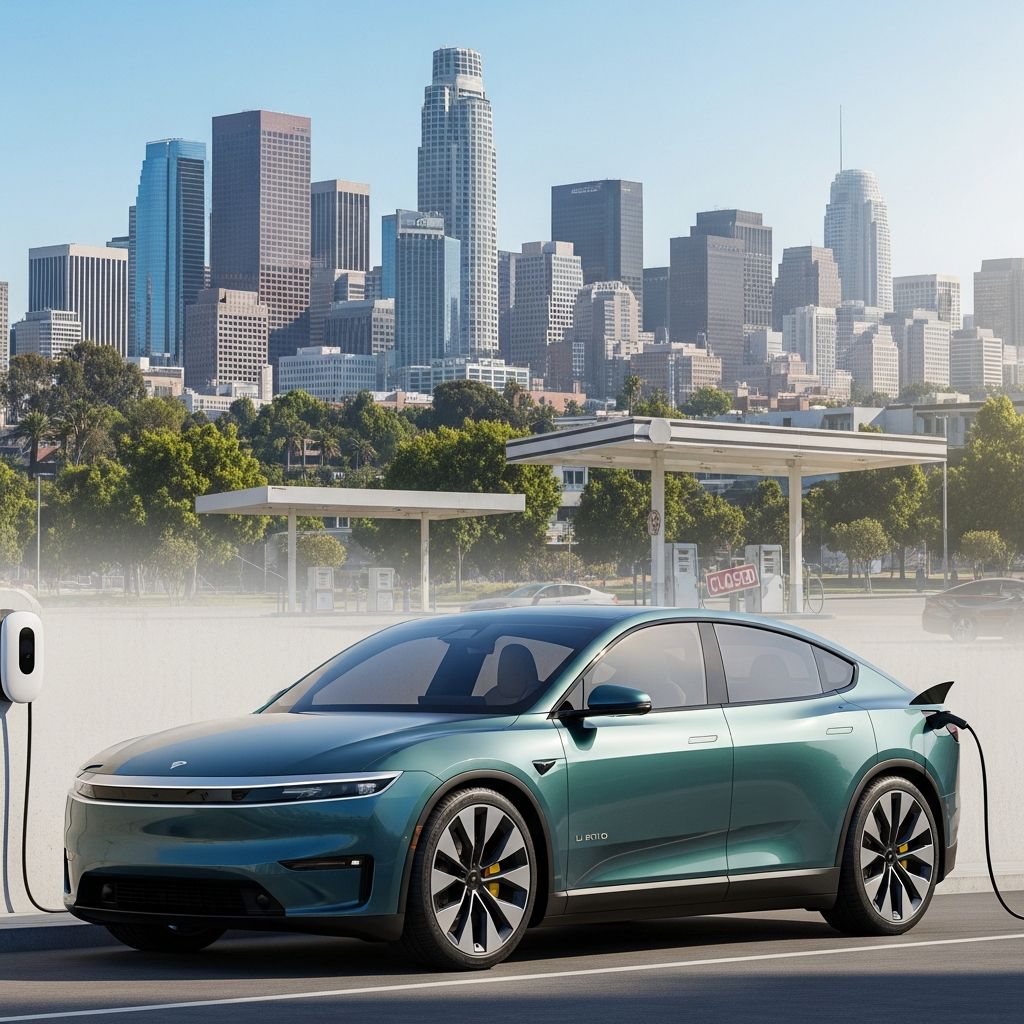
States Banning Gas-Powered Cars: The EV Revolution Underway
The United States is experiencing a dramatic shift in transportation policy as states across the country move to phase out the sale of new gasoline-powered vehicles. What began as California’s ambitious climate initiative has evolved into a nationwide movement, with multiple states adopting or planning similar regulations. This transition represents one of the most significant policy shifts in automotive history, driven by climate concerns, air quality improvements, and technological advancement in electric vehicle technology.
California Leads the Way
California stands at the forefront of the gas vehicle ban movement. In September 2020, Governor Gavin Newsom issued an executive order requiring that by 2035, all new passenger vehicles sold in California must be zero-emission vehicles. This landmark decision positions California as a leader in climate action, addressing the fact that transportation currently accounts for more than 50 percent of the state’s greenhouse gas emissions. The California Air Resources Board finalized regulations in 2022 under the Advanced Clean Cars II (ACC II) program, which mandates that 100 percent of in-state sales of new passenger cars and trucks achieve zero-emission status by 2035. This regulation would achieve more than a 35 percent reduction in greenhouse gas emissions and an 80 percent improvement in oxides of nitrogen emissions from cars statewide.
The Multi-State Adoption Wave
West Coast Alliance
Following California’s lead, Oregon and Washington have adopted equally aggressive timelines. In December 2022, both states voted to align their zero-emission vehicle rules with California’s policy, requiring that new cars sold in Oregon and Washington be emissions-free starting in 2035. These rules mean an end to the sale of new gas- and diesel-powered trucks, passenger cars, and SUVs up and down the West Coast, with all new vehicles required to be powered by electric batteries, plug-in hybrid electric motors, or fuel cell systems.
Washington has taken an even more aggressive stance. The state enacted legislation setting a target of 2030 for all new cars to be electric—the earliest date in the nation for a state to phase out sales of new gas cars, with comprehensive all-of-government planning to meet this ambitious goal.
Expanding National Movement
The momentum extends far beyond the West Coast. As of 2023, twelve U.S. states have adopted all or part of the Advanced Clean Cars II regulations to phase out the sale of new gasoline-powered vehicles by 2035. These states include Colorado, Delaware, Maryland, Massachusetts, New Jersey, New Mexico, New York, Oregon, Rhode Island, Vermont, Washington, and the District of Columbia.
Maryland Governor Wes Moore announced the state’s plan in March 2023 to phase out sales of new gas-powered cars by 2035, emphasizing that this represents “a major step in the state’s acceleration to improve air quality and combat the effects of climate change.” New Jersey and New Mexico have also joined this growing coalition, with New Mexico Governor Michelle Lujan Grisham announcing that the state will set annual targets for the sale of new zero-emission vehicles. The District of Columbia adopted California’s Vehicle Emission Standards in December 2023.
Understanding the Regulatory Framework
Advanced Clean Cars II (ACC II)
The Advanced Clean Cars II program serves as the foundation for most state-level bans. ACC II requires automakers to sell a rising percentage of electric vehicles, reaching 100 percent by 2035, or face substantial penalties. Vermont, New York, Washington, and Oregon adopted this program in 2022, establishing a standardized approach to vehicle electrification across multiple jurisdictions.
Implementation Timeline
California’s plan begins phasing in with model year 2026 vehicles and becomes progressively more aggressive annually until 100 percent of new car sales meet the state’s definition of a zero-emission vehicle. This gradual approach allows manufacturers and consumers time to adapt to the changing marketplace while maintaining steady progress toward the 2035 goal.
Supporting Infrastructure and Incentives
Charging Station Development
States implementing vehicle bans recognize that supporting infrastructure is essential for success. Oregon has plans to spend $100 million on fast-charging stations for electric vehicles along major roadways, with a focus on serving disadvantaged communities and rural areas over the next five years. This commitment reflects the understanding that widespread EV adoption requires equitable access to charging capabilities across all geographic regions and income levels.
Federal and State Tax Incentives
Financial incentives play a crucial role in accelerating EV adoption. Oregon offers two electric vehicle rebates that can total up to $7,500 for a new electric vehicle. The federal Inflation Reduction Act passed by Congress and signed by President Joe Biden appropriates $369 billion for clean energy and climate action, including federal tax breaks of up to $7,500 for qualifying new electric vehicles and up to $4,000 for used ones for households with low-to-moderate income. When combined, state and federal tax incentives allow certain residents to receive up to $15,000 in rebates for new electric vehicles.
Cost Parity and Economic Considerations
One significant concern raised by critics involves vehicle costs. However, data provides an encouraging outlook. The Oregon Department of Environmental Quality reports that, with the exception of pickup trucks, the cost of electric vehicles will reach parity with internal combustion engine vehicles between 2030 and 2033. After that point, electric vehicles are projected to cost less than internal-combustion engine vehicles. Pickup trucks would not reach price parity until after 2035. This economic trajectory suggests that the transition to electric vehicles will become increasingly affordable for consumers over time.
Environmental and Health Benefits
The rationale behind these vehicle bans extends beyond climate change. Oregon’s transportation sector accounts for 40 percent of total greenhouse gas emissions—the largest single source in the state. The zero-emissions vehicle rule combined with other policy steps helps Oregon address climate change while reducing health risks for communities near major roadways where tailpipe emissions are concentrated. Leah Feldon, Oregon Department of Environmental Quality’s interim director, stated that the commission’s action puts the state in a position to expand charging infrastructure, ensure grid reliability, and incentivize auto manufacturers to send all electric model options to Oregon.
State Progress and Goals
Oregon has set an ambitious goal to have at least 250,000 registered electric vehicles in the state by 2025. While this target represents significant growth, the state had recorded more than 50,000 registered electric vehicles at the time of reporting, demonstrating measurable progress toward electrification. These numbers reflect both the increasing consumer acceptance of electric vehicles and the effectiveness of incentive programs.
Policy Momentum and Future Considerations
Gasoline phaseout policy discussions are ongoing or have partially passed in Minnesota, Nevada, and Pennsylvania, suggesting that the movement toward vehicle electrification will continue expanding. The adoption of similar standards across multiple states creates a unified market signal to automotive manufacturers, encouraging them to accelerate development and production of zero-emission vehicles.
Frequently Asked Questions
Q: What exactly does a gas-powered vehicle ban mean?
A: A gas-powered vehicle ban prohibits the sale of new gasoline or diesel-powered vehicles within a state by a specified date. It does not affect the ownership or operation of existing gas-powered vehicles already in circulation. The ban applies only to new vehicle sales.
Q: Are plug-in hybrids and fuel cell vehicles permitted under these bans?
A: Yes. Zero-emission vehicle regulations permit vehicles powered by electric batteries, plug-in hybrid electric motors, or fuel cell systems. This provides manufacturers and consumers with multiple technology options rather than restricting choices to battery-electric vehicles alone.
Q: What states have adopted gas vehicle bans so far?
A: Twelve states plus the District of Columbia have adopted the Advanced Clean Cars II regulations or similar standards. These include California, Colorado, Delaware, Maryland, Massachusetts, New Jersey, New Mexico, New York, Oregon, Rhode Island, Vermont, Washington, and Washington D.C., with most targeting 2035 for full phase-out, though Washington aims for 2030.
Q: How will these bans affect vehicle prices?
A: Initially, electric vehicles may cost more than traditional gas-powered vehicles. However, projections indicate that electric vehicles will reach price parity with gas vehicles between 2030 and 2033 for most vehicle types, eventually becoming less expensive than comparable gas-powered vehicles.
Q: What financial incentives are available for EV purchases?
A: Federal tax credits of up to $7,500 are available for new electric vehicles, with additional state rebates in participating states. For low-to-moderate income households, federal credits of up to $4,000 apply to used vehicles. Combined state and federal incentives can total up to $15,000 in some cases.
Q: Will there be enough charging infrastructure to support electric vehicles?
A: States implementing vehicle bans are investing significantly in charging infrastructure. For example, Oregon is dedicating $100 million to fast-charging stations along major roadways, with priority given to underserved rural and disadvantaged communities. Federal investments through the Inflation Reduction Act also support nationwide charging network expansion.
Q: What happens to existing gas-powered vehicles after the ban takes effect?
A: Gas-powered vehicles already in use will not be prohibited. Owners may continue driving, maintaining, and selling used gas-powered vehicles. The ban applies only to sales of new vehicles after the effective date.
References
- Oregon, Washington join California in banning gas-powered vehicles 2035 — Oregon Public Broadcasting. 2022-12-20. https://www.opb.org/article/2022/12/20/oregon-washington-ban-gas-powered-vehicles-2035-joining-california/
- Gasoline Vehicle Phaseout Advances Around the World — Coltura. 2023. https://coltura.org/world-gasoline-phaseouts/
- Gas Car Bans & Electric Vehicle Mandates — American Fuel & Petrochemical Manufacturers. https://www.afpm.org/issues/fuels-vehicles/gas-car-bans-electric-vehicle-mandates
- Governor Newsom Announces California Will Phase Out Gasoline-Powered Cars — State of California Official Website. 2020-09-23. https://www.gov.ca.gov/2020/09/23/governor-newsom-announces-california-will-phase-out-gasoline-powered-cars-drastically-reduce-demand-for-fossil-fuel-in-californias-fight-against-climate-change/
Similar Articles








Read full bio of medha deb