Statement Credits: Essential Guide To Using Them
Discover how statement credits lower your credit card balance and boost your rewards strategy effectively.
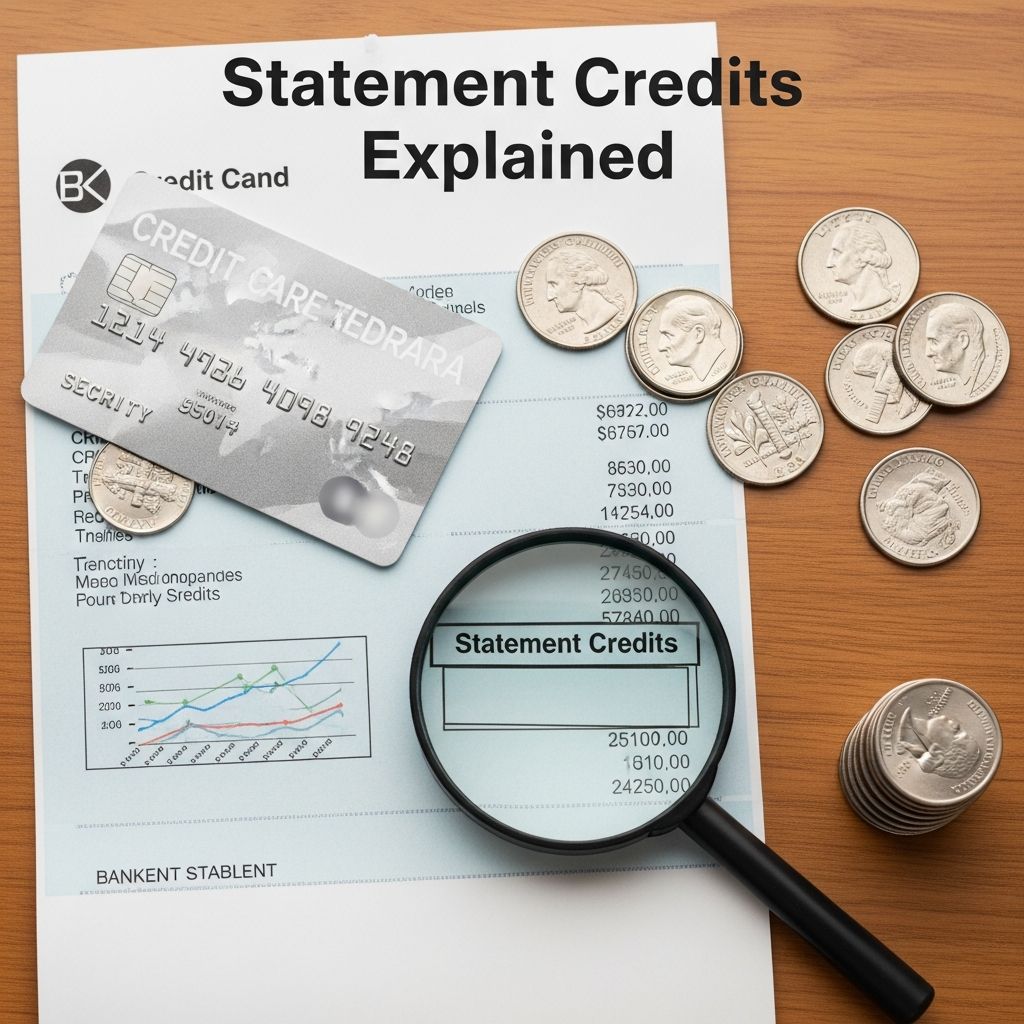
Statement credits represent a valuable feature of credit card accounts, directly lowering the outstanding balance without functioning as formal payments. These credits arise from various activities like refunds or reward redemptions, helping users manage debt more efficiently.
Defining Statement Credits in Credit Card Terms
A statement credit occurs when a credit card issuer applies funds back to your account, effectively decreasing what you owe. Unlike charges that add to your balance, these appear as negative entries on your statement, often highlighted in green or with a minus sign for easy identification. This mechanism provides immediate relief on revolving debt, potentially reducing interest accrual if balances are carried over.
Importantly, while they diminish your total due, statement credits do not satisfy minimum payment requirements. Cardholders must still submit payments separately to maintain good standing and avoid late fees. Understanding this distinction prevents common pitfalls in account management.
Primary Sources of Statement Credits
Multiple pathways lead to earning statement credits, each tied to everyday card usage or issuer perks. Recognizing these sources empowers users to optimize their card benefits strategically.
- Returns and Refunds: When merchandise bought with the card is returned, merchants typically issue credits that reflect on your statement, reversing the original charge.
- Price Adjustments: If an item drops in price post-purchase, many retailers offer the difference as a credit upon request, honoring competitive pricing policies.
- Reward Redemptions: Cash back, points, or miles from rewards programs can convert into credits, providing tangible value from spending habits.
- Sign-Up Bonuses: New accounts often qualify for introductory credits after meeting spending thresholds, serving as incentives for opening cards.
- Disputed Transactions: Successful challenges to unauthorized or erroneous charges result in provisional credits during investigations.
- Special Perks: Premium cards may automatically apply credits for categories like streaming, travel fees, or groceries, aligning with user lifestyles.
How Statement Credits Appear on Your Account
On monthly statements, these credits show under transaction histories or summaries as distinct line items. They reduce the period’s closing balance but require separate payment tracking. Online portals often color-code them positively, aiding quick reviews of account health.
| Transaction Type | Typical Display | Impact on Balance |
|---|---|---|
| Purchase Charge | Positive Amount | Increases Balance |
| Statement Credit | Negative Amount (e.g., -$50.00) | Decreases Balance |
| Payment | Separate Entry | Decreases Balance (Counts Toward Minimum) |
This table illustrates key differences, emphasizing that credits aid balance control but not payment obligations.
Strategic Advantages of Leveraging Statement Credits
Beyond basic balance reduction, statement credits enhance overall financial positioning. They lower credit utilization ratios—a critical factor in credit scoring models comprising about 30% of FICO scores. High utilization signals risk to lenders, so timely credits help maintain scores.
Additionally, redeeming rewards as credits maximizes value, especially for high-earners of cash back (typically 1-5% per purchase). Welcome bonuses can yield hundreds in credits, offsetting annual fees on premium cards. Users matching cards to spending patterns—e.g., travel credits for frequent flyers—amplify savings annually.
Tax Considerations for Statement Credit Rewards
Most statement credits from cash back or purchase-related refunds carry no tax implications, treated as rebates rather than income. However, certain sign-up bonuses without spending requirements may count as taxable interest, per IRS guidelines. Consult tax professionals for specifics, as rules evolve.
Potential Pitfalls and Best Practices
While beneficial, mismanaging credits can lead to issues. Over-reliance without payments risks delinquency. Delays in processing—common for promotional credits—may surprise users at billing time.
To mitigate:
- Review statements monthly for accuracy.
- Track pending credits via app notifications.
- Align redemptions with high-balance periods.
- Choose cards with credits matching expenses.
Proactive monitoring ensures credits deliver maximum utility without complications.
Real-Life Applications and Examples
Consider a $200 purchase returned: a -$200 credit nullifies the charge, preserving budget flexibility. Or, redeeming 5,000 points worth $50 in cash back applies as a credit, directly cutting debt. Premium cards might credit $15 monthly for deliveries, turning routine spends into savings—e.g., netting $10 effective cost on a $25 order.
These scenarios highlight practical value, particularly for disciplined users integrating credits into broader financial plans.
Selecting Cards Optimized for Statement Credits
When shopping cards, prioritize those with robust credit features. Evaluate annual fees against perk value; a $95 fee offset by $200+ credits proves worthwhile. Tools comparing approvals based on credit profiles streamline selection.
Categories like travel, dining, or transit often yield automatic credits, ideal for targeted spenders. Research terms to confirm eligibility and posting timelines.
Frequently Asked Questions
Do statement credits count toward my minimum payment?
No, they reduce balances but do not fulfill payment duties; submit payments separately.
How long do credits take to post?
Typically days for returns, weeks for rewards or bonuses; check issuer policies.
Are statement credits taxable?
Generally not for cash back or refunds, but some bonuses may be; verify with IRS rules.
Can credits exceed my balance?
Yes, excess may apply to future charges or fees per agreement terms.
Where do I find statement credits on my statement?
Under transactions, often as negative amounts or highlighted entries.
Maximizing Credits for Long-Term Financial Health
Integrating statement credits into routines fosters disciplined spending and reward optimization. By pairing high-reward cards with return policies and perks, users can shave significant costs yearly. Regularly auditing accounts ensures no opportunities slip away, turning credits into a cornerstone of savvy credit management.
This approach not only curbs debt but elevates credit profiles, unlocking better rates and limits over time. As financial tools evolve, staying informed positions cardholders ahead.
References
- Understanding Statement Credits — SoFi. 2024. https://www.sofi.com/learn/content/what-is-a-statement-credit/
- What Is a Statement Credit? — Capital One. 2024. https://www.capitalone.com/learn-grow/money-management/statement-credit/
- What Is a Statement Credit? — Experian. 2024. https://www.experian.com/blogs/ask-experian/what-is-statement-credit/
- What is a Statement Credit? — KOHO. 2024. https://www.koho.ca/learn/what-is-a-statement-credit/
- Statement Credit: What It Is & How It Works — Chase Bank. 2024. https://www.chase.com/personal/credit-cards/education/rewards-benefits/what-is-a-statement-credit
- What Is a Statement Credit? — American Express. 2024. https://www.americanexpress.com/en-us/credit-cards/credit-intel/what-is-a-statement-credit/
Similar Articles








Read full bio of Sneha Tete