Statement Credits: 6 Ways To Lower Your Balance
Understand how statement credits work and maximize your credit card rewards.
Managing credit card finances effectively requires understanding the various mechanisms that can reduce your outstanding balance. One of the most valuable features available to cardholders is the statement credit—a financial tool that many people use without fully comprehending how it works or the multiple ways it can benefit them. This comprehensive guide explores the fundamentals of statement credits, their practical applications, and how they fit into your overall credit card strategy.
Defining Statement Credits and Their Core Function
A statement credit is money that a credit card issuer applies directly to your account, effectively reducing the total balance you owe. Unlike a regular payment you make toward your bill, a statement credit appears as a negative transaction on your monthly statement, often displayed in a different color or with a plus sign to distinguish it from standard charges. This distinction is important because while statement credits lower your overall balance, they do not count as payment toward your minimum monthly obligation.
The mechanics of statement credits are straightforward: when eligible circumstances occur, the issuer automatically credits your account, decreasing the amount of money you owe. If the credit exceeds your current balance, many card issuers will apply the excess toward future charges or, in some cases, toward annual fees or other account-related costs.
Primary Sources of Statement Credits
Statement credits originate from various sources, each tied to specific actions or circumstances related to your credit card use. Understanding these sources helps you identify opportunities to reduce your balance and maximize the value of your card membership.
Merchandise Returns and Refunds
One of the most common ways cardholders receive statement credits is through merchandise returns. When you purchase an item using your credit card and subsequently return it, the merchant typically processes a refund by issuing a statement credit to your account. This credit reverses the original charge and appears on your billing statement within a few days to several weeks, depending on the merchant and card issuer’s processing timelines.
Rewards Redemption
Credit cards featuring rewards programs often allow cardholders to redeem accumulated points or cash back in the form of statement credits. Rather than receiving rewards as a separate payment or transfer to a bank account, many cardholders opt to apply their earned rewards directly against their credit card balance. This approach offers immediate financial relief by reducing what you owe to your card issuer.
Welcome Bonuses and Sign-Up Incentives
Many credit card companies attract new customers through welcome bonuses, which may be structured as statement credits. These promotional offerings provide a lump sum credit applied to your account once you meet specified spending requirements. In some cases, the credit may be applied automatically upon account approval, though most require cardholders to complete qualifying purchases within a designated timeframe.
Price Adjustments and Price Matching
If you purchase an item that subsequently goes on sale, certain merchants honor price adjustments by issuing statement credits for the difference between your original purchase price and the reduced sale price. This benefit allows you to receive the advantage of a sale price even after your initial transaction has been completed.
Cardholder Benefits and Perks
Premium credit cards often include automatic statement credits as part of their cardholder benefits. These credits might reimburse specific purchases, such as travel credits, annual subscription services, or application fees for trusted traveler programs like Global Entry or TSA PreCheck. When you make qualifying purchases with your card, the issuer automatically applies the credit to your account.
Disputed Transactions and Chargeback Resolutions
If you dispute a transaction and the card issuer rules in your favor, they may apply a statement credit to your account as part of the resolution. Similarly, if a merchant processes an unauthorized charge that gets reversed through the dispute process, you’ll receive a statement credit.
How Statement Credits Appear on Your Billing Statement
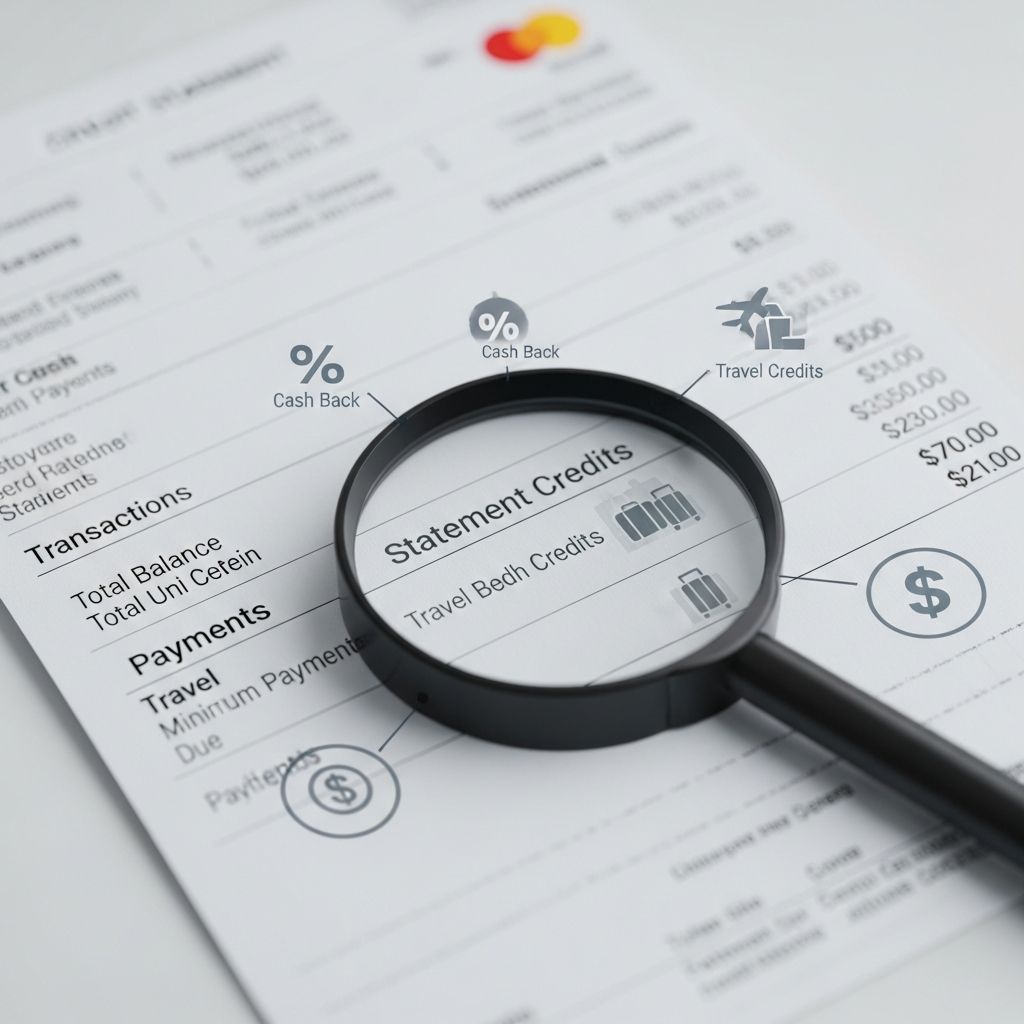
Statement credits appear distinctly on your monthly billing statement to differentiate them from regular charges and payments. Most issuers display them in green text, with a minus sign or negative indicator preceding the dollar amount. They typically appear in your transaction list as a separate line item, making them easy to identify and track.
When reviewing your statement online, you’ll usually find statement credits categorized under account activity or listed alongside other transactions. The exact presentation varies by card issuer, but the fundamental principle remains consistent: the credit reduces your total balance owed.
Statement Credits Versus Related Financial Concepts
Statement Credits vs. Payments
A critical distinction exists between statement credits and actual credit card payments. While both reduce your balance, only payments count toward satisfying your minimum monthly payment obligation. You can receive a substantial statement credit and still be required to make your minimum payment to maintain account good standing and avoid late fees or interest penalties. This distinction prevents cardholders from misinterpreting statement credits as payment fulfillment.
Statement Credits vs. Cash Back Rewards
Although related, statement credits and cash back rewards operate differently. Cash back is a reward earned as a percentage of eligible purchases you make with your card. While you can redeem cash back as a statement credit, cash back rewards don’t automatically reduce your balance the way statement credits do. Instead, you maintain control over how to use your cash back—whether to convert it to a statement credit, request a separate payment, or use other redemption options your card offers.
Impact on Credit Utilization and Credit Score
Statement credits directly affect your credit utilization ratio, which measures the percentage of available credit you’re using. When a statement credit reduces your balance, your utilization ratio improves, potentially boosting your credit score over time. Conversely, maintaining high balances between billing periods increases your utilization ratio, which can negatively impact your creditworthiness.
This relationship makes statement credits particularly valuable for credit building strategies. By actively earning and applying statement credits through returns, rewards redemptions, and promotional bonuses, you can reduce your overall debt and improve the metrics that credit scoring models evaluate.
Tax Considerations for Statement Credits
In most circumstances, statement credits are not taxable income. Returns, price adjustments, and regular rewards redemptions represent adjustments to your original transactions rather than new income. However, certain statement credits—particularly those from sign-up bonuses without required spending minimums—may have tax implications. If you receive a substantial welcome bonus that doesn’t require spending, the card issuer might issue a 1099 form, requiring you to report the bonus as taxable income. Consulting with a tax professional can help clarify your specific situation.
Maximizing Statement Credit Value
To fully leverage statement credits in your financial strategy, consider these approaches:
- Actively pursue rewards on everyday purchases and strategically redeem them as statement credits to manage your balance
- Monitor promotional offers and welcome bonuses from cards aligned with your spending patterns
- Request price adjustments when items you’ve purchased go on sale
- Regularly review your statement for potential disputed transactions that might warrant investigation
- Select credit cards offering automatic statement credits for benefits you’ll actually utilize
- Time your redemptions strategically to lower your balance before billing periods close
Frequently Asked Questions
Does a statement credit count as a payment toward my credit card bill?
No, statement credits do not count as payments toward your minimum monthly obligation. While they reduce your overall balance, you must still make your minimum payment to maintain good account standing and avoid penalties.
How long does it take for a statement credit to appear on my account?
Timeline varies depending on the source. Merchandise returns typically appear within a few days to several weeks. Promotional credits may take longer, particularly if they’re tied to spending requirements. Rewards redemptions usually process within one to two billing cycles.
What happens if my statement credit exceeds my current balance?
Most card issuers apply excess credits toward future charges on your account. In some cases, they may be applied toward annual fees or other account fees. Check your cardholder agreement or contact your issuer for specific policies.
Can I receive a statement credit as a separate payment instead?
This depends on the type of credit and your card issuer’s policies. Some credits must be applied to your account, while others—particularly cash back rewards—may offer redemption options. Review your card’s terms or contact customer service for available options.
Are statement credits ever taxable?
Most statement credits are not taxable, as they represent adjustments to original transactions. However, some welcome bonuses without spending requirements may be taxable. Consult a tax professional if you’re unsure about your specific situation.
Strategic Financial Management Through Statement Credits
Statement credits represent a valuable feature of modern credit card offerings. By understanding how they work, recognizing the multiple ways to earn them, and strategically applying them to reduce your balance, you can enhance your financial position and maximize the benefits of your credit card relationships. Whether through rewards redemption, promotional bonuses, or merchandise returns, statement credits provide tangible financial advantages that merit active attention and thoughtful utilization in your broader credit card strategy.
References
- Understanding Statement Credits — SoFi. 2025. https://www.sofi.com/learn/content/what-is-a-statement-credit/
- What Is a Statement Credit? — Capital One. 2025. https://www.capitalone.com/learn-grow/money-management/statement-credit/
- What Is a Statement Credit? — Experian. 2025. https://www.experian.com/blogs/ask-experian/what-is-statement-credit/
- Statement Credit: What It Is & How It Works — Chase Bank. 2025. https://www.chase.com/personal/credit-cards/education/rewards-benefits/what-is-a-statement-credit
- What is statement credit? — Intuit Credit Karma. 2025. https://www.creditkarma.com/credit-cards/i/what-is-statement-credit
- What Is a Statement Credit? — American Express. 2025. https://www.americanexpress.com/en-us/credit-cards/credit-intel/what-is-a-statement-credit/
Similar Articles








Read full bio of medha deb