Statement Balance Vs Minimum Payment: What You Need To Know
Discover the key differences between statement balance and minimum payment to avoid interest charges and boost your credit health effectively.
Navigating credit card statements requires understanding core terms like
statement balance
andminimum payment
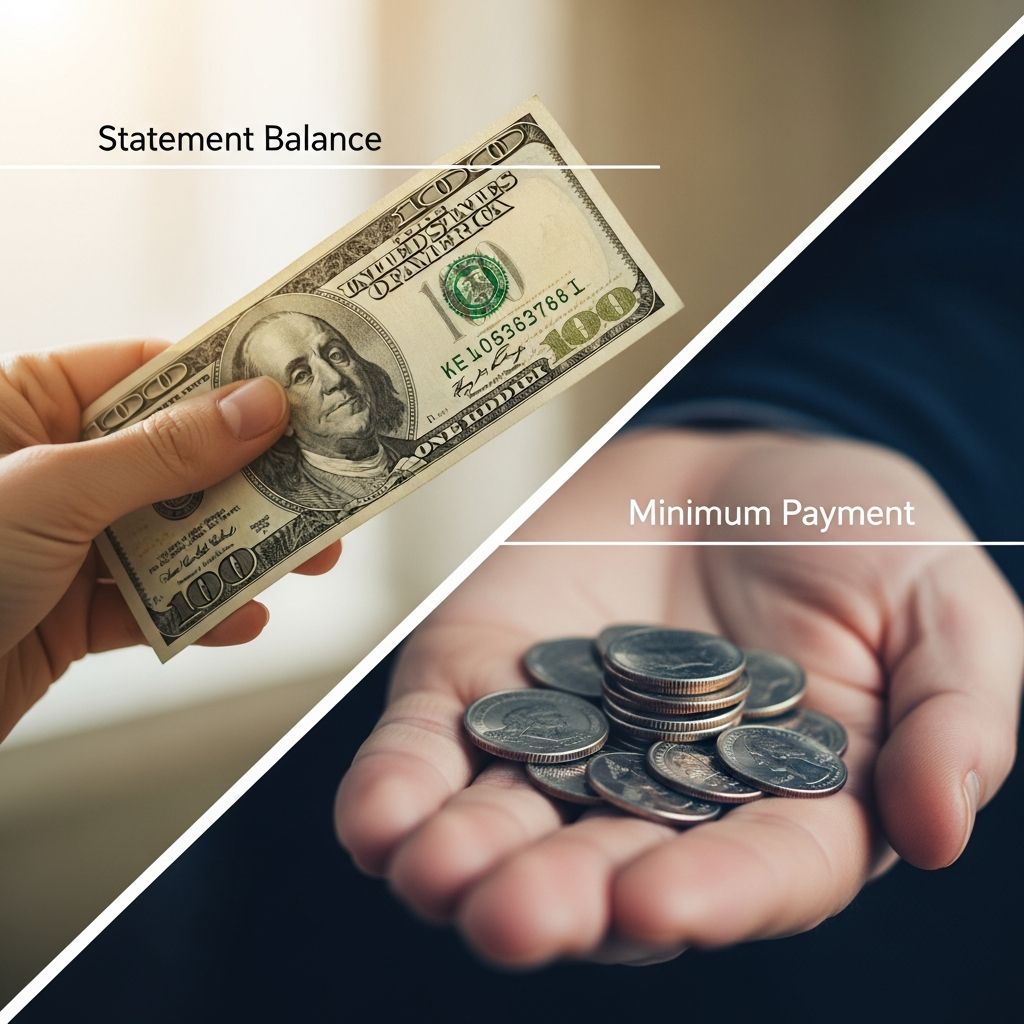
. The statement balance represents the total owed at the end of your billing cycle, while the minimum payment is the smallest amount needed to avoid penalties. Choosing between them affects interest costs, credit scores, and long-term financial health.Defining Core Credit Card Payment Terms
Credit card issuers provide multiple payment options on monthly statements to help users manage balances. Grasping these distinctions empowers better decision-making.
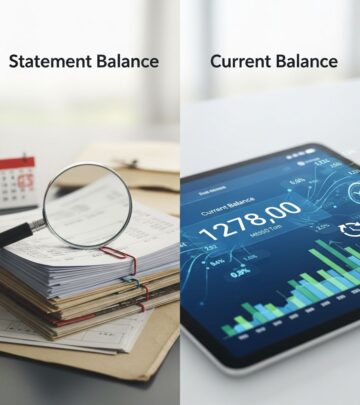
- Statement Balance: This is the full amount charged during the billing period, including purchases, fees, and any prior unpaid balances, calculated as of the statement closing date.
- Minimum Payment: A calculated figure, often 1-4% of the balance or a flat fee like $25-$35, whichever is higher, designed to keep the account in good standing.
- Current Balance: Reflects real-time activity, incorporating post-statement transactions, interest, and adjustments.
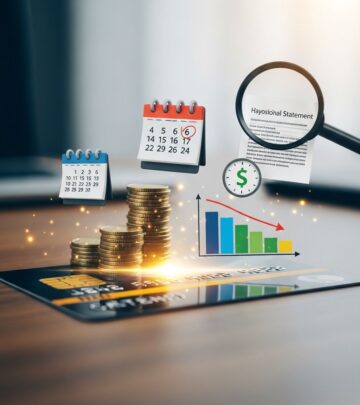
These terms appear prominently on statements, with due dates typically 21-25 days after the closing date, offering a grace period for full payment without interest.
How Minimum Payments Are Calculated
Issuers determine minimum payments using formulas outlined in card agreements. Common methods include a percentage of the balance plus interest and fees, or a fixed minimum.
| Balance Level | Typical Calculation | Example ($1,000 Balance) |
|---|---|---|
| Low (< $100) | Full balance | $75 (full) |
| Medium ($500-$2,000) | 2-4% of balance + fees | $30 (3%) |
| High (> $2,000) | 1-2% + interest/fees | $50 (incl. fees) |
For a $1,000 statement balance at 2%, the minimum might be $20, but issuers often enforce $25 minimums. Check your statement or terms for exact formulas.
Risks of Sticking to Minimum Payments Only
While minimum payments prevent late fees (up to $40) and negative credit reporting, they come with hidden costs. Most of the payment covers interest, leaving principal reduction minimal.
- Prolonged Debt: A $5,000 balance at 20% APR with $100 minimum payments could take over 30 years to clear, accruing $16,000+ in interest.
- High Credit Utilization: Balances linger above 30% of limits, hurting FICO scores (utilization is 30% of score).
- Interest Accrual: Unpaid portions compound daily, increasing future minimums.
According to credit bureaus, consistent minimum-only payments maintain payment history (35% of score) but erode utilization and increase costs.
Benefits of Paying the Full Statement Balance
Clearing the statement balance by the due date leverages the grace period, halting interest on new purchases. This strategy aligns with best practices for debt avoidance.
Key advantages include:
- Zero interest on cycle purchases, saving hundreds annually.
- Lower utilization ratios, as balances reset to zero before new charges report.
- Preserved buying power without revolving debt.
For example, on a $2,000 monthly spend at 18% APR, paying full avoids $30/month interest, totaling $360 yearly savings.
Current Balance: A Third Payment Option
Beyond statement and minimum, the current balance offers aggressive payoff. It includes everything post-statement: new charges, pending interest, refunds.
Paying this:
- Optimizes utilization by clearing running totals before reporting.
- Prevents grace period loss from partial statement payments.
- Ideal for high spenders monitoring real-time debt.
Note: Unlike statement balance, no fixed due date; pay anytime via app or phone.
Impact on Credit Scores and Utilization Ratios
Credit utilization (credit used vs. limits) influences 30% of FICO scores. Minimum payments keep balances high (e.g., 50% utilization), dropping scores 50-100 points potentially.
Paying statement or current balances drops utilization under 10%, boosting scores. On-time full payments also build positive history.
| Payment Strategy | Utilization Effect | Score Impact |
|---|---|---|
| Minimum Only | High (30%+) | Neutral/Negative |
| Statement Balance | Low (0-10%) | Positive |
| Current Balance | Lowest | Strongly Positive |
Practical Strategies to Pay More Than Minimum
Budgeting for higher payments accelerates freedom from debt cycles. Start with these steps:
- Automate Payments: Set statement balance auto-pay to ensure full clearance.
- Balance Transfers: Move debt to 0% APR cards for 12-21 months, directing payments to principal.
- Extra Principal Attacks: Add $50-100 monthly beyond minimum to halve payoff time.
- Track Cycles: Pay mid-cycle to lower reported balances.
Tools like issuer apps show projected minimums, aiding planning.
Common Myths About Credit Card Payments
Misconceptions persist:
- Myth: Minimum covers principal fully. Reality: 80%+ often interest on revolved debt.
- Myth: Grace period always applies. Reality: Lost after first partial payment.
- Myth: Small balances don’t accrue interest. Reality: Any unpaid rolls over.
Verify via statements; issuers like Chase detail formulas.
Real-World Examples and Scenarios
Scenario 1: $800 statement, $25 min (3%). Minimum path: 2+ years, $200 interest. Full pay: Zero interest.
Scenario 2: Post-statement $200 spend. Current balance $1,000. Paying it pre-close optimizes utilization.
High earners benefit most: Average U.S. household carries $6,000+ revolving debt; full payments save $1,000/year.
Frequently Asked Questions (FAQs)
What happens if I miss the minimum payment?
Late fees ($30-40), penalty APR (up to 29.99%), 30-day delinquency on reports, score drop 100+ points.
Does paying statement balance build credit faster?
Yes, via low utilization and perfect history.
Can minimum payments increase over time?
Yes, as balances or interest rise.
Is current balance always higher than statement?
Usually, due to new activity.
How to lower my minimum payment?
Reduce balance via extra payments or transfers.
Tools and Resources for Better Management
Leverage free calculators from bureaus (Experian, Equifax) to model payoff timelines. Apps track utilization live. Review terms annually for changes.
For debt overload, nonprofit counseling via NFCC.org offers plans averaging 46-month payoffs[relevant official source].
Long-Term Financial Planning with Credit Cards
Incorporate payments into budgets: Allocate 10-20% income to debt. Build emergency funds to avoid reliance on cards. Aim for under 10% utilization long-term for top scores (800+).
Shifting from minimums fosters wealth-building: Savings compound, enabling investments over interest payments.
References
- Statement Balance vs Minimum Payment — Chase. 2023. https://www.chase.com/personal/credit-cards/education/basics/statement-balance-vs-minimum-payment
- What Is a Credit Card Minimum Payment? — Experian. 2024-01-15. https://www.experian.com/blogs/ask-experian/what-is-credit-card-minimum-payment/
- Statement Balance vs. Current Balance: What’s the Difference? — Citi. 2023. https://www.citi.com/credit-cards/understanding-credit-cards/statement-balance-vs-current-balance
- Consumer Credit Card Market Report — Consumer Financial Protection Bureau (CFPB). 2024-09. https://www.consumerfinance.gov/data-research/credit-card-data/
- FICO Score Factors — myFICO (Fair Isaac Corporation). 2024. https://www.myfico.com/credit-education/whats-in-your-credit-score
Similar Articles








Read full bio of Sneha Tete