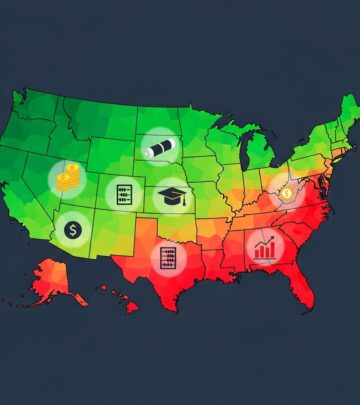
State Rankings by Education Quality 2025
Comprehensive guide to the best and worst education systems across US states in 2025.

Understanding State Education Rankings in 2025
When evaluating where to live or considering educational opportunities for children, understanding how states rank in terms of educational quality becomes crucial. State education rankings provide comprehensive insights into public school systems, student achievement, teacher quality, and overall educational infrastructure across the United States. These rankings help parents, educators, and policymakers identify the strongest educational systems and areas that require improvement. The 2025 education rankings reveal significant variations in academic performance, resource allocation, and student outcomes across different states.
Methodology Behind State Education Rankings
State education rankings are compiled using multiple data points and metrics that paint a comprehensive picture of educational quality. Organizations like WalletHub, World Population Review, and the National Education Association analyze various factors to determine how states stack up against one another. These metrics typically include standardized test scores in mathematics and reading, Advanced Placement (AP) exam success rates, graduation rates, college readiness indicators, pupil-to-teacher ratios, school safety measures, and per-pupil spending. By examining these diverse factors, ranking organizations provide a more nuanced view of educational quality beyond simple test score comparisons. The methodology ensures that states are evaluated on multiple dimensions, recognizing that educational excellence encompasses academic achievement, student support, teacher quality, and safe learning environments.
Top-Performing States in Education 2025
The 2025 education rankings reveal a clear hierarchy of top-performing states that have established themselves as leaders in public education. These states consistently demonstrate high academic achievement, strong teacher compensation, and comprehensive support systems for student success.
Massachusetts: The National Leader
Massachusetts continues to reign as the nation’s best state for public education in 2025. The Bay State has earned its position through exceptional performance across multiple educational metrics. Massachusetts boasts the highest mathematics and reading test scores in the United States and demonstrates outstanding performance on Advanced Placement examinations. With 48.8% of eligible schools ranking in the top 25% of high school rankings, Massachusetts has established a strong educational foundation across diverse communities. The state also maintains one of the lowest bullying incidence rates in the country and is recognized as one of the best states for teachers, offering competitive compensation and professional development opportunities.
Connecticut: Strong Second Place
Connecticut ranks second nationally in public school quality, showcasing consistent excellence across educational metrics. The state’s students achieve the highest median ACT score of 25.5 and rank third in reading test scores. Connecticut’s commitment to educational excellence is reflected in its per-pupil spending of approximately $18,958, among the highest in the nation. Teachers in Connecticut enjoy some of the best working conditions and compensation packages in the country, with average annual salaries reaching $73,113. The state’s small class sizes and comprehensive teacher support systems contribute to its strong educational outcomes.
New Jersey: Top Academic Performers
New Jersey ranks third in the nation for public education, combining high elementary and middle school performance with exceptional Advanced Placement exam success. The state demonstrates strong digital learning initiatives and maintains rigorous academic standards. New Jersey’s commitment to educational innovation and resource investment positions it among the nation’s educational leaders, offering students diverse pathways to academic and professional success.
Top 10 States Ranked by Education Quality
The comprehensive 2025 rankings identify ten states that have distinguished themselves through superior educational systems and consistent academic achievement:
| Rank | State | Key Strengths |
|---|---|---|
| 1 | Massachusetts | Highest test scores, AP success, school safety, teacher quality |
| 2 | Connecticut | Highest ACT scores, strong per-pupil spending, excellent teacher compensation |
| 3 | New Jersey | High reading/math scores, AP success, digital learning |
| 4 | Virginia | Consistent quality improvement, comprehensive curriculum support |
| 5 | New Hampshire | High educational quality, strong teacher-student engagement |
| 6 | Wisconsin | Balanced academic achievement, commitment to student safety |
| 7 | Rhode Island | Urban school reform initiatives, equitable resource distribution |
| 8 | Indiana | Solid academic foundations, career readiness programs |
| 9 | Maryland | Higher education preparation, technology integration, rigorous curricula |
| 10 | New York | Strong academic indicators, urban district improvements, diverse opportunities |
Important Factors in Education Rankings
Multiple critical factors contribute to how states are ranked in education systems, each playing an important role in determining overall quality and educational effectiveness.
Standardized Test Performance
Standardized test scores in mathematics and reading form a fundamental component of state education rankings. These assessments provide measurable indicators of student achievement and help identify areas where educational support may be needed. States with consistently high test scores across diverse student populations demonstrate effective teaching methodologies and comprehensive curricula.
Advanced Placement Success
The success rate of students taking Advanced Placement examinations serves as an important indicator of college readiness and advanced academic opportunity. States that offer robust AP programs and demonstrate high exam success rates enable students to earn college credit in high school, potentially reducing college costs and accelerating degree completion.
Teacher Quality and Compensation
Teacher recruitment and retention directly impact educational quality. States that offer competitive compensation, comprehensive benefits, and professional development opportunities attract and maintain high-quality educators. The best-performing states typically invest significantly in teacher support, recognizing that classroom instruction quality fundamentally shapes student outcomes.
School Safety and Student Support
Safe, supportive learning environments are essential for academic success. Rankings consider bullying incidence rates, school security measures, and availability of counseling and mental health services. States that prioritize student well-being and maintain safe schools create conditions conducive to learning and development.
Per-Pupil Spending
Educational funding per student provides resources for classroom instruction, facilities, technology, and support services. States with higher per-pupil spending generally have greater capacity to provide comprehensive educational services, though spending alone does not guarantee quality outcomes.
Challenges for Lower-Ranking States
While top-ranking states demonstrate educational excellence, lower-ranking states face significant challenges in improving educational quality and student outcomes. States ranking below the top ten often struggle with insufficient funding, teacher shortages, outdated facilities, and student achievement gaps. These states frequently have lower standardized test scores, reduced access to advanced educational programs, and more limited resources for student support services. Addressing these challenges requires sustained investment, policy innovation, and commitment to educational equity.
State Education Funding and Resources
Education funding varies dramatically across states, influencing the resources available for students and schools. Public schools nationally received $946.5 billion in funding in 2023, with significant variation by state. States like New York lead in per-student spending at $36,976, followed by New Jersey, reflecting these states’ commitment to education. However, states with lower per-pupil funding face constraints in providing comprehensive educational services, updating facilities, and attracting qualified teachers.
The Role of Educational Innovation
Leading states recognize that educational excellence requires continuous innovation and adaptation to student needs. Rhode Island demonstrates this through significant strides in urban school reform and equitable resource distribution. Virginia focuses on strategic curriculum development and student support systems. New York has implemented effective improvements in urban school districts, expanding educational opportunities. These innovations include technology integration, updated pedagogical approaches, and programs designed to support diverse learners.
College Readiness and Career Preparation
State education rankings increasingly emphasize college and career readiness, recognizing that K-12 education must prepare students for post-secondary success. States like Indiana and Maryland have developed strong pathways connecting high school education to college preparation and career development. Advanced Placement programs, dual enrollment opportunities, vocational training, and career guidance services enable students to transition successfully to higher education or directly to careers.
Equity and Access in Education
Educational excellence must extend across all communities and student populations. Leading states recognize that demographic factors should not determine educational outcomes. Texas demonstrates this principle, with 43% of high-poverty campuses rated A or B, proving that socioeconomic status need not limit academic achievement. Effective states implement policies ensuring equitable resource distribution, culturally responsive teaching, and targeted support for disadvantaged students.
Frequently Asked Questions About State Education Rankings
Q: What makes Massachusetts the top state for education?
A: Massachusetts leads in K-12 mathematics and reading test scores, demonstrates exceptional Advanced Placement exam success, maintains high school safety standards, and is recognized as an excellent state for teachers. The combination of high academic achievement, student support, and teacher quality positions Massachusetts at the top of national rankings.
Q: How are state education rankings determined?
A: Rankings are calculated using multiple metrics including standardized test scores, Advanced Placement success rates, graduation rates, pupil-to-teacher ratios, school safety measures, and per-pupil spending. This multifaceted approach provides comprehensive evaluation of educational system quality.
Q: Does higher per-pupil spending guarantee better education?
A: While per-pupil spending provides resources for quality education, it does not automatically guarantee superior outcomes. Effective resource allocation, strong leadership, quality teaching, and community engagement also critically influence educational quality and student achievement.
Q: Which states have the lowest education rankings and why?
A: States ranking lower typically face challenges including lower per-pupil funding, teacher shortages, lower standardized test scores, and limited access to advanced programs. Historical underfunding and resource constraints have contributed to these disparities, though many states are implementing reforms to improve educational quality.
Q: What can lower-ranking states do to improve their education systems?
A: Lower-ranking states can improve by increasing education funding, implementing teacher recruitment and retention programs, modernizing school facilities and technology, adopting evidence-based instructional practices, and ensuring equitable resource distribution across all communities.
Q: How do teacher salaries impact state education rankings?
A: Competitive teacher compensation attracts and retains quality educators, directly impacting instructional quality and student outcomes. Top-ranking states like Connecticut and Massachusetts offer high average teacher salaries, enabling them to recruit experienced, qualified educators.
Q: Are state education rankings stable year to year?
A: While top-performing states generally maintain high rankings, some fluctuation occurs as states implement improvements. Rankings reflect current performance data, and sustained commitment to educational excellence is necessary to maintain or improve standing.
Conclusion
State education rankings provide valuable insights into the quality of public school systems across the United States. The 2025 rankings demonstrate that Massachusetts, Connecticut, and New Jersey have established themselves as educational leaders through consistent academic achievement, strong teacher support, and comprehensive student services. However, educational excellence is not limited to top-ranking states, and many states demonstrate significant strengths in specific areas. Understanding these rankings helps inform decision-making about educational quality, resource allocation, and policy priorities. As states continue working to improve educational outcomes for all students, sustained investment in quality teaching, equitable resource distribution, and innovative approaches will remain essential for advancing educational excellence across the nation.
References
- US Public School Rankings 2025: List of 10 Best US States for Public Education — Jagran Josh. 2025. https://www.jagranjosh.com/us/explainers/list-of-best-us-states-for-public-education-2025
- Public School Rankings by State 2025 — World Population Review. 2025. https://worldpopulationreview.com/state-rankings/public-school-rankings-by-state
- Rankings of the States 2024 and Estimates of School Statistics 2025 — National Education Association. April 2025. https://www.nea.org/sites/default/files/2025-04/2025_rankings_and_estimates_report.pdf
- K-12 Education Spending Spotlight 2025: Annual public school funding analysis — Reason Foundation. 2025. https://reason.org/k12-ed-spending/2025-spotlight/
- TEA Releases 2025 A–F Accountability Ratings; 2024 Ratings Now Also Available — Texas Education Agency. 2025. https://tea.texas.gov/about-tea/news-and-multimedia/news-releases/news-2025/tea-releases-2025-a-f-accountability-ratings-2024-ratings-now-also-available
Similar Articles








Read full bio of Sneha Tete