State-Owned Enterprise (SOE): Definition, Role, and Governance
Understanding state-owned enterprises: Structure, governance, and economic impact.
Understanding State-Owned Enterprises (SOEs)
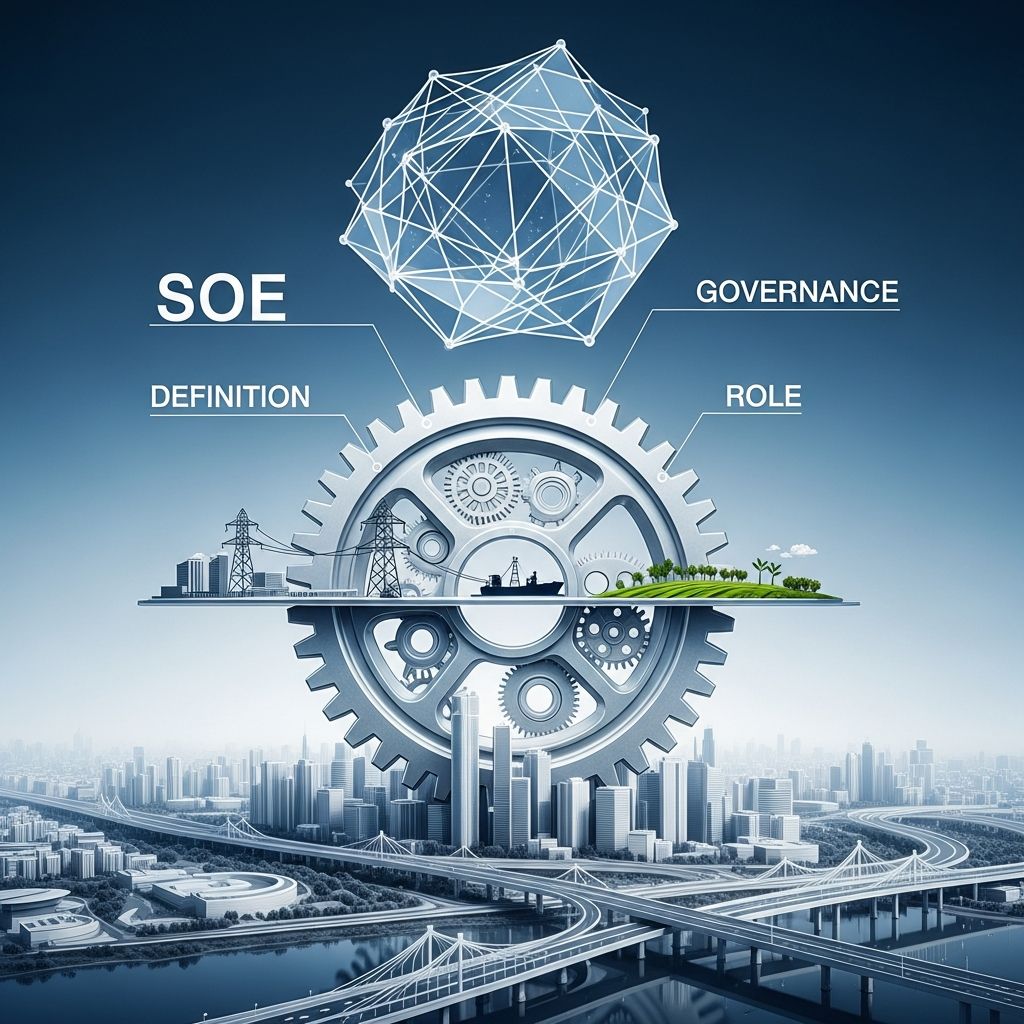
A state-owned enterprise (SOE) is a legal entity established by a government to conduct commercial activities on its behalf. These organizations operate as separate entities from the government itself, yet remain under government ownership or control, typically through direct ownership stakes or regulatory authority. SOEs represent a significant component of many national economies, particularly in developing and emerging markets where they play crucial roles in strategic industries and economic development.
SOEs exist across diverse sectors including energy, transportation, telecommunications, utilities, and financial services. They combine elements of both public and private sector characteristics, operating with commercial objectives while maintaining accountability to government stakeholders and the public interest. The structure and governance of SOEs vary considerably across different countries and regions, reflecting unique economic, political, and social circumstances.
Key Characteristics of State-Owned Enterprises
SOEs possess several defining features that distinguish them from both purely private companies and traditional government agencies:
Government Ownership: The state maintains full or partial ownership of the enterprise, either directly or through designated entities responsible for managing state assets. This ownership provides governments with control over strategic decisions and policy directions.
Commercial Operations: Unlike government agencies focused on administration and regulation, SOEs engage in commercial activities with the objective of generating revenue and achieving financial sustainability. They operate in competitive or quasi-competitive markets, producing goods and services for profit.
Legal Separation: SOEs maintain legal independence from the government, allowing them to enter contracts, own property, and conduct business in their own names. This separation enables more efficient operations and clearer accountability structures.
Public Interest Objectives: Beyond profit generation, SOEs often serve public policy goals such as universal service provision, regional development, employment creation, and social welfare objectives. These dual mandates sometimes create tension between commercial efficiency and public service obligations.
Accountability Frameworks: SOEs operate under accountability mechanisms that include performance monitoring, financial reporting requirements, and oversight by government representatives or boards of directors. These frameworks ensure alignment with government objectives and public interest.
Types and Classifications of SOEs
SOEs can be classified according to several criteria reflecting their structure, ownership, and operational characteristics:
By Ownership Structure: Wholly-owned SOEs are completely controlled by the government, while mixed-ownership companies include both government and private shareholders. Listed SOEs are publicly traded on stock exchanges, combining government ownership with minority public shareholding.
By Sector: Strategic SOEs operate in sectors deemed essential to national security or economic stability, such as energy, defense, and telecommunications. Non-strategic SOEs function in competitive commercial sectors with limited government intervention in daily operations.
By Operational Model: Some SOEs maintain monopoly positions in their sectors, particularly in essential services like water and electricity distribution. Competitive SOEs operate in markets with private sector competitors, requiring efficient management and cost controls.
By Development Stage: Development-focused SOEs facilitate industrialization and economic growth in emerging economies, while mature-economy SOEs typically operate in stable, established markets with sophisticated governance frameworks.
The Global Significance of SOEs
State-owned enterprises represent a substantial portion of economic activity worldwide. Governments utilize SOEs as instruments for achieving development objectives, maintaining control over strategic sectors, and generating state revenue. The performance and governance quality of SOEs directly impact national economic competitiveness, financial stability, and social welfare outcomes.
SOEs play particularly important roles in developing economies where they facilitate infrastructure development, technology transfer, and industrial advancement. In mature economies, SOEs typically operate in essential services and strategic sectors where market failures or public goods characteristics warrant government involvement.
International investment by SOEs has expanded significantly, with emerging economy SOEs investing across global markets. This internationalization has prompted governments worldwide to develop policies addressing SOE investment practices and ensuring compliance with international standards.
Corporate Governance of SOEs
Effective governance represents a critical factor determining SOE performance and accountability. Modern SOE governance frameworks address key dimensions including ownership structures, board composition, performance monitoring, and transparency standards.
Separating Ownership and Regulatory Functions: Best practices require clear separation between the state’s ownership functions and its policy-making or regulatory roles. This separation prevents conflicts of interest and ensures SOEs respond to market signals rather than regulatory capture.
Board Structure and Professionalization: Effective SOE boards combine government representatives with independent directors from private sector backgrounds. Professional boards provide strategic direction, financial oversight, and accountability while insulating daily operations from political interference.
Performance Monitoring Systems: Comprehensive performance frameworks establish clear mandates, strategies, and objectives aligned with government policy goals. Key performance indicators measure both financial results and non-financial achievements including service quality, employment, and social contributions.
Financial Discipline: SOEs require robust financial management, including transparent budgeting, cost controls, and efficient capital allocation. Financial discipline frameworks address the common challenge of fiscal burdens created when SOEs operate inefficiently or require government subsidies.
Transparency and Disclosure: High-quality financial and operational reporting follows private sector standards and international benchmarks. External audits conducted by independent auditors provide credibility and ensure accountability to government stakeholders and the public.
Minority Shareholder Protection: In mixed-ownership SOEs, governance frameworks must protect minority shareholders through fair treatment, equitable dividend policies, and representation in corporate governance structures. These protections attract private investment and promote efficient operations.
Performance Challenges and Reform Considerations
While many SOEs perform effectively, others continue facing significant challenges impacting economic efficiency and financial sustainability. Common performance issues include operational inefficiency, financial losses requiring government subsidies, weak governance, and limited accountability.
Fiscal Burdens: Underperforming SOEs create fiscal risks through losses, capital requirements, and contingent liabilities. Government subsidies supporting inefficient SOEs divert resources from productive uses and distort market competition.
Governance Deficiencies: Weak corporate governance, including political interference in management decisions, inadequate board oversight, and insufficient transparency, compromises SOE performance. Political considerations sometimes override commercial logic in operational decisions.
Competitive Pressures: SOEs facing international competition may struggle when operating inefficiently or benefiting from government support. Exposure to global markets tests SOE performance and reveals weaknesses in operational efficiency and competitiveness.
Comprehensive reform approaches combining corporate governance improvements with structural reforms address these challenges. Governance enhancements include professionalizing boards, implementing performance monitoring systems, improving transparency, and establishing clear performance agreements between government owners and SOE management.
Strategic Uses of SOEs in Development
Governments strategically deploy SOEs to advance development objectives and economic growth. In emerging economies, SOEs serve as vehicles for “catch-up” industrialization, developing sectors where private capital is unavailable or risk-averse. SOEs may function as “national champions” competing internationally while receiving government support during development phases.
Infrastructure development represents a critical SOE role, particularly in transportation, utilities, and telecommunications sectors where large capital requirements and extended investment horizons limit private sector participation. SOEs can mobilize resources and manage long-term projects aligned with national development priorities.
Technology transfer and innovation capabilities develop through SOE operations in strategic sectors. As SOEs mature and gain international experience, they generate knowledge and expertise benefiting broader economies and enabling competitive participation in global markets.
International Investment and Trade Dimensions
SOE participation in international investment and trade has increased substantially, reflecting economic growth and internationalization of emerging economy enterprises. Outward investment by SOEs from developing and transition economies has grown dramatically, with these enterprises establishing operations across multiple countries and sectors.
International investment agreements increasingly include specific provisions addressing SOE treatment and conduct. These provisions clarify government control definitions, establish transparency requirements, and prevent discriminatory treatment of SOE investors. However, concerns about SOE competitive advantages through government support have prompted discussions about appropriate competitive conduct standards.
Trade policy discussions address SOE practices including government subsidies, preferential procurement, and market access restrictions. Organizations including the World Trade Organization have developed rules governing SOE conduct in international commerce, balancing legitimate government objectives with competitive fairness principles.
Governance Framework Implementation
Successful SOE governance reform requires comprehensive approaches addressing diagnosis of specific challenges, policy development, technical capacity building, and stakeholder engagement. Different national contexts and governance starting points necessitate customized implementation strategies.
Assessment Tools: Evaluating SOE governance maturity across multiple dimensions identifies specific weaknesses and priorities for improvement. Assessment frameworks establish baseline performance levels and track progress through reform implementation.
Capacity Building: Board member training, management development, and technical skill enhancement support governance improvements. Capacity building addresses human resource limitations that may constrain effective governance implementation.
Stakeholder Engagement: Comprehensive reform processes involve government officials, SOE management and boards, private sector participants, and civil society organizations. Stakeholder engagement builds consensus for reform priorities and implementation approaches.
Market Discipline: Where feasible and appropriate, exposing SOEs to stock market discipline through partial public listing enhances governance through investor scrutiny, market-based performance evaluation, and transparency requirements.
Complementary Reforms and Structural Changes
Governance reforms alone cannot resolve underlying SOE challenges. Comprehensive approaches combine governance improvements with structural reforms including enterprise restructuring, privatization of suitable enterprises, and competitive market development. Where SOEs retain government ownership, reforms create conditions for improved performance and reduced fiscal burdens. Where privatization is appropriate, governance improvements facilitate effective transitions to private ownership while protecting public interests and worker rights.
Regional variations in SOE development strategies reflect different economic circumstances, development levels, and policy priorities. Successful reform approaches accommodate these national differences while applying established principles and best practices adapted to local contexts.
Frequently Asked Questions
Q: What is the primary difference between SOEs and private enterprises?
A: SOEs are government-owned and operated to serve public policy objectives alongside commercial goals, while private enterprises are owned by individuals or shareholders focused primarily on profit maximization. SOEs maintain accountability to government stakeholders and may prioritize universal service provision or social objectives.
Q: Why do governments create and maintain SOEs?
A: Governments establish SOEs to control strategic sectors, provide essential services, facilitate industrial development, generate state revenue, and ensure public interest protection. SOEs enable governments to intervene in markets where private sector activity is insufficient or misaligned with public objectives.
Q: What are the main governance challenges facing SOEs?
A: Key governance challenges include political interference in management decisions, inadequate board independence, weak financial discipline, limited transparency, fiscal burdens from inefficient operations, and insufficient performance monitoring. Addressing these challenges requires comprehensive governance reforms and structural changes.
Q: How do mixed-ownership SOEs differ from wholly-owned enterprises?
A: Mixed-ownership SOEs include both government and private shareholders, requiring governance frameworks that protect minority shareholders and ensure equitable treatment. Wholly-owned SOEs operate under government control without minority shareholder considerations but may face greater political interference risks.
Q: What role do SOEs play in international investment?
A: SOEs from emerging economies have become significant international investors, establishing operations in multiple countries. This internationalization has prompted governments to develop policies addressing SOE investment conduct and treatment under international investment agreements.
Q: How can SOE governance be improved?
A: Governance improvements include separating ownership from regulatory functions, professionalizing boards with independent directors, implementing comprehensive performance monitoring systems, enhancing financial discipline, improving transparency and disclosure, protecting minority shareholders, and building management capacity.
References
- Corporate Governance of State-Owned Enterprises: A Toolkit — The World Bank. 2015. https://documents1.worldbank.org/curated/en/228331468169750340/pdf/Corporate-governance-of-state-owned-enterprises-a-toolkit.pdf
- State-Owned Enterprises in the Development Process — OECD. 2015. https://www.oecd.org/publications/state-owned-enterprises-in-the-development-process-9789264229617-en.html
- International Investment Agreements and State-Owned Enterprises — UNCTAD. 2023. https://unctad.org
- Guidelines on Corporate Governance of State-Owned Enterprises — International Finance Corporation (IFC). 2014. https://www.ifc.org
Similar Articles








Read full bio of medha deb