State Income Tax Rates 2025: 9 No-Tax States And Key Changes
Complete guide to 2025 state income tax rates, brackets, and recent changes by state.

Understanding State Income Tax Rates in 2025
State income tax represents a significant portion of tax obligations for residents across the United States. Unlike federal income tax, which applies uniformly to all Americans, state income taxes vary considerably from state to state, with some states implementing no income tax at all while others levy rates exceeding 10 percent. Understanding your state’s income tax structure is essential for proper financial planning and tax preparation.
State income taxes are taxes enforced by a state’s government that apply to money earned within—and sometimes outside—a specific state. These taxes affect most individuals and organizations, and failing to file accurately and on time can result in serious consequences including fines, audits, and other costly penalties. The complexity of state tax systems requires careful attention to detail when calculating your tax liability.
Recent Changes to State Income Tax Rates
The tax landscape continues to evolve as states adjust their income tax structures to meet budgetary needs and economic conditions. Several states have implemented significant changes for 2025 and 2026, reflecting broader trends toward tax reduction and simplification.
Major Tax Rate Reductions
Georgia reduced its flat income tax rate from 5.39% to 5.19% beginning July 1, 2025, making it one of the most favorable income tax environments in the Southeast. The state also increased standard deductions to $24,000 for married filing jointly returns and $12,000 for other filing statuses.
Nebraska implemented a phased tax reduction through Legislative Bill 754, with the top rate dropping from 5.2% to 4.55% in 2025 and scheduled to decrease further to 3.99% by 2027. This multi-year reduction plan demonstrates Nebraska’s commitment to creating a more competitive tax environment.
North Carolina continues its phased reduction plan, with the flat rate tax declining from 4.25% to 3.99% in 2026, marking the final decrease in this scheduled reduction.
Ohio made a substantial change by moving to a flat 2.75% tax rate on income above $26,050, with income at or below $26,050 remaining untaxed. This represents a significant shift in Ohio’s tax structure, offering relief to lower-income earners.
Oklahoma reduced its top tax rate from 4.75% to 4.5% while simultaneously simplifying its tax bracket structure from six brackets to three, making the state’s tax code more straightforward for taxpayers.
Virginia increased standard deductions for single filers from $8,500 to $8,750, providing modest tax relief despite maintaining current rate levels.
How to Calculate State Income Tax in 2025
Calculating your state income tax liability requires understanding three primary factors that influence your tax obligation:
- Taxable income: The amount of your income subject to state taxation after applying standard deductions and allowable exemptions
- A state’s effective tax rate: The average percentage of your income that goes toward state taxes
- A state’s marginal tax rate: The percentage applied to your last dollar of income in a graduated tax system
Most states use progressive tax brackets, meaning your income is taxed at different rates as it reaches progressively higher income levels. Understanding where your income falls within your state’s bracket structure is crucial for accurate tax planning. Many states provide online income tax calculators on their tax department websites to help residents estimate their liabilities.
State Income Tax Rates by State
State income tax rates vary dramatically across the nation, from zero in states like Alaska, Florida, and Texas to over 10 percent in high-tax states. The following represents a comprehensive overview of state income tax environments:
States with No Income Tax
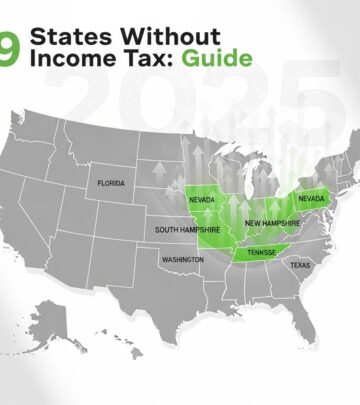
Nine states impose no state income tax: Alaska, Florida, Nevada, South Dakota, Tennessee, Texas, Washington, Wyoming, and New Hampshire (which only taxes dividends and interest income). These states rely more heavily on sales taxes, property taxes, and other revenue sources to fund state operations.
States with Low Income Tax Rates
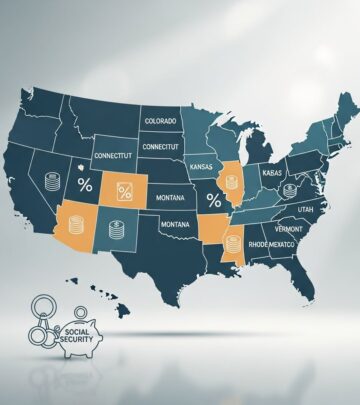
Colorado and Illinois employ flat tax rates of 4.63% and 4.95% respectively, offering relatively moderate tax burdens. Indiana maintains a flat rate of 3.23%, among the lowest in the nation for states that impose income tax.
States with Highest Income Tax Rates
California, Hawaii, New York, New Jersey, and Washington, D.C. have some of the highest marginal tax rates, with California reaching 13.3% and Hawaii climbing to 11%. New York residents face tax brackets ranging from 4% to 10.9% with nine different brackets, and residents of New York City and Yonkers pay additional local income tax on top of state rates.
Vermont maintains graduated rates from 3.35% to 8.75%, while Virginia offers rates ranging from 2% to 5.75%.
Understanding Tax Brackets and Graduated Taxation
Most states with income taxes use graduated bracket systems, meaning different portions of your income are taxed at progressively higher rates. For example, your first portion of income might be taxed at 3%, the next portion at 5%, and higher portions at 7%. This system contrasts with flat tax states like Colorado (4.63%) and Illinois (4.95%), where all income faces the same tax rate regardless of amount.
Graduated taxation often includes standard deductions—amounts of income that are not subject to taxation—which further reduce your actual tax liability. Many states increased standard deductions for 2025, providing relief to taxpayers across income levels.
Federal Income Tax Rates vs. State Income Taxes
Federal income taxes operate independently from state income taxes, and both systems must be considered when calculating total tax obligations. Federal tax brackets for 2024 include rates ranging from 10% to 37%, with single taxpayers facing brackets from $0 to $11,600 at the 10% rate, progressing to income over $609,351 at the 37% rate. These federal rates apply uniformly regardless of state of residence, but state rates compound these obligations.
Understanding how federal and state taxes interact is essential for comprehensive tax planning. While some expenses and deductions differ between systems, taxpayers generally must file both federal and state returns where applicable.
Sales Tax and Other State Taxes
While income tax represents a major revenue source, many states also rely on sales taxes and property taxes. Sales tax rates vary significantly by state, with some states like Delaware and Montana imposing no sales tax at all. Louisiana increased its state sales tax rate from 4.45% to 5% in 2025, while Kansas reduced sales tax on unprepared food to 0%. These sales tax variations significantly impact overall tax burdens when combined with income tax obligations.
Overall State Tax Burden Rankings
When considering all forms of taxation including income, sales, and property taxes, certain states emerge as having higher overall tax burdens than others. Hawaii residents experience the highest overall tax burden, while Alaska residents benefit from the lowest tax burden in the nation, primarily due to Alaska’s lack of state income tax and reliance on oil revenue and sales taxes.
The total tax burden calculation accounts for property taxes, income taxes, sales taxes, and other state-specific levies. This comprehensive view provides better insight into the true cost of living in different states than income tax rates alone.
Tax Filing Deadlines by State
Most states follow the federal tax filing deadline of April 15, though some states maintain different deadlines for their tax returns:
- Delaware: April 30
- Hawaii: April 21
- Iowa: April 30
- Louisiana: May 15
- New Mexico: April 30
- Oklahoma: April 20
Missing state tax filing deadlines can result in penalties and interest charges, making timely filing essential. Many taxpayers use automatic extensions to gain additional filing time, though extensions do not delay tax payment obligations.
Planning for State Income Tax Obligations
Effective tax planning requires understanding your state’s income tax structure and how it affects your overall financial situation. Several strategies can help minimize state tax burden:
- Maximize retirement contributions: Many states offer tax deductions for traditional IRA and 401(k) contributions
- Claim all available credits: Education credits, dependent exemptions, and other state-specific credits reduce tax liability
- Consider timing of income: If possible, timing of bonus income or business revenue can sometimes spread income across tax years strategically
- Review your filing status: Different filing statuses may result in different tax brackets and deductions
- Consult a tax professional: Licensed tax professionals can identify state-specific deductions and credits you might otherwise miss
Interstate Tax Considerations
Residents who work in one state but live in another may face tax obligations in multiple states. Typically, you file a resident return in your state of residence and may file a nonresident return in the state where you earned income. Most states offer credits for taxes paid to other states to prevent double taxation, though the specifics vary by state.
Remote workers should be particularly attentive to interstate tax implications, as some states aggressively pursue tax revenue from individuals working remotely within their borders. Understanding your work location and state residency status is crucial for proper tax filing.
Frequently Asked Questions
Q: Which states have no income tax?
A: Nine states—Alaska, Florida, Nevada, South Dakota, Tennessee, Texas, Washington, Wyoming, and New Hampshire—impose no state income tax. New Hampshire uniquely taxes only dividend and interest income.
Q: What are the highest state income tax rates?
A: California (13.3%), Hawaii (11%), and New York (10.9%) have among the highest marginal tax rates in the nation, with additional local taxes applying in some cities.
Q: How do I know my state’s income tax bracket?
A: Contact your state’s tax department website or consult with a tax professional. Most states provide tax calculators and detailed bracket information online.
Q: Can I deduct state income tax from my federal return?
A: Yes, you can deduct state and local taxes (SALT), including state income tax, up to $10,000 per year as part of itemized deductions on your federal return, though limits may apply depending on your situation.
Q: Do I need to file state taxes if I work remotely in another state?
Q: What recent changes affected state tax rates in 2025?
A: Georgia reduced its flat rate to 5.19%, Nebraska moved toward a 3.99% top rate by 2027, North Carolina reduced to 3.99%, Ohio shifted to a flat 2.75% rate, and Oklahoma simplified its brackets from six to three.
References
- 2026 State Income Tax Rates by State — Paycor. 2025-11-29. https://www.paycor.com/resource-center/articles/state-income-tax-rates/
- 2025 US Sales Tax Rates by State — Avalara. 2025-11-29. https://www.avalara.com/taxrates/en/state-rates.html
- Sales Tax by State 2025 — Taxually. 2025-11-29. https://www.taxually.com/blog/whats-new-in-us-sales-tax-sales-tax-by-state-2025
- Federal Income Tax Rates and Brackets — Internal Revenue Service. 2024. https://www.irs.gov/filing/federal-income-tax-rates-and-brackets
- 2025 State Income Tax Rates & How to Calculate Them — Paycom. 2025-11-29. https://www.paycom.com/resources/blog/state-income-tax-rates/
- New York State Taxes: What You’ll Pay in 2025 — AARP. 2025-11-29. https://states.aarp.org/new-york/state-taxes-guide
- How the 50 States Rank By Tax Burden (Updated for 2025) — CPA Practice Advisor. 2025-04-01. https://cpapracticeadvisor.com/2025/04/01/how-the-50-states-rank-by-tax-burden-updated-for-2025/158094/
- 2025 State Income Tax Rates — NerdWallet. 2025-11-29. https://www.nerdwallet.com/taxes/learn/state-income-tax-rates
Similar Articles








Read full bio of medha deb