State Income Tax Rates 2025: Complete Guide
Understand state income tax rates across all 50 states and how they compare.

Understanding State Income Tax Rates
State income tax represents a significant portion of your overall tax burden, and rates vary dramatically depending on where you live. Unlike federal income tax, which applies uniformly across all 50 states, state income taxes can range from zero to over 13 percent, depending on your state of residence and income level. Understanding your state’s tax structure is essential for effective financial planning and determining your true take-home pay.
State income taxes fund essential services including education, infrastructure, and public health programs. However, the amount you pay depends on several factors, including your filing status, total income, and whether your state uses a flat rate or graduated tax brackets.
How State Income Tax Works
State income tax systems operate differently across the country. Some states use a simple flat tax rate that applies to all residents regardless of income level, while others employ a progressive system with multiple tax brackets similar to the federal system. A few states have eliminated income tax entirely, placing greater reliance on sales taxes and other revenue sources.
Flat Tax States
Flat tax states charge the same percentage of income to all taxpayers. This approach simplifies tax calculations but may be considered less progressive than graduated tax systems. States like Colorado, Indiana, and Illinois use flat tax structures.
Progressive Tax States
Progressive tax systems feature multiple tax brackets, meaning higher earners pay a higher percentage on income that falls within upper brackets. Most states utilize this approach, similar to the federal tax system. States like California, New York, and Massachusetts employ progressive tax structures with rates that increase as income rises.
No-Income-Tax States
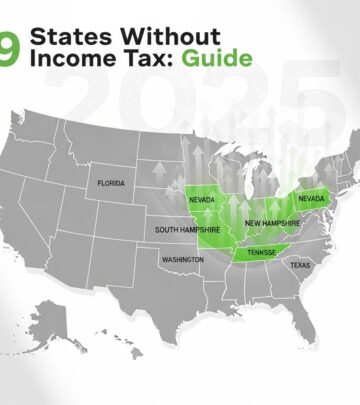
Nine states currently impose no individual income tax: Alaska, Florida, Nevada, South Dakota, Tennessee, Texas, Washington, Wyoming, and New Hampshire. Residents of these states benefit from lower income tax burdens, though many compensate through higher sales taxes or property taxes.
State Income Tax Rate Changes for 2025
Several states made significant changes to their income tax structures for 2025, reflecting evolving tax policy priorities.
Recent Tax Reductions
Multiple states implemented tax rate reductions in 2025. North Carolina reduced its flat income tax rate from 4.5 percent in 2024 to 4.25 percent for 2025, with plans to continue decreasing the rate to 3.99 percent by 2026. Georgia maintains its focus on tax relief, having reduced its flat income tax rate to 5.19 percent beginning July 1, 2025, down from 5.39 percent, while also increasing standard deductions to $24,000 for married filing jointly returns and $12,000 for other filing statuses.
Bracket Simplification and Rate Changes
Oklahoma simplified its tax bracket structure, reducing the number of brackets from six to three and lowering the top tax rate from 4.75 percent to 4.5 percent. Nebraska implemented a gradual reduction in its top rate from 5.2 percent to 4.55 percent for 2026, with legislation directing further reductions to 3.99 percent by 2027.
Structural Shifts
Ohio implemented a notable change by moving to a flat 2.75 percent tax rate on income exceeding $26,050, while income at or below that threshold remains untaxed. This hybrid approach combines elements of a progressive system with a simplified flat rate structure.
States with the Highest Income Tax Rates
Several states impose significantly higher income tax rates than the national average. California, Hawaii, and New York consistently rank among the states with the highest marginal income tax rates, often exceeding 10 percent on top earners.
These high-tax states typically use progressive tax systems with multiple brackets, meaning the highest rates apply only to top earners. However, even middle-income residents in these states often face substantial tax burdens compared to residents of other states. The higher tax revenue generated supports extensive public services, infrastructure, and social programs in these states.
States with the Lowest Income Tax Rates
Excluding the nine states with no income tax, several states maintain notably low income tax rates. Arizona, Indiana, Louisiana, and North Dakota feature among the lowest state income tax rates in the country, generally in the range of 3 to 5 percent.
Residents of these states enjoy lower income tax burdens compared to high-tax states, which can result in significant savings for high earners. These states often compensate for lower income tax revenue through alternative tax sources such as sales taxes, property taxes, or excise taxes.
Federal vs. State Income Tax: Key Differences
Understanding the distinctions between federal and state income taxes is crucial for comprehensive tax planning.
| Characteristic | Federal Income Tax | State Income Tax |
|---|---|---|
| Application | Applies uniformly across all states | Varies significantly by state |
| Tax Structure | Progressive brackets: 10%, 12%, 22%, 24%, 32%, 35%, 37% | Flat rates or progressive brackets depending on state |
| Tax Brackets | Seven income tax brackets | Zero to nine or more brackets by state |
| Rate Range | 10% to 37% | 0% to 13%+ depending on state |
| Administration | Internal Revenue Service (IRS) | Individual state tax agencies |
Federal income tax rates, established by the Tax Cuts and Jobs Act, remain permanent with rates ranging from 10 to 37 percent across seven brackets. The highest federal rate of 37 percent applies to single filers with taxable income above $626,350 and married couples filing jointly with income exceeding $751,600.
State income taxes, by contrast, reflect each state’s unique revenue needs and policy priorities. Some states have deliberately kept rates low to attract residents and businesses, while others maintain higher rates to fund robust public services.
Factors Affecting Your State Income Tax
Several variables influence the amount of state income tax you owe annually.
Annual Income Level
Your total annual income is the primary determinant of state income tax liability. States with progressive tax systems charge higher percentages to higher earners. Even in flat-tax states, higher income results in proportionally more taxes owed, though at a consistent rate.
Filing Status
Your filing status—single, married filing jointly, head of household, or married filing separately—affects your applicable tax brackets and standard deduction amounts. Married couples filing jointly typically benefit from broader tax brackets, reducing their effective tax rate compared to single filers with the same combined income.
State-Specific Deductions and Credits
Individual states offer various deductions, credits, and exemptions that reduce taxable income. These may include education-related credits, dependent exemptions, retirement income exclusions, and charitable contribution deductions that vary substantially between states.
Residency and Income Source
Most states tax residents on all income sources, both within and outside the state. However, non-residents may face different tax treatment depending on where income is earned and state-specific rules regarding multistate income.
How to Calculate Your State Income Tax
Understanding the calculation process helps you anticipate your tax liability and plan accordingly.
Step One: Determine Your Taxable Income
Start with your gross income from all sources, then subtract applicable deductions. This includes the standard deduction offered by your state or itemized deductions if you choose that option. The resulting figure is your taxable income, which forms the basis for tax calculations.
Step Two: Apply Your State’s Effective Tax Rate
Your state’s effective tax rate represents the average percentage of income paid in taxes. For flat-tax states, this is straightforward—simply multiply your taxable income by the flat rate. For progressive states, you must calculate taxes using each applicable bracket.
Step Three: Account for Your Marginal Tax Rate
Your marginal tax rate is the percentage you pay on the last dollar of income earned. This rate determines how additional income affects your total tax liability and is essential for tax planning decisions, such as evaluating whether to pursue additional income or make certain deductions.
Planning Strategies for State Income Tax
Effective tax planning can help minimize your state income tax burden through legitimate strategies.
Consider State Tax Implications When Relocating
If you have flexibility in choosing where to live or work, evaluating state income tax rates should factor into your decision. Moving from a high-tax state to a low-tax or no-income-tax state can result in substantial long-term savings, particularly for high earners.
Maximize Tax-Advantaged Accounts
Contributions to retirement accounts, health savings accounts, and education savings plans may reduce your state taxable income while providing long-term financial benefits. These accounts often receive favorable state tax treatment.
Understand Multi-State Taxation
If you earn income in multiple states or have relocated during the tax year, understanding how each state taxes your income is critical. Many states offer credits to prevent double taxation of the same income.
Frequently Asked Questions About State Income Tax
Q: What is the difference between a flat tax and a progressive tax?
A: A flat tax charges the same percentage to all taxpayers regardless of income level, while a progressive tax uses multiple brackets with higher percentages applying to higher income levels. Progressive taxes are generally considered more equitable but more complex to administer.
Q: Which states have no income tax?
A: Nine states have no individual income tax: Alaska, Florida, Nevada, South Dakota, Tennessee, Texas, Washington, Wyoming, and New Hampshire. These states typically generate revenue through other sources such as sales taxes, property taxes, and business taxes.
Q: Can I reduce my state income tax liability?
A: Yes, several strategies can help reduce state income tax, including maximizing contributions to tax-advantaged retirement accounts, claiming all eligible deductions and credits, and understanding your state’s specific tax incentives for education, charitable giving, or business activities.
Q: How does relocation affect my state income tax?
A: When you relocate to a new state, your tax liability changes based on that state’s rates, brackets, and deductions. You may owe taxes to both states during your year of relocation, though many states offer credits to prevent double taxation. Establishing residency in your new state typically takes priority over your previous state’s claims.
Q: Are state income taxes deductible on my federal return?
A: Yes, you can deduct state and local income taxes (SALT) on your federal return if you itemize deductions, up to $10,000 annually. This deduction applies to income taxes, property taxes, or sales taxes—you choose which combination benefits you most.
Q: How do I know what tax bracket I’m in?
A: Your tax bracket depends on your taxable income and filing status. Your state’s tax agency publishes tax tables and bracket information annually. Online calculators and tax professionals can help determine which bracket applies to your specific situation.
Q: What credits and deductions does my state offer?
A: State-specific credits and deductions vary significantly. Common options include dependent exemptions, education credits, earned income tax credits, retirement income exclusions, and charitable contribution deductions. Consult your state’s tax agency website for a complete list applicable to your situation.
References
- 2026 State Income Tax Rates by State — Paycor. 2025. https://www.paycor.com/resource-center/articles/state-income-tax-rates/
- North Carolina State Taxes: What You’ll Pay in 2025 — AARP. 2025. https://states.aarp.org/north-carolina/state-taxes-guide
- Federal Income Tax Rates and Brackets — Internal Revenue Service (IRS). 2025. https://www.irs.gov/filing/federal-income-tax-rates-and-brackets
- New Tax Laws 2025: Tax Brackets and Deductions — U.S. Bank. 2025. https://www.usbank.com/wealth-management/financial-perspectives/financial-planning/tax-brackets.html
- 2025 State Income Tax Rates & How to Calculate Them — Paycom. 2025. https://www.paycom.com/resources/blog/state-income-tax-rates/
- 2025 Income Tax Withholding Tables and Instructions for Employers — North Carolina Department of Revenue. 2024. https://www.ncdor.gov/income-tax-withholding-tables-and-instructions-employers/open
- 2025 State Income Tax Rates — NerdWallet. 2025. https://www.nerdwallet.com/taxes/learn/state-income-tax-rates
Similar Articles








Read full bio of Sneha Tete