State Debt Collections: Highest and Lowest Nationwide
Explore which U.S. states face the heaviest debt collection burdens and those with the lightest loads, revealing regional financial health patterns.
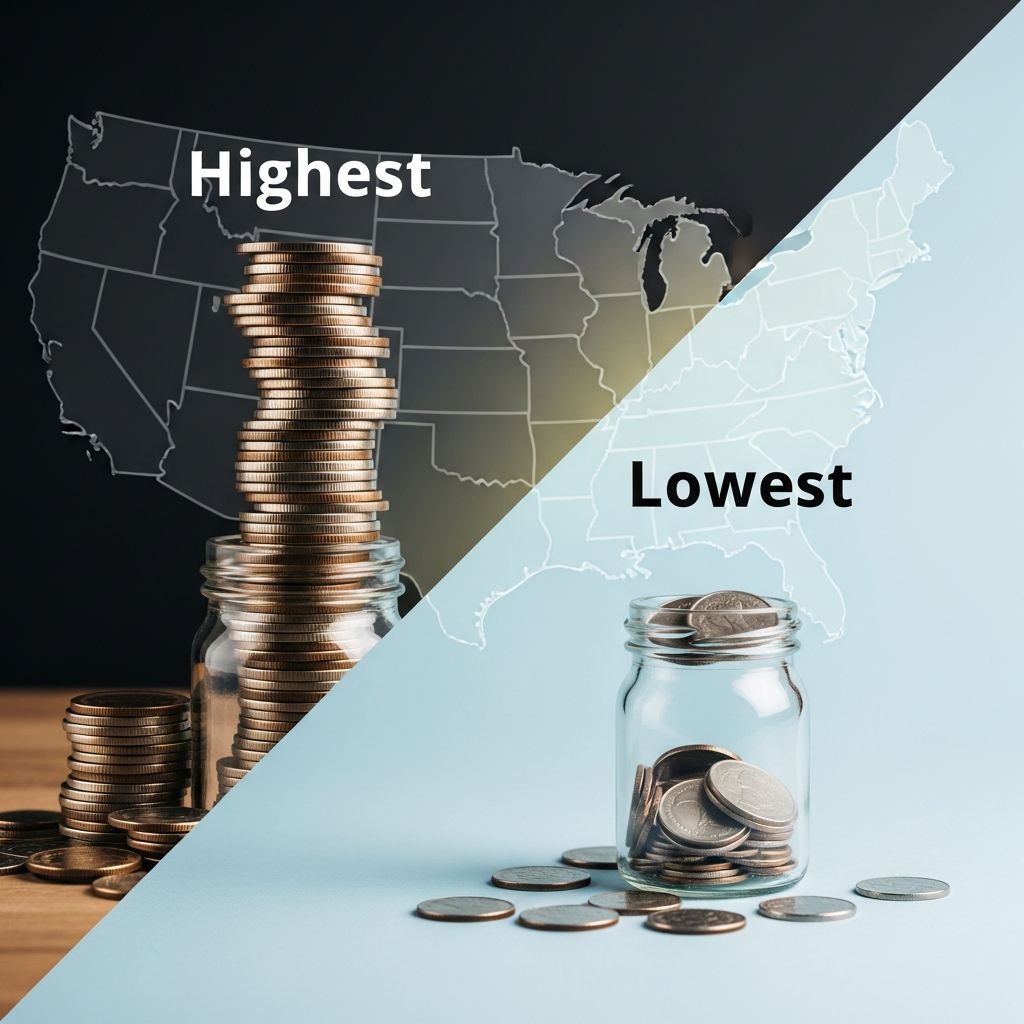
Consumer debt collections represent a critical indicator of financial stress across U.S. states, reflecting unpaid obligations that creditors pursue through recovery agencies. Recent data underscores stark regional disparities, with some states grappling with elevated average collection balances while others maintain lower levels. This comprehensive examination draws on credit bureau insights and economic metrics to map these trends, offering clarity on underlying drivers like credit card usage and income levels.
Understanding Collection Balances and Their Impact
Collection balances occur when debts, such as medical bills, credit cards, or loans, remain unpaid long enough to be transferred to third-party agencies. These accounts can severely damage credit scores, limiting access to future borrowing. Nationally, total credit card debt reached $1.277 trillion by Q4 2025, fueling a rise in collections as economic pressures mount. States with higher personal debt loads often see amplified collection activity, influenced by factors including unemployment rates, cost of living, and borrowing habits.
High collection balances signal broader economic challenges, potentially leading to cycles of financial hardship. Conversely, states with low balances typically exhibit stronger fiscal resilience, supported by robust job markets or conservative spending. Analyzing these patterns helps consumers and policymakers address regional vulnerabilities.
Top States with Elevated Collection Balances
Certain regions bear disproportionate collection burdens, often correlating with dense populations and high living costs. For instance, coastal and urban-heavy states frequently top lists due to aggressive credit use and delayed payments.
| Rank | State | Avg. Collection Balance Insight | Related Debt Factor |
|---|---|---|---|
| 1 | Delaware | Highest reported averages | $7,787 avg. credit card debt |
| 2 | Maryland | Significant medical collections | $9,630 avg. credit card debt |
| 3 | New Jersey | Urban debt pressures | $9,748 avg. credit card debt |
| 4 | California | High volume of accounts | $9,396 avg. credit card debt |
| 5 | Florida | Tourism-driven spending | $9,184 avg. credit card debt |
Delaware leads with the highest averages, linked to its financial sector prominence and credit card debt growth of 2.5% year-over-year. Maryland and New Jersey follow, where per capita state liabilities exceed $19,000 in some cases, exacerbating personal debt cycles. California’s $498 billion in state liabilities indirectly pressures residents, contributing to collection upticks.
States Experiencing Minimal Collection Pressures
In contrast, rural and Midwestern states often report lower collection balances, benefiting from stable economies and lower debt accumulation.
| Rank | State | Avg. Collection Balance Insight | Related Debt Factor |
|---|---|---|---|
| 1 | Nebraska | Lowest reported averages | $7,075 avg. credit card debt |
| 2 | South Dakota | Strong financial habits | High debt collector interest (100 index) |
| 3 | North Dakota | Resource-based stability | $6,707 avg. credit card debt |
| 4 | Oklahoma | Moderate growth | $5,963 avg. credit card debt |
| 5 | Kentucky | Agricultural buffers | $5,368 avg. credit card debt |
Nebraska’s low balances align with an 11.3% credit card debt increase but overall fiscal prudence. South Dakota, despite peak interest in debt collectors (index 100), maintains low balances through community lending practices. These states demonstrate how local economies can mitigate national debt trends.
Regional Patterns in Debt and Collections
- Northeast: High collections in NJ, MD due to elevated credit limits and urban costs; CT tops per capita liabilities at $27,031.
- South: Mixed, with FL high but OK, TN low; average personal debt varies widely.
- Midwest: Generally lower, ND and NE benefit from energy and farming revenues.
- West: CA high volume, WY moderate at $6,833 credit debt.
Search interest for debt collectors peaks in SD, OK, MT (94 index), indicating proactive recovery efforts in heartland states. This contrasts with lower interest in CA (61), despite high debts, suggesting alternative resolution methods.
Key Drivers Behind State Collection Disparities
Several factors propel collection variations:
- Credit Card Debt Surge: Q3 2025 saw NJ up 7%, MD 9.1%, correlating with collections.
- State Liabilities: IL’s 468.7% debt ratio burdens residents with $14,780 per person obligations.
- Economic Shifts: National debt at $38.86T by March 2026 amplifies local pressures.
- Consumer Behavior: High-interest states show borrowing for essentials amid inflation.
Personal debt averages hit $103,570 in DC, $90,540 in CO, blending mortgages ($78,920 DC) and student loans. These feed into collections when payments falter.
Strategies to Avoid or Resolve Collections
Consumers in high-risk states can protect credit health:
- Monitor reports regularly for early disputes.
- Negotiate payment plans before agency transfer.
- Build emergency funds covering 3-6 months expenses.
- Seek debt consolidation for high-interest balances.
In low-collection states, maintaining habits like budgeting sustains advantages. Federal changes in 2026, including repayment enforcements, may intensify collections nationwide.
Future Outlook for State Debt Collections
Projections indicate persistent deficits, with CBO forecasting $1.9T annually through 2036. States like CA ($362.87B liabilities) face ongoing challenges, while others leverage growth. Monitoring credit trends remains essential as national debt per household nears $288,283.
Frequently Asked Questions
What causes high collection balances in certain states?
Primarily credit card debt growth, high living costs, and state fiscal burdens like pensions.
How do collection accounts affect credit scores?
They drop scores by 100+ points, lingering 7 years unless resolved.
Which states have the lowest personal debt averages?
Typically Midwest like NE, ND, with credit cards under $7,000.
Can state economies influence individual collections?
Yes, strong sectors like energy in ND reduce defaults.
What’s the national credit card debt total in 2025?
$1.277 trillion, driving collection activity.
References
- A New Study Reveals Growing Interest for Debt Collectors Across US States — The Kaplan Group. 2023. https://www.kaplancollectionagency.com/debt-collection-2/a-new-study-reveals-growing-interest-for-debt-collectors-across-us-states/
- 2026 Credit Card Debt Statistics — LendingTree. 2026-01. https://www.lendingtree.com/credit-cards/study/credit-card-debt-statistics/
- State debt: California, Illinois, New York, New Jersey and Texas — Reason Foundation. 2023. https://reason.org/transparency-project/debt-trends-state-local/state/
- Debt by State 2026 — World Population Review. 2026. https://worldpopulationreview.com/state-rankings/debt-by-state
- Monthly Debt Update — U.S. Joint Economic Committee. 2026-03-06. https://www.jec.senate.gov/public/vendor/_accounts/JEC-R/debt/Monthly%20Debt%20Update.html
- State Debt Rankings: All 50 States Ranked by Debt (2026) — US Debt Clock. 2026. https://www.us-debt-clock.com/states
Similar Articles








Read full bio of medha deb