Stanford University: Elite Education and Career Excellence
Discover Stanford's world-class education, exceptional outcomes, and generous financial aid programs.
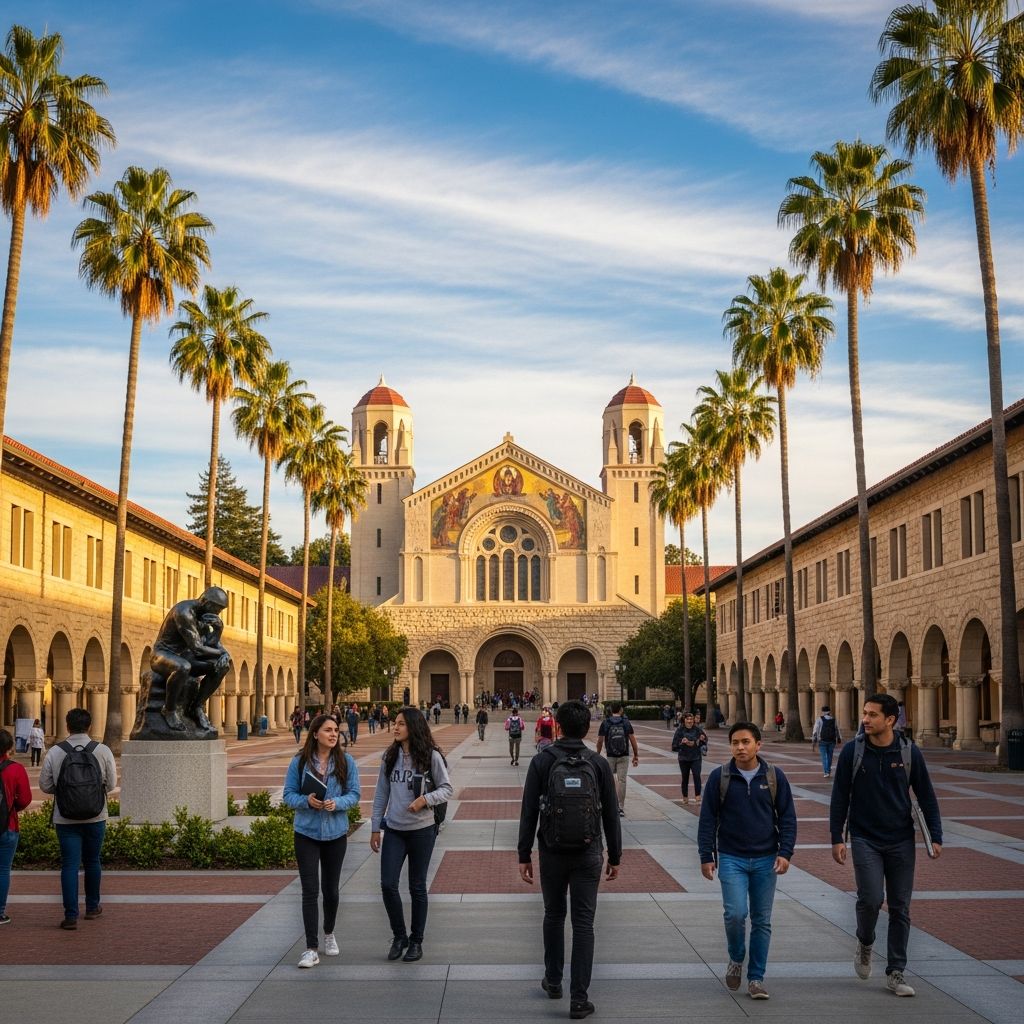
Stanford University: America’s Premier Research Institution
Stanford University stands as one of the most prestigious and selective institutions in the United States, consistently ranked among the top colleges by educational analysts and prospective students alike. Located in California’s Silicon Valley, Stanford has cultivated a reputation for academic excellence, groundbreaking research, and producing entrepreneurs and leaders who shape the global economy. Parents and students have both named Stanford University one of their top dream colleges for most of the past decade, according to surveys by The Princeton Review, reflecting its status as an aspirational destination for high-achieving students worldwide.
The university’s draw extends beyond its prestige. Stanford combines rigorous academics with unparalleled career outcomes, making it an investment in both intellectual development and professional success. With a 96% graduation rate and alumni who founded tech giants like Google, Yahoo, and Cisco, Stanford demonstrates tangible results that justify its selectivity and competitive admissions process.
Admissions and Selectivity
Stanford is undeniably one of the hardest schools in the country to gain admission to, accepting only about 4% of applicants. This extraordinarily selective admissions process means that nearly 96 out of every 100 applicants receive rejection letters, making Stanford a reach school even for exceptional students with perfect grades and test scores.
The university’s stringent admissions standards reflect its commitment to assembling a cohort of intellectually curious, accomplished individuals who contribute meaningfully to the campus community. Beyond traditional metrics like GPA and standardized test scores, Stanford evaluates applicants holistically, considering leadership qualities, extracurricular achievements, essays, and personal circumstances. Once admitted, students join an elite cohort of peers, all of whom have demonstrated exceptional academic and personal accomplishments.
Academic Excellence and Faculty Leadership
Stanford’s reputation for academic excellence is reinforced by its extraordinary faculty. The university features a stunning array of innovative and important thinkers, including 20 Nobel laureates, more than 30 MacArthur fellows, and four Pulitzer Prize winners. This concentration of accomplished scholars creates an unparalleled intellectual environment where cutting-edge research occurs alongside undergraduate instruction.
The presence of such distinguished faculty members ensures that Stanford students have access to world-leading expertise across disciplines. Whether in engineering, medicine, business, sciences, or humanities, students benefit from instruction and mentorship by scholars who have made transformative contributions to their fields. This faculty strength translates into rigorous academics and the opportunity for students to engage in groundbreaking research alongside their coursework.
Financial Aid and Affordability
Despite its elite status and high sticker price, Stanford demonstrates genuine commitment to making education accessible through generous financial aid policies. The university is remarkably generous with financial aid, with roughly 60% of students receiving assistance. This represents a significant commitment to socioeconomic diversity and ensuring that talented students are not priced out of a Stanford education.
Stanford’s financial aid philosophy is particularly progressive regarding low and middle-income families. Parents earning less than $100,000 annually are not expected to contribute anything toward their student’s college costs, while those earning less than $150,000 are not expected to pay tuition. These policies, among the most generous in American higher education, acknowledge that financial circumstances should not determine educational opportunity.
For students receiving aid, the average net price represents substantial savings compared to the full cost of attendance. This commitment to affordability extends Stanford’s reach beyond wealthy families, enabling socioeconomic diversity that enriches campus life and ensures talented students from all backgrounds can access Stanford’s opportunities.
Career Outcomes and Alumni Achievement
The tangible results of a Stanford education manifest most clearly in graduate outcomes and alumni achievements. Not only does Stanford maintain a 96% graduation rate, but its former students have also founded transformative companies including Google, Yahoo, and Cisco, among many others. This entrepreneurial success rate reflects the university’s location in Silicon Valley and its culture of innovation that permeates the campus.
Financially, Stanford alumni demonstrate exceptional earning potential. The typical student earns at least a six-figure salary 10 years after enrolling, positioning Stanford graduates among the highest-earning college graduates in the nation. This earning potential reflects both the quality of education received and the networks, mentorship, and opportunities available to Stanford students during and after their undergraduate years.
Beyond traditional employment, many Stanford graduates pursue entrepreneurship, venture capital, nonprofit leadership, and other paths that leverage their Stanford education. The alumni network spans industries and geographies, providing lifelong professional connections and opportunities that compound throughout careers.
Academic Rigor and Student Life
Stanford’s intellectual environment is characterized by intense academic demands. Once admitted, students encounter educational rigor that matches the selectivity of admissions. Course loads are demanding, competition among peers is fierce, and expectations for intellectual contribution are high. This challenging academic environment prepares students for advanced study, professional careers, and leadership roles in their chosen fields.
Beyond the classroom, Stanford’s location near San Francisco and within Silicon Valley offers unique opportunities for internships, entrepreneurial projects, and professional networking. Students can engage with leading technology companies, startups, venture capital firms, and research institutions. This proximity to innovation centers enriches educational experiences and accelerates career development.
Campus life reflects Stanford’s commitment to holistic education. The residential college system, extensive athletics programs, and hundreds of student organizations create community and opportunities for personal growth alongside academic pursuits. The vibrant student culture balances intense academics with collaborative, creative experiences.
Research and Innovation Culture
Stanford’s identity as a research university extends throughout the institution. Undergraduates have exceptional opportunities to participate in cutting-edge research across disciplines, from biomedical sciences to computer science to renewable energy. This research engagement deepens learning, develops critical thinking skills, and often produces publishable findings.
The university’s research infrastructure includes state-of-the-art laboratories, computing facilities, and libraries. Faculty actively involve undergraduate students in their research programs, mentoring the next generation of researchers and innovators. This hands-on research experience distinguishes Stanford from many peer institutions and contributes to strong graduate school admission and professional outcomes.
Why Stanford Matters
Stanford University represents the pinnacle of American higher education, combining academic excellence, selective admissions, generous financial aid, and exceptional outcomes. The university’s location in Silicon Valley, distinguished faculty, research opportunities, and successful alumni network create an environment where exceptional students thrive intellectually, professionally, and personally.
For admitted students who can navigate the intense academic environment, Stanford offers transformative educational experiences and career outcomes that justify its status as a dream school. The generous financial aid policies ensure that talent, rather than financial circumstance, remains the primary factor determining admission and attendance.
Frequently Asked Questions
Q: How selective is Stanford’s admissions process?
A: Stanford accepts only about 4% of applicants, making it one of the most selective universities in the United States. This means approximately 96 out of 100 qualified applicants are rejected.
Q: What is Stanford’s graduation rate?
A: Stanford maintains a 96% graduation rate, among the highest in the nation, indicating strong student success and support systems.
Q: How much financial aid does Stanford provide?
A: Approximately 60% of Stanford students receive financial aid. Families earning less than $100,000 annually pay nothing, while families earning less than $150,000 pay no tuition.
Q: What do Stanford graduates earn after college?
A: Stanford alumni typically earn at least a six-figure salary within 10 years of graduating, reflecting the strong career outcomes associated with a Stanford education.
Q: What notable companies were founded by Stanford alumni?
A: Stanford alumni have founded major technology companies including Google, Yahoo, and Cisco, among many others that have transformed industries and the global economy.
Q: How many Nobel laureates are on Stanford’s faculty?
A: Stanford’s faculty includes 20 Nobel laureates, more than 30 MacArthur fellows, and four Pulitzer Prize winners, representing extraordinary scholarly achievement.
Q: Is Stanford academically demanding for students?
A: Yes, Stanford is known for rigorous academics. Once admitted, educational demands can be intense, requiring strong time management and intellectual commitment from students.
References
- Stanford University, California – Complete Profile, Rankings and Data — Money. Accessed November 2025. https://money.com/best-colleges-2024/profile/stanford-university/
- 2025 Best Colleges in U.S. — Money. Accessed November 2025. https://money.com/best-colleges/
- University of California Campuses Rise to the Top in Money’s 2024 Best Colleges — UC Newsroom. June 20, 2024. https://www.universityofcalifornia.edu/news/university-california-campuses-rise-top-moneys-2024-best-colleges
- College Rankings: Money Magazine Weighs In — Top Tier Admissions. Accessed November 2025. https://toptieradmissions.com/college-rankings-money-magazine-weighs-in/
Similar Articles








Read full bio of Sneha Tete