Stanford University: Elite Education & Financial Aid
Discover Stanford's exceptional academics, generous financial aid, and outstanding career outcomes for ambitious students.
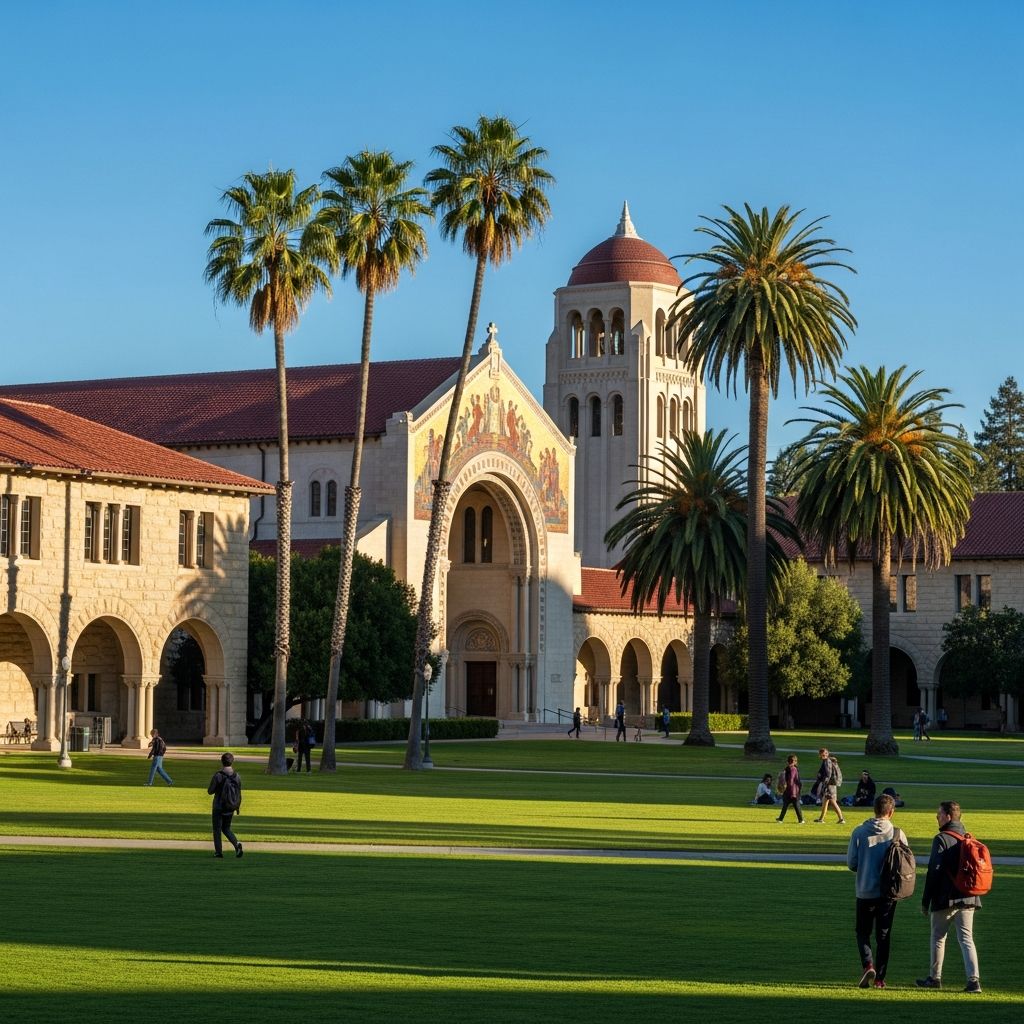
Stanford University: A Comprehensive College Profile
Stanford University stands as one of the most prestigious and selective institutions in the United States, consistently ranking among the top colleges for academic excellence, financial value, and student outcomes. Located in California’s Silicon Valley, Stanford has earned its reputation as a beacon of innovation and intellectual achievement, attracting some of the brightest minds from around the world.
Academic Excellence and Selective Admissions
Stanford is renowned for maintaining one of the lowest acceptance rates in the country, admitting only approximately 4% of applicants. This exceptional selectivity reflects the university’s commitment to enrolling the most accomplished and promising students. Once admitted, students enter a rigorous academic environment where excellence is both expected and celebrated.
The faculty at Stanford is nothing short of extraordinary. The university boasts 20 Nobel laureates, more than 30 MacArthur fellows, and four Pulitzer Prize winners among its faculty members. This concentration of innovative and influential thinkers creates an unparalleled learning environment where students have access to leading scholars and researchers across every discipline.
Campus Life and Traditions
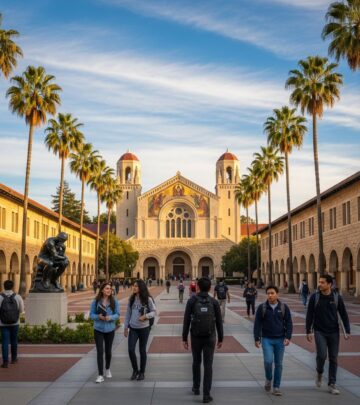
Stanford’s Mission-style campus spans an impressive 8,100 acres, making it one of the largest university campuses in the country. The expansive grounds are so vast that most students rely on bicycles for transportation around campus. This unique aspect of campus life has become synonymous with the Stanford experience, contributing to the university’s distinctive character and community feel despite its large student population.
As an NCAA Division I school, Stanford maintains a legendary football rivalry with the University of California-Berkeley that has become one of college sports’ most celebrated traditions. Beyond athletics, campus traditions play an important role in Stanford’s culture. The Wacky Walk represents one of the most iconic undergraduate traditions, where graduating seniors dress in creative costumes and parade into Stanford Stadium to celebrate their graduation.
The “Duck Syndrome” and Student Experience
Stanford students often describe their college experience using the term “duck syndrome,” a reference to how they work to appear serene on the surface while paddling desperately beneath the water to keep up with academic demands. This humorous yet poignant characterization reflects the intensity of the Stanford educational experience. The phenomenon became so prevalent that students even created a popular Facebook group titled “Stanford University Places I’ve Cried,” offering a tongue-in-cheek tribute to campus life.
Despite the challenging academic environment, students consistently report high levels of satisfaction with their Stanford education, and the results speak volumes about the transformative power of a Stanford degree.
Impressive Graduation Rates and Alumni Success
Stanford demonstrates exceptional student success metrics, with a graduation rate of approximately 94-96%. This high completion rate reflects both the university’s commitment to student support and the caliber of students admitted to the institution. Beyond just completing their degrees, Stanford alumni have gone on to achieve remarkable success in their careers and entrepreneurial ventures.
The university’s most visible legacy may be in technology entrepreneurship. Stanford’s former students founded some of the world’s most influential technology companies, including Google, Yahoo, and Cisco. This entrepreneurial spirit extends far beyond Silicon Valley, with Stanford alumni making significant contributions across finance, medicine, law, government, and academia.
Perhaps most impressively, the typical Stanford graduate earns at least a six-figure salary within ten years of enrolling. This outstanding financial outcome demonstrates the tremendous return on investment that a Stanford education provides, even accounting for the university’s high sticker price.
Financial Aid and Affordability
One of Stanford’s most distinguishing features is its generous financial aid program, which makes the institution accessible to talented students regardless of their family’s financial circumstances. Approximately 60% of Stanford students receive financial assistance. The university’s financial aid policies are among the most progressive in higher education.
The estimated cost of attendance for Stanford with average grant aid is approximately $21,100 per year. However, Stanford’s true commitment to affordability is evident in its need-blind admissions policy and generous aid packages. Parents earning less than $100,000 annually are not expected to contribute anything toward their student’s college costs, while families earning less than $150,000 are not expected to pay tuition.
This approach represents a fundamental commitment to ensuring that admission to Stanford is not determined by financial circumstances, but rather by merit, potential, and fit with the university’s mission.
Median Earnings for Recent Graduates
Stanford graduates command impressive earning potential in the job market. The median earnings for recent graduates stand at $97,800, significantly higher than the median for graduates from most other institutions. This figure reflects the quality of education received, the strength of the Stanford brand, and the caliber of students who attend the university.
Why Stanford Remains a Top Dream College
Both parents and students have consistently named Stanford University as one of their top dream colleges for most of the past decade, according to surveys conducted by The Princeton Review. This designation reflects Stanford’s reputation for academic excellence, its transformative educational experience, and its track record of launching students into successful careers.
The draw of Stanford extends beyond its impressive statistics. The university represents opportunity, innovation, and excellence. For many, attending Stanford symbolizes the possibility of joining a community of exceptional individuals and gaining access to unparalleled resources and opportunities.
Stanford’s Historical Significance
Founded in 1885 by railroad baron Leland Stanford in memory of his son, Leland Stanford Jr., who died at age 15, the university carries a unique historical legacy. The Stanford Mausoleum, where Leland Stanford Jr. is buried, remains a notable campus landmark and the site of the Halloween Mausoleum Party, one of Stanford’s cherished campus traditions.
Stanford Among California’s Best Colleges
When ranked among California’s colleges, Stanford consistently appears at or near the top of lists measuring educational quality and value. California’s prestigious private schools, including Stanford, Pomona College, and the California Institute of Technology, tend to score exceptionally high across multiple metrics that measure college quality.
What Makes Stanford Stand Out: Key Statistics at a Glance
| Metric | Stanford Performance |
|---|---|
| Acceptance Rate | Approximately 4% |
| Graduation Rate | 94-96% |
| Estimated Annual Cost (with aid) | $21,100 |
| Median Recent Graduate Earnings | $97,800 |
| Faculty Nobel Laureates | 20 |
| MacArthur Fellows on Faculty | 30+ |
| Pulitzer Prize Winners on Faculty | 4 |
| Campus Size | 8,100 acres |
| Students Receiving Financial Aid | Approximately 60% |
Frequently Asked Questions About Stanford University
Q: How selective is Stanford University’s admissions process?
A: Stanford is extremely selective, accepting only about 4% of applicants, making it one of the most difficult universities in the country to gain admission to. The university seeks students with exceptional academic achievement, intellectual curiosity, and unique contributions to their communities.
Q: Is Stanford University affordable for low-income families?
A: Yes, Stanford is remarkably affordable for families with lower incomes. Parents earning less than $100,000 annually are not expected to pay anything, while families earning less than $150,000 are not expected to pay tuition. Approximately 60% of students receive financial aid.
Q: What is the graduation rate at Stanford?
A: Stanford has an exceptional graduation rate of 94-96%, among the highest in the country. This reflects the university’s strong support systems and the caliber of admitted students.
Q: How much do Stanford graduates earn after graduation?
A: Stanford graduates earn a median of $97,800 for recent graduates, with typical graduates earning at least six figures within ten years of enrollment. This represents one of the strongest financial outcomes of any university.
Q: What notable companies were founded by Stanford alumni?
A: Stanford alumni have founded or co-founded many of the world’s most influential technology companies, including Google, Yahoo, and Cisco. The university’s location in Silicon Valley has facilitated strong entrepreneurial culture and networks.
Q: What are Stanford’s campus traditions?
A: Stanford has rich traditions including the Wacky Walk, an annual commencement celebration where graduating seniors in costumes parade into Stanford Stadium, and the Halloween Mausoleum Party held at the Stanford Mausoleum. The university also maintains a fierce football rivalry with UC Berkeley.
Q: How large is Stanford’s campus and what is transportation like?
A: Stanford’s campus spans 8,100 acres, making it one of the largest university campuses. Most students use bicycles for transportation around the vast campus, contributing to the university’s distinctive character.
References
- The 10 Best Colleges in California — Money Magazine. 2025. https://money.com/best-colleges-in-california/
- Stanford University, California – Complete Profile, Rankings and Data — Money Magazine. 2024. https://money.com/best-colleges-2024/profile/stanford-university/
- Stanford University, CA – Complete Profile, Rankings and Data — Money Magazine. 2025. https://money.com/best-colleges/profile/stanford-university/
Similar Articles








Read full bio of Sneha Tete