Standard of Living: Definition, Measurement & Factors
Understand standard of living: how it's measured, key factors, and its impact on quality of life.
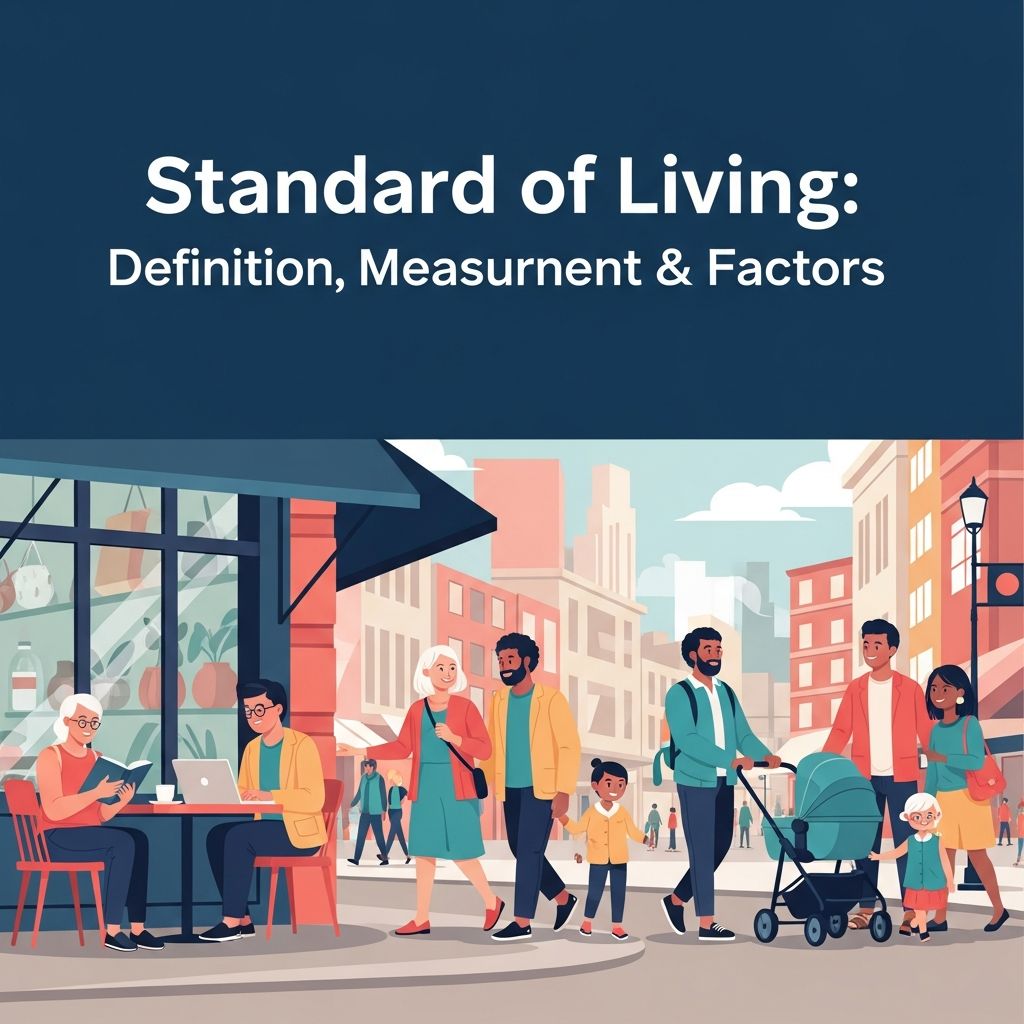
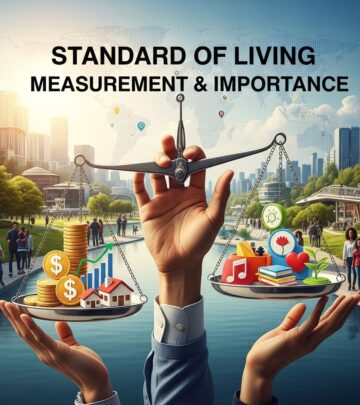
The standard of living is a fundamental economic concept that measures the level of income, material wealth, comforts, and services available to an individual, community, or society. It represents the material prosperity and quality of economic conditions that people experience in their daily lives. Unlike quality of life, which is more subjective and encompasses personal satisfaction and fulfillment, standard of living focuses on objective, quantifiable metrics that reflect the tangible resources and services accessible to a population.
Standard of living serves as a crucial indicator for economists, policymakers, and social scientists to evaluate economic progress, compare prosperity across nations, and assess the overall well-being of societies. It provides insight into whether populations have access to essential needs such as food, shelter, healthcare, education, and employment opportunities. Countries with high standards of living typically demonstrate better health outcomes, higher life expectancy, lower poverty rates, and greater access to quality services.
What Is Standard of Living?
At its core, standard of living represents the material conditions under which people live. It encompasses both economic and non-economic factors, though economic factors typically receive greater emphasis in formal measurements. The concept goes beyond mere income figures; it includes the availability and quality of goods and services that people can afford and access within their communities.
A high standard of living indicates that individuals in a society can sustain long, healthy lives while having access to resources that enable them to pursue productive and fulfilling endeavors. Conversely, a low standard of living suggests that populations face poverty, limited health services, restricted educational opportunities, and constrained economic mobility. This distinction carries significant implications for economic productivity, social stability, and overall national development.
Key Factors That Determine Standard of Living
Multiple interconnected factors contribute to establishing and maintaining a society’s standard of living. These factors span economic, social, political, and environmental dimensions:
Economic Factors
Economic dimensions form the foundation of standard of living assessments. Household income represents the primary economic measure, determining purchasing power and access to goods and services. Per capita income—the average earnings per individual in a country—serves as a critical indicator, as higher income generally correlates with improved access to education, healthcare, and quality housing. Employment levels and job quality also influence standard of living, as stable, well-compensated work provides financial security and dignity.
Consumer spending patterns, housing prices, inflation rates, and the availability of affordable goods and services further shape economic well-being. The poverty rate within a geographic area indicates what proportion of the population struggles to meet basic needs, while economic growth trajectories suggest whether standards are improving or declining over time.
Health and Life Expectancy
Access to quality healthcare and preventive services directly impacts population health outcomes. Life expectancy—the average number of years individuals can expect to live—serves as a powerful indicator of standard of living. Populations with high life expectancies typically have superior healthcare systems, better nutrition, safer living conditions, and lower disease burdens. The general health status of a population, measured through disease prevalence and disability rates, further reflects healthcare quality and living conditions.
Education and Literacy
Educational access and achievement significantly influence standard of living trajectories. Literacy rates indicate basic educational attainment, while access to quality education at all levels determines economic opportunities and social mobility. Higher education levels correlate with increased earning potential, better health literacy, and more informed participation in civic processes.
Housing and Basic Needs
The availability and quality of adequate shelter represents a fundamental component of standard of living. Housing affordability—the proportion of income required to secure quality housing—reflects real economic well-being. Access to clean water and sanitation services, essential for health and dignity, distinguishes societies with higher standards from those struggling with development. Reasonable access to sufficient food meeting nutritional requirements is equally fundamental.
Social and Environmental Conditions
Crime rates and personal safety influence both quality of life and standard of living, as high crime areas discourage investment and create insecurity. Environmental quality, including air and water cleanliness, affects health outcomes and livability. Access to social services, infrastructure quality, public transportation availability, and leisure time opportunities all contribute to overall living standards. Political freedom and social freedoms—including rights to assembly, expression, and participation—shape the context within which people experience their material circumstances.
How Standard of Living Is Measured
Economists employ several methodologies to quantify and compare standards of living across populations and time periods. Each measurement approach offers distinct advantages and limitations:
Gross Domestic Product Per Capita
GDP per capita remains the most commonly used metric for assessing standard of living internationally. This measure calculates a country’s total economic output—the value of all goods and services produced within one year—and divides it by the population size. The resulting figure indicates average economic productivity per person and serves as a straightforward basis for international comparisons. Higher GDP per capita generally correlates with greater resource availability and service quality.
However, GDP per capita possesses limitations. It masks internal income inequality, as average figures can obscure whether wealth is distributed broadly or concentrated among elites. It also doesn’t account for non-market activities or environmental degradation that reduces actual well-being.
Per Capita Income
Per capita income measures the average earnings each person receives annually within a population. This metric directly reflects purchasing power and resource availability. Higher per capita income enables individuals to acquire more goods and services, increases access to quality education and healthcare, and raises life expectancy—all contributing to enhanced quality of life. Additionally, higher income expands a country’s tax base, enabling governments to fund social services, infrastructure, public education, and community investments that further improve living standards.
Gross National Income Per Capita
The World Bank frequently employs Gross National Income (GNI) per capita to evaluate standard of living. GNI per capita represents the average annual income that residents receive, including income from abroad. This measure sometimes provides a more accurate picture than GDP per capita for countries with significant international investment or remittances.
Human Development Index
The Human Development Index (HDI) provides a more comprehensive assessment by combining three dimensions: health (measured by life expectancy), education (measured by literacy and school enrollment), and income (measured by per capita income or GNI per capita). This multidimensional approach captures non-economic factors while maintaining quantifiable measures.
Additional Measurement Approaches
Economists supplement primary metrics with additional indicators. The Gini Index measures income inequality within a population, revealing whether prosperity is broadly shared or concentrated. Inflation-adjusted income accounts for price level changes over time, ensuring meaningful comparisons across periods. Poverty rates indicate what percentage of populations fall below subsistence thresholds. Specific consumption measures—such as refrigerators per 1,000 people or automobile ownership rates—provide tangible indicators of material access.
Standard of Living vs. Quality of Life
While often used interchangeably, standard of living and quality of life represent distinct but related concepts. Understanding their differences clarifies what each measures and why both matter:
| Dimension | Standard of Living | Quality of Life |
|---|---|---|
| Focus | Objective material conditions and economic resources | Subjective personal satisfaction and fulfillment |
| Measurement | Quantifiable, data-driven metrics | Qualitative assessment and personal perception |
| Factors Emphasized | Income, GDP, housing, healthcare access, education | Happiness, contentment, meaning, relationships, well-being |
| Variability | Relatively consistent across similar populations | Highly individual and culturally dependent |
| Assessment Basis | External economic conditions | Internal psychological and emotional state |
Standard of living focuses on material prosperity and external circumstances—whether people have sufficient income, healthcare, education, and housing. Quality of life, conversely, emphasizes how satisfied, content, and fulfilled individuals feel with their overall lives. Two people might live in identical material conditions yet experience vastly different quality of life based on personal relationships, health status, purpose, and psychological well-being.
That said, standard of living and quality of life remain interconnected. A minimum standard of living—ensuring access to basic needs—enables the psychological security necessary for positive quality of life. However, beyond meeting basic needs, further income increases show diminishing returns on happiness and satisfaction, suggesting that quality of life depends increasingly on non-material factors.
Why Standard of Living Matters
Understanding and improving standard of living carries profound significance for societies and economies. A high standard of living indicates that populations can maintain healthy, productive lives with access to opportunities for personal and professional development. This creates positive feedback loops: healthier, better-educated populations demonstrate higher productivity, generate greater economic output, and support more robust civic participation.
Conversely, low standards of living perpetuate cycles of poverty and limited opportunity. When populations lack adequate nutrition, healthcare, and education, they struggle to escape poverty, contribute less productively to economies, and face constrained social mobility. This has far-reaching implications including reduced innovation, lower tax revenues, increased healthcare burdens, and greater social inequality.
International comparisons of standard of living inform policy decisions, investment priorities, and development strategies. Tracking changes in standard of living over time reveals whether national policies effectively improve citizen well-being or exacerbate disparities. For individuals considering relocation, standard of living comparisons help assess potential destinations’ suitability.
Improving Standard of Living
Societies employ various policy approaches to elevate living standards. Investments in education and healthcare infrastructure expand access to essential services. Economic policies promoting job creation, wage growth, and income stability enhance household finances. Social safety nets provide security during economic hardship. Infrastructure development improves transportation, utilities, and public services. Environmental protections enhance health and livability. Democratic governance and rule of law create stability that attracts investment and enables planning for long-term improvement.
Frequently Asked Questions
What is the main difference between standard of living and quality of life?
Standard of living measures objective material conditions and economic resources available to people, using quantifiable metrics like income and GDP per capita. Quality of life, by contrast, reflects subjective personal satisfaction and fulfillment with one’s circumstances, encompassing psychological well-being, relationships, and meaning. Someone might have a high standard of living but lower quality of life if they experience unhappiness despite material abundance.
How do economists most commonly measure standard of living?
Economists primarily measure standard of living using GDP per capita, which divides total national economic output by population size. Per capita income is another fundamental measure showing average individual earnings. The Human Development Index provides a more comprehensive approach combining health, education, and income metrics. The World Bank also frequently uses Gross National Income per capita to evaluate living standards.
What are the key factors that affect standard of living?
Essential factors include household income and employment quality, access to healthcare and health outcomes, educational opportunity and literacy rates, adequate shelter and sanitation, access to clean water, crime rates and safety, environmental quality, social services availability, and political and social freedoms. Economic conditions like inflation rates and poverty levels also significantly influence standards of living.
Why is standard of living important?
Standard of living matters because it indicates whether populations can maintain healthy, productive lives with access to resources enabling fulfillment. High standards enable economic development, innovation, and social stability. Low standards perpetuate poverty cycles, reduce productivity, and increase inequality. For policymakers, tracking living standards reveals whether policies effectively improve citizen well-being.
Can a country have high GDP per capita but still have low standard of living?
Yes, this occurs when wealth concentrates among elites rather than distributing broadly. GDP per capita represents an average that can obscure extreme inequality. A country might have high average income while many citizens lack access to healthcare, education, or adequate housing. The Gini Index helps reveal such inequality by measuring income distribution.
How does standard of living vary between countries?
Standard of living varies considerably based on economic development, government policies, resource availability, and infrastructure quality. Developed nations typically offer higher incomes, better healthcare and education systems, safer communities, and more environmental protections. Developing nations often struggle with poverty, limited healthcare and education access, inadequate infrastructure, and fewer economic opportunities. International organizations use standardized metrics to compare and track these differences.
References
- Standard of Living | Definition, Factors & Measurement — Study.com. 2024. https://study.com/academy/lesson/standard-of-living-definition-measurement-quiz.html
- Standard of Living – Definition, How to Measure — Corporate Finance Institute. 2024. https://corporatefinanceinstitute.com/resources/economics/standard-of-living/
- Standard of Living — Wikipedia. 2024. https://en.wikipedia.org/wiki/Standard_of_living
Similar Articles








Read full bio of Sneha Tete