Stakeholders vs. Shareholders: Key Differences
Understand the critical distinctions between stakeholders and shareholders in corporate governance.

Stakeholders vs. Shareholders: Understanding the Key Differences
In the corporate world, the terms “stakeholder” and “shareholder” are frequently used, yet many people use them interchangeably without fully understanding their distinct meanings and implications. While these concepts are related, they represent fundamentally different relationships with a company and carry different expectations regarding corporate governance and decision-making. Understanding the differences between these two groups is essential for anyone involved in business, investing, or organizational management.
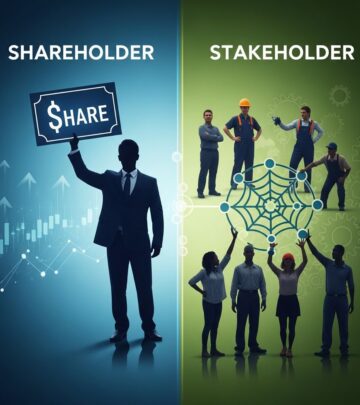
A shareholder is a person, organization, or institution that owns at least one share of a company’s stock, thereby holding an ownership stake in the business. Shareholders have a direct financial interest in the company’s performance and profitability. On the other hand, a stakeholder is any individual or group that has an interest in the company or is affected by its operations, decisions, and outcomes. This broader definition encompasses shareholders but also includes many other parties who may not own any equity in the company.
Defining Shareholders and Their Role
Shareholders are equity owners of a company who have invested capital in exchange for ownership stakes. This investment gives them certain rights and benefits within the organization. Shareholders can be individual retail investors, large institutional investors, or even company executives who hold shares as part of their compensation packages.
The primary motivation for shareholders is financial return on their investment. They expect the company to generate profits, increase in value, and potentially distribute dividends to shareholders. When a company’s stock price rises, the shareholder’s investment value increases proportionally. Conversely, if the company performs poorly and its stock price declines, shareholders experience a direct financial loss.
Shareholders have specific rights within the company structure, including:
- Voting rights on major company decisions through shareholder meetings
- The right to receive dividends when the company distributes profits
- A claim on residual assets in the event of company liquidation or bankruptcy
- The ability to influence board composition and executive compensation
One of the defining characteristics of shareholders is their ability to exit their investment relatively easily. If a shareholder becomes dissatisfied with the company’s performance or management decisions, they can simply sell their shares and invest in another company. This flexibility means shareholders often focus on short-term financial returns and stock price appreciation.
Defining Stakeholders and Their Scope
Stakeholders represent a much broader category of parties with interests in a company’s success or failure. These individuals and groups can be affected by the company’s policies, decisions, and operations, even if they don’t own any equity. Stakeholders can be classified into two main categories: internal and external.
Internal Stakeholders have a direct relationship with the company through employment, ownership, or investment. Examples include:
- Employees who work for the company
- Managers and executives
- Shareholders (who are also stakeholders)
- Board members and directors
External Stakeholders do not have direct relationships with the company but are significantly affected by its actions. Examples include:
- Suppliers and vendors
- Creditors and lenders
- Customers and consumers
- Local communities and municipalities
- Government regulatory agencies
- Environmental organizations
- General public interest groups
Unlike shareholders, stakeholders cannot easily remove themselves from their relationship with the company. An employee cannot simply quit without consequences, a supplier has contractual obligations, and a community faces environmental impacts regardless of their preferences. This fundamental difference creates longer-term commitments and deeper interdependencies.
Key Differences in Priorities and Objectives
Perhaps the most significant distinction between shareholders and stakeholders lies in their differing priorities and objectives regarding company operations.
| Aspect | Shareholders | Stakeholders |
|---|---|---|
| Primary Focus | Financial returns and profit maximization | Broader company performance and sustainability |
| Time Horizon | Often short-term stock price appreciation | Long-term success and stability |
| Decision Motivation | Actions that increase share price and dividends | Actions that benefit their specific interests |
| Risk Tolerance | May accept high-risk expansion strategies | Prefer stability and sustainable practices |
| Exit Strategy | Can sell shares and leave quickly | Long-term commitment and dependency |
Shareholders typically want company management to pursue aggressive strategies such as expansion, acquisitions, mergers, and market penetration—activities that can significantly increase profitability and overall financial health. These initiatives often align with maximizing shareholder value and attracting additional investment.
Stakeholders, conversely, focus on longevity, quality, and stability. Employees prefer better wages, job security, and positive workplace environments. Suppliers seek timely payments, fair rates, and reliable partnerships. Customers demand high-quality products, excellent customer service, and fair pricing. Communities want minimal environmental impact and positive social contributions. These priorities may indirectly support profitability, but the primary concern is broader operational excellence and sustainable practices.
Shareholder Theory vs. Stakeholder Theory
The distinction between shareholders and stakeholders extends into two competing philosophical approaches to corporate governance: shareholder theory and stakeholder theory.
Shareholder Theory posits that the primary responsibility of corporate management is to maximize profits and returns for shareholders. Under this model, all business decisions should be evaluated based on their impact on shareholder value. Executive compensation is tied to stock performance, boards are composed of shareholder-appointed individuals, and strategic decisions prioritize financial metrics above all other considerations.
This traditional approach argues that by maximizing shareholder returns, companies ultimately benefit the broader economy and society through job creation, innovation, and efficient capital allocation. However, critics contend that this narrow focus can lead to short-term thinking, ethical compromises, and neglect of important social and environmental concerns.
Stakeholder Theory advocates that corporations have ethical obligations to all stakeholders, not just shareholders. Under this model, company leaders must balance multiple competing interests and make decisions that create shared value for all parties affected by the business. This approach emphasizes long-term sustainability, social responsibility, environmental stewardship, and community engagement alongside financial performance.
Stakeholder theory has gained increasing acceptance in recent years, particularly with the rise of environmental, social, and governance (ESG) considerations in business decision-making. However, implementing this approach can result in slower decision-making processes and compromises that may not fully satisfy any single stakeholder group.
Ownership and Control Implications
A fundamental distinction between shareholders and stakeholders relates to ownership and control of the company. Shareholders own equity in the company and possess formal control mechanisms through voting rights and board representation. This ownership translates into tangible power to influence corporate direction and strategic decisions.
Stakeholders, with the exception of shareholders who are also stakeholders, typically do not own the company. However, they still maintain significant influence over company operations through various mechanisms. Employees can impact productivity and company culture. Suppliers can affect product quality and supply chain reliability. Customers can influence revenue through purchasing decisions and brand loyalty. Communities and regulators can impose restrictions through legislation and social pressure.
This distinction highlights that while shareholders have formal legal authority through ownership, stakeholders possess informal but nonetheless powerful influence through their relationships and dependencies with the company.
Time Horizon and Investment Perspective
Another critical difference between shareholders and stakeholders is their time horizon for success. Shareholders, particularly those focused on short-term gains, often prioritize quarterly earnings reports and annual stock price performance. They may view their investment as temporary, planning to buy and sell based on market conditions and performance metrics. This short-term orientation can drive management to focus on immediate profitability over long-term sustainability.
Stakeholders generally operate on longer time horizons. Employees plan careers spanning decades with a single company. Communities invest in infrastructure and planning around company facilities. Suppliers build long-term relationships and capabilities tailored to specific customers. This longer-term perspective encourages all stakeholders to care deeply about company sustainability, market position, and reputation. They benefit from the company’s long-term success and suffer from its failures more directly than short-term shareholders.
Rights and Benefits
Shareholders enjoy specific legal rights and tangible benefits from their ownership stake. These include dividend payments, voting privileges, and claims on company assets. If a shareholder holds common stock, they typically receive one vote per share on matters presented at shareholder meetings, such as electing board members or approving major transactions.
Stakeholders’ benefits vary widely depending on their category. Employees receive compensation, benefits, and career development opportunities. Suppliers gain revenue and business opportunities. Customers access products and services. Communities benefit from employment and tax revenues. However, these benefits are generally not formalized as legal rights in the same manner as shareholder privileges.
Impact of Company Performance
Company performance affects shareholders and stakeholders quite differently. For shareholders, poor performance directly threatens their investment value. A significant stock price decline represents an immediate financial loss. In extreme cases, shareholders may lose their entire investment if the company goes bankrupt. However, shareholders can mitigate losses by selling before conditions deteriorate further.
Stakeholders face different consequences from poor company performance. Employees risk job loss and income disruption. Suppliers may face payment delays or contract cancellations. Customers may lose access to needed products or services. Communities lose employment opportunities and tax revenue. Unlike shareholders, most stakeholders cannot easily exit the relationship when performance declines. An employee cannot simply resign without personal consequences; a supplier has contractual obligations; a community cannot relocate overnight.
Board Representation and Corporate Governance
Traditional corporate governance structures heavily favor shareholders. Boards of directors are typically elected by shareholders and primarily accountable to shareholder interests. Executive compensation is commonly tied to stock performance and shareholder returns, creating incentives for management to prioritize shareholder value.
Modern governance reforms increasingly advocate for broader stakeholder representation in corporate decision-making. Some propose boards that include employee representatives, community members, environmental experts, and other stakeholder advocates alongside shareholder-elected directors. This expanded representation aims to ensure that corporate decisions consider diverse interests and create more balanced outcomes. However, implementing such structures raises practical challenges regarding decision-making speed and stakeholder coordination.
Frequently Asked Questions
Q: Can a person be both a shareholder and a stakeholder?
A: Yes, absolutely. Every shareholder is also a stakeholder by definition, as shareholders have an interest in the company and are affected by its performance. However, not every stakeholder is a shareholder. For example, an employee is a stakeholder but may not own company stock.
Q: Why should companies care about stakeholder interests if shareholders own the company?
A: While shareholders own the company legally, ignoring stakeholder interests can jeopardize long-term business success. Employee dissatisfaction leads to turnover and reduced productivity. Poor supplier relationships disrupt supply chains. Unhappy customers switch to competitors. Community opposition creates regulatory and reputational challenges. Balancing stakeholder and shareholder interests typically produces better long-term outcomes.
Q: How do stakeholder and shareholder theories affect business decisions differently?
A: Shareholder theory may lead to decisions that maximize immediate profits, such as cost-cutting measures or aggressive acquisition strategies, even if they harm employees or communities. Stakeholder theory encourages decisions that balance multiple interests, potentially maintaining higher labor standards and environmental practices, even if this moderately reduces short-term profits.
Q: What happens to stakeholders if a company goes bankrupt?
A: Stakeholders face various consequences depending on their category. Employees lose their jobs and may lose unpaid wages. Suppliers become unsecured creditors who may recover nothing. Customers lose access to products or services. Shareholders typically lose their entire investment. Creditors and secured lenders have priority in asset distribution over all other parties.
Q: Is stakeholder capitalism replacing shareholder capitalism?
A: Most companies operate under hybrid models that acknowledge both shareholder returns and stakeholder interests. While stakeholder considerations have gained prominence in recent years, particularly regarding ESG factors, complete replacement of shareholder focus remains uncommon. Most corporations balance these competing pressures rather than adopting one philosophy exclusively.
References
- Stakeholder vs. Shareholder – Difference, Definitions — Corporate Finance Institute. Accessed 2025. https://corporatefinanceinstitute.com/resources/accounting/stakeholder-vs-shareholder/
- Stakeholders Vs. Shareholders: What’s The Difference? — Bankrate. Accessed 2025. https://www.bankrate.com/investing/stakeholders-vs-shareholders/
- Shareholder vs. Stakeholder: What’s the Difference? [2025] — Asana. Accessed 2025. https://asana.com/resources/stakeholder-vs-shareholder
- Shareholder vs Stakeholder – What’s the Difference? — Quality Company Formations. Accessed 2025. https://www.qualitycompanyformations.co.uk/blog/shareholder-vs-stakeholder/
- Shareholder vs Stakeholder: Comparing Models & Approaches — Ideals Board. Accessed 2025. https://idealsboard.com/blog/board-management/shareholder-vs-stakeholder-models/
- Stockholder vs. Stakeholder: What’s the Difference? — Indeed. Accessed 2025. https://www.indeed.com/career-advice/career-development/stockholder-vs-stakeholder
Similar Articles








Read full bio of Sneha Tete