Stagflation: Definition, Causes, and Economic Impact
Understanding stagflation: When economic stagnation meets inflation.
What Is Stagflation?
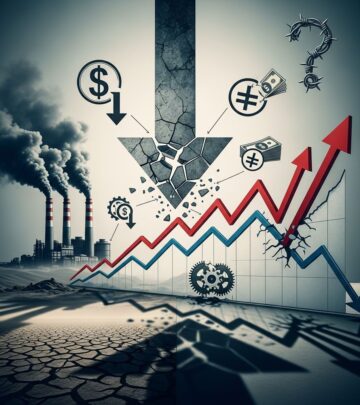
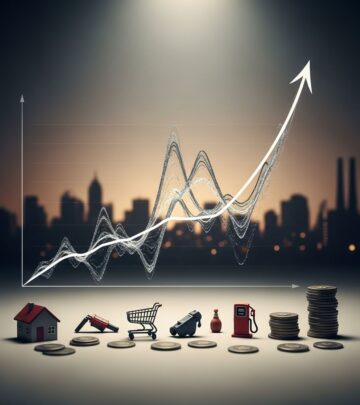
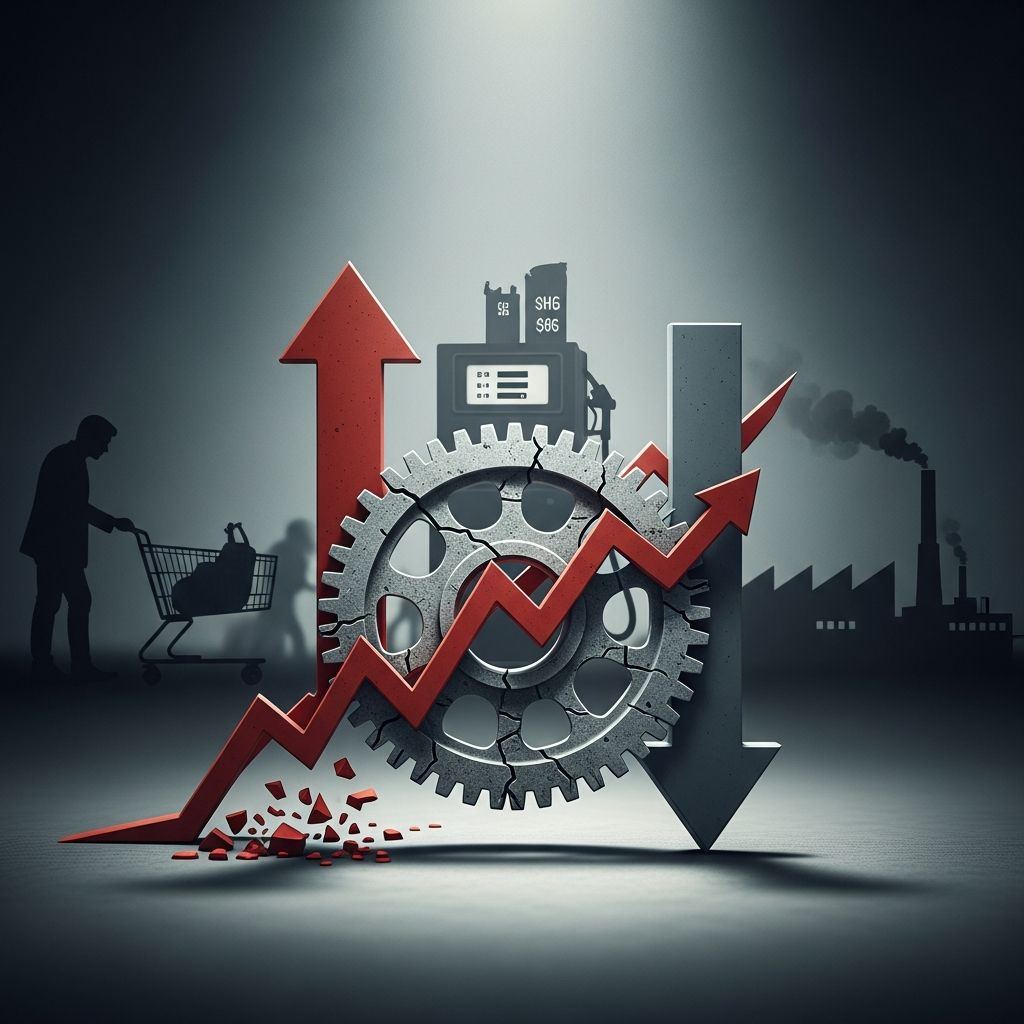
Stagflation is an economic condition characterized by the simultaneous occurrence of stagnant economic growth, high unemployment, and rising inflation. The term is a portmanteau of “stagnation” and “inflation,” combining two traditionally opposing economic phenomena that economists once believed could not happen at the same time. Unlike typical recessions where inflation tends to fall as economic activity slows, stagflation presents a uniquely challenging scenario for policymakers and investors alike.
In a stagflation environment, consumers face the worst of both worlds: they encounter rising prices for goods and services while simultaneously experiencing job losses or wage stagnation. This combination creates significant hardship for households and poses complex policy challenges for central banks and governments, as traditional monetary policy tools may prove ineffective or counterproductive.
Understanding the Economics of Stagflation
Stagflation challenges the conventional wisdom of macroeconomic theory, particularly the Phillips Curve concept, which suggested an inverse relationship between inflation and unemployment. The emergence of stagflation in the 1970s fundamentally altered economists’ understanding of how these variables interact.
The condition typically arises when external shocks or structural economic problems prevent normal market mechanisms from functioning effectively. When stagflation occurs, policymakers face a difficult dilemma: attempting to combat inflation through tight monetary policy may worsen unemployment, while trying to stimulate growth through expansionary policies may accelerate price increases.
Key Characteristics of Stagflation
Stagflation exhibits several defining characteristics that distinguish it from other economic downturns:
- Slowing Economic Growth: Gross Domestic Product (GDP) growth stalls or enters negative territory, indicating an economy that is not expanding or is contracting.
- High Inflation Rates: Consumer prices rise at significant rates despite weak economic conditions, eroding purchasing power and creating uncertainty.
- Rising Unemployment: Job losses mount and labor force participation declines as businesses reduce operations and hiring freezes take effect.
- Reduced Consumer Spending: With prices rising and incomes stagnant or falling, consumers cut back on discretionary purchases and savings decline.
- Business Pessimism: Companies postpone investments and expansion plans due to uncertain economic conditions and squeezed profit margins.
- Asset Price Volatility: Stock markets typically experience significant declines as investors lose confidence in future earnings and economic recovery.
Causes of Stagflation
Stagflation typically results from external supply shocks or structural economic imbalances rather than demand-side problems. Understanding the root causes is essential for addressing the condition effectively.
Supply-Side Shocks
External disruptions to the supply side of the economy can trigger stagflation by simultaneously reducing productive capacity and raising input costs. Examples include:
- Oil Price Shocks: Sudden increases in energy prices raise costs across the entire economy, from transportation to manufacturing to heating, while reducing economic efficiency.
- Natural Disasters: Earthquakes, hurricanes, floods, and other natural events can destroy infrastructure and productive capacity, limiting supply while disrupting distribution networks.
- Geopolitical Crises: Wars, sanctions, and political instability can interrupt supply chains, increase shipping costs, and create uncertainty that dampens investment and hiring.
- Pandemic Disruptions: Health crises can simultaneously close businesses, disrupt supply chains, reduce labor supply, and increase production costs.
Structural Economic Problems
Stagflation can also result from deep-seated structural issues within an economy:
- Wage-Price Spirals: When workers demand higher wages to compensate for inflation, and firms raise prices to cover wage increases, a self-reinforcing cycle develops.
- Poor Policy Decisions: Ill-timed fiscal or monetary policies can create stagflation if they reduce productive capacity while expanding money supply.
- Loss of Competitiveness: Industries that lose competitive advantages or face increased international competition may shrink while prices remain elevated.
- Productivity Decline: When an economy’s productive efficiency falls, output decreases while input costs rise, creating the perfect environment for stagflation.
Historical Examples of Stagflation
Stagflation has occurred at several critical junctures in modern economic history, each providing valuable lessons about this challenging condition.
The 1970s Oil Crisis
The most prominent and studied example of stagflation occurred during the 1970s following the 1973 oil embargo imposed by the Organization of Arab Petroleum Exporting Countries (OPEC). Oil prices quadrupled, rising from approximately $3 per barrel to $12 per barrel. This shock reverberated throughout developed economies, particularly the United States, which imported significant quantities of crude oil.
The combination of soaring energy prices, wage-price spirals, and accommodative monetary policies created severe stagflation. Inflation in the United States reached double digits, unemployment surged to over 9 percent, and economic growth stalled. The period demonstrated policymakers’ struggle to address both inflation and unemployment simultaneously, ultimately requiring Federal Reserve Chairman Paul Volcker to implement aggressive interest rate increases in the early 1980s to break the inflation cycle, though at the cost of a severe recession.
The 1980s Stagflation
Following the Iranian Revolution in 1979, another oil price shock occurred as Iranian oil production halted. Crude prices nearly doubled again, reaching $39 per barrel. This second supply shock reignited stagflation in many developed economies during the early 1980s, though the impact was somewhat mitigated by the policy responses implemented after the 1970s stagflation.
Post-2020 Pandemic Stagflation
Following the COVID-19 pandemic, many developed economies experienced a resurgence of stagflation. Massive fiscal stimulus combined with supply chain disruptions, labor shortages, and sustained high energy prices (particularly following Russia’s invasion of Ukraine in February 2022) created elevated inflation rates alongside slowing economic growth and rising unemployment in 2022-2023. This period demonstrated that stagflation remains a relevant economic challenge in the modern era.
Effects on the Economy
Stagflation creates widespread negative consequences for economic participants and poses significant challenges for policymakers:
Impact on Consumers
Consumers bear significant hardship during stagflation. Real wages—the purchasing power of earnings—decline as prices rise while incomes remain stagnant or fall due to job losses. Savings rates typically decline as households struggle to maintain consumption levels. Consumer confidence plummets, further reducing spending and economic activity.
Impact on Businesses
Companies face compressed profit margins as input costs rise but competitive conditions prevent corresponding price increases. Capital investment declines as uncertainty increases and expected returns fall. Many businesses reduce workforce levels to control costs, contributing to rising unemployment.
Impact on Investments
Stagflation is particularly challenging for investors. Traditional diversification strategies often fail because stocks and bonds both perform poorly simultaneously—stocks decline due to reduced earnings prospects, while bonds fall as inflation erodes fixed-income returns. Real assets like real estate may provide some protection, but their liquidity constraints limit their utility for many investors.
Impact on Financial Markets
Stock markets typically experience significant declines during stagflation as investors reassess earnings prospects and demand higher risk premiums. Volatility increases dramatically, creating uncertainty that further dampens investment and economic activity. Credit spreads widen as default risk concerns mount.
Policy Response to Stagflation
Addressing stagflation presents central banks and governments with an extraordinarily difficult policy dilemma. Traditional macroeconomic tools are often inadequate or counterproductive:
- Monetary Tightening: Raising interest rates may control inflation but risks deepening recession and unemployment.
- Monetary Easing: Lowering rates may stimulate growth but risks accelerating inflation further.
- Fiscal Stimulus: Government spending can support demand but may worsen inflation if stagflation stems from supply-side constraints.
- Supply-Side Reforms: Addressing structural constraints and improving productivity offers the most promising approach but requires time and political will.
Stagflation vs. Other Economic Conditions
Understanding how stagflation differs from other economic scenarios helps clarify its unique challenges:
| Condition | Economic Growth | Inflation | Unemployment | Characteristics |
|---|---|---|---|---|
| Stagflation | Low/Negative | High | High | Simultaneous stagnation and inflation; policy dilemma |
| Recession | Negative | Low | High | Declining growth with falling prices; easier to address |
| Inflation | Positive | High | Low | Strong growth with rising prices; traditional policy effective |
| Deflation | Negative | Negative | High | Declining prices and growth; liquidity trap risk |
Investment Strategies During Stagflation
Investors face significant challenges when allocating capital during stagflation. Traditional portfolio diversification often fails, requiring alternative approaches:
- Inflation-Protected Securities: Treasury Inflation-Protected Securities (TIPS) maintain purchasing power as inflation rises.
- Commodities: Physical commodities and commodity-linked investments often appreciate during stagflation as input costs drive prices higher.
- Real Estate: Property investments may provide inflation protection, though illiquidity and leverage risks must be carefully managed.
- High-Quality Dividend Stocks: Companies with pricing power and strong balance sheets may maintain dividends despite challenging conditions.
- Cash and Short-Duration Assets: Preserving capital and maintaining flexibility becomes paramount during uncertain stagflation periods.
Frequently Asked Questions (FAQs)
Q: Is stagflation likely to occur again?
A: Yes, stagflation can occur again whenever economies experience significant supply-side shocks or structural imbalances. Supply chain disruptions, energy crises, geopolitical conflicts, or pandemic-related disruptions could all trigger stagflation. However, improved economic understanding and policy tools may help mitigate its severity.
Q: How does stagflation differ from recession?
A: In a typical recession, economic growth falls while inflation also declines, making policy responses more straightforward. Stagflation is worse because growth falls while inflation remains elevated, creating a policy dilemma where actions to fight inflation worsen unemployment.
Q: Can central banks eliminate stagflation?
A: Central banks alone cannot eliminate stagflation caused by supply-side shocks. They must work with governments on structural reforms that increase productive capacity. When stagflation stems from demand-side problems, tight monetary policy can eventually work but may require accepting temporarily higher unemployment.
Q: What sectors perform best during stagflation?
A: Energy, commodities, utilities, and consumer staples typically perform better during stagflation because these sectors have pricing power and provide essential goods. Technology and discretionary consumer stocks typically underperform due to reduced spending and lower expected earnings.
Q: How does stagflation affect retirement savings?
A: Stagflation is particularly damaging for retirees living on fixed incomes, as purchasing power declines while investment portfolios decline in value. Younger workers benefit from inflation reducing real debt burdens, but face reduced job prospects and lower real wage growth.
Q: What warning signs precede stagflation?
A: Warning signs include sudden increases in commodity or energy prices, declining productivity metrics, rising unemployment, persistent inflation despite slowing growth, and widening credit spreads. Yield curve inversions and pessimistic consumer sentiment surveys also often precede stagflation.
References
- Historical Oil Price Data — U.S. Energy Information Administration. 2024. https://www.eia.gov/petroleum/historicalanalysis/
- Inflation and Unemployment Trends — U.S. Bureau of Labor Statistics. 2024. https://www.bls.gov/data/
- The Great Inflation of the 1970s-80s — Federal Reserve History. Federal Reserve System. https://www.federalreservehistory.org/essays/great-inflation
- Supply Chain Disruptions and Inflation: Post-Pandemic Analysis — International Monetary Fund (IMF). 2023. https://www.imf.org/external/research/
- Monetary Policy During Stagflation — Bank for International Settlements. 2022. https://www.bis.org/publ/
- The Phillips Curve and Modern Economics — National Bureau of Economic Research (NBER). 2024. https://www.nber.org/
Similar Articles








Read full bio of medha deb