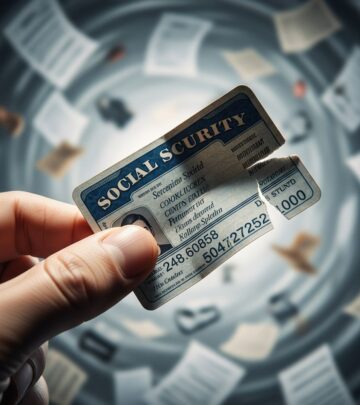
Immediate Actions When Your SSN is Compromised
Essential steps to protect yourself after discovering your Social Security number has been stolen

Discovering that your Social Security number (SSN) has been stolen can be alarming, but taking prompt action significantly reduces the damage a thief can inflict. Your SSN is one of the most valuable pieces of personal information in your identity—it’s the gateway to credit accounts, government benefits, and financial services. When compromised, criminals can open lines of credit in your name, file fraudulent tax returns, apply for government benefits, or engage in other forms of identity fraud. The key to minimizing harm lies in responding quickly and systematically. Understanding what steps to take immediately after learning your SSN has been stolen can mean the difference between a minor inconvenience and years of financial recovery.
Understand the Scope of the Threat
Before taking action, it’s important to recognize what a stolen SSN means and how criminals might use it. Your Social Security number serves as a unique identifier for your financial and government records. Thieves who obtain your SSN can potentially use it to open credit cards, take out loans, apply for mortgages, file tax returns, claim government benefits, or create fake identification documents. The severity of the threat depends on whether the thief has only your number or also has additional personal information such as your name, address, or financial details.
Understanding the urgency of your situation helps you prioritize your response. If you suspect that supplementary information has also been compromised—such as through a data breach affecting your employer or a bank—you may need to take even more aggressive protective measures. The good news is that federal law and consumer protections exist to help you recover from identity theft, and many of the most effective tools are available to you at no cost.
Step One: Report the Theft to Law Enforcement and the Federal Trade Commission
Your first critical action should be to create an official record of the identity theft. This documentation serves as legal evidence if a criminal uses your SSN to commit fraud, and it provides you with important protections under federal law.
File a Police Report
Contact your local police department and file a report documenting the theft of your Social Security number. Provide them with details about when you discovered the theft, where your SSN may have been compromised (such as through a data breach notification), and any fraudulent activity you’ve already detected. Request a copy of the police report, as you’ll need it when contacting creditors and credit bureaus. Some police departments allow you to file reports online, while others require an in-person visit. Having an official police report creates a documented trail that helps establish that you are a victim of identity theft rather than responsible for the fraud.
File with the Federal Trade Commission
The Federal Trade Commission (FTC) maintains a centralized identity theft report database and provides resources specifically designed to help victims. You can file an identity theft report through the FTC’s website at IdentityTheft.gov or by calling their toll-free identity theft hotline at 877-IDTHEFT (877-438-4338). When you file with the FTC, you create an official record that you can share with creditors, banks, and credit bureaus. The FTC uses this information to investigate identity theft patterns and help law enforcement agencies track down perpetrators. Filing an FTC report is free and typically takes about 30 minutes to complete online. You’ll be asked to provide information about the identity theft, any fraudulent accounts opened, and unauthorized charges.
Step Two: Implement Protective Measures with Credit Bureaus
One of your most powerful defenses against ongoing fraud is controlling who can access your credit file. Two primary tools—fraud alerts and credit freezes—work together to protect your creditworthiness.
Place a Fraud Alert
A fraud alert notifies credit bureaus and creditors that your identity may have been compromised. When a fraud alert is active, creditors are required to take additional steps to verify your identity before opening new credit accounts in your name. This might include calling you at a phone number you’ve designated or sending confirmation to an address you specify. Fraud alerts last for one year but can be renewed, and they’re entirely free to place.
To place a fraud alert, contact any one of the three major credit bureaus—Equifax, Experian, or TransUnion—and that bureau is required to alert the other two. You only need to contact one bureau, not all three, though some people choose to contact all three simultaneously to ensure uniform protection. You can place a fraud alert by phone, online, or by mail. Speak to a representative and explain that you’ve experienced identity theft or are concerned about it, and request a fraud alert. Keep documentation of when you placed the alert and with which bureau.
Consider a Credit Freeze
A credit freeze (also called a security freeze) is a more comprehensive protective measure than a fraud alert. When you freeze your credit, the credit bureaus restrict access to your credit file entirely. Potential creditors cannot view your credit report without your permission, which prevents criminals from opening new accounts in your name. A credit freeze remains in effect until you explicitly remove it, providing ongoing protection even after a fraud alert expires.
While fraud alerts are always free, credit freezes are also free for identity theft victims who have filed a police report or FTC identity theft report. To place a credit freeze, contact each of the three credit bureaus directly through their fraud department. You’ll need to provide identifying information and a copy of your police report or FTC identity theft report. The freeze typically takes effect within one business day. When you need to apply for legitimate credit in the future, you can temporarily lift the freeze—a process sometimes called thawing—for specific creditors or for a specific time period.
Step Three: Lock Your Social Security Number and Block Electronic Access
Beyond credit bureau protections, you can directly restrict access to your Social Security records through the Social Security Administration (SSA).
Block Electronic Access to Your SSA Records
The Social Security Administration offers an electronic access block that prevents anyone—including you—from accessing your Social Security records online or by phone. This tool is particularly valuable if you believe your SSN has been compromised and you’re concerned that a criminal might attempt to fraudulently access government benefits in your name. When you request an electronic access block by calling the SSA at 1-800-772-1213, the SSA implements a restriction that stops automated telephone and electronic access to your file.
The electronic access block remains in place until you contact the SSA again and request its removal. If you need to access your own Social Security records in the future, you can visit your local Social Security office in person with proper identification, and they can assist you. This approach balances security with access—criminals cannot easily bypass the block, but you retain the ability to interact with the SSA through verified in-person channels.
Create a my Social Security Account
If you haven’t already done so, create a personal my Social Security account on the SSA’s website. By establishing your own account before a criminal can create one using your SSN, you prevent fraudsters from using your credentials to access your Social Security information. Your account allows you to view your earnings record, verify that benefit information is accurate, and monitor for any suspicious activity. Log in periodically to confirm that your earnings and benefit information remain accurate and unchanged.
Additional Essential Actions
Contact Government Agencies Where Fraud Occurred
If you have specific evidence that your SSN was used to commit fraud—such as a fraudulent tax return filed in your name or an unauthorized application for government benefits—contact the relevant government agencies directly. If someone filed a fraudulent tax return, contact the Internal Revenue Service and report the suspected fraud. You can reach the IRS identity theft hotline or file a report through their website. If your SSN was used to fraudulently apply for Social Security benefits, Supplemental Security Income, or other benefits programs, contact the Social Security Administration and report the unauthorized application. The SSA can flag your account and help prevent additional fraudulent claims.
Monitor Financial Accounts and Credit Reports
Regularly review all of your financial accounts for unexplained activity. Check your bank statements, credit card accounts, and investment accounts monthly or more frequently. Look for transactions you don’t recognize, unauthorized transfers, or accounts you didn’t open. Additionally, you’re entitled to a free credit report from each of the three major credit bureaus once per year through AnnualCreditReport.com. Review these reports carefully for accounts or inquiries you didn’t authorize. Many identity theft victims discover fraud through credit report monitoring rather than through their direct accounts.
Document Everything
Keep detailed records of every action you take in response to the identity theft. Save copies of police reports, FTC identity theft reports, fraud alert confirmations, credit freeze documentation, letters to creditors, and records of phone calls (including dates, times, and names of representatives you spoke with). This documentation is essential if you need to dispute fraudulent charges, prove your identity, or file insurance claims. Organize this information in a dedicated folder—digital or physical—for easy reference.
Ongoing Prevention and Monitoring Strategies
After addressing immediate threats, implement long-term protective measures. Never carry your Social Security card in your wallet or purse. Instead, memorize your SSN and leave your card at home in a secure location. When organizations request your SSN, ask why it’s needed, how it will be used, and what happens if you decline to provide it—many organizations don’t actually require it despite requesting it. Shred any documents containing your SSN before disposing of them, particularly tax returns, bank statements, and payroll stubs. Use strong, unique passwords for all online accounts and enable multi-factor authentication wherever available. Regularly monitor your my Social Security account, credit reports, and financial statements for signs of unauthorized activity.
Frequently Asked Questions
How long does it take to recover from SSN identity theft?
Recovery time varies depending on the extent of the fraud. Resolving unauthorized accounts or fraudulent charges can take weeks to months, while more complex cases involving tax fraud or government benefit fraud may require a year or longer.
Will I be responsible for fraudulent charges made with my SSN?
Federal law limits your liability for most types of identity theft fraud, particularly regarding credit cards and bank accounts. However, you must report the fraud promptly and cooperate with investigations. Filing a police report and FTC identity theft report protects your legal standing.
Can I get a new Social Security number?
The Social Security Administration rarely issues new SSNs. While you can request a replacement card if yours is lost or stolen, the number itself remains the same. Freezing your credit and blocking electronic access provides better protection than obtaining a new number.
What should I do if I receive a tax refund I didn’t request?
This may indicate that someone filed a fraudulent tax return using your SSN. Contact the IRS immediately at their identity theft hotline, do not cash the check, and report it as part of your identity theft claim.
References
- How to Protect Yourself from Social Security Number Identity Theft — Equifax. 2025. https://www.equifax.com/personal/education/identity-theft/articles/learn/social-security-number-identity-theft/
- How to Keep Your Social Security Number Safe — Experian. 2025. https://www.experian.com/blogs/ask-experian/how-to-keep-social-security-number-safe/
- How To Lock Your Social Security Number and Prevent Identity Theft — LendingTree. 2025. https://www.lendingtree.com/credit-repair/how-to-stop-identity-thieves-from-getting-your-social-security-number/
- How to Avoid Scams and Protect Your SSN — Asurity. 2025. https://www.asurity.com/blogs/social-security-protection-guide-how-to-avoid-scams-and-protect-your-ssn/
- Identity Theft Guide for Individuals — Internal Revenue Service. 2025. https://www.irs.gov/identity-theft-central/identity-theft-guide-for-individuals
- Avoid Identity Theft: Protect Social Security Numbers — Social Security Administration. 2024. https://www.ssa.gov/phila/ProtectingSSNs.htm
- How You Can Help Us Protect Your Social Security Number and Keep Your Information Safe — Social Security Administration. Publication EN-05-10220. https://www.ssa.gov/pubs/EN-05-10220.pdf
Similar Articles








Read full bio of medha deb