SSI and SSDI Impact on Credit Scores
Discover how Supplemental Security Income and Social Security Disability Insurance influence your credit profile and financial stability.
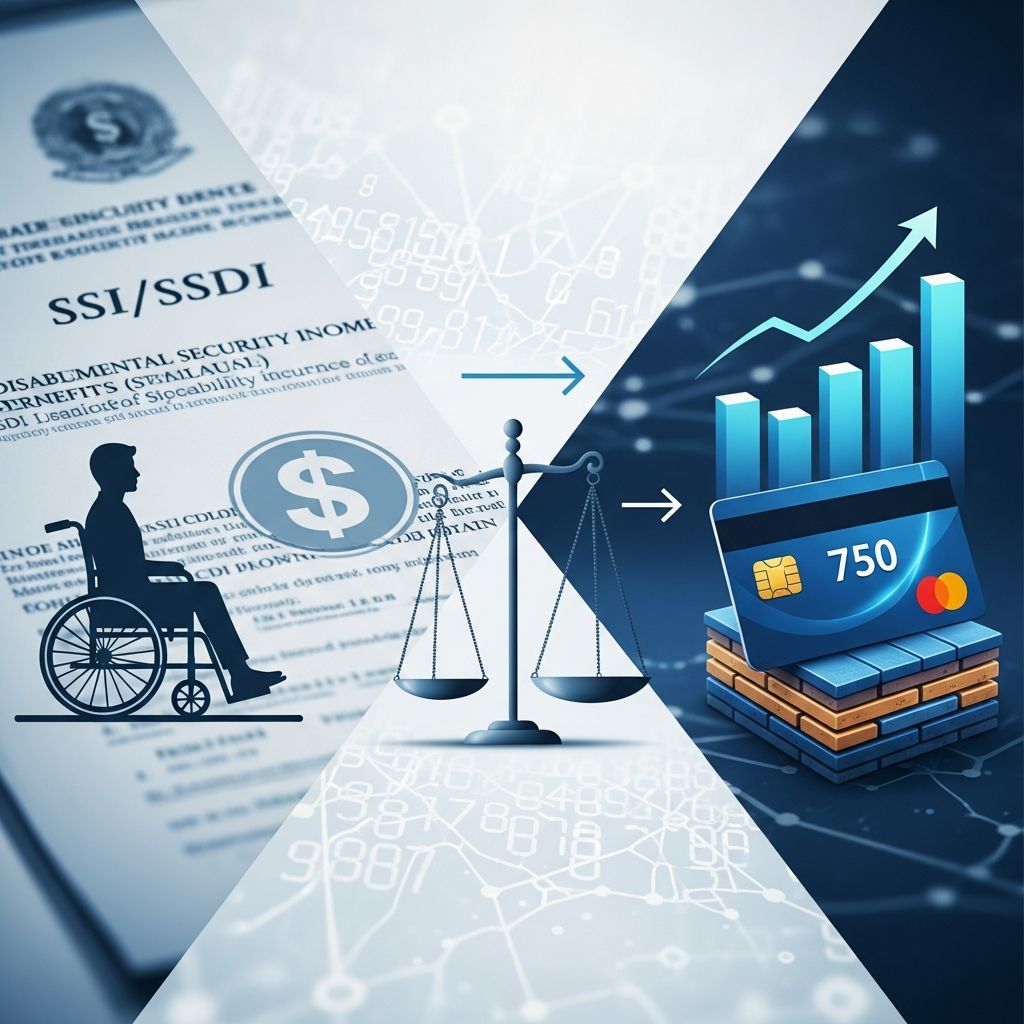
Social Security Disability Insurance (SSDI) and Supplemental Security Income (SSI) provide vital financial support for individuals unable to work due to disabilities, but they do not directly harm credit scores. These benefits are not reported as income to credit bureaus like Experian, Equifax, or TransUnion, meaning receipt alone won’t lower your score. However, fixed incomes from these programs can indirectly influence credit management, bill payments, and debt accumulation.
Understanding SSDI: Insurance for Workers with Disabilities
SSDI offers monthly payments to those with sufficient work history who become disabled. Eligibility hinges on earning work credits through Social Security taxes, typically requiring 40 credits with 20 in the last 10 years, though younger applicants need fewer. Benefits are calculated from prior earnings, converting seamlessly to retirement benefits at full retirement age without application.
Unlike needs-based programs, SSDI ignores personal assets or current income levels for qualification. This structure supports workers regardless of savings, focusing solely on disability severity—defined as a condition preventing substantial gainful activity for at least 12 months or resulting in death. A five-month waiting period applies post-disability onset.
SSI Basics: Needs-Based Support for Low-Income Disabled
SSI targets low-income individuals, including children, adults over 65, or the blind, without work credit requirements. Financial need determines eligibility, with strict limits: individuals under $2,000 in countable resources, couples under $3,000, plus $2,000 per child. Income caps, around $1,971 monthly for singles (adjusted yearly), further restrict access.
Countable resources exclude primary homes, one vehicle, household goods, and life insurance up to $1,500 face value. Excess resources disqualify benefits for that month, but selling them may restore eligibility the next. SSI payments, below federal poverty levels (e.g., $794 max federal in 2021), supplement low earnings. No waiting period exists, aiding immediate needs.
Do Disability Benefits Appear on Credit Reports?
Neither SSDI nor SSI payments are listed as income on credit reports. Credit bureaus do not receive this data from the Social Security Administration (SSA), so benefits won’t boost or damage scores via income fields. However, if benefits fund loans or credit use, repayment history impacts scores indirectly.
- Positive aspects: Reliable, direct-deposited payments help consistent bill payments, supporting on-time history (35% of FICO score).
- Potential pitfalls: Fixed budgets may lead to missed payments if expenses exceed benefits, harming payment history.
- Concurrent receipt: Low SSDI earners can get SSI supplements, but high SSDI disqualifies SSI.
Navigating Financial Limits While on Benefits
SSI’s resource rules demand careful asset management. Loans generally don’t count as income if repayable and documented, preserving eligibility. Special needs trusts or ABLE accounts shelter funds without penalty, ideal for long-term planning. SSDI recipients face no such caps, allowing savings growth.
| Program | Asset Limit (Individual) | Income Consideration | Work Credits Required |
|---|---|---|---|
| SSDI | None | No | Yes |
| SSI | $2,000 | Yes ($1,971/mo max) | No |
This table highlights key differences, aiding eligibility planning.
Building and Protecting Credit on Disability Income
Stable benefits enable credit-building via secured cards or credit-builder loans, reporting positive activity without high risk. Aim for utilization under 30% and payments before due dates. Budgeting tools track fixed incomes against variables like medical costs.
- Review free annual credit reports for errors.
- Use autopay for utilities to avoid lates.
- Seek hardship programs from creditors if needed.
- Consult non-profits for debt counseling, avoiding high-fee services.
Tax implications arise if combined income exceeds thresholds, taxing up to 85% of SSDI; plan via trusts.
Common Financial Hurdles and Solutions
Medical debts or over-limit spending challenge recipients. Prioritize essentials: housing, food, utilities. SSDI’s higher averages (earnings-based) offer more flexibility than SSI’s flat rates. Long-term, benefits support retirement transitions without credit effects.
For dual-eligible, SSA offsets SSI by SSDI amounts exceeding federal benefits. Legal aid clarifies complex calculations.
Frequently Asked Questions
Can SSI or SSDI payments improve my credit score?
No direct impact, but timely bill payments using benefits strengthen scores indirectly.
Will receiving both programs affect my credit?
Not directly; focus on debt management across incomes.
Do assets over SSI limits ruin credit?
No, but they suspend benefits, straining finances and payments.
Are disability benefits taxable and reported to credit bureaus?
Potentially taxable, but never reported to bureaus.
How to handle loans on SSI?
Document as repayable to exclude from income/resources.
Long-Term Financial Strategies for Recipients
Integrate benefits into holistic plans: emergency funds within limits, investment via eligible vehicles. Monitor SSA updates, as limits adjust for inflation. Professional guidance ensures compliance without credit risks.
Disability shouldn’t doom financial health. Proactive steps yield strong profiles, opening secured loans or rentals.
References
- How SSDI Asset Limits Affect Social Security Disability — Hankey Law Office. 2023. https://www.hankeylawoffice.com/blog/ssdi-asset-limits-social-security-disability/
- How SSDI Affects Long-Term Financial Planning — Grech Law Firm. 2023. https://grechlawfirm.com/how-ssdi-affects-long-term-financial-planning/
- Social Security Disability Insurance Versus Supplemental Security Income — J and Ils Law. 2023. https://jandils.com/blog/social-security-disability-insurance-versus-supplemental-security-income/
- Supplemental Security Income & Legal Eligibility — Justia. 2023. https://www.justia.com/disability-law/disability-benefits-your-legal-options/supplemental-security-income-legal-eligibility/
- Supplemental Security Income for People with Disabilities — KFF (Kaiser Family Foundation). 2021-10-01. https://www.kff.org/affordable-care-act/supplemental-security-income-for-people-with-disabilities-implications-for-medicaid/
- Understanding Supplemental Security Income SSI Resources — SSA.gov. 2023. https://www.ssa.gov/ssi/text-resources-ussi.htm
- Will getting a loan affect my Supplemental Security Income? — Bridgman Gantt Law. 2023. https://www.bridgmanganttlaw.com/blog/will-getting-a-loan-affect-my-supplemental-security-income/
Similar Articles








Read full bio of medha deb