Bank Scams: 5 Major Types And How To Avoid Them
Learn to identify common bank scams like phishing, account takeovers, and fake accounts to safeguard your finances effectively.
Bank scams are increasingly sophisticated, targeting digital banking users through phishing, account takeovers, and more. Financial institutions lost over $500,000 on average to fraud in 2022, with incidents rising due to advanced tactics like AI-driven attacks. This guide covers major scam types, red flags, and prevention steps drawn from official sources to help you protect your accounts.
Common Types of Bank Scams
Scammers exploit trust in banks via email, phone, text, or fake websites. Key types include fake accounts, account takeovers (ATO), money mules, and authorized/unauthorized transactions. Understanding these helps in early detection.
Phishing Attacks
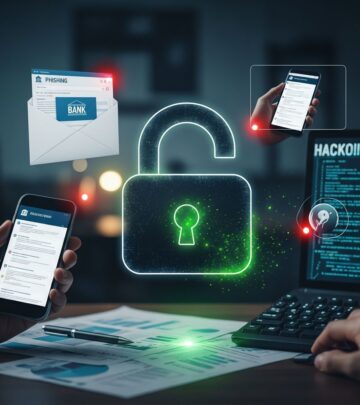
Phishers send fake emails, texts, or calls pretending to be your bank, urging you to log in or share details. They create look-alike sites to steal credentials. Bank of America warns never to provide personal info or click suspicious links. TD Bank notes real banks never ask for info over unsolicited calls.
- Red flags: Urgent language, threats to close accounts, requests for passwords or PINs.
- Example: “Your account is locked—click here to verify.” Hang up and call official numbers.
Account Takeovers (ATO)
Fraudsters use stolen credentials from phishing or data breaches to access accounts. They transfer funds or make purchases. Credentials are traded in underground markets.
- How it happens: Phishing emails like “Update billing—log in here.”
- Impacts: ACH theft, fund laundering between accounts.
Fake Accounts
Criminals use bots and stolen IDs to open thousands of accounts for promotions or money laundering. They bypass KYC with fake documents.
- Detection challenge: Traditional CAPTCHAs fail against automation.
- Solution: Banks use unsupervised machine learning to spot patterns like shared emails.
Money Mules
Scammers recruit unwitting people to transfer illicit funds, often via job scams. Mules face legal risks. Digital banks see this in coordinated account schemes.
- Warning: Offers for easy money transferring “packages.”
Authorized and Unauthorized Transactions
Even approved transfers can be fraudulent if tricked. Unauthorized ones stem from breaches. Banks monitor for anomalies using AI.
Red Flags of Bank Scams
Spot scams by these signs from FDIC and OCC guidelines:
- Unsolicited contacts requesting sensitive info.
- Too-good-to-be-true deals or prizes.
- Pressure to act fast or keep secrets.
- Frozen computer screens demanding calls.
- Requests to withdraw cash secretly, like in Grandparent Scam.
Consumer Financial Protection Bureau emphasizes reporting to prevent wider harm.
How Banks Would Never Contact You
Legitimate banks follow strict protocols:
- Never ask for personal info via phone or email—verify independently.
- Never demand secrecy for transactions; staff must know details.
- Never rush or threaten account closure without official notice.
- Never request remote access to your computer.
Prevention Strategies
Protect yourself with these expert-recommended steps:
Secure Your Devices and Connection
- Use updated antivirus, OS, and screen locks with biometrics.
- Avoid public Wi-Fi; use personal chargers.
- Freeze credit at bureaus to block new accounts.
Strengthen Credentials
- Create unique, complex passwords; enable MFA and biometrics.
- Avoid reusing passwords across sites.
Be Cautious Online
- Limit shared info; ignore stranger requests.
- Think before clicking—scan attachments.
- Use official apps/sites only.
Bank-Side Protections
Banks deploy AI, machine learning, behavioral biometrics, and device fingerprinting. Federal Reserve advises vigilance against imposter scams.
| Scam Type | Prevention Method | Source |
|---|---|---|
| Phishing | MFA, verify sender | |
| ATO | Monitor logins, ML detection | |
| Fake Accounts | UML, ID verification | |
| Money Mules | Report suspicious jobs |
What to Do If Scammed
Act fast:
- Contact your bank immediately.
- Report to FTC at ReportFraud.ftc.gov or local police.
- Change passwords, monitor credit.
- Freeze accounts/credit.
Funds may be irrecoverable if transferred, so prevention is key.
Frequently Asked Questions (FAQs)
Q: What is the Bank Investigator Scam?
A: Scammers pose as bank staff investigating fraud, tricking you into sharing info or money.
Q: Should I ever give my bank details over phone?
A: No. Hang up and call the official number on your card.
Q: How does MFA help against ATO?
A: It requires a second factor, blocking access even with stolen passwords.
Q: Can banks detect fake accounts?
A: Yes, using machine learning to analyze patterns invisible to rules-based systems.
Q: What if my computer is frozen with a scam message?
A: Don’t call the number; take it to a trusted tech for virus scan.
Stay Vigilant: Cyber Hygiene Tips
Regularly update passwords, enable alerts, and educate yourself via FDIC resources. Threats evolve, so adapt. Canadian Anti-Fraud Centre offers scam trackers.
References
- How to Identify a Bank Scam to Keep Your Account Safe — Bank of America. 2025. https://www.bankofamerica.com/security-center/avoid-bank-scams/
- 4 Major Digital Bank Frauds and How to Stop Them — DataVisor. 2024-10-15. https://www.datavisor.com/blog/4-major-digital-bank-frauds-and-how-to-stop-them
- What is Bank Fraud? 12 Common Types & Prevention Strategies — Ping Identity. 2024. https://www.pingidentity.com/en/resources/blog/post/bank-fraud.html
- Things Your Bank Would Never Ask You: How to Spot Fraud — TD Stories. 2024. https://stories.td.com/ca/en/article/things-your-bank-would-never-ask-you-how-to-spot-fraud-before-it-happens
- A Quick Guide to Fraud Detection & Prevention in Banking — ComplyAdvantage. 2025-01-10. https://complyadvantage.com/insights/fraud-detection-prevention-in-banking/
- Fraud and Scams — Consumer Financial Protection Bureau (.gov). 2025. https://www.consumerfinance.gov/consumer-tools/fraud/
- Protect Yourself from Fraud and Scams — Federal Reserve Board (.gov). 2024. https://www.federalreserve.gov/consumerscommunities/fraud-scams.htm
Similar Articles








Read full bio of Sneha Tete