Specialization: Driving Economic Growth and Productivity
Master specialization: the economic principle that drives productivity, efficiency, and global trade.

Understanding Specialization in Economics
Specialization is a fundamental economic principle that refers to the practice of individuals, organizations, or nations focusing on a limited scope of productive activities in which they possess a comparative advantage. Rather than attempting to produce all goods or services independently, specialized entities concentrate their resources, skills, and efforts on specific areas where they can achieve maximum efficiency and output. This strategic focus creates the foundation for increased productivity, reduced production costs, and enhanced overall economic performance.
In modern economies, specialization manifests across multiple levels—from individual workers mastering specific trades to entire nations dedicating resources to particular industries or sectors. A surgeon specializes in medical procedures, a software developer focuses on programming, and a nation might concentrate on manufacturing electronics or producing agricultural goods. This concentrated expertise enables each participant to develop superior skills, implement advanced techniques, and ultimately produce goods and services of higher quality at lower costs.
The Concept of Division of Labor
Division of labor, closely intertwined with specialization, refers to the breakdown of production processes into specialized tasks performed by different workers or entities. Instead of one individual handling all steps of production, each person focuses on one or several specific tasks, becoming highly proficient in that particular area. This approach fundamentally transformed manufacturing and service industries throughout history.
The benefits of division of labor are substantial and measurable. When workers concentrate on specific tasks repeatedly, they develop expertise, speed, and efficiency that would be impossible if they constantly switched between different responsibilities. Additionally, specialized workers typically require less training time to reach competency levels, as they focus on mastering a narrower skill set. Organizations save time and resources through reduced learning curves and increased operational efficiency.
Consider modern healthcare systems as a practical example. Rather than having general practitioners perform all medical tasks, hospitals employ cardiologists, radiologists, surgeons, nurses, and technicians—each specializing in specific areas. This division of labor enables faster diagnoses, more effective treatments, and improved patient outcomes compared to scenarios where one person attempted all medical functions.
Comparative Advantage and Absolute Advantage
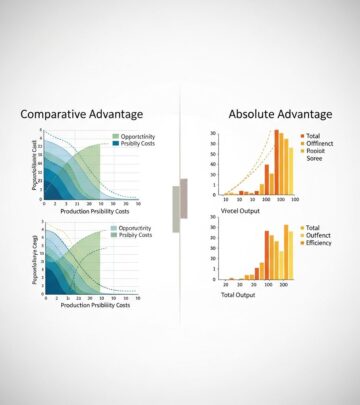
Two critical concepts underpin the economic rationale for specialization: comparative advantage and absolute advantage. Understanding these principles explains why specialization generates significant economic benefits at individual, organizational, and national levels.
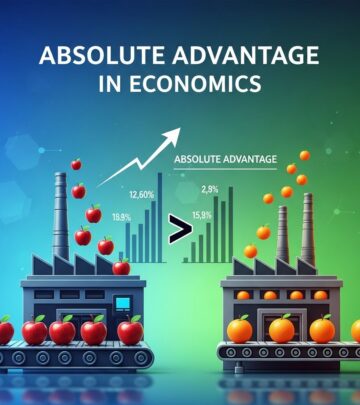
Absolute Advantage
Absolute advantage exists when an entity can produce more of a good or service using fewer resources than competitors. If Country A can manufacture 100 widgets using the same resources Country B uses to produce 60 widgets, Country A possesses absolute advantage in widget production. While absolute advantage seems straightforward, it doesn’t necessarily determine optimal specialization patterns, as comparative advantage often proves more significant for trade and specialization decisions.
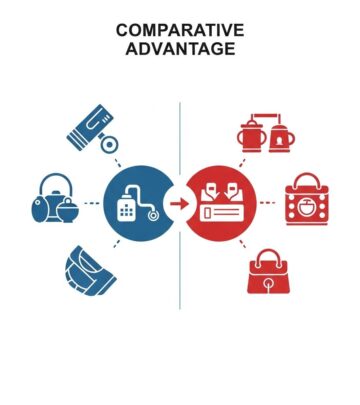
Comparative Advantage
Comparative advantage, a more nuanced economic concept, refers to the ability to produce goods or services at a lower opportunity cost than competitors. The opportunity cost represents what must be sacrificed to obtain something else. Even when one entity possesses absolute advantage in multiple areas, comparative advantage dictates that each party should specialize in activities where they maintain the greatest efficiency relative to alternatives.
For instance, suppose a skilled surgeon could both perform surgeries and review medical records faster than any staff member. The surgeon possesses absolute advantage in both tasks. However, if the surgeon’s opportunity cost of reviewing records involves sacrificing lucrative surgeries, they maintain comparative advantage in performing operations. Economic efficiency improves when the surgeon focuses exclusively on surgeries while delegating record review to administrative staff, despite the staff member being slower at that task.
Productivity Gains Through Specialization
Specialization directly drives productivity improvements across economies. When individuals and organizations concentrate on activities matching their strengths and comparative advantages, overall output increases substantially. Research consistently demonstrates that specialized workers produce more goods and services of higher quality than generalists attempting diverse tasks.
Several mechanisms explain productivity improvements through specialization:
- Skill Development: Repeated focus on specific tasks enables workers to develop deep expertise, advanced techniques, and refined problem-solving abilities that boost output quality and speed.
- Technological Innovation: Specialized professionals invest in industry-specific equipment, tools, and techniques that enhance efficiency within their narrow focus areas.
- Reduced Switching Costs: Eliminating constant task-switching eliminates setup times, mental transitions, and efficiency losses associated with context switching.
- Optimized Workflows: Specialized units develop streamlined processes specifically designed for their particular activities, eliminating inefficiencies inherent in generalized operations.
- Learning Economies: Focused specialization enables faster mastery of skill sets and more efficient knowledge accumulation compared to attempting to maintain competency across diverse domains.
International Trade and Specialization
Specialization principles extend significantly to international commerce and trade relationships. Nations that specialize in producing goods where they maintain comparative advantages experience trade benefits that increase overall wealth and living standards. International trade enables countries to exchange specialized goods, accessing products they could not efficiently produce domestically while selling their specialized outputs to global markets.
Consider agricultural production patterns globally. Nations with favorable climates, soil conditions, and geographical features concentrate on specific crops where they possess natural comparative advantages. Costa Rica specializes in coffee and bananas, leveraging ideal growing conditions. This specialization allows Costa Rican farmers to produce these crops efficiently while importing wheat, machinery, and manufactured goods from other specialized nations. All parties benefit through trade based on comparative advantage.
However, specialization in international contexts involves complexities including tariff structures, transportation costs, and policy decisions that influence comparative advantage calculations. Trade barriers can disrupt established specialization patterns, forcing nations and companies to reconsider production locations and strategies. Recent trade policy changes demonstrate how tariffs reshape specialization decisions, as companies evaluate whether maintaining current specialized production locations remains economically justified under new trade conditions.
Specialization in Modern Organizations
Contemporary businesses leverage specialization extensively through departmentalization, professional expertise, and functional division. Organizations typically contain specialized departments including accounting, marketing, human resources, research and development, production, and distribution—each focusing on specific functions where employees develop relevant expertise.
This organizational specialization generates multiple advantages:
- Employees develop deep professional expertise in their specialized domains
- Organizations recruit talent with specific skill sets matching departmental needs
- Workflow efficiency improves through focused operational systems
- Quality standards increase as specialists apply refined expertise to their domains
- Innovation accelerates through specialized research and development teams
- Customer service improves through specialized support functions
Limitations and Challenges of Specialization
While specialization generates significant benefits, it also introduces challenges and limitations that organizations and economies must address. Extreme specialization can create vulnerabilities and inefficiencies if not carefully managed.
Dependency and Vulnerability: Specialized entities become dependent on others for goods and services outside their specialization. This interdependence creates vulnerabilities if specialized suppliers face disruptions, failures, or strategic decisions affecting supply chains.
Worker Monotony: Employees performing identical specialized tasks repeatedly may experience diminished job satisfaction, reduced engagement, and motivation decline despite increased productivity. Monotonous work environments can increase turnover rates and require significant management attention.
Economic Disruption: When specialized industries face technological disruption, market shifts, or policy changes, workers and regions dependent on those industries experience significant economic hardship. Retraining and career transitions become necessary but often prove costly and time-consuming.
Inflexibility: Highly specialized operations struggle to adapt when market conditions shift or unexpected challenges emerge. Companies and individuals with narrow skill sets face difficulties pivoting to new requirements.
Coordination Complexity: As specialization increases, coordinating diverse specialized functions becomes increasingly complex, potentially creating bottlenecks and inefficiencies if coordination systems malfunction.
Specialization and Economic Growth
Empirical evidence consistently demonstrates strong correlations between specialization levels and economic growth rates. Nations with advanced specialization infrastructures, developed labor markets enabling specialized employment, and efficient trade systems typically experience sustained productivity growth and rising living standards.
Specialization fuels economic growth through multiple pathways. First, increased productivity from specialized workers generates more goods and services per capita, directly expanding economic output. Second, efficiency gains reduce production costs, enabling more competitive pricing and expanded market access. Third, specialization facilitates innovation as focused professionals develop breakthrough technologies within their domains. Fourth, specialized production attracts investment and attracts talent to competitive industries.
Measuring Specialization Intensity
Economists employ various metrics to measure specialization levels across industries, organizations, and economies. The Herfindahl-Hirschman Index (HHI) measures market concentration by analyzing industry specialization patterns. Alternatively, employment concentration indices reveal whether regional economies depend heavily on specific industries or maintain diversified economic bases.
Nations with higher specialization indices typically demonstrate stronger productivity metrics, though extremely concentrated specialization creates vulnerability to industry-specific disruptions. Optimal specialization balances efficiency gains against diversification benefits and economic resilience.
Real-World Examples of Specialization Success
Global markets demonstrate numerous successful specialization examples. Silicon Valley specializes in technology innovation and software development, attracting specialized talent and investment that created a self-reinforcing ecosystem. Switzerland specializes in precision manufacturing and watchmaking, developing expertise that commands premium prices globally. India’s Narayana Hospital demonstrates extreme specialization in cardiac surgery, reducing costs to approximately $800 through dedicated focus, assembly-line efficiency, and specialized protocols—compared to $30,000 in American hospitals.
Frequently Asked Questions
Q: What is the primary benefit of specialization?
A: The primary benefit is increased productivity and efficiency. By focusing on specific tasks or industries where they possess comparative advantage, individuals and nations produce more goods and services of higher quality at lower costs compared to attempting diverse production activities.
Q: How does specialization differ from division of labor?
A: Division of labor refers to breaking production processes into specialized tasks performed by different workers, while specialization describes focusing on particular products, services, or skills. Division of labor is a component of broader specialization strategies.
Q: Can specialization harm economies?
A: Yes, excessive specialization without economic diversification creates vulnerability. When regions or nations depend entirely on specialized industries, economic disruptions in those sectors cause significant hardship. Balanced specialization with maintained economic diversity provides resilience.
Q: How does comparative advantage determine specialization patterns?
A: Entities should specialize in activities where they maintain the lowest opportunity cost compared to alternatives. Even when possessing absolute advantage in multiple areas, comparative advantage indicates optimal specialization to maximize overall economic efficiency.
Q: How has globalization affected specialization?
A: Globalization has expanded specialization possibilities dramatically, enabling countries and companies to access global markets and specialized suppliers. International trade based on comparative advantage has intensified, though trade policies and tariffs continue reshaping specialization patterns.
References
- What Is Specialization in Economics? — Investopedia. https://www.investopedia.com/terms/s/specialization.asp
- Division of Labor and Specialization — Federal Reserve Bank of St. Louis. https://www.stlouisfed.org/education/economic-lowdown-podcast-series
- Comparative Advantage and International Trade — U.S. International Trade Commission. https://www.usitc.gov/
- The Economics of Specialization — OECD Economic Outlook. https://www.oecd.org/
- Manufacturing Specialization and Economic Growth — World Bank Economic Review. https://www.worldbank.org/
- Case Study: Narayana Hospital and Cost Reduction Through Specialization — The Lancet. https://www.thelancet.com/
- Tariffs and Comparative Advantage in Modern Trade — International Monetary Fund. https://www.imf.org/
Similar Articles








Read full bio of medha deb