Solving a Debt Dilemma with Debt Settlement
Discover how debt settlement can resolve overwhelming debt, with steps for DIY negotiation, company options, pros, cons, and alternatives.

Overwhelming debt can feel like a suffocating burden, with collectors calling relentlessly and balances growing due to interest and fees.
Debt settlement
offers a potential escape by negotiating to pay less than owed, typically via a lump sum. This approach suits those with unsecured debts like credit cards or medical bills who can’t afford full payments but have some savings capacity.However, it’s not risk-free: expect credit score drops, potential lawsuits, and taxes on forgiven amounts. This guide covers what debt settlement entails, how to pursue it yourself or through companies, key risks, and smarter alternatives.
What Is Debt Settlement?
**Debt settlement**—also called debt relief or negotiation—involves convincing creditors to accept a reduced payoff, often 40-60% of the original balance, in exchange for closing the account. Creditors agree because a partial payment beats nothing, especially if default seems imminent.
It targets
unsecured debts
such as:- Credit card balances
- Medical bills
- Personal loans
- Payday loans
Secured debts like mortgages or auto loans don’t qualify, as they’re tied to collateral. The process typically requires stopping payments to creditors, building funds in escrow, then settling—taking 2-4 years.
How Does Debt Settlement Work with a Company?
Debt settlement companies handle negotiations for a fee (15-25% of enrolled debt or settled amount). Here’s the step-by-step:
- Enroll debts: Select unsecured accounts; company advises halting payments to create urgency.
- Fund escrow: Deposit monthly into a company-held account (your old payments plus fees).
- Negotiate: Once funds accumulate (e.g., 40-50% of debt), company offers settlements, starting with smaller debts.
- Pay and resolve: Creditor accepts; funds disburse, debt marked “settled.” Repeat per account.
Companies must disclose timelines, fees, and escrow requirements upfront per FTC rules. They can’t charge until settling an account. Example: $10,000 debt at 25% fee means $2,500 to company plus settled principal.
| Month | Action | Escrow Balance | Status |
|---|---|---|---|
| 1-6 | Monthly deposits ($400/mo) | $2,400 | No payments to creditors |
| 7-12 | Settle first $5k debt | $4,800 | One account resolved |
| 13-24 | Settle remaining | $0 | Debt-free (fees paid) |
Success isn’t guaranteed; creditors may refuse or sue during delinquency.
DIY Debt Settlement: Negotiate Yourself
Skip fees by negotiating directly—faster and cheaper if you’re persistent. Creditors often settle to avoid collections costs.
Steps to DIY Debt Settlement
- Assess finances: List debts, rates, minimums. Aim for 40-60% offers; gather lump-sum cash via savings, sales, or side gigs.
- Prioritize: Target smallest or highest-interest first; let others age for leverage.
- Contact creditor: Call hardship department; explain hardship (job loss, etc.). Start low (30% of balance).
- Negotiate: Be polite, persistent. Offer lump sum; counter their counter. Get written agreement before paying.
- Pay securely: Use certified check; confirm settlement in writing and on credit report.
Sample script: “I’m facing hardship and can’t pay full $5,000. I can pay $2,500 lump sum today to settle—will you accept?” Track everything; consider a lawyer for complex cases.
**Pro tip:** Request late fees/interest waiver and credit report updates to “paid as agreed”.
Pros and Cons of Debt Settlement
Weigh these carefully:
Pros
- Reduced debt: Pay 40-60% less.
- Debt-free path: Structured plan ends collections.
- No bankruptcy: Avoids public record.
Cons
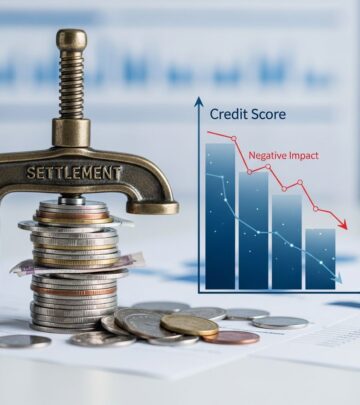
- Credit damage: Delinquencies drop score 100+ points; “settled” notation lasts 7 years.
- Taxes: Forgiven debt ($600+) is taxable income.
- Fees/Lawsuits: 15-25% fees; lawsuits possible.
- No guarantees: Some creditors won’t settle.
Risks and Tax Implications
Stopping payments triggers fees, interest, and collections. Scores plummet from missed payments. Forgiven amounts (e.g., $4,000 on $10,000 debt) count as income; expect a 1099-C form. Insolvency exception may apply—consult a tax pro. Lawsuits risk wage garnishment if ignored. FTC warns of scam companies promising unrealistic results.
Alternatives to Debt Settlement
Often better options exist:
- Debt management plans (DMPs): Non-profits negotiate lower rates; fixed payments, no stopping pay.
- Consolidation loans: One low-rate loan pays multiples.
- Balance transfers: 0% APR cards for 12-21 months.
- Bankruptcy: Chapter 7 wipes debt (credit hit similar but faster).
- Increase income/cut spending: Debt snowball/avalanche methods.
| Option | Credit Impact | Timeframe | Cost | Best For |
|---|---|---|---|---|
| Settlement | High (100+ drop) | 2-4 years | 15-25% fees + taxes | High unsecured debt |
| DMP | Low | 3-5 years | Low fees | Steady income |
| Consolidation | Minimal | 1-5 years | Interest | Good credit |
| Ch. 7 Bankruptcy | High (10 years) | 3-6 months | Filing fees | Overwhelmed |
Frequently Asked Questions (FAQs)
Q: Is debt settlement better than bankruptcy?
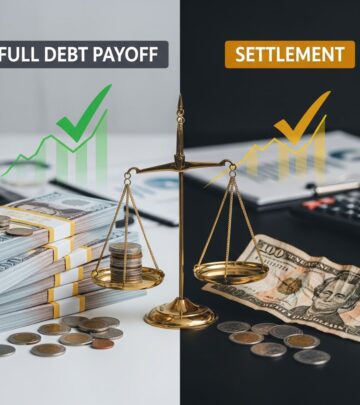
A: Settlement avoids bankruptcy’s public record and asset liquidation but takes longer with similar credit damage. Bankruptcy discharges debt faster.
Q: How much will creditors settle for?
A: Typically 40-60% of balance, varying by age of debt, creditor policy, and your hardship proof.
Q: Can debt settlement remove delinquencies from my credit report?
A: Creditors may agree to update but rarely delete history. Settled status remains.
Q: Are debt settlement companies legit?
A: Some are, but FTC regulates them strictly. Avoid upfront fees; check reviews and BBB.
Q: Does settled debt affect taxes?
A: Yes, forgiven amounts over $600 are taxable unless insolvent. Expect IRS Form 1099-C.
Q: Can I settle secured debt?
A: No, as collateral backs it. Focus on unsecured.
Debt settlement can resolve dilemmas but research thoroughly. Consult non-profits like NFCC for free advice before committing.
References
- Debt Settlement: What it is, How it Works & If it’s Worth It — InCharge Debt Solutions. 2024. https://www.incharge.org/debt-relief/debt-settlement/
- What Is Debt Settlement? — Experian. 2024-10-15. https://www.experian.com/blogs/ask-experian/what-is-debt-settlement/
- What Is Debt Settlement and How Does It Work? — NerdWallet. 2025-01-10. https://www.nerdwallet.com/personal-loans/learn/how-does-debt-settlement-work
- What Is Debt Settlement And How Does It Work? — Bankrate. 2025-06-20. https://www.bankrate.com/personal-finance/debt/what-is-debt-settlement/
- What Is Debt Settlement? — American Express. 2024. https://www.americanexpress.com/en-us/credit-cards/credit-intel/what-is-debt-settlement/
- How To Get Out of Debt — Federal Trade Commission (consumer.ftc.gov). 2023-05-01. https://consumer.ftc.gov/articles/how-get-out-debt
Similar Articles








Read full bio of medha deb