Soft Skills: Definition, Examples & Why They Matter
Master essential soft skills to advance your career and build stronger professional relationships.

What Are Soft Skills?
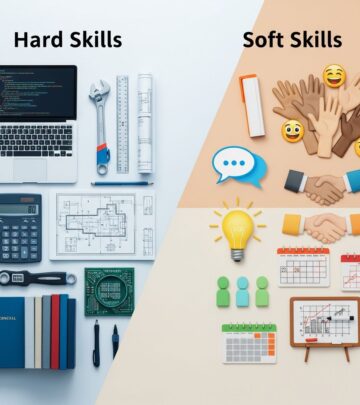
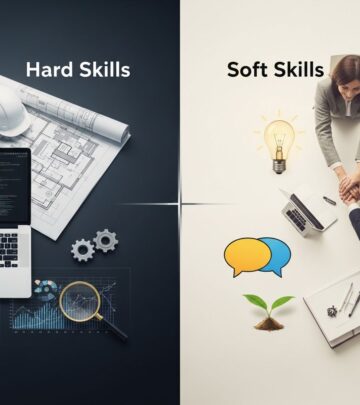
Soft skills are character traits and interpersonal abilities that characterize a person’s relationships with others. In the workplace, soft skills are considered a complement to hard skills, which refer to a person’s technical knowledge and occupational expertise. Unlike hard skills—such as coding, data analysis, or proficiency with specific software—soft skills are transferable abilities that can be utilized across various industries and professional settings.
The term “soft skills” was initially developed by the military to distinguish between technical skills and leadership skills, recognizing that the latter are equally important, if not more so, than the former. These skills are often harder to teach because they involve human interaction, where instruction cannot always be as straightforward as simply telling someone what to do.
According to the Oxford dictionary, soft skills are defined as “personal attributes that enable someone to interact effectively and harmoniously with other people.” This definition captures the essence of what makes soft skills valuable in today’s workplace: they are the foundation for building strong professional relationships and creating productive work environments.
The Business Case for Soft Skills
Research demonstrates the significant impact soft skills have on career success and organizational performance. A study from The Carnegie Institute of Technology found that 85% of financial success is due to personality and the ability to communicate, negotiate, and lead. Shockingly, only 15% is attributed to technical knowledge. This startling statistic underscores why employers increasingly prioritize soft skills when recruiting and evaluating employee performance.
In today’s competitive job market, employers are less focused on job-specific technical knowledge and more interested in identifying leaders, communicators, and critical thinkers. They recognize that employees with strong soft skills contribute to better collaboration, fewer misunderstandings, and ultimately higher productivity and workplace satisfaction.
Core Types of Soft Skills
While there are numerous soft skills that contribute to professional success, five core abilities stand out as essential for career advancement:
Communication
Being able to clearly and concisely communicate with colleagues is fundamental to minimizing mistakes and inefficiencies that stem from miscommunication. Effective communication defines how people perceive you and shapes your professional relationships. This includes not only speaking clearly but also active listening, understanding different communication styles, and adapting your approach based on your audience’s needs.
Critical Thinking
Those who practice critical thinking develop the ability to make informed and thoughtful decisions. This skill involves vetting your sources, considering varied perspectives, questioning your own biases, and engaging in active listening. Critical thinkers are valuable assets to any organization because they approach problems methodically and contribute to better decision-making processes.
Leadership
Leadership skills extend beyond formal management positions. You can develop your leadership qualities by focusing on authenticity, relationship-building, self-awareness, and empowering others. Leadership in any role involves inspiring colleagues, taking initiative, and demonstrating responsibility for outcomes. These abilities help you lead from your seat regardless of your job title.
Teamwork
Regardless of your profession, you will likely need to collaborate with other people to solve problems and accomplish projects. Strong teamwork skills involve cooperating with others, contributing to group goals, resolving conflicts constructively, and supporting your colleagues. The ability to work effectively in teams is invaluable in virtually every industry.
Professionalism
Professionalism encompasses demonstrating integrity in all interactions, practicing inclusion, setting a positive example for others, and maintaining ethical standards. This soft skill involves how you conduct yourself, your reliability, your work ethic, and your commitment to excellence. Professionalism builds trust and credibility with colleagues and supervisors.
Additional In-Demand Soft Skills
Beyond these five core competencies, employers actively seek several other soft skills that contribute to workplace success:
| Soft Skill | Definition | Workplace Value |
|---|---|---|
| Analytical Skills | The ability to examine information and draw meaningful conclusions | Supports data-driven decision making |
| Customer Service | Providing support and assistance to clients and customers | Builds loyalty and positive organizational reputation |
| Adaptability | Flexibility and willingness to adjust to changing circumstances | Essential in fast-paced, evolving work environments |
| Organization | Managing time, resources, and priorities effectively | Increases productivity and reduces wasted effort |
| Open-Mindedness | Receptiveness to new ideas and different perspectives | Fosters innovation and continuous improvement |
| Problem-Solving | Identifying issues and developing effective solutions | Drives efficiency and organizational success |
| Work Ethic | Commitment to quality work and personal responsibility | Builds reputation and career advancement opportunities |
How to Develop Your Soft Skills
Developing soft skills requires intentional effort and real-world practice. Here are practical strategies to enhance your soft skill capabilities:
Practice in Real-World Situations
One of the most effective ways to develop soft skills is to practice them in genuine workplace and community settings. Seeking out opportunities to step outside your comfort zone is essential for growth. This may include volunteering, participating in experiential learning opportunities, community service projects, or taking on challenging assignments at work that push you to develop specific skills.
Join Professional Organizations and Clubs
Getting involved in professional associations and groups provides excellent opportunities to build relationships with professionals in your industry, develop leadership skills through committee participation, and gain visibility as an active, engaged member of your professional community. These connections and experiences directly contribute to soft skill development.
Seek Feedback and Reflect
Learning soft skills can be challenging because it requires interaction with others and a willingness to accept constructive feedback. However, by remaining open to feedback and reflecting on your communication and interpersonal interactions, you can identify areas for improvement and track your progress over time.
Embrace New Challenges
Trying new things is an essential part of career development and soft skill enhancement. Whether through taking on leadership roles in projects, participating in competitions, or contributing to initiatives outside your usual responsibilities, new challenges force you to apply and refine your soft skills in different contexts.
Demonstrate Your Skills on Your Resume
While it is important to say you have critical thinking and leadership skills, it is equally important to show these abilities through concrete examples and experiences. Highlight specific projects, volunteer work, competition participation, and accomplishments that demonstrate your soft skills in action. This helps potential employers visualize your capabilities.
Why Soft Skills Matter More Than Ever
In an increasingly interconnected and collaborative workplace, soft skills have become more critical than ever. As organizations navigate rapid technological change, complex problem-solving, and diverse teams, the ability to communicate effectively, think critically, lead with authenticity, collaborate seamlessly, and maintain professionalism distinguishes top performers from average ones.
Employers recognize that technical skills can be taught and updated relatively quickly, but soft skills take time to develop and are more difficult to teach. Therefore, candidates who demonstrate strong soft skills often have significant competitive advantages in the job market. Additionally, soft skills directly impact employee retention, workplace satisfaction, and organizational culture—factors that influence long-term business success.
The Platinum Rule: A Foundation for Soft Skills Excellence
A practical approach to developing soft skills involves applying what is often called the “Platinum Rule”—communicate with others as they would have you communicate with them. This principle emphasizes adapting your behavior and communication style to meet the individual needs of each person you interact with rather than expecting others to adjust to your preferences. By recognizing and respecting different communication styles and preferences, you communicate more effectively and achieve results with minimal time lost to misunderstandings or poor collaboration.
Soft Skills and Workplace Success
The connection between soft skills and workplace outcomes is undeniable. Employees with well-developed soft skills experience better relationships with colleagues and supervisors, higher levels of job satisfaction, greater opportunities for advancement, and more meaningful contributions to their organizations. Teams with members who possess strong soft skills function more cohesively, make better decisions, and achieve higher levels of productivity.
For organizations, investing in soft skills development yields measurable returns through reduced turnover, improved employee engagement, enhanced innovation, and stronger customer relationships. As the workplace continues to evolve, the value of soft skills only increases, making them a critical focus area for anyone serious about career development and professional success.
Frequently Asked Questions
Q: What is the difference between soft skills and hard skills?
A: Hard skills are technical, job-specific abilities such as coding, accounting, or data analysis that are typically gained through formal education or training. Soft skills are transferable, people-focused competencies like communication, teamwork, and leadership that apply across industries and roles.
Q: Can soft skills be taught?
A: Yes, soft skills can be developed and improved through practice, feedback, real-world experience, and intentional effort. However, they typically take longer to develop than technical skills because they require consistent practice in interpersonal situations.
Q: Which soft skills are most important for career advancement?
A: While all soft skills are valuable, the five core skills most employers prioritize are communication, critical thinking, leadership, teamwork, and professionalism. However, the specific soft skills most important for your career depend on your industry and role.
Q: How can I demonstrate soft skills to potential employers?
A: Rather than simply listing soft skills on your resume, provide concrete examples of situations where you applied these skills and achieved results. Include volunteer experience, project leadership roles, awards, and testimonials from colleagues or supervisors that validate your soft skill capabilities.
Q: Why do employers value soft skills as much as or more than technical skills?
A: Research shows that 85% of career success is attributed to soft skills like communication and negotiation, while only 15% comes from technical knowledge. Soft skills directly impact team dynamics, productivity, innovation, and workplace culture—factors that drive organizational success and profitability.
Q: How long does it take to develop soft skills?
A: Soft skills development is an ongoing process that continues throughout your career. While you can see improvement in specific soft skills within weeks or months of focused effort, mastering soft skills typically requires years of consistent practice and refinement.
References
- Key Soft Skills Include Professionalism, Communication, Teamwork, and Critical Thinking — U.S. Department of Labor, Office of Disability Employment Policy. 2024. https://www.dol.gov/agencies/odep/publications/fact-sheets/soft-skills-the-competitive-edge
- What Are Soft Skills and Why Are They Important in the Workplace? — Southern New Hampshire University (SNHU). 2024. https://www.snhu.edu/about-us/newsroom/career/what-are-soft-skills
- A Definition of Soft Skills that Matters for YOU — Dove Development. 2024. https://www.dove-development.net/a-definition-of-soft-skills-that-matters-for-you
- The Soft Skills Side of Clerical Success – The I’s Have It — Career Concepts. 2024. https://www.careerconcepts.com/the-soft-skills-side-of-clerical-success-the-is-have-it
Similar Articles








Read full bio of Sneha Tete