Social Welfare System: Definition and How It Works
Comprehensive guide to social welfare systems, programs, and their role in supporting citizens.

What Is a Social Welfare System?
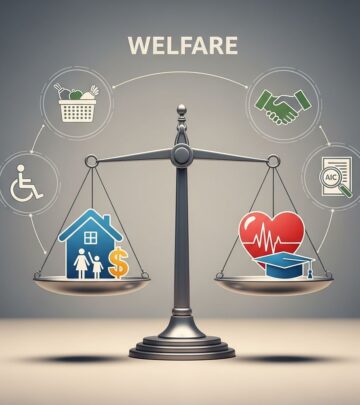
A social welfare system is a network of government-sponsored programs and initiatives designed to provide financial aid and support to individuals and families who are unable to meet their basic needs on their own. These systems represent a fundamental commitment by governments to protect the economic and social well-being of their citizens, based on principles of equal opportunity and equitable distribution of resources. The primary purpose of social welfare systems is to shield citizens from financial insecurities and provide a safety net during challenging life circumstances.
The concept of social welfare extends beyond simple monetary assistance. It encompasses a comprehensive approach to societal care that addresses multiple dimensions of human need, including healthcare, housing, nutrition, and employment support. Social welfare systems acknowledge that individuals face various obstacles throughout their lives—whether due to age, illness, unemployment, or other circumstances—and that society has a collective responsibility to ensure basic provisions for all citizens.
Historical Development of Social Welfare Systems
The modern social welfare system has its roots in 19th-century Europe. Germany became the pioneering nation in implementing formal social welfare legislation during the 1880s, establishing the foundational framework that would influence global welfare policy for generations to come. These early programs were primarily designed to support industrial workers facing economic hardship and to prevent social unrest during periods of rapid industrialization.
Following Germany’s example, other nations gradually adopted and adapted similar welfare programs to suit their specific social and economic contexts. The evolution of social welfare accelerated significantly during the 20th century, particularly following major economic disruptions like the Great Depression, which demonstrated the necessity of government intervention in alleviating widespread poverty. In the United States, programs such as Social Security, Medicaid, and housing assistance emerged from this expanded understanding of government’s role in protecting citizen welfare.
Core Components and Types of Social Welfare Programs
Social welfare systems are composed of various specialized programs, each designed to address specific needs and circumstances. While implementation varies significantly from country to country, most social welfare systems share common structural elements and eligibility criteria. Understanding these program categories helps illuminate how comprehensive welfare systems function to support diverse populations.
Healthcare and Medical Care Benefits
Healthcare programs represent some of the most complex and frequently debated components of social welfare systems. These programs provide monetary compensation for lost wages due to illness or injury, alongside coverage for medical bills and ongoing treatment. Healthcare eligibility requirements vary considerably across nations—some countries provide universal healthcare coverage to all citizens, while others restrict coverage to employees of participating employers or those meeting specific income thresholds.
The financing mechanisms for healthcare programs differ substantially. In some countries, citizens contribute privately to healthcare systems while governments supplement costs, whereas other nations fully fund healthcare through government revenues. Healthcare providers may include private practitioners, government-appointed professionals, or hybrid models combining both. Payment structures similarly vary, with some governments paying providers directly and others reimbursing patients for medical expenses incurred.
Unemployment Benefits
Unemployment benefit programs provide financial assistance to individuals who have lost employment through no fault of their own. These programs are more prevalent in industrialized nations than in developing countries and serve a crucial stabilizing function during economic downturns. Unemployment benefits typically replace a portion of lost wages, helping workers maintain financial stability while seeking new employment opportunities.
The structure of unemployment programs generally focuses on workers with prior employment history rather than first-time job seekers. These programs help prevent economic hardship, reduce poverty, and enable workers to search for appropriate employment matches rather than accepting any available position out of immediate financial desperation.
Work-Injury Compensation Programs
Nearly every country maintains some form of work-injury compensation program designed to support employees who suffer work-related injuries or occupational illnesses. These programs typically cover workers employed by companies of a particular size threshold and are usually funded by employers rather than government general revenues. Eligible employees receive financial support for medical treatment and may receive compensation for lost wages, typically ranging from 50 to 75 percent of their actual salary during recovery periods.
Work-injury compensation programs represent an important recognition that workers deserve protection and support when workplace hazards result in injury or illness. These programs help maintain workforce stability and ensure injured workers are not forced into financial hardship due to workplace accidents.
Family Allowances and Support Programs
Family allowance programs provide financial support to families with dependent children, recognizing that raising children increases household expenses. These programs help ensure that families can afford basic necessities, education, and childcare services. Family allowances represent an investment in human capital and social stability by supporting families during the critical child-rearing years.
Public Assistance Programs
Public assistance programs function as supplementary safety nets designed to provide aid to individuals and families not covered by other specialized welfare programs. These surplus programs target populations facing particular hardship, including low-income families, homeless individuals, individuals with disabilities, and seniors living below poverty thresholds. Public assistance programs ensure that vulnerable populations have access to basic subsistence support when other welfare programs prove insufficient.
Universal vs. Selective Welfare Systems
Social welfare systems generally fall into two broad categories based on their coverage approach. Universal welfare systems provide provisions and benefits to all citizens regardless of income or employment status, operating on the principle that social welfare is a right of citizenship rather than a privilege earned through employment or need qualification. These systems ensure comprehensive coverage and eliminate stigma associated with means-testing.
Selective welfare systems, by contrast, target assistance specifically to those deemed most needy, requiring individuals to demonstrate financial necessity or meet specific eligibility criteria. Selective systems focus resources on populations most in need but require administrative mechanisms to verify eligibility and may involve stigma for recipients.
Welfare State Models and Approaches
Contemporary welfare states operate according to different philosophical models that shape their structure, financing, and outcomes. Scholars have identified three primary welfare state subtypes that reflect different approaches to balancing state and market roles.
Liberal welfare states emphasize market mechanisms and private provision, with government assistance primarily targeted to low-income populations. These systems preserve strong market incentives and private provision while maintaining safety nets for the most disadvantaged.
Social-democratic welfare states prioritize universal coverage and significant government involvement in provision and financing. These systems emphasize equality and social solidarity, with comprehensive programs covering the entire population rather than targeting specific disadvantaged groups.
Conservative welfare states maintain traditional hierarchical relationships and emphasize social insurance tied to employment history. These systems emphasize maintaining existing social structures while providing support based on prior contributions and employment status.
Eligibility and Common Principles
Despite significant variations across countries, social welfare systems share several common eligibility principles and organizational characteristics. Most programs require individuals to demonstrate that they cannot independently meet their basic needs, establishing a fundamental criterion for assistance. This income or asset test ensures that assistance reaches those genuinely unable to provide for themselves.
The nature of risks that citizens are insured against shows remarkable similarity across different national systems. Healthcare risks, employment disruption, work-related injury, and age-related dependency represent nearly universal concerns addressed by welfare systems. This consistency reflects common human vulnerabilities and needs regardless of national context.
Distributive vs. Redistributive Programs
Social welfare programs operate according to two distinct mechanisms: distributive and redistributive policies. Distributive programs, also called entitlement programs, aim to benefit beneficiaries according to the amount they contributed into the system. These programs maintain a direct connection between contributions and benefits, functioning similarly to insurance systems. Social Security exemplifies distributive programs, providing retirement benefits proportional to prior earnings and contributions.
Redistributive programs, conversely, provide assistance specifically to those meeting income qualifications, regardless of prior contributions. These programs explicitly transfer resources from higher-income populations to lower-income populations, addressing inequality and ensuring basic provisions for all citizens. Means-tested assistance programs represent the primary redistributive mechanism within social welfare systems.
Role of Government and Social Responsibility
Over time, establishing and maintaining social welfare systems has become recognized as a fundamental government responsibility in developed nations. A strong consensus has emerged that social welfare should be extended to all individuals unable to care for themselves due to circumstances beyond their control. This represents a significant evolution from historical perspectives that viewed poverty and hardship as individual failures rather than systemic challenges requiring collective response.
Social welfare is increasingly conceived as a matter of right rather than charity. This philosophical shift recognizes that individuals facing unemployment, illness, disability, or age-related dependency have legitimate claims on societal resources. Governments implement this principle by ensuring social welfare is available to qualifying individuals as a guaranteed benefit rather than discretionary assistance.
Frequently Asked Questions
Q: What is the primary purpose of a social welfare system?
A: The primary purpose is to provide financial aid and support to individuals and families unable to meet their basic needs independently, protecting citizens from economic hardship and ensuring access to essential services like healthcare, housing, and nutrition.
Q: How do eligibility requirements vary between countries?
A: Eligibility requirements differ significantly across nations. Some countries provide universal coverage to all citizens, while others use means-testing to limit assistance to those meeting income thresholds. Requirements may also depend on prior employment history, employer participation, or specific demographic characteristics.
Q: What is the difference between universal and selective welfare systems?
A: Universal systems provide benefits to all citizens regardless of income or employment status, while selective systems target assistance specifically to those meeting established eligibility criteria and demonstrating financial need.
Q: How do work-injury compensation programs work?
A: These programs provide financial support and medical coverage to employees injured during work activities. Eligible workers receive compensation ranging from 50 to 75 percent of lost wages, plus coverage for medical treatment, with costs typically borne by employers.
Q: What distinguishes distributive from redistributive welfare programs?
A: Distributive programs provide benefits proportional to prior contributions and function like insurance systems. Redistributive programs provide assistance based on income qualification, explicitly transferring resources to lower-income populations regardless of prior contributions.
References
- Social Welfare System – Definition, How it Works — Corporate Finance Institute. 2024. https://corporatefinanceinstitute.com/resources/economics/social-welfare-system/
- Welfare state — Wikipedia. 2024. https://en.wikipedia.org/wiki/Welfare_state
- Understanding Social Welfare Policy — Virginia Commonwealth University, School of Social Work. 2024. https://onlinesocialwork.vcu.edu/blog/social-welfare-policy/
- Welfare — EBSCO Research Starters. 2024. https://www.ebsco.com/research-starters/social-sciences-and-humanities/welfare
- The Advantages and Disadvantages of Different Social Welfare Systems — U.S. Social Security Administration. 1994. https://www.ssa.gov/policy/docs/ssb/v57n3/v57n3p3.pdf
Similar Articles








Read full bio of Sneha Tete