What To Do With Money In Savings: 12 Practical Steps
Learn exactly what to do with your savings so your money works harder and supports your short and long-term financial goals.
Reaching a point where you have money sitting in a savings account is a big financial milestone. The next question is: what should you actually do with those savings so they support your goals instead of just sitting idle?
This guide walks through clear, practical options for using your savings wisely. You will learn how much to keep easily accessible, where to put different types of goals, when to pay off debt instead, and when it makes sense to start investing for the future.
Start With Your Financial Foundation
Before you move savings into more advanced strategies, it is important to put a solid financial base in place. Think of this as the safety net that protects you from setbacks and gives you peace of mind.
1. Build (or top up) your emergency fund
An emergency fund is cash set aside for unexpected but essential expenses, such as medical bills, car repairs, or temporary loss of income. According to the U.S. Federal Reserve, many households would struggle to cover a modest unexpected expense without borrowing, which makes an emergency fund crucial for stability.
Common guidelines suggest:
- Starter emergency fund: Aim for at least $1,000–$2,500 as a minimum cushion.
- Full emergency fund: Target 3–6 months of essential expenses (housing, utilities, food, transport, insurance).
Consider saving toward the higher end (6 months or more) if:
- You are self-employed or have variable income.
- You are the main earner in your household.
- You work in a field where job changes can take longer.
Emergency savings should be:
- Safe: Protected from market ups and downs.
- Liquid: Easy to withdraw quickly when needed.
- Separate: Not mixed with your checking account to reduce temptation.
2. Choose the right account for your safety net
Once you know how much you need for emergencies, choose an account that pays some interest while still keeping your money accessible.
Common options include:
- High-yield savings accounts (HYSA): Online banks often pay a higher interest rate than traditional brick-and-mortar banks, helping your emergency fund keep up better with inflation.
- Money market deposit accounts: Bank accounts that may offer checks or debit access, often with competitive yields and federal deposit insurance up to applicable limits.
- Traditional savings accounts: Easy to open at your current bank, but typically with lower interest rates.
For emergency savings, it is generally better to prioritize safety and liquidity over returns. Investments that can lose value or lock up your money are not ideal for this purpose.
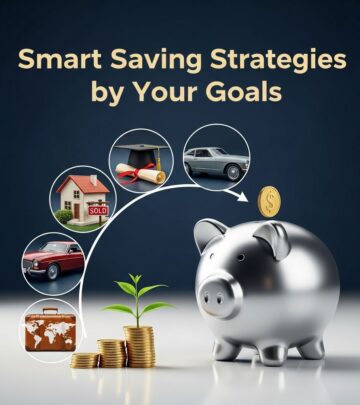
Align Your Savings With Different Time Horizons
After your emergency fund is in place, the next step is to match your savings to your goals based on time frame. Your timeline strongly influences where you should keep the money.
3. Short-term savings (0–2 years)
Short-term savings are for goals you expect to reach within the next couple of years. Examples include:
- Travel and vacations
- Moving costs
- Small home projects or furniture
- Upcoming medical or dental work
For these goals, focus on preserving your money rather than chasing high returns.
Possible places to keep short-term savings:
- High-yield savings accounts for easy access and modest interest.
- Short-term certificates of deposit (CDs) if you are confident about the timeline and can leave the money untouched for the term.
Because the horizon is short, investing in the stock market is usually too risky for these funds. Market downturns can happen in any year, and you may not have enough time to recover.
4. Use sinking funds for recurring or expected expenses
A sinking fund is a pool of money you build up gradually for a specific, known future cost. Instead of being surprised by large bills, you save a small amount every month.
Common sinking fund categories include:
- Car repairs and maintenance
- Annual insurance premiums
- Back-to-school expenses
- Holidays and gifts
- Property taxes
To set up a sinking fund:
- Estimate the total cost of the expense.
- Divide that amount by the number of months until the expense will occur.
- Automatically transfer that amount into a dedicated savings sub-account each month.
Many banks allow you to create multiple labeled savings buckets so you can keep these funds separate from your general savings.
5. Medium-term savings (3–10 years)
Medium-term goals sit between short-term needs and long-term retirement investing. Examples include:
- Saving for a home down payment
- Starting or expanding a business
- Major home renovations
- Funding further education or training
These goals may allow a bit more risk than short-term savings, but you still need to protect the money because the timeline is limited.
Potential options:
- High-yield savings accounts or money market accounts for lower risk and flexibility.
- Laddered CDs to earn somewhat higher yields while staggering maturity dates for access.
- Conservative investment portfolios (for example, a mix of bonds and some stocks) if your horizon is closer to the longer end of this range and you are comfortable with risk. This approach requires careful planning and understanding of potential losses.
Compare Common Savings Vehicles
The table below summarizes how common cash and near-cash options differ. These are general characteristics; actual rates and terms depend on the provider.
| Account Type | Risk Level | Liquidity | Typical Use | Key Considerations |
|---|---|---|---|---|
| Traditional savings account | Very low | High | Basic emergency savings | Easy to open; interest rates often low. |
| High-yield savings account | Very low | High | Emergency fund, short-term goals | Usually online; higher rates but may have transfer delays. |
| Money market deposit account | Very low | High | Larger cash balances, short-term goals | May offer check/debit access; minimum balance requirements. |
| Certificate of deposit (CD) | Very low | Low to medium | Funds you will not need until a set date | Early withdrawals often incur penalties; higher rates for longer terms. |
Use Savings To Strengthen Your Overall Financial Health
Beyond emergencies and upcoming goals, your savings can play a powerful role in improving your overall financial position. Sometimes the best move is not to keep more in savings, but to use part of it strategically.
6. Pay down high-interest debt
If you have high-interest consumer debt, especially credit card balances, using some of your extra savings to pay it down can dramatically improve your finances. According to the U.S. Consumer Financial Protection Bureau, many credit cards carry interest rates that make balances expensive to maintain.
In many cases, the interest you are paying on debt is higher than any return you could reliably earn on low-risk savings. That means paying off the debt is effectively a risk-free return equal to the interest rate you no longer have to pay.
General approach:
- Keep your essential emergency fund intact.
- Use excess savings above that level to reduce high-interest balances.
- Focus on the highest-rate debt first while making at least the minimum payments on others.
7. Save for major life milestones
Once high-interest debt is under control and your emergency fund is solid, you can assign your savings toward significant future milestones, such as:
- Buying a home
- Starting a family
- Relocating to a new city or country
- Taking a career break or going back to school
To stay organized, create separate savings buckets (or accounts) named after each goal. Automate transfers for each one based on your budget and timeline.
When And How To Start Investing
At some point, keeping all your money in savings accounts can limit your long-term progress, because inflation erodes purchasing power over time. The World Bank and other institutions highlight how sustained inflation can reduce the value of cash if returns do not keep pace.
8. Decide if you are ready to invest
Investing is typically appropriate when you:
- Have a funded emergency fund.
- Are making progress on high-interest debt.
- Understand that investments can lose value in the short term.
- Have long-term goals, such as retirement or building wealth over decades.
Because investing involves risk, it should be aligned with goals that are at least five to ten years away, giving you time to ride out market fluctuations.
9. Use tax-advantaged retirement accounts
For long-term savings, especially retirement, tax-advantaged accounts can be very powerful. In the United States, examples include workplace plans and individual accounts.
- 401(k) or similar employer plan: Contributions may be pre-tax or Roth, and many employers offer matching contributions, which is essentially additional compensation.
- Traditional or Roth IRA: Individual accounts with tax advantages for retirement savings, subject to annual limits and eligibility rules.
Many financial education sources emphasize maximizing any available employer match as a priority, because it is effectively an immediate return on your contributions.
10. Consider simple, diversified investment options
For long-term investing, many investors use diversified funds rather than individual stocks. Examples include:
- Broad stock index funds: Funds that track a market index, offering exposure to many companies at once.
- Bond funds: Collections of bonds that can provide income and help reduce overall volatility.
- Target-date retirement funds: Professionally managed portfolios that automatically adjust their risk level as you approach a target year.
It is important to understand fees, your risk tolerance, and your time horizon before choosing investments. Reputable sources such as the U.S. Securities and Exchange Commission provide educational materials on how different investment products work.
Balance Saving, Spending, And Enjoying Your Money
Knowing what to do with savings is not only about discipline. It is also about designing a plan that supports a life you enjoy, both now and in the future.
11. Create a simple plan for every saved dollar
To avoid letting money sit without purpose, give each saved dollar a specific job.
A practical framework:
- Step 1: Confirm your emergency fund level.
- Step 2: List your short-, medium-, and long-term goals.
- Step 3: Decide how much of your current savings to allocate to each goal.
- Step 4: Choose the right account or investment type for each time horizon.
- Step 5: Automate contributions going forward.
Review your plan a few times a year and adjust as your circumstances and priorities change.
12. Allow room for values-based spending
It is reasonable to use some of your savings intentionally for meaningful experiences or purchases, such as travel, education, or hobbies. The goal is to make those choices consciously rather than through impulse.
Ask yourself:
- Does this spending align with my long-term values and goals?
- Will I still feel good about this decision a year from now?
- What am I giving up if I choose this over saving or investing?
By weighing these questions, you can use your savings in ways that support both financial security and personal fulfillment.
Frequently Asked Questions (FAQs)
Q: How much of my savings should stay in cash?
A: Many people aim to keep at least 3–6 months of essential expenses in a safe, easily accessible account like a high-yield savings account. Beyond that, extra savings can be directed toward paying off high-interest debt or investing for long-term goals, depending on your situation and comfort with risk.
Q: Should I invest my emergency fund?
A: Generally no. Emergency funds work best when they are safe and liquid, which is why they are usually kept in insured savings, money market accounts, or similar low-risk vehicles. Investments that can quickly lose value or that limit withdrawals are not well suited for emergencies.
Q: Is it better to save or pay off debt first?
A: A common approach is to build a small starter emergency fund, then aggressively pay down high-interest consumer debt while still making minimum payments on other obligations. Once expensive debt is reduced, you can shift more money toward savings and investing. The exact balance depends on your interest rates, risk tolerance, and job stability.
Q: Where should I keep money for a home down payment?
A: If you expect to buy within the next few years, a high-yield savings account, money market account, or a ladder of short-term CDs can be appropriate. These options prioritize preserving your principal. Investing heavily in stocks for a near-term down payment is risky because a market downturn could reduce your savings just when you need them.
Q: When is the right time to start investing for retirement?
A: In many cases, you can start investing for retirement once you have a basic emergency fund and are keeping high-interest debt under control. Contributing enough to receive any employer match in a workplace plan is often a strong early step, because it adds to your savings at no additional cost to you. From there, you can gradually increase contributions as your budget allows.
References
- Economic Well-Being of U.S. Households in 2023 — Board of Governors of the Federal Reserve System. 2024-05-21. https://www.federalreserve.gov/publications/2024-economic-well-being-of-us-households-in-2023-dealing-with-unexpected-expenses.htm
- What is a high-yield savings account? — Consumer Financial Protection Bureau. 2023-08-16. https://www.consumerfinance.gov/ask-cfpb/what-is-a-high-yield-savings-account-en-2095/
- Insured Money Market Deposit Accounts — Federal Deposit Insurance Corporation (FDIC). 2022-10-01. https://www.fdic.gov/resources/deposit-insurance/brochures/deposits-money-market.html
- Investing for Long-Term Goals — U.S. Securities and Exchange Commission (Investor.gov). 2023-11-03. https://www.investor.gov/introduction-investing/investing-basics/how-invest/investing-long-term-goals
- Credit Cards — Consumer Financial Protection Bureau. 2024-02-01. https://www.consumerfinance.gov/consumer-tools/credit-cards/
- Inflation and the Real Value of Money — The World Bank. 2022-06-15. https://www.worldbank.org/en/news/feature/2022/06/15/how-inflation-erodes-purchasing-power
Similar Articles








Read full bio of Sneha Tete