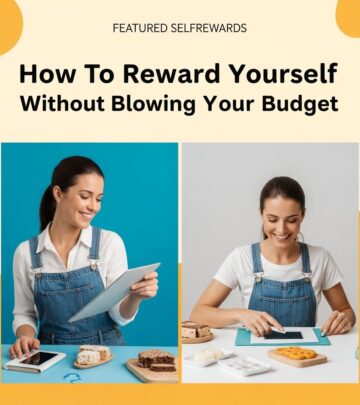
Smart Ways To Treat Yourself On A Budget
Learn how to enjoy guilt-free treats while still saving money, paying off debt, and staying aligned with your biggest financial goals.

Treating yourself matters for motivation, mental health, and avoiding burnout, but it does not have to sabotage your savings, debt payoff, or long-term financial goals. Thoughtful, budget-friendly rewards can actually help you stay consistent with your money plan over time, instead of feeling deprived and giving up.
In this guide, you will learn how to build fun money into your budget, choose treats that really matter to you, and enjoy low-cost or completely free rewards that still feel luxurious and restorative.
Why Treating Yourself Matters For Your Money Journey
Many people try to reach big financial goals using extreme restriction: no eating out, no small treats, and no fun until every dollar of debt is gone. While short bursts of intensity can help, research in behavioral economics shows that overly strict rules often backfire and lead to quitting altogether because they feel unsustainable and punishing.
Giving yourself small, intentional rewards along the way can:
- Provide positive reinforcement as you hit savings or debt milestones.
- Reduce feelings of deprivation that can lead to impulse spending.
- Support your mental health and life satisfaction while you work toward long-term goals.
- Help you see your money as a tool to build a fulfilling life, not just bills and restrictions.
The key is to treat yourself in a way that still respects your budget and your values.
Build Fun Money Into Your Budget
If you want to treat yourself without guilt, you need a plan. That starts with creating a fun money or treat yourself category in your budget.
What is fun money?
Fun money is a small, intentional portion of your income that you set aside each month for guilt-free spending. Once that amount is decided, you can use it on anything you choose, as long as you stay within the limit.
According to common budgeting frameworks like the 50/30/20 rule, it is reasonable to dedicate a portion of your after-tax income to wants and discretionary spending, as long as needs and savings are covered first.
How to set up a fun money category
- Start with your goals: First, decide how much you need for essentials, debt payments, and savings. Protect those categories before you assign money to fun.
- Choose a realistic amount: Even $20–$50 per month can be enough to enjoy small treats like a coffee date, a book, or a DIY spa day.
- Use a separate account: Many people find it helpful to move their fun money into a separate checking account or prepaid card to avoid overspending.
- Automate it: Set up an automatic transfer to your fun money account every payday so you do not rely on willpower.
| Category | Percent of Income | Notes |
|---|---|---|
| Needs (housing, food, utilities, transport) | 50–60% | Core bills and essentials come first. |
| Savings & debt payoff | 20–30% | Emergency fund, retirement, extra debt payments. |
| Fun money / wants | 10–20% | Dining out, treats, hobbies, experiences. |
If You Don’t Need To Spend It, Save It
Just because you created a fun money line item does not mean you must spend it every single month. Giving yourself the option to save it can accelerate your progress.
Some months, you may feel satisfied with free or low-cost activities, or you might be close to a big goal and choose to redirect your fun money toward that goal instead.
- Transfer unused fun money into your emergency fund to build a stronger financial safety net.
- Use it for extra debt payments to pay off high-interest balances faster.
- Invest it in a retirement or brokerage account to build long-term wealth.
Having this flexibility keeps fun money from feeling wasteful. You are choosing each month: spend it consciously or let it push you closer to financial freedom.
Stop Treating Yourself To Impress Other People
It is easy to confuse treating yourself with performing for other people. Social media, peer pressure, and comparison can all push you into spending money on things that are about image rather than genuine joy.
Beware of comparison and lifestyle inflation
When your income increases, it is tempting to upgrade everything: apartment, car, clothes, vacations. Economists call this lifestyle inflation—when you spend more simply because you earn more. If all your raises go toward visible upgrades, it is harder to grow savings or build wealth over time.
Instead of spending to keep up with others, pause and ask:
- Am I buying this because I truly want it, or because I want others to notice?
- Does this purchase bring lasting satisfaction, or is it just for a quick dopamine hit?
- How will this affect my long-term goals in six months or a year?
Re-center on gratitude and your own progress
Regular gratitude practices are linked to higher psychological well-being and life satisfaction. In money terms, gratitude helps you notice what is going well instead of constantly chasing the next upgrade.
Simple ideas:
- Keep a short gratitude journal where you list three things you appreciate about your current life and finances each day.
- Track your own progress: debt balances going down, savings going up, or new financial habits you have built.
- Compare yourself only to your past self, not to friends, coworkers, or strangers online.
Choose Treats That Truly Matter To You
Not every treat is equally satisfying. The most powerful rewards are the ones that align with your personal values—what you genuinely care about most.
Align your treats with your values
First, reflect on what you value:
- Connection: Do you love quality time with family and friends?
- Learning: Are you energized by books, classes, or creative projects?
- Health: Does movement, rest, or nourishing food feel luxurious to you?
- Freedom: Do you value free time and flexibility more than physical things?
Then, choose treats that reinforce those values. For example:
- If you value connection, plan a homemade brunch or a game night instead of buying another gadget.
- If you value learning, use your fun money for a new book, course, or museum day.
- If you value health, invest in a yoga class pass or ingredients for a special home-cooked meal.
Avoid random, unfulfilling spending
Impulse spending on things you do not truly want often leads to regret and clutter rather than joy. Before you check out, pause and ask:
- Will I still be glad I bought this in a month?
- Does this purchase reflect my values and goals?
- Is there a lower-cost version that would feel just as good?
If the answer is no, consider saving that fun money for something more meaningful later.
Free & Low-Cost Ways To Treat Yourself
You do not have to spend a lot of money—or any at all—to feel pampered and refreshed. Many of the most restorative treats are simple and free.
Ideas that do not cost any money
- At-home spa evening: Take a long bath or shower, play calming music, and use any products you already have.
- Reading session: Borrow books or audiobooks from your local library and give yourself an uninterrupted hour.
- Nature time: Enjoy a walk in a nearby park, watch the sunrise or sunset, or sit outside with a cup of tea.
- Creative time: Draw, write, cook, or try a DIY project using supplies you already own.
- Digital detox: Turn off notifications for a few hours and let yourself fully rest.
Low-cost treats that still feel special
- A specialty coffee or pastry enjoyed slowly instead of on the go.
- A single fresh flower or small plant for your workspace.
- A movie night at home with popcorn and a favorite film.
- Discounted museum, gallery, or local event days.
- A budget-friendly meal out during a weekday lunch instead of a pricey dinner.
Reward Yourself With Time & Rest
In a fast-paced world, one of the most underrated ways to treat yourself is with unstructured time. Rest is essential not only for your health but also for your ability to make good financial decisions; chronic stress and fatigue are associated with more impulsive choices and lower self-control.
Ideas for a no-spend “me time” day
- Sleep in without an alarm if your schedule allows.
- Turn off social media for the entire day.
- Say no to nonessential commitments so you can recharge.
- Spend time on hobbies you love but rarely prioritize.
- Meal-prep something simple and comforting to make the day easier.
Build rest into your routine
Instead of waiting until you are completely exhausted, schedule small, regular rest breaks:
- Weekly: a quiet evening with no plans or chores.
- Monthly: a half-day just for you, even if you stay at home.
- Quarterly: a low-cost staycation at home with a different routine, books, and favorite foods.
Putting It All Together: Treat Yourself The Smart Way
You can absolutely enjoy your money and still build wealth. The goal is to treat yourself intentionally instead of impulsively:
- Plan for fun with a dedicated budget category.
- Only spend what you can truly afford after covering needs and savings.
- Focus on experiences and habits that align with your values.
- Use free and low-cost ideas to stretch your fun money further.
- Remember that time, rest, and peace of mind are powerful treats too.
Frequently Asked Questions (FAQs)
Q: How much should I budget each month to treat myself?
A: There is no one-size-fits-all number, but many people start with 5–10% of their take-home pay for fun money after covering essentials and savings. The amount should feel generous enough to enjoy, but small enough that it does not slow down your key financial goals.
Q: Is it wrong to treat myself while I still have debt?
A: You can treat yourself in moderation while paying off debt, as long as you are consistently making at least the required payments and still moving toward your goals. Small, controlled rewards can help you stay motivated on a long payoff journey, especially when they are low-cost or free.
Q: How do I avoid impulse spending when I feel like I “deserve” a treat?
A: Give yourself a cooling-off rule, such as waiting 24 hours before unplanned purchases over a certain dollar amount. Check your fun money balance first, and if a treat would require using savings or credit cards, consider postponing it or choosing a lower-cost option instead.
Q: What if my budget is really tight and I can’t spare any extra for fun?
A: In seasons when money is very tight, focus on free ways to treat yourself—extra sleep, library books, walks, or movie nights at home. As your income grows or expenses decrease, you can gradually introduce a small fun money line, even if it is just a few dollars per month at first.
Q: How can I tell if my treats are getting in the way of my financial goals?
A: Track your spending for a month or two and compare it with your goals. If you are routinely falling short on savings or debt payments while spending more than planned on non-essentials, that is a sign to reduce your fun money temporarily or switch to lower-cost rewards until you are back on track.
References
- Thaler, R. H., & Sunstein, C. R. “Nudge: Improving Decisions About Health, Wealth, and Happiness” — Yale University Press. 2008-01-01. https://yalebooks.yale.edu/book/9780300122237/nudge/
- Milkman, K. L., et al. “Using implementation intentions prompts to enhance influenza vaccination rates” — PNAS. 2011-03-22. https://www.pnas.org/doi/10.1073/pnas.1013108108
- Emmons, R. A., & McCullough, M. E. “Counting blessings versus burdens: An experimental investigation of gratitude and subjective well-being in daily life” — Journal of Personality and Social Psychology. 2003-02-01. https://doi.org/10.1037/0022-3514.84.2.377
- Consumer Financial Protection Bureau. “Your Money, Your Goals: A Financial Empowerment Toolkit” — CFPB. 2023-01-01. https://files.consumerfinance.gov/f/documents/cfpb_your-money-your-goals_toolkit_en.pdf
- FDIC. “Building Emergency Savings” — Federal Deposit Insurance Corporation. 2022-09-15. https://www.fdic.gov/resources/consumers/money-smart/teach-resources/lessons/bank-on-it/
- U.S. Bureau of Labor Statistics. “Consumer Expenditures, 2023” — BLS. 2024-09-10. https://www.bls.gov/news.release/cesan.nr0.htm
- American Psychological Association. “Stress in America” — APA. 2023-10-31. https://www.apa.org/news/press/releases/stress/2023
Similar Articles








Read full bio of medha deb