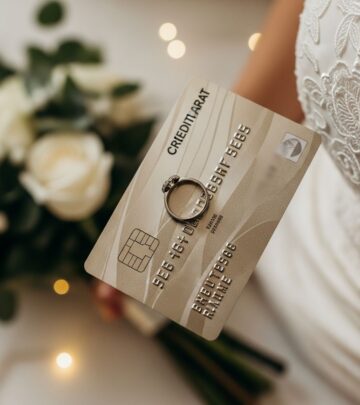
Smart Ways To Finance Your Wedding: Practical Guide In 2026
Discover practical strategies to cover wedding costs without derailing your financial future, from budgeting basics to smart payment options.

Weddings represent a significant financial commitment, with average costs ranging from $33,000 to $42,000 nationally in 2026, though medians hover around $13,000-$15,000 for more realistic spends. Effective financing starts with a clear budget and smart payment choices to ensure your celebration enhances rather than hinders your financial stability.
Establishing a Solid Wedding Budget Foundation
Begin by calculating your total affordable spend based on savings, income, and future goals. Allocate funds across key categories using data-driven percentages: venue and catering often claim 45-50% ($15,000-$18,000), photography/videography 10-12% ($3,600-$5,000), and planning 8-10% ($3,000-$4,200).
Track every expense from the outset. Use tools like spreadsheets to monitor quotes and actual costs, building in a 10-15% contingency for surprises like taxes, tips, or weather-related adjustments. Prioritize elements that matter most to you—perhaps photography over elaborate florals—and negotiate vendor packages accordingly.
| Category | Percentage of Budget | Average Cost (175 Guests) |
|---|---|---|
| Venue & Catering | 45-50% | $15,000-$18,000 |
| Photography & Videography | 10-12% | $3,600-$5,000 |
| Entertainment (DJ/Band) | 7-10% | $2,500-$3,500 |
| Attire & Beauty | 5-8% | $2,000-$3,000 |
| Florals & Decor | 8-10% | $3,000-$4,000 |
| Planner/Coordination | 8-10% | $3,000-$4,200 |
| Contingency | 10-15% | Buffer |
This breakdown, adapted from 2026 estimates, helps visualize allocations for a typical U.S. wedding with 175 guests totaling $42,000-$51,000. Adjust for your guest count and location—urban areas like Chicago average $54,000 while states like Oklahoma stay under $20,000.
Building Savings for Your Big Day
Savings remain the cornerstone of wedding financing. Aim to cover at least 50% through accumulated funds to minimize debt risk. Open a high-yield savings account dedicated to wedding expenses, automating monthly transfers based on your timeline—$1,000 monthly for 18 months funds $18,000.
Cut discretionary spending elsewhere: reduce dining out, subscriptions, or vacations. Side gigs like freelancing or ridesharing can add $500+ monthly without disrupting your primary job. Family contributions often cover 10-20% of costs; discuss expectations early to integrate them into your plan seamlessly.
- Automate transfers: Set recurring deposits to treat savings like a non-negotiable bill.
- Windfall allocation: Direct tax refunds, bonuses, or gifts straight to the wedding fund.
- Timeline alignment: For a 12-month runway, save 8-10% of your budget monthly.
Cash Flow Management During Planning
With payments spread over months, manage outflows carefully. Request staggered vendor payments—50% deposit, 50% at event—to align with your savings buildup. Use credit cards only for rewards on confirmed spends, paying balances in full monthly to avoid interest.
Monitor credit utilization; keep it under 30% to protect your score, especially if applying for a mortgage soon after. Tools like budgeting apps sync with banks for real-time tracking, alerting you to overspends in categories like attire (5-8% average) or entertainment.
Evaluating Credit-Based Financing Options
Credit cards offer convenience and perks but demand discipline. Opt for 0% introductory APR cards for large deposits like venues ($3,000-$12,000 range), ensuring payoff before promo ends. Rewards cards yield 2-5% cashback on catering or travel, potentially saving hundreds.
Personal loans provide fixed rates (6-36% APR based on credit), ideal for lump sums like $10,000 photography packages. Compare terms: a $20,000 loan at 10% over 36 months costs ~$680 monthly. Avoid high-interest options; excellent credit (740+) secures best rates.
- Credit cards: Best for short-term, rewards-eligible spends under $5,000.
- Personal loans: Fixed payments for larger, predictable expenses.
- Home equity: Risky for non-essential events; preserves liquidity better.
Family Contributions and Shared Funding
Many couples receive help from parents or relatives, often earmarked for specifics like rehearsal dinners. Formalize via checks or transfers to your account for tracking. If dividing costs with in-laws, use a shared spreadsheet for transparency.
Crowdfunding platforms allow guests to contribute via registries tied to honeymoon funds or honeymoons, averaging $100-$200 per donor. Frame requests thoughtfully, focusing on experiences over cash.
Cost-Saving Tactics Without Sacrificing Quality
Trim expenses strategically: choose off-peak dates to slash venue fees by 20-30%; DJs ($1,000-$2,000) over bands ($5,000+); self-serve apps instead of passed hors d’oeuvres. Bulk-buy alcohol for venues allowing it, or source florals from wholesale markets for 40% savings.
DIY elements like signage or favors cap stationery at 2-3% ($700-$1,000). Month-of coordinators ($1,000) handle logistics cheaper than full planners ($6,000+). Destination weddings can undercut domestic averages ($32,000 vs. $50,000) via packages.
| Saving Strategy | Potential Savings | Example Application |
|---|---|---|
| Off-Peak Booking | 20-30% | Winter venue rates |
| DIY Decor | 30-50% | Signage, favors |
| App Stations | 15-25% | Cocktail hour |
| Wholesale Florals | 40% | Bouquets, centerpieces |
Protecting Your Credit During Wedding Season
Weddings coincide with life milestones; preserve your credit score (key for post-wedding home buys). Limit new inquiries, pay on time, and keep debts low. Check reports free weekly via AnnualCreditReport.com to dispute errors pre-planning.
Post-wedding, consolidate any balances quickly. High utilization from vendors can drop scores 50-100 points temporarily—pay down promptly.
Long-Term Financial Impacts and Recovery
Debt from weddings averages $10,000+ for some couples, delaying savings by years. Prioritize cash funding to emerge debt-free. Post-event, redirect monthly savings to emergency funds or retirement.
Review finances quarterly during planning; adjust as needed. Celebrate milestones like hitting 50% funded to stay motivated.
Frequently Asked Questions
What is the average wedding cost in 2026?
Averages range $33,000-$42,000, but medians are $13,000-$15,000 for typical couples.
How much should I save monthly for a wedding?
For $30,000 over 12 months, target $2,500 monthly including contingency.
Is using credit cards okay for wedding expenses?
Yes, if paid off monthly; leverage 0% APR for deposits.
Can family help without awkwardness?
Discuss early and track contributions transparently.
How do I cut costs effectively?
Opt for off-peak, DIY, and package deals to save 20-50%.
Financing a wedding thoughtfully ensures joy without financial regret. Start planning today for a celebration that fits your life.
References
- The Ultimate 2026 Guide to Creating a Wedding Budget — The Club at Garden Ridge. 2026-01-19. https://theclubatgardenridge.com/2026/01/19/the-ultimate-2026-guide-to-creating-a-wedding-budget/
- The Brutal Truth About Wedding Planning in 2026: A Budget Survival Guide — Rinlong Flower. 2026. https://www.rinlongflower.com/blogs/news/the-brutal-truth-about-wedding-planning-in-2026-a-budget-survival-guide
- The Ultimate Wedding Budget Checklist — Here Comes The Guide. 2026. https://www.herecomestheguide.com/wedding-ideas/the-ultimate-wedding-budget-breakdown
- Wedding Budget Breakdown, Based on Real Couples’ Data — The Knot. 2025. https://www.theknot.com/content/wedding-budget-ways-to-save-money
- Wedding Budget Breakdown 2026: What Couples Are Really Spending — Harpsen. 2026. https://www.harpsen.com/blog/wedding-budget-breakdown-2026-what-couples-are-really-spending-and-how-planners-can-help
- How Much Does a Destination Wedding Cost (2026) — Sunlover Travel. 2026. https://sunlovertravel.com/how-much-does-a-destination-wedding-cost-2026/
- 2026 Average Wedding Cost Estimate — The Wedding Report. 2026. https://wedding.report/action/wedding_cost.estimate/budgetid/585B48AA-09BE-41DC-8DDB7A6C9A854A19
Similar Articles








Read full bio of medha deb