Balance Transfer Cards: When To Use Them, Expert Guide
Discover when shifting credit card debt to a new card with low rates can cut costs and streamline your finances effectively.

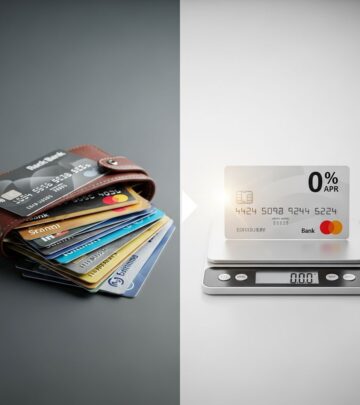
Balance transfer credit cards provide a strategic tool for managing high-interest debt by moving balances to cards offering promotional low or zero percent interest rates. This approach shines when you face substantial credit card balances accruing steep interest, allowing you to redirect payments toward principal reduction rather than finance charges.
Understanding the Core Mechanics of Balance Transfers
A balance transfer relocates existing debt from one credit card or loan to a new credit card, typically one featuring a temporary introductory annual percentage rate (APR) of 0%. This shift pauses interest accumulation during the promotional window, which often spans 12 to 21 months, enabling faster debt elimination if you maintain disciplined payments.
Debt consolidation emerges as a primary benefit, merging multiple balances into a single account with unified payments and tracking. For instance, juggling several cards at average rates above 20% can lead to fragmented finances; transferring to one low-rate card simplifies oversight.
- High-interest debt migration to 0% APR promo periods.
- Streamlined billing from multiple sources to one.
- Potential savings in the hundreds or thousands over promo duration.
Key Scenarios Where Transfers Deliver Maximum Value
These cards prove most effective for debts requiring extended payoff timelines. If your balance demands over six months to clear at current rates, the interest avoidance often surpasses transfer costs.
| Scenario | Why It Works | Potential Savings Example ($5,000 Balance) |
|---|---|---|
| High APR (15-25%) on existing cards | 0% intro APR halts interest | $265+ over 12 months |
| Multiple card balances | One payment simplifies management | Reduced late fees risk |
| Stable monthly budget for payments | Accelerated principal payoff | Debt-free sooner |
Ideal candidates hold good credit scores, typically 670+, to qualify for top promo offers from issuers. Those with irregular income or temptation to accrue new charges may find alternatives like debt management plans more suitable.
Navigating Costs and Hidden Pitfalls
Upfront balance transfer fees range from 3% to 5% of the transferred amount, adding $150-$250 on a $5,000 move. Calculate breakeven by dividing fee by monthly interest savings; if promo period covers payoff, net gain materializes.
Post-promo, standard APRs apply to remnants, often 18-29%, underscoring urgency to clear balances timely. New purchases on transfer cards usually bypass promo rates, accruing at higher standard APRs immediately.
- Fee structure: 3-5% or $5 minimum per transfer.
- Promo expiration: Plan payoff before rate reversion.
- Credit impact: Hard inquiry and utilization spike possible short-term.
Step-by-Step Guide to Executing a Balance Transfer
Initiate by assessing current debts: list balances, APRs, and minimum payments across accounts. Compare issuer offers for longest 0% periods and lowest fees.
- Research and apply: Select card; apply online, requesting transfer during process.
- Gather details: Provide old account numbers, balances, and billing addresses.
- Await processing: Transfers post in 2-14+ days; continue old minimum payments.
- Verify and pay: Confirm transfer, then allocate budget to aggressive monthly payments.
Many issuers prohibit intra-brand transfers, e.g., no Wells Fargo to Wells Fargo. Limits cap at approved credit line, potentially below total debt sought.
Real-World Savings Projections and Examples
Consider a $10,000 balance at 20% APR with $300 monthly payments: without transfer, payoff spans 46 months costing $5,800 interest. At 0% for 18 months, same payments clear debt in 34 months, saving $4,200.
Tools from issuers like calculators estimate personalized outcomes by inputting balances, rates, and payments. Sensitivity to payment increases amplifies savings; boosting to $400 monthly shaves additional months.
Alternatives When Transfers Fall Short
Not all situations favor transfers. Short-term debts clearable in 2-3 months render fees uneconomical. Poor credit disqualifies from prime offers, pushing toward personal loans at fixed rates or nonprofit credit counseling.
- 0% purchase APR cards for planned spending.
- Debt consolidation loans with fixed terms.
- Home equity options for larger sums (with risks).
Maintaining Financial Discipline Post-Transfer
Success hinges on commitment: freeze old cards, set autopay above minimums, and track progress via apps. Build emergency funds to avoid new borrowing. Credit mix improves long-term as utilization drops post-payoff.
Frequently Asked Questions
Can I transfer balances from loans, not just cards?
Yes, many cards accept certain loan balances alongside credit card debt, check terms.
How long do promotional rates last?
Typically 12-21 months, varying by offer; review post-promo APR.
Does a transfer hurt my credit score?
Temporarily yes, from inquiry and utilization; rebounds with payments.
Can I transfer to my bank account?
Limited via convenience checks or ACH, incurring fees and cash advance rates.
What if I don’t pay off before promo ends?
Remaining balance shifts to standard APR, possibly with penalty rates.
Advanced Strategies for Optimal Results
Chain multiple transfers if disciplined, rolling remnants to new promos before expiration, though harder with successive inquiries. Pair with spending cuts: redirect saved interest (e.g., $100/month) directly to principal. Monitor via statements for posting accuracy, disputing errors promptly.
For households, coordinate family-wide transfers to maximize limits. Businesses may explore commercial cards with similar features. Track FICO via free services to time applications during score peaks.
Regulatory protections under CARD Act mandate clear disclosures; report violations to CFPB. Tax implications nil unless forgiven debt counts as income.
References
- What is a Balance Transfer & How Does it Work? — Bank of America Better Money Habits. 2023. https://bettermoneyhabits.bankofamerica.com/en/debt/how-do-balance-transfers-work
- What is a Balance Transfer? — Commerce Bank. 2021. https://www.commercebank.com/personal/ideas-and-tips/2021/what-is-a-balance-transfer
- When does a Credit Card Balance Transfer Make Sense? — Fifth Third Bank. N/A. https://www.53.com/content/fifth-third/en/financial-insights/personal/credit-cards/when-does-a-credit-card-balance-transfer-make-sense.html
- What Is a Balance Transfer? Should I Do One? — NerdWallet. 2023. https://www.nerdwallet.com/credit-cards/learn/what-is-a-balance-transfer
- What is a credit card balance transfer? — Citi. 2023. https://www.citi.com/credit-cards/balance-transfer/balance-transfer-credit-cards-101
- How to do a balance transfer—calculate what you’ll save! — Navy Federal Credit Union. 2023. https://www.navyfederal.org/loans-cards/credit-cards/cardholder-resources/balance-transfers.html
- What is a Balance Transfer on a Credit Card? — Equifax. 2023. https://www.equifax.com/personal/education/credit-cards/articles/-/learn/balance-transfer-credit-card/
Similar Articles








Read full bio of medha deb