Smart Tax Strategies for Retirement Savings
Unlock tax-efficient retirement investing with proven methods to cut taxes now and boost future income through smart account choices and strategies.

Building a robust retirement portfolio requires more than just saving money—it demands strategic tax planning to preserve and multiply your wealth. With evolving tax laws and contribution limits for 2026, individuals can leverage accounts like 401(k)s, IRAs, and HSAs to defer, reduce, or eliminate taxes on retirement funds. This guide explores practical methods to invest wisely, drawing on high-quality financial insights to help you navigate these opportunities effectively.
Understanding Tax-Advantaged Accounts
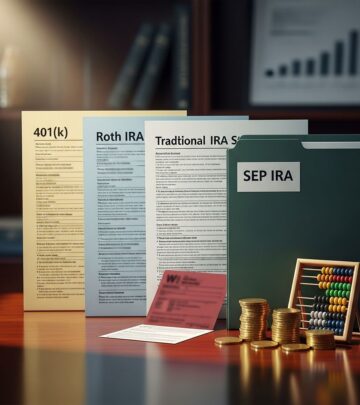
Tax-advantaged accounts form the foundation of efficient retirement planning. These vehicles allow contributions to grow with minimal tax interference, providing a significant edge over taxable investments.
- Traditional 401(k) and IRA contributions reduce your current taxable income, effectively lowering your tax bill today while deferring taxes until withdrawal.
- Roth versions offer tax-free growth and distributions, ideal for those expecting higher future tax rates.
- Health Savings Accounts (HSAs) triple the tax benefits: deductions on contributions, tax-free growth, and qualified withdrawals free from taxes.
For 2026, contribution limits have increased to accommodate inflation. Individuals can contribute up to $23,500 to a 401(k), with catch-up provisions for those 50 and older reaching $31,000, and special super catch-ups for ages 60-63 up to $34,750. IRAs allow $7,500 standard, plus $1,100 catch-up for 50+, totaling $8,600. HSAs permit $4,400 for individuals and $8,750 for families, with a $1,000 catch-up.
Maximizing Contributions for Immediate Tax Relief
One of the simplest yet most powerful moves is maxing out contributions to these accounts. Each dollar deferred into a traditional account lowers your adjusted gross income, potentially dropping you into a lower tax bracket.
Consider this: In a 28% marginal bracket, a $10,000 401(k) contribution might only reduce take-home pay by $7,200, as the government subsidizes the rest through tax savings. Prioritize employer matches first—they’re free money—then HSAs for their unique triple tax advantage, followed by IRAs and additional 401(k) funds.
| Account Type | 2026 Standard Limit | Catch-Up (50+) | Special Catch-Up (60-63) |
|---|---|---|---|
| 401(k)/403(b) | $23,500 | $7,500 | $11,250 |
| IRA | $7,500 | $1,100 | N/A |
| HSA (Individual) | $4,400 | $1,000 | N/A |
| HSA (Family) | $8,750 | $1,000 | N/A |
This table highlights the opportunities; use them to build tax-deferred nests that compound over decades.
Strategic Roth Conversions for Future Tax Freedom
Roth conversions involve shifting funds from traditional IRAs or 401(k)s to Roth accounts, paying taxes now for tax-free withdrawals later. This is particularly advantageous in low-income years, such as early retirement before Social Security or RMDs kick in.
With ordinary income rates steady at a top of 37%, converting during lower-bracket years locks in today’s rates. Research shows blending conversions with withdrawals can extend portfolio longevity, saving thousands in taxes. For instance, strategic timing kept one couple in the 10% bracket longer, preserving $106,000 more for heirs. New retirees might delay Social Security to create conversion room, while established ones plan around RMDs.
Tax-Loss Harvesting to Offset Gains
In volatile markets, tax-loss harvesting sells losing investments to offset gains elsewhere, reducing your capital gains tax. Long-term rates remain 0%, 15%, or 20% based on income, with a 0% bracket up to $49,450 single/$98,900 joint filers.
Execute this year-end or opportunistically: Sell losers to neutralize winners, then reinvest proceeds in similar assets to maintain allocation. This strategy minimizes embedded gains taxes without derailing your portfolio.
Optimizing Asset Placement Across Accounts
Not all investments are tax-equal. Place tax-inefficient assets—like bonds or REITs generating ordinary income—in tax-deferred accounts (IRAs/401(k)s). Tax-efficient ones, such as index stocks or municipal bonds, thrive in taxable brokerage accounts.
Municipal bonds shine for high earners, offering federal (often state) tax-exempt interest. Harvest the 0% capital gains bracket by realizing gains in low-income years, especially for retirees.
Managing Required Minimum Distributions Effectively
Starting at age 73, RMDs force withdrawals from traditional accounts, taxed as income. Plan ahead: Use Qualified Charitable Distributions (QCDs) up to $105,000 annually (indexed) to satisfy RMDs tax-free while donating.
Reinvest unneeded RMDs in taxable accounts with tax-efficient ETFs for continued growth at lower capital gains rates. Qualified Longevity Annuity Contracts (QLACs) up to $210,000 defer RMDs until age 85, hedging longevity risk.
Blending Withdrawal Strategies for Tax Control
Conventional wisdom suggests depleting taxable accounts first, but data favors customized sequencing. Mix taxable, traditional, and Roth withdrawals to stay in lower brackets.
For example, pull from taxable for capital gains control, supplement RMDs with Roth, and convert strategically. This approach saved $35,000 in taxes in one study, extending low-bracket years.
Incorporating Health and Long-Term Care Planning
HSAs double as retirement powerhouses post-65, with non-medical withdrawals taxed like traditional IRAs but growing tax-free. Hybrid long-term care annuities offer tax-free growth and amplified coverage for care needs.
Prioritize these for rising healthcare costs, a top retirement expense.
Year-End Actions to Lock in Savings
Before 2026, harvest losses, bunch deductions, fund accounts, and adjust estimated payments. Invest overpayments in short-term fixed income for yield. Consult fiduciaries for personalized advice.
Frequently Asked Questions
What are the 2026 IRA contribution limits?
Standard $7,500, plus $1,100 catch-up for 50+, totaling $8,600.
Is Roth conversion right for me?
Yes, if in a low bracket now or expecting hikes later; model with projections.
How does tax-loss harvesting work?
Sell losses to offset gains, avoiding wash-sale rules by waiting 30 days or swapping assets.
Can I avoid taxes on RMDs?
Use QCDs for charity or QLACs to defer; reinvest extras tax-efficiently.
What’s the priority for contributions?
1. Employer match; 2. HSA; 3. IRA; 4. Max 401(k).
References
- 10 Tax Strategies That Matter in 2026 — Davis Capital Management. 2026. https://daviscapitalsite.com/10-tax-strategies-that-matter-in-2026/
- Tax-Efficient Retirement Withdrawal Strategies — T. Rowe Price. 2026-02. https://www.troweprice.com/en/us/insights/tax-efficient-retirement-withdrawal-strategies
- 2026 Tax Strategy: Pay Less Now, Increase Retirement Income — Langan Financial Group. 2026. https://langanfinancialgroup.com/2026-tax-strategy-pay-less-now-increase-retirement-income/
- 5 Year-End Tax-Planning Actions to Take Before 2026 — J.P. Morgan Private Bank. 2025. https://privatebank.jpmorgan.com/nam/en/insights/markets-and-investing/ideas-and-insights/5-year-end-tax-planning-actions-to-take-before-2026
- 7 Smart Money Moves for 2026 Retirement Planning — Fidelity. 2026. https://www.fidelity.com/learning-center/personal-finance/retirement/2026-money-moves
Similar Articles








Read full bio of medha deb