Buying Used Cars: Smart Guide To Avoid Costly Mistakes
Master the art of purchasing a pre-owned vehicle with expert strategies to secure reliability, value, and peace of mind without overpaying.

Purchasing a pre-owned vehicle offers substantial savings compared to new models, but it demands careful preparation to sidestep expensive surprises. This guide equips you with a systematic approach, drawing from reliable practices to evaluate options thoroughly and secure a dependable ride.
Establishing Your Financial Foundation
Begin by defining a realistic budget that encompasses more than the sticker price. Factor in ongoing expenses like fuel, insurance premiums, maintenance, and registration fees. Experts recommend allocating an extra 20% buffer for unforeseen repairs on used vehicles.
- Calculate total affordability: Aim for monthly payments under 10-15% of your income.
- Explore pre-approval for loans to strengthen your negotiating position.
- Compare insurance quotes for target models, as rates vary by safety ratings and theft risks.
Tools such as Edmunds or Kelley Blue Book provide localized pricing data, helping you gauge fair market value amid regional fluctuations.
Defining Your Ideal Vehicle Profile
Align your choice with lifestyle needs to ensure long-term satisfaction. Consider usage patterns like daily commutes, family hauling, or off-road adventures.
| Need | Recommended Features | Examples |
|---|---|---|
| City Driving | Compact size, high fuel efficiency | Honda Civic, Toyota Corolla |
| Family Use | Spacious interior, safety tech | Subaru Outback, Honda CR-V |
| Heavy Duty | Towing capacity, durability | Ford F-150, Toyota Tacoma |
Review reliability ratings from sources like NHTSA for recalls and owner feedback to prioritize dependable models.
Conducting Thorough Vehicle History Research
A detailed history report is non-negotiable, revealing accidents, ownership changes, odometer discrepancies, and service logs. Services like Carfax flag salvaged, flooded, or lien-encumbered titles.
- Scan for red flags: Frequent owners, service gaps, or hurricane-zone title transfers.
- Cross-verify VIN on title, doors, and engine against the report.
- Request maintenance receipts for oil changes, tire rotations, and part replacements.
High-mileage cars aren’t deal-breakers if records show consistent care; highway miles wear less than stop-and-go urban driving.
Performing a Comprehensive Visual Assessment
Before engines roar, scrutinize the exterior and interior for telltale issues. Park in natural light to spot imperfections clearly.
Exterior Examination
- Inspect panels for uneven gaps, mismatched paint, or overspray indicating repairs.
- Check tires for uniform tread (at least 4/32 inch) and matching brands.
- Probe rust under wheel wells, rocker panels, and door edges; avoid flood-damaged cars with musty smells or silt residue.
- Test lights, signals, and wipers for full operation.
Interior Scrutiny
- Examine seats, carpets, and headliners for wear, stains, or water damage.
- Operate windows, locks, sunroof, and audio systems.
- Verify seatbelts retract smoothly and airbags show no deployment signs.
- Confirm spare tire, jack, and fluids are present.
Engine and Mechanical Deep Dive
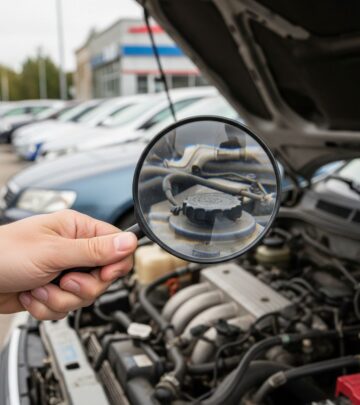
Pop the hood cold for an honest reveal. Look for leaks, corrosion on battery terminals, and secure hoses/belts.
- Oil: Dark but not metallic or milky; proper level.
- Coolant: Clean, not rusty; check reservoir when cool.
- Start cold: Listen for smooth idle without smoke, ticks, or grinding.
With engine running, monitor for drips and gauge readings in normal ranges.
Mastering the Test Drive Protocol
A minimum 20-30 minute drive on varied roads tests real-world performance. Bring a checklist and trusted companion.
- Idle check: AC/heat blasts cold/hot, no vibrations.
- Braking: Firm pedal, no pulling or squeals from speed.
- Acceleration: Smooth shifts, no hesitations or clunks in turns.
- Highway stint: Stability at 65+ mph, minimal road noise.
- Reverse and parking: All gears engage cleanly.
Post-drive, recheck temperature and listen behind wheels for brake issues.
Professional Inspection and Certification Options
Invest $100-200 in a mechanic’s pre-purchase exam for hidden flaws like frame damage or transmission woes. Certified Pre-Owned (CPO) programs from manufacturers add inspected quality and warranty perks, though at a premium.
- Ask sellers to allow independent inspections; refusal is a red flag.
- CPO benefits: Multi-point checks, extended warranties.
Negotiation and Closing the Deal
Leverage your research for leverage. Start below market value, citing history report issues or needed fixes.
- Verify title clarity, no liens; match seller name to documents.
- Secure bill of sale, odometer statement, and emissions compliance.
- Review warranties or return policies from dealers.
Finalize insurance and registration promptly post-purchase.
Frequently Asked Questions
Is a high-mileage used car a poor choice?
Not necessarily; prioritize maintenance proof over raw miles. Well-serviced highway-driven vehicles often outlast neglected low-milers.
How do I spot accident repair signs?
Seek panel mismatches, paint variances, or non-functional safety features. History reports catch reported incidents, but visual cues reveal unreported ones.
What paperwork is essential for purchase?
Title, bill of sale, odometer disclosure, insurance proof, and tax payments. Verify VIN consistency to dodge stolen vehicles.
Should I buy from private sellers or dealers?
Dealers offer warranties and recourse; private sales save money but risk more. Always inspect rigorously regardless.
What’s the value of a vehicle history report?
Invaluable for uncovering theft, floods, or rollbacks; no inspection substitutes it.
Common Pitfalls to Evade
- Rushing without history checks or test drives.
- Ignoring insurance or repair cost estimates.
- Accepting seller refusals for mechanic visits.
- Falling for ‘too good to be true’ pricing signaling scams.
By following this blueprint, you’ll navigate the used car market confidently, landing a reliable vehicle that fits your budget and needs. Patience pays dividends in automotive investments.
References
- The Comprehensive Used Car Buying Checklist – What You Need to Know — Nissan South Morrow. 2023-2024. https://www.nissansouthmorrow.com/the-comprehensive-used-car-buying-checklist-what-you-need-to-know/
- The Used Car Buyer’s Blueprint | 5 Steps to Avoid Costly Mistakes — Advantage Chevrolet. 2023-2024. https://www.advantagechevrolet.com/blog/the-used-car-buyers-blueprint
- How to Buy a Used Car with Confidence [Free Checklist] — Copper State Credit Union. 2023-2024. https://www.copperstatecu.org/blog/checklist-how-to-buy-a-used-car-with-confidence-free-pdf
- What to Check When Buying a USED CAR, Experts Full Checklist — YouTube (Mechanic Channel). 2023. https://www.youtube.com/watch?v=Q4AAzo0q3ow
- How to Buy a Used Car – CARFAX — Carfax. 2024-2026. https://www.carfax.com/buying/car-buying-checklist
Similar Articles








Read full bio of Sneha Tete