Smart Funding For Short-Term Goals: A Practical Guide
Discover effective strategies to fund your short-term dreams without derailing your financial stability or risking your hard-earned savings.
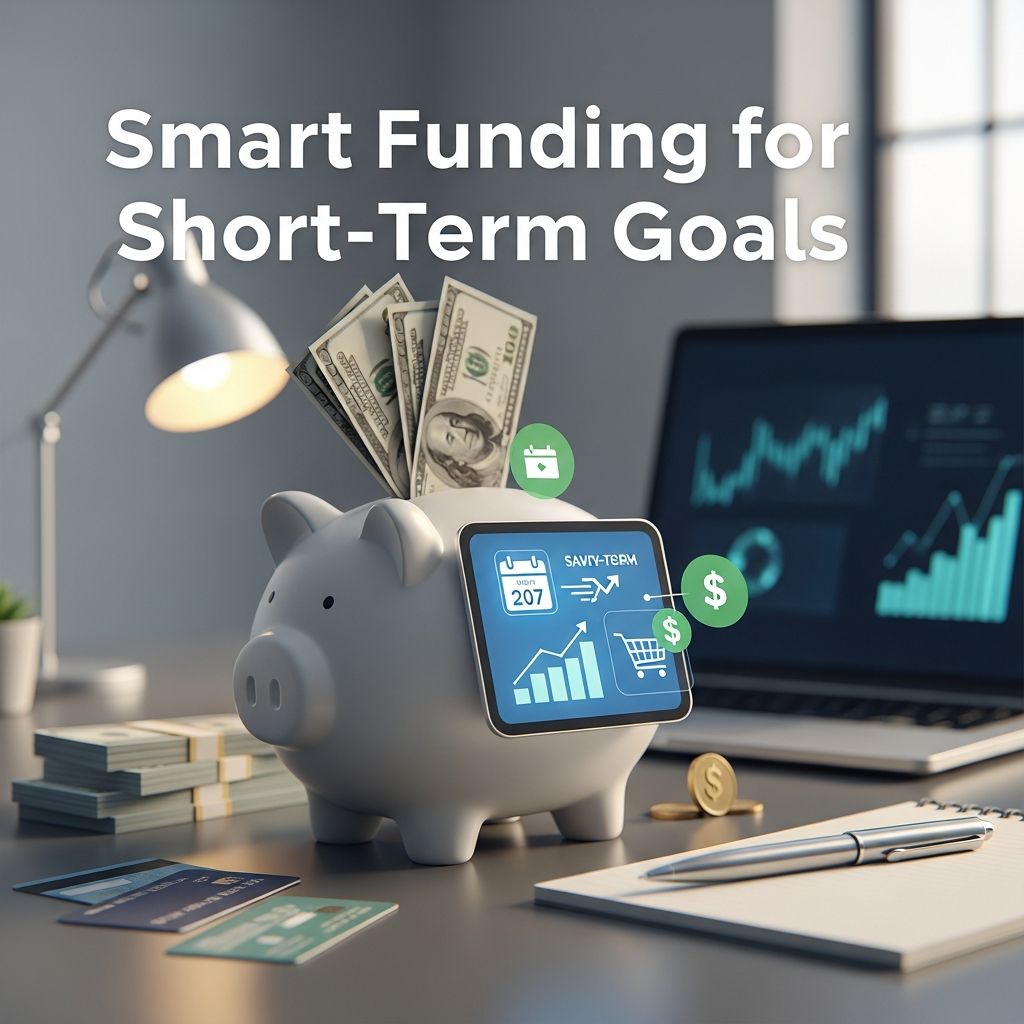
Funding short-term goals effectively requires balancing accessibility, safety, and growth potential. For objectives achievable in one to three years, such as building an emergency fund, planning a vacation, or purchasing a new appliance, prioritize low-risk options that protect your principal while generating modest returns.
Defining Your Financial Targets
Begin by clarifying what constitutes a short-term goal. These are typically expenses you plan to cover within 36 months, distinguishing them from long-term aspirations like retirement. Common examples include accumulating three to six months of living expenses for emergencies, saving for a family trip, or covering unexpected repairs.
To set a precise target, estimate the total cost. Research current prices for flights, hotel stays, or vehicle maintenance to avoid underestimating. For an emergency fund, calculate monthly essentials like housing, food, and utilities, then multiply by three to six.
- Assess your timeline: Divide the total by remaining months to determine monthly contributions.
- Factor in inflation: Add 2-3% annually to account for rising costs.
- Build in buffers: Aim 10-20% higher to handle surprises.
Budgeting Foundations for Success
A solid budget is the cornerstone of funding any goal. Track income and outflows for one month to reveal spending patterns. Tools like spreadsheets or apps categorize expenses into needs, wants, and savings.
Adopt the 50/30/20 framework: Allocate 50% to necessities (rent, groceries), 30% to discretionary items (dining, hobbies), and 20% to savings and debt repayment. For an $8,000 monthly income, this yields $1,600 for goals—potentially $19,200 yearly.
| Category | Percentage | Example ($8,000 Income) |
|---|---|---|
| Necessities | 50% | $4,000 |
| Discretionary | 30% | $2,400 |
| Savings/Debt | 20% | $1,600 |
Implement micro-adjustments: Prepare meals at home to slash dining costs, cancel unused subscriptions, or use public libraries for entertainment. These tweaks can free $200-500 monthly without lifestyle sacrifice.
Automating Your Savings Journey
Consistency trumps motivation. Set up automatic transfers from checking to savings on payday, treating it like a non-negotiable bill. This ‘pay yourself first’ approach ensures progress even amid busy schedules.
For a $8,000 vacation in 12 months, automate $667 monthly. Review quarterly to accelerate if surplus arises, such as from bonuses or tax refunds.
Optimal Accounts for Preservation and Growth
High-Yield Savings Accounts
These accounts offer liquidity and superior interest rates compared to traditional savings, often 4-5% APY as of recent data. Access funds anytime without penalties, ideal for goals needing flexibility.
Benefits include FDIC insurance up to $250,000, no market risk, and compounding interest that accelerates growth. Deposit irregularly or automate for steady buildup.
Certificates of Deposit (CDs)
CDs lock funds for a fixed term (3-12 months for short goals) at guaranteed rates, typically higher than savings accounts. Early withdrawal incurs penalties, enforcing discipline.
Suitable for portions of savings not needed imminently. Ladder CDs—stagger maturities—for balanced access and yields.
Money Market Funds
These invest in short-term, high-quality debt with average maturities under 60 days, emphasizing stability and liquidity. Yields track federal rates, with low risk.
Vanguard’s funds have outperformed peers over a decade, per historical data. Use for parking cash awaiting opportunities.
| Option | Liquidity | Risk Level | Typical Yield | Best For |
|---|---|---|---|---|
| High-Yield Savings | High | Very Low | 4-5% | Flexible access |
| CDs | Low | Very Low | 4.5-5.5% | Fixed timelines |
| Money Market Funds | High | Low | 4-5% | Short-term parking |
Debt Management Integration
High-interest debt sabotages goals. Prioritize repayment using snowball (smallest balances first) or avalanche (highest rates first) methods alongside saving.
Post-debt, redirect payments to goals. For instance, eliminating a $200 monthly credit card payment boosts savings capacity.
Common Pitfalls and Protections
Avoid dipping into long-term investments for short needs—market dips could force sales at losses. Resist impulse borrowing via credit cards, where rates exceed 20%.
- Maintain separate accounts: Label for specific goals to curb temptation.
- Emergency fund first: Secure 3-6 months before other pursuits.
- Reassess annually: Adjust for life changes like raises or inflation.
Real-World Applications
For a $5,000 emergency fund in 18 months, save $278 monthly in a high-yield account at 5% APY, yielding ~$5,100 total. A $3,000 vacation? Use CDs for half, savings for the rest.
Diversify: 50% high-yield, 30% CDs, 20% money market for optimized liquidity and returns.
Frequently Asked Questions
What is a short-term savings goal?
Any financial target met within 1-3 years, like emergencies or vacations, using low-risk vehicles to preserve capital.
High-yield savings vs. CDs: Which to choose?
Savings for flexibility, CDs for higher locked rates. Combine both for balance.
How much for an emergency fund?
3-6 months of expenses, starting with $2,000 or two weeks’ worth.
Are money market funds safe?
Yes, focused on high-quality short-term securities with liquidity and stability.
Can I save on a tight budget?
Yes, via small cuts like home cooking and subscription audits.
Advanced Tactics for Acceleration
Boost via side gigs, windfalls, or ‘no-spend’ challenges. Pair with apps tracking net worth for motivation. For families, involve all in goal-setting to sustain commitment.
Monitor rates quarterly; switch providers if better APYs emerge, as competition drives improvements.
References
- Savings Strategies to Help You Reach Your Short-Term Goals — Forbright Bank. 2024. https://www.forbrightbank.com/stories/resources/two-savings-strategies-for-short-term-goals/
- 10 ways to start saving money — Vanguard. 2025. https://investor.vanguard.com/investor-resources-education/article/how-to-save
- Investment strategies for short-term goals — Fidelity. 2024. https://www.fidelity.com/learning-center/trading-investing/investing-for-short-term-goals
- An essential guide to building an emergency fund — Consumer Financial Protection Bureau. 2023. https://www.consumerfinance.gov/an-essential-guide-to-building-an-emergency-fund/
Similar Articles








Read full bio of Sneha Tete