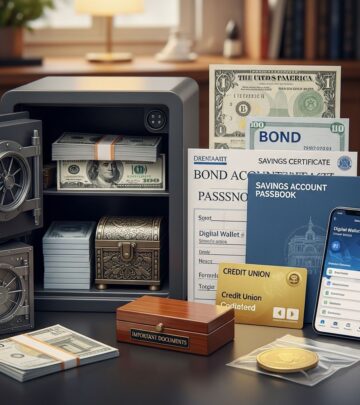
Smart Financial Storage: Beyond Home Cash
Discover secure alternatives to keeping cash at home and protect your money effectively.

Keeping significant amounts of cash at home presents numerous risks that many people underestimate. From theft and fire damage to loss and deterioration, physical currency stored in residential spaces faces constant vulnerability. Understanding where to place your money instead of hiding it around your home can provide both security and potential growth opportunities. This guide explores practical alternatives that offer superior protection while maintaining accessibility when you need funds.
Why Home Storage Presents Financial Risks
The practice of storing cash at home may feel secure because you maintain direct control over it, but this approach carries substantial drawbacks. Without proper protection mechanisms, your money remains exposed to multiple threats. Natural disasters like fires can destroy physical currency instantly, leaving no recovery options. Burglars and thieves specifically target homes, knowing that many people keep cash hidden in predictable locations. Additionally, deteriorating bills may become unusable over time, effectively reducing your stored wealth without any action on your part.
Beyond these tangible risks, keeping cash at home prevents your money from working for you. Unlike funds placed in interest-bearing accounts, currency sitting in a shoebox generates zero returns and actually loses purchasing power over time due to inflation. This opportunity cost compounds significantly over months and years, representing real financial loss despite your money physically existing.
Primary Alternatives to Home Cash Storage
Traditional Banking Solutions for Everyday Access
Opening accounts at financial institutions remains one of the most straightforward methods to safely store money while maintaining reasonable accessibility. Banks and credit unions offer structural advantages that home storage cannot match. Your deposits receive protection through federal insurance programs that guarantee funds up to specific limits, typically $250,000 per account holder per institution through FDIC coverage or similar protections through credit union insurance programs.
Consider establishing multiple accounts across different financial institutions as a diversification strategy. This approach provides practical advantages beyond simple redundancy. If your primary bank experiences technical difficulties, such as power outages affecting ATM networks, your secondary accounts remain functional. Should one institution face unexpected closures or service interruptions, your money remains accessible through alternative institutions. This strategy also maximizes your insurance coverage, since each account at different institutions qualifies for separate protection limits.
When opening new accounts, verify that minimum balance requirements align with your intended deposit amounts. Some institutions impose monthly fees if balances fall below specified thresholds, potentially eroding your savings through unnecessary charges. Many banks and credit unions now waive these fees or maintain relatively low requirements, making account diversification increasingly practical for most people.
Enhanced Yield Through Specialized Savings Vehicles
Beyond basic checking and savings accounts, several specialized products allow your money to generate meaningful returns while maintaining safety. High-yield savings accounts offered by many banks provide interest rates substantially exceeding standard savings products. These accounts typically require no lock-in periods, allowing complete withdrawal flexibility while earning significantly more than home storage provides.
Certificates of Deposit represent another low-risk option for intermediate time horizons. CDs lock your money for predetermined periods—commonly ranging from three months to five years—in exchange for guaranteed interest rates higher than traditional savings accounts. These products carry full FDIC insurance protection and pose virtually no risk of principal loss. The primary trade-off involves reduced liquidity; withdrawing funds before maturity typically incurs penalties. However, this forced patience often benefits savers by preventing impulsive withdrawals and committing them to actual saving behavior.
Money market accounts combine features of checking accounts with higher interest rates typical of savings products. These accounts generally require maintaining substantial minimum balances—often $5,000 or more—making them suitable primarily for people with significant liquid savings. The higher interest rates and check-writing capabilities make money market accounts attractive for those meeting minimum requirements.
Digital and Mobile Payment Solutions
Contemporary technology offers increasingly practical alternatives for storing and accessing funds without maintaining physical cash at home. Peer-to-peer payment applications like Venmo and Cash App allow users to maintain account balances for everyday transactions and money transfers. These platforms eliminate the need for physical currency while providing instant transfer capabilities to contacts. Users can load funds through connected bank accounts and maintain balances for convenient spending or emergency access.
Prepaid debit cards function similarly to traditional debit cards but operate independently from bank accounts. You load specific amounts directly onto the card, creating a spending limit that prevents overdrafts. This mechanism provides natural spending controls while eliminating the need for bank account connections. Some prepaid cards offer protections against fraud and theft, though protection levels vary by card issuer and registration status. The portability of prepaid cards makes them useful for emergency situations, travel, or keeping accessible funds separate from primary bank accounts.
Digital wallets including Apple Pay and Google Pay store payment information on mobile devices, enabling contactless transactions without physical cards or cash. While these solutions primarily address payment convenience, they eliminate the necessity of carrying physical currency and provide transaction records for financial tracking. Linking prepaid cards or stored funds to digital wallets creates layered flexibility for accessing your money.
Evaluating Security Measures Across Storage Methods
Security considerations vary substantially across different storage approaches, requiring thoughtful evaluation based on your specific situation. Traditional banks provide institutional security including vault protection, insurance coverage, and regulatory oversight. These institutions employ sophisticated security systems and employ security personnel specifically trained in asset protection.
Digital solutions depend on cybersecurity measures rather than physical security. Strong passwords, two-factor authentication, and regular account monitoring significantly reduce digital theft risks. However, digital solutions inherently face different vulnerability vectors than physical storage, including hacking attempts and fraudulent access schemes.
When evaluating any storage method, prioritize understanding the specific protections offered. Research terms and conditions outlining how different institutions protect your funds against various risks. Federal insurance programs provide specific coverage amounts and conditions that vary by account type and institution. Understanding these details ensures you maintain appropriate coverage for your stored wealth.
Strategic Considerations for Emergency Funds
Emergency funds require different storage strategies than long-term savings. Funds needed for rapid access should remain in highly liquid accounts, allowing withdrawal within days or hours. High-yield savings accounts balance safety with reasonable interest earnings while maintaining complete accessibility. These accounts provide optimal characteristics for emergency reserves that might require quick deployment.
The amount of emergency savings should typically cover three to six months of essential expenses, though individual circumstances vary considerably. This substantial amount justifies seeking interest-bearing solutions rather than accepting zero returns from home storage. The difference between storing emergency funds in a high-yield account versus your mattress compounds significantly over extended periods.
Comparison of Storage Alternatives
| Storage Method | Security Level | Accessibility | Interest/Returns | Insurance Protection |
|---|---|---|---|---|
| Home Safe | Moderate | Immediate | None | None |
| Traditional Bank Account | High | High (ATM/Branch) | Low | FDIC up to $250,000 |
| High-Yield Savings | High | High | Moderate | FDIC up to $250,000 |
| Certificate of Deposit | High | Moderate | Higher | FDIC up to $250,000 |
| Prepaid Debit Card | Moderate | High | None | Limited |
| Digital Wallet/P2P App | Moderate | High | None | Limited |
Practical Implementation Steps
Begin by assessing your current financial situation, including total liquid savings and monthly cash flow. Determine how much emergency capital you reasonably need accessible at short notice. Separate this amount from longer-term savings that can be placed in products offering higher returns through restricted access.
Research financial institutions in your area, comparing account features, minimum balance requirements, and interest rates. Many online banks offer particularly competitive rates on savings and money market accounts due to lower operational costs. Consider opening accounts at multiple institutions to diversify risk and maximize insurance coverage.
If maintaining some home cash for emergencies, select a secure storage location offering fire resistance and theft protection. This amount should represent only a small portion of total savings—typically sufficient for immediate needs during bank access disruptions or emergencies.
Frequently Asked Questions
How much cash should I keep at home for emergencies?
Most financial advisors recommend keeping sufficient cash at home to cover one to two days of essential expenses. This amount provides access to funds if banks close temporarily or ATMs become unavailable, without exposing large sums to home-based risks. For most households, this means $200 to $500 stored securely at home, with additional emergency funds in accessible bank accounts.
What protection do bank deposits receive if banks fail?
The FDIC insures deposits up to $250,000 per depositor per bank. This protection covers checking accounts, savings accounts, money market accounts, and CDs. Credit union deposits receive similar protection through the NCUA up to $250,000. This insurance protects your funds even if the institution fails completely.
Can I access funds stored in CDs quickly if I need them?
CDs allow withdrawal before maturity, but typically impose penalties reducing your returns. The penalty amount varies by CD term and issuing bank but might equal several months of accumulated interest. Some banks offer flexible CDs with reduced penalties. If you anticipate needing rapid access, choose high-yield savings accounts instead of CDs.
Are digital wallets and payment apps safe for storing significant amounts?
Digital wallets and payment apps provide reasonable security through encryption and authentication protocols, but offer limited insurance protection compared to bank accounts. These solutions work well for smaller amounts and everyday spending but shouldn’t replace bank accounts for substantial emergency savings. Their value lies primarily in convenience and accessibility rather than maximum security.
Should I diversify across multiple banks and account types?
Yes, diversification offers practical advantages including maximized insurance coverage, protection against bank service interruptions, and access to different account features. Maintaining accounts at multiple institutions provides options if one institution experiences technical difficulties or service disruptions. This strategy requires minimal effort while substantially improving your financial resilience.
Moving Forward With Better Financial Security
Protecting your money through appropriate storage methods represents a fundamental aspect of financial wellness. Moving beyond home storage doesn’t require complex strategies or sophisticated financial products. Simple steps like opening accounts at established banks or credit unions, utilizing high-yield savings options, or maintaining prepaid cards create substantially safer situations than storing cash in residential spaces.
The optimal approach typically involves layered strategies combining multiple solutions. Maintain small emergency cash at home in secure storage, keep readily accessible funds in high-yield savings accounts, diversify across multiple financial institutions, and utilize digital solutions for everyday transactions. This balanced approach provides security, accessibility, and opportunity for growth while minimizing risks inherent in home storage alone.
Your financial security depends partly on thoughtful decision-making about where your money physically resides. By understanding available alternatives and implementing practical solutions, you transform your money from a vulnerable asset sitting at home into securely stored funds protected by institutional safeguards and working toward your financial goals through earned interest and returns.
References
- How to Store Money Without a Bank Account — Western Union. Accessed 2026. https://www.westernunion.com/blog/en/us/storing-money-without-bank-account/
- How Much Cash Should You Keep At Home? — Bankrate. Accessed 2026. https://www.bankrate.com/banking/how-much-cash-should-you-keep-at-home/
- 5 Smarter Places to Keep Your Emergency Fund — Eastex Credit Union. Accessed 2026. https://eastexcu.org/5-smarter-places-to-keep-your-emergency-fund/
- 3 Low-Risk Alternatives to Keeping Money in Cash — Afton Advisors. Accessed 2026. https://aftonadvisors.com/3-low-risk-alternatives-to-keeping-money-in-cash
- How People Store Cash at Home: A Guide for Money Senders — Remitly. Accessed 2026. https://www.remitly.com/blog/finance/how-people-store-cash-at-home/
Similar Articles








Read full bio of medha deb