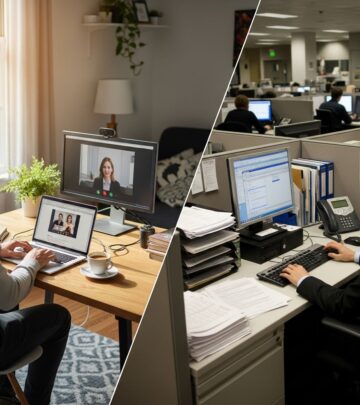
SOHO: Small Office Home Office Definition and Guide
Understand SOHO businesses, their benefits, tax deductions, and how to set up a successful home office.
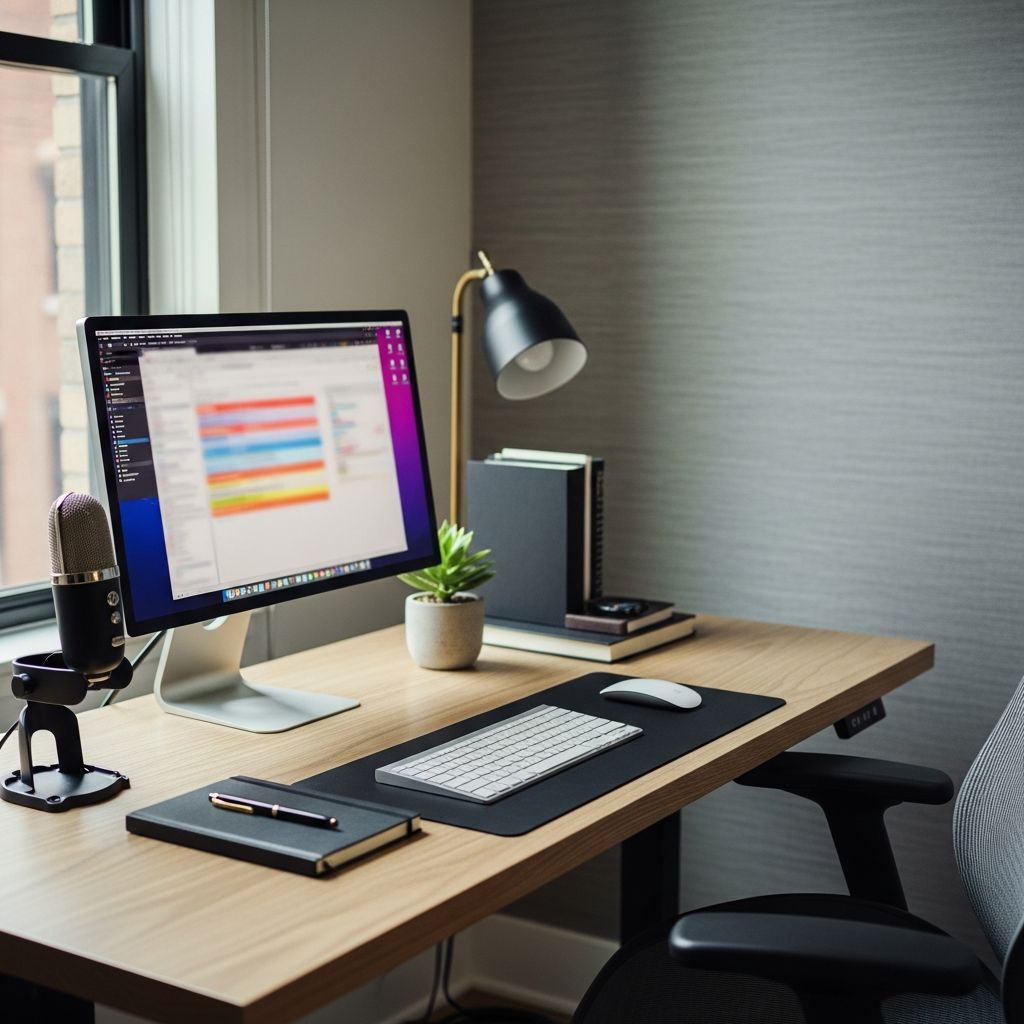
What is SOHO? Small Office Home Office Definition
SOHO stands for Small Office Home Office and refers to a business category that encompasses operations involving anywhere from 1 to 1,000 workers. This business model represents a fundamental shift in how work is conducted, allowing entrepreneurs, freelancers, and remote workers to operate their businesses from residential spaces or small dedicated offices. The SOHO designation has become increasingly relevant in today’s digital economy, where advanced technology enables professionals to compete globally without the overhead of traditional corporate spaces.
The term ”Small Office Home Office” encompasses various business structures, from sole proprietorships operated by a single individual to small teams working collaboratively from shared spaces. In many countries, regulatory bodies define SOHO differently. For instance, in New Zealand, the Ministry of Business, Innovation and Employment (MBIE) categorizes small offices as having 6-19 employees and micro offices as having 1-5 employees. This flexibility in definition allows businesses of varying sizes to benefit from SOHO classifications and associated support programs.
The Evolution and History of SOHO Businesses
The concept of home-based work is not new. Before the Industrial Revolution in the 19th century, nearly all offices were small offices or home offices. Most businesses operated on a small scale with limited paperwork, and owners conducted their affairs from their residences or small dedicated spaces. However, the Industrial Revolution fundamentally transformed this landscape by aggregating workers into factories for mass production, and similarly, white-collar office work became centralized in large buildings within cities and densely populated suburban areas.
The resurgence of SOHO as a viable business model began in the mid-1980s with technological breakthroughs. The advent of personal computers, fax machines, and telecommunications innovations created unprecedented opportunities for office workers to decentralize their operations. This technological shift was attractive to both employees and employers. Employers recognized the potential for lower overhead costs and potentially increased productivity, while employees gained flexibility and improved work-life balance. The combination of these factors sparked a quiet revolution in how work could be organized and conducted.
The Impact of Internet and Modern Technology on SOHO
The internet has fundamentally transformed the SOHO landscape, enabling home-based workers to compete on a global scale. Prior to internet connectivity, small home offices were limited to local markets and regional clients. Today, technology provides an extensive toolkit that allows SOHO operators to function as effectively as large enterprises. Email, the World Wide Web, e-commerce platforms, videoconferencing, remote desktop software, VPN connections, VLAN systems, webinar platforms, and Voice over IP (VOIP) telephone systems have democratized access to professional communication and business management tools.
This technological democratization has created a remarkable shift in market dynamics. A solo consultant working from a home office can now serve clients across continents, manage complex projects, and maintain professional communications indistinguishable from larger organizations. The barrier to entry for starting a business has lowered dramatically, and the potential market reach has expanded exponentially. This has prompted the development of specialized software and web services designed specifically for SOHO operations, including accounting software, project management tools, virtual assistant services, and cloud-based collaboration platforms.
Common SOHO Professions and Industries
Numerous professions operate successfully from home offices and small dedicated spaces. Consultants, lawyers, real estate agents, surveyors, accountants, graphic designers, writers, programmers, and numerous other professionals regularly operate from SOHO environments. Many of these professions, particularly in small and medium-sized towns, have traditionally operated from home offices or small local offices due to the nature of their work and the limited need for physical infrastructure.
The SOHO market has spawned a specialized industry of products and services designed to support home-based work. Armoire desks, all-in-one printers, virtual assistants, home servers, and network-attached storage devices represent just a fraction of the products marketed specifically to the SOHO segment. Additionally, numerous books, magazines, and online publications provide guidance on SOHO-specific challenges, from setting up telecommunications systems and managing finances to optimizing productivity and maintaining professional environments within residential spaces.
SOHO Employment Models: Independent and Corporate
The SOHO business model encompasses two primary employment arrangements. The first involves independent businesspersons who establish and operate their own enterprises from home offices. These entrepreneurs maintain complete autonomy over their business decisions, client relationships, and operational processes. The second model involves individuals employed by larger corporations who work remotely from home. This arrangement has become increasingly common, particularly following global workplace transformations in recent years. In some cases, remote workers remain independent contractors, maintaining their own business structure while serving a single primary client. In other instances, they become formal employees of the larger company, receiving benefits and employment protections while working from home.
The flexibility of the SOHO model has made it attractive to employers seeking to reduce real estate costs and expand their talent pool beyond geographic limitations. For employees, SOHO arrangements offer flexibility in work schedules, reduced commute times, and improved work-life balance. This symbiotic relationship between employees seeking flexibility and employers seeking cost efficiency has driven significant growth in remote work arrangements.
Home Office Tax Deductions: Key Requirements and Eligibility
One of the most significant advantages of operating a SOHO business is the potential to claim home office tax deductions. However, specific requirements must be met to qualify for these deductions. Understanding and properly documenting these deductions can result in substantial tax savings for eligible business owners and self-employed individuals.
To claim a home office deduction, several fundamental requirements must be satisfied. First, the designated home office space must be used exclusively and regularly for conducting business. This exclusivity requirement is crucial; if a room or area is used for both personal and business purposes, the home office deduction cannot be claimed for that space. For example, a spare bedroom used as an office only during business hours would qualify, but a guest room that occasionally serves as an office would not. Additionally, the home office must generally be the taxpayer’s principal place of business. However, an important exception exists: if administrative or management activities are conducted at home and there is no other location available for these duties, the home office can still qualify as the principal place of business, even if other business activities occur elsewhere.
Another critical criterion is that only self-employed individuals and business owners can claim home office deductions. Employees of corporations cannot claim this deduction, regardless of how much time they spend working from home. This distinction is important for those considering whether to structure their work as independent contractors or seek corporate employment.
Calculating Your Home Office Deduction: Two Methods
The IRS provides two distinct methods for calculating home office deductions, allowing taxpayers to choose the approach that maximizes their deduction based on their specific circumstances.
The Simplified Method
The simplified option offers a straightforward calculation of $5 per square foot of business-use space. This method has a maximum limit of 300 square feet, resulting in a maximum deduction of $1,500 annually. The simplified method requires minimal record-keeping and is ideal for those with straightforward home office setups. If your dedicated office space is 200 square feet, for example, your annual deduction would be $1,000 (200 × $5). This method eliminates the need to track detailed expenses and calculate percentages, making it attractive for many SOHO operators.
The Regular Method
The regular method provides a more detailed calculation based on the actual percentage of the home devoted to business use. This method requires identifying and documenting all applicable expenses, which may include mortgage interest, property taxes, insurance, utilities, repairs, maintenance, and depreciation. The deductible percentage is calculated by dividing the square footage of the home office by the total square footage of the home. For instance, if your home is 2,000 square feet and your office occupies 200 square feet, you could deduct 10% of eligible indirect expenses. Direct expenses, such as office furniture or office-specific repairs, are deducted in full regardless of the percentage calculation. The regular method typically results in larger deductions but requires careful record-keeping and documentation.
Eligible Expenses for Home Office Deduction
Understanding which expenses qualify for deduction is essential for maximizing your tax benefits. Several categories of expenses can be claimed when calculating home office deductions, provided they meet the exclusivity and regularity requirements.
Direct Expenses include costs directly attributable to the office space, such as office furniture, equipment, office supplies, and repairs specific to the office area. These expenses are deducted in full.
Indirect Expenses represent costs related to the entire home but shared with the office space, including mortgage interest (or rent), property insurance, utility bills, maintenance and repairs, and depreciation. These are deducted based on the percentage of home devoted to business use.
Non-Deductible Expenses include items that cannot be claimed, such as homeowner’s association fees, general home repairs not affecting the office, landscaping, and personal home improvements unrelated to the office.
Home Office Deduction Eligibility for Renters and Homeowners
Both homeowners and renters can claim home office deductions, though the specific expenses differ. Homeowners can deduct mortgage interest, property taxes, insurance, utilities, maintenance, repairs, and depreciation. Renters can deduct rent payments (or the business-use percentage of rent), renter’s insurance, utilities, and similar expenses applicable to their rental arrangement. This inclusive approach ensures that the home office deduction is available to a broad range of SOHO operators, regardless of their property ownership status.
Separate Structures and Additional Considerations
The home office deduction extends beyond rooms within the main residence. Separate structures on a property, such as unattached garages, studios, barns, or greenhouses, may qualify for deductions if used exclusively and regularly for business purposes. This expansion of eligibility enables small business owners with diverse space configurations to claim deductions appropriately.
It is important to note that certain properties do not qualify. Any portion of property used exclusively as a hotel, motel, inn, or similar hospitality business cannot be claimed as a home office deduction, even if the owner also operates other business activities from the property.
Setting Up a Successful SOHO Business
Establishing a productive and professional SOHO business requires careful planning and attention to several key factors. Successful SOHO operators prioritize ergonomic workspace design, reliable technology infrastructure, professional communication systems, and clear boundaries between personal and business activities. Investing in quality office furniture, high-speed internet connectivity, backup power systems, and appropriate cybersecurity measures establishes a foundation for business success. Additionally, maintaining detailed records of all business expenses, particularly those related to home office deductions, is essential for tax compliance and maximizing available deductions.
The Future of SOHO and Remote Work
The SOHO business model continues to evolve as technology advances and workplace expectations shift. The global trend toward remote work, accelerated by recent global events, has validated the SOHO model for both employers and employees. Continued development of collaboration tools, cloud computing infrastructure, and cybersecurity solutions will further enhance the viability and attractiveness of home-based work. As SOHO businesses continue to grow, support resources, specialized software, and professional services designed for this segment will likely expand correspondingly.
Frequently Asked Questions About SOHO
Q: What is the difference between SOHO and a traditional office?
A: SOHO operations are typically smaller, involve fewer employees, and are conducted from residential or small dedicated spaces. Traditional offices are usually larger, employ more staff, and occupy commercial real estate in business districts. SOHO provides flexibility and lower overhead costs, while traditional offices provide dedicated infrastructure and professional environments.
Q: Can I claim a home office deduction if I work part-time from home?
A: To claim a home office deduction, the space must be used regularly and exclusively for business. If you use a room for both personal and business purposes, or only occasionally for business, you likely cannot claim the deduction. However, if you maintain a dedicated office space used exclusively for your business, you may qualify regardless of whether you work full-time or part-time.
Q: Are employees allowed to claim home office deductions?
A: No. The IRS explicitly prohibits employees from claiming home office deductions. Only self-employed individuals and business owners can claim this deduction. If you are classified as an employee, even if you work entirely from home, you cannot claim home office expenses as deductions.
Q: Which method should I choose: simplified or regular for home office deductions?
A: The choice depends on your specific circumstances. The simplified method ($5 per square foot, maximum $1,500) is easier to calculate and requires less documentation. The regular method may provide larger deductions if your home has significant expenses like mortgage interest or property taxes, but requires detailed record-keeping and calculations.
Q: Can I deduct a separate garage or studio as a home office?
A: Yes, if the structure is separate from your main residence and used exclusively and regularly for business purposes, it can qualify for home office deductions. This includes unattached garages, studios, barns, or similar structures on your property.
References
- How Small Business Owners Can Deduct Their Home Office From Their Taxes — Internal Revenue Service (IRS). 2022-01-19. https://www.irs.gov/newsroom/how-small-business-owners-can-deduct-their-home-office-from-their-taxes
- Form 8829: Expenses for Business Use of Your Home — Internal Revenue Service (IRS). https://www.irs.gov/forms-pubs/about-form-8829
- Small Office/Home Office — Ministry of Business, Innovation and Employment (MBIE), New Zealand. https://www.mbie.govt.nz/
- Self-Employment Tax (Social Security and Medicare Taxes) — Internal Revenue Service (IRS). https://www.irs.gov/businesses/small-businesses-self-employed/self-employment-tax-social-security-and-medicare-taxes
- Telecommuting and Remote Work: Employee Rights and Responsibilities — U.S. Department of Labor. https://www.dol.gov/
Similar Articles








Read full bio of medha deb