5 Reasons Why Smaller Homes Can Save You Big Money
Discover how downsizing to a smaller home can drastically cut costs, simplify life, and boost your financial freedom in today's market.
By Nicole Dow, Staff Writer at The Penny Hoarder
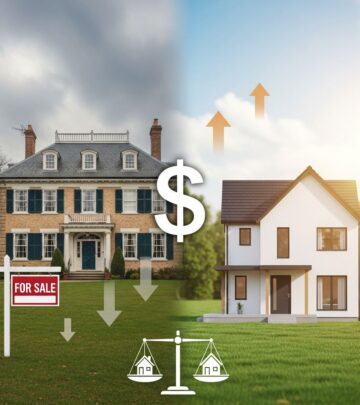
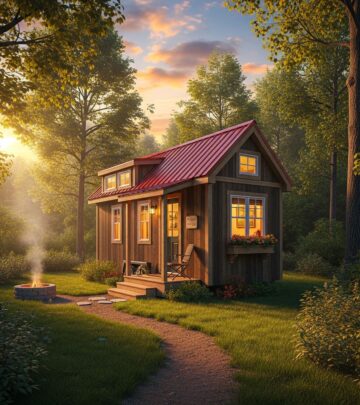
In an era of skyrocketing home prices and rising living costs, smaller homes are experiencing a renaissance. Whether it’s tiny houses on wheels, compact cottages, or modest bungalows under 1,000 square feet, these pint-sized properties offer outsized financial benefits. Homeownership remains the American dream, but the median new home size has ballooned to over 2,500 square feet, driving up costs exponentially. Smaller homes counter this trend, providing affordability without sacrificing comfort.
According to the U.S. Census Bureau, the average new single-family home size peaked at 2,519 square feet in 2015 but has since trended downward slightly as builders respond to demand for efficiency. Meanwhile, tiny home sales have surged, with the tiny house movement gaining traction amid economic uncertainty. This article dives into the five key reasons why opting for a smaller home can save you tens of thousands annually, backed by data from credible sources like the Census Bureau and energy agencies.
1. Lower Purchase Price
The most obvious advantage of smaller homes is their dramatically reduced upfront cost. In 2024, the median sales price for all homes hit $412,300, per the National Association of Realtors. However, tiny homes or those under 800 square feet often sell for $50,000 to $150,000, making homeownership accessible for first-time buyers, retirees, or those escaping urban rent traps.
Consider this: A 400-square-foot tiny home might cost $100,000, versus $500,000 for a 2,000-square-foot equivalent in the same area. That’s a $400,000 savings outright. Financing is easier too—smaller mortgages mean lower down payments (as low as 3-5% for FHA loans) and monthly payments under $600. The U.S. Department of Housing and Urban Development (HUD) reports that affordable housing options like these prevent millions from remaining renters, building equity faster.
- Average savings: $200,000-$400,000 on purchase price compared to median homes.
- Mortgage impact: $1,000+ less per month at current 6.5% rates.
- Equity build: Pay off in 10-15 years versus 30.
Real-world example: In markets like Austin, Texas, micro-homes under 600 sq ft list for $180,000, half the city median. Buyers like Jennifer Fuist, who downsized from hoarding clutter to a tiny home on wheels, report life-changing affordability.
2. Drastically Reduced Utility Bills
Smaller spaces mean less space to heat, cool, and power. The U.S. Energy Information Administration (EIA) states that homes under 1,000 sq ft use 40-50% less energy than larger ones. Annual utility costs for a tiny home average $1,200, versus $3,000+ for bigger houses.
Energy-efficient designs amplify this: Thick insulation, LED lighting, compact appliances, and solar panels (common in tiny homes) slash bills further. The Department of Energy notes that right-sizing your home is the #1 way to cut energy use, potentially saving $800 yearly. In cold climates, mini-split heat pumps cost pennies to run in small footprints.
| Home Size | Avg. Annual Utilities | Monthly Savings vs. 2,500 sq ft |
|---|---|---|
| <500 sq ft | $1,000 | $170 |
| 800-1,200 sq ft | $1,800 | $100 |
| 2,000+ sq ft | $3,600 | – |
Pro tip: Pair with smart thermostats and low-flow fixtures for 20% extra savings. Over 20 years, this compounds to $30,000+ in pocketed cash.
3. Minimal Maintenance and Repairs
Big homes equal big headaches—and bills. Roofing a 2,500 sq ft house costs $15,000; for 600 sq ft, it’s $3,500. The Joint Center for Housing Studies at Harvard University reports homeowners spend 1-4% of home value annually on maintenance, scaling directly with size. Smaller homes cap this at $1,000-$2,000/year.
- Exterior: Less siding, fewer windows to seal.
- Interior: Minimal HVAC, plumbing runs.
- Yard: Smaller lots reduce landscaping to $500/year vs. $2,000+.
Insurance follows suit: Tiny homes average $500/year premiums, per FDIC data on low-value properties. Time savings are huge too—no weekends painting vast walls or mowing acres. This frees hours for side hustles, aligning with The Penny Hoarder’s ethos of putting more money in your pocket.
4. Lower Property Taxes
Taxes track assessed value, which correlates with size and land. Nationally, property taxes average 1.1% of value (ATTOM Data). A $300,000 large home incurs $3,300/year; a $150,000 small one, just $1,650—saving $1,650 annually.
Some states offer homestead exemptions amplified for modest homes. In Florida, tiny home communities pay under $1,000/year. The IRS confirms deductions for mortgage interest scale down too, but smaller principal means less phase-out risk. Long-term: Taxes on appreciation are lower, preserving wealth.
5. Avoiding Lifestyle Inflation
Smaller homes curb the temptation to fill space with stuff. As incomes rise, big houses lure unnecessary purchases—furniture, decor, gadgets. The Federal Reserve notes lifestyle inflation erodes 20-30% of raises. Tiny living enforces minimalism, boosting savings rates to 30-50% of income.
The Penny Hoarder’s guide to avoiding inflation emphasizes this: Smaller homes naturally limit consumerism, channeling funds to investments[10]. Studies from the American Psychological Association show decluttering reduces stress, enhancing financial discipline.
Challenges and Considerations
Not all rosy: Zoning laws restrict tiny homes in 80% of U.S. cities (per HUD), financing can be tricky (RV loans as workaround), and resale varies. Families may feel cramped. Mitigate with modular designs or ADUs. Still, demand grows—tiny home market projected at $5B by 2028.
Frequently Asked Questions (FAQs)
What qualifies as a ‘small home’?
Typically under 1,000 sq ft; tiny homes are 100-400 sq ft, often on wheels for mobility.
Are tiny homes legal everywhere?
No—check local zoning. Many areas now permit them in backyards or RV parks as affordable housing solutions.
How much can I really save on utilities?
40-60% vs. average homes, per EIA—up to $2,000/year with efficient builds.
Is financing harder for small homes?
Yes for stick-built under 400 sq ft; use personal loans, RV financing, or cash. FHA helps for larger small homes.
Do small homes appreciate in value?
Yes, especially in high-demand areas. Tiny home communities see 5-10% annual gains.
Final Thoughts: Start Small, Win Big
Smaller homes aren’t just trendy—they’re a proven path to financial independence. By slashing costs across purchase, utilities, maintenance, taxes, and spending, you could save $20,000-$50,000 yearly. In 2026’s volatile market, this strategy empowers wealth-building. Ready to downsize? Research local listings and consult a financial advisor.
References
- Characteristics of New Housing — U.S. Census Bureau. 2024-07-01. https://www.census.gov/construction/chars/index.html
- Affordable Housing Data — U.S. Department of Housing and Urban Development (HUD). 2025-01-10. https://www.huduser.gov/portal/datasets/assthsg.html
- Residential Energy Consumption Survey (RECS) — U.S. Energy Information Administration (EIA). 2024-10-15. https://www.eia.gov/consumption/residential/
- State of the Housing Market — Joint Center for Housing Studies, Harvard University. 2025-03-20. https://www.jchs.harvard.edu/research-areas/housing-markets
- Property Tax Statistics — U.S. Census Bureau. 2024-11-05. https://www.census.gov/programs-surveys/property-values.html
- Homeowner Insurance Trends — Federal Deposit Insurance Corporation (FDIC). 2024-09-12. https://www.fdic.gov/analysis/insurance/
- Quarterly Residential Vacancies and Homeownership — U.S. Census Bureau. 2025-01-28. https://www.census.gov/housing/hvs/index.html
Similar Articles








Read full bio of Sneha Tete