Small Business Balance Sheet: 6-Step Guide For Owners
Master the essentials of crafting and interpreting a balance sheet to drive your small business toward financial success and stability.

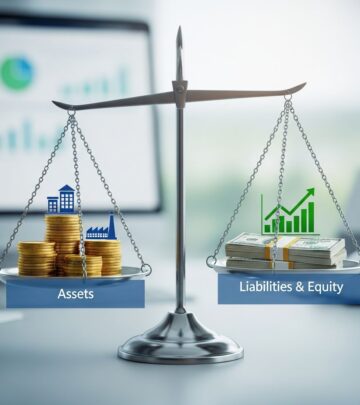
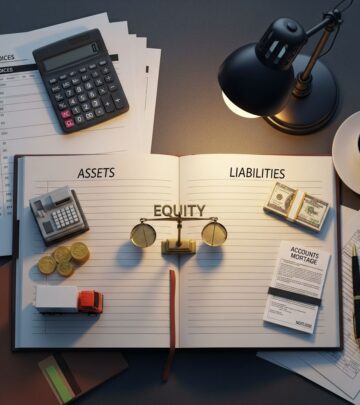
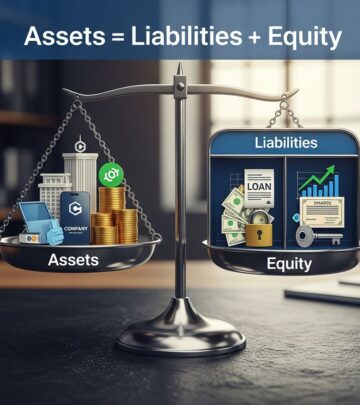
A balance sheet serves as a vital financial snapshot for any small business, revealing what you own, owe, and the net worth at a specific moment. It empowers owners to assess stability, attract investors, and plan strategically by adhering to the fundamental equation: Assets = Liabilities + Equity.
Why Balance Sheets Matter for Small Businesses
Unlike income statements that track performance over time, a balance sheet captures your business’s position on a single date, such as quarter-end or year-end. This tool is indispensable for securing loans, as lenders scrutinize it to gauge repayment capacity, and for internal decisions like managing cash flow or expanding operations.
Regular balance sheets highlight trends, such as growing inventory signaling sales potential or rising debts indicating risk. They also support ratio analysis to benchmark against industry standards, fostering informed growth.
Breaking Down the Core Elements
The balance sheet divides into three primary sections, each providing insights into different facets of your financial health.
Assets: What Your Business Owns
Assets represent resources that generate value, listed from most liquid to least. They split into current (convertible to cash within a year) and non-current (long-term).
- Cash and equivalents: Immediate funds in banks or petty cash.
- Accounts receivable: Money customers owe from sales.
- Inventory: Goods ready for sale.
- Prepaid expenses: Advance payments like insurance that benefit future periods.
- Fixed assets: Long-term items such as equipment, vehicles, or buildings, often net of depreciation.
- Intangible assets: Non-physical items like patents or trademarks.
Accurate valuation prevents overstatement; for instance, depreciate equipment annually to reflect true worth.
Liabilities: Your Business Obligations
Liabilities are debts and obligations, categorized as current (due within a year) or long-term. They indicate financial leverage and repayment pressure.
- Accounts payable: Unpaid supplier invoices.
- Accrued expenses: Incurred costs like wages or taxes not yet paid.
- Short-term loans: Debts maturing soon.
- Long-term debt: Mortgages or bonds payable over years.
- Deferred revenue: Payments received for undelivered services.
Tracking these ensures you avoid liquidity crunches by prioritizing payments.
Equity: Owner’s Stake
Equity, or net worth, is the residual after subtracting liabilities from assets. It includes owner investments, retained earnings from profits, and adjustments like draws.
- Owner’s capital: Initial and additional contributions.
- Retained earnings: Cumulative profits minus dividends.
A growing equity signals profitability and reinvestment, appealing to stakeholders.
Step-by-Step Process to Build Your Balance Sheet
Constructing a balance sheet requires gathering data from ledgers, bank statements, and invoices. Aim for consistency, such as monthly or quarterly preparation.
- Select a date: Choose end-of-period for accuracy, like December 31.
- Gather asset details: Sum cash, receivables (age them for collectibility), inventory (use FIFO or average cost), and fixed assets (adjust for depreciation).
- List liabilities: Compile payables, loans, and accruals from accounting records.
- Compute equity: Start with prior equity, add net income, subtract draws.
- Verify balance: Total assets must equal total liabilities plus equity; discrepancies signal errors.
- Review and adjust: Check for prepaid items or accruals to refine accuracy.
Use templates from reliable sources to streamline, ensuring GAAP compliance for credibility.
Sample Balance Sheet Template
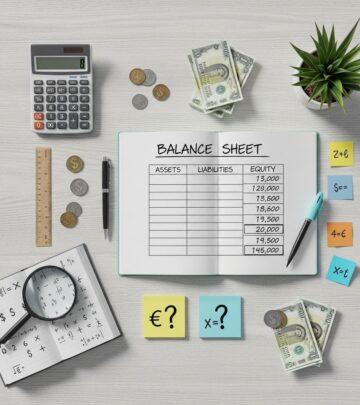
Here’s a simplified table illustrating a hypothetical $250,000 asset business:
| Assets | Amount ($) | Liabilities & Equity | Amount ($) |
|---|---|---|---|
| Current Assets | Current Liabilities | ||
| Cash | 50,000 | Accounts Payable | 30,000 |
| Accounts Receivable | 40,000 | Accrued Expenses | 10,000 |
| Inventory | 60,000 | Total Current Liabilities | 40,000 |
| Total Current Assets | 150,000 | ||
| Fixed Assets | Long-term Liabilities | ||
| Equipment (net) | 100,000 | Bank Loan | 80,000 |
| Total Assets | 250,000 | Total Liabilities | 120,000 |
| Equity | |||
| Owner’s Capital | 100,000 | ||
| Retained Earnings | 30,000 | ||
| Total Liabilities & Equity | 250,000 |
This example balances perfectly, demonstrating real-world application.
Key Financial Ratios from Your Balance Sheet
Ratios unlock deeper analysis, revealing liquidity, leverage, and efficiency.
- Current Ratio: Current Assets / Current Liabilities (ideal >1.5). Measures short-term bill-paying ability.
- Debt Ratio: Total Liabilities / Total Assets (lower is better, <0.5 preferred). Shows debt dependency.
- Working Capital: Current Assets – Current Liabilities. Indicates operational liquidity.
In the sample above: Current Ratio = 150,000 / 40,000 = 3.75 (strong); Debt Ratio = 120,000 / 250,000 = 0.48 (manageable).
Common Mistakes and How to Avoid Them
Errors can mislead decisions. Watch for:
- Misclassifying items: Don’t list long-term loans as current.
- Ignoring depreciation: Always net fixed assets.
- Outdated data: Update receivables for bad debts.
- Imbalanced totals: Recheck math or omissions.
Leverage software like QuickBooks for automation and audits.
Tools and Software Recommendations
Manual spreadsheets work for startups, but scale with tools:
- Excel/Google Sheets templates for basics.
- QuickBooks or Xero for automated categorization and reports.
- Advanced options like FreshBooks for integrated invoicing.
These ensure compliance and real-time insights.
Using Balance Sheets for Growth Strategies
Beyond basics, analyze trends over periods. Declining equity? Cut costs. High receivables? Tighten credit. Use for loan applications by showcasing ratios and projections.
For investors, pair with cash flow statements. Quarterly reviews align with tax prep and budgeting.
Frequently Asked Questions (FAQs)
What is a balance sheet used for in small businesses?
It provides a snapshot of financial position to guide decisions, loans, and investments.
How often should I prepare a balance sheet?
Quarterly or monthly for active monitoring; annually for taxes.
What’s the difference between current and fixed assets?
Current convert to cash within a year; fixed last longer.
Can I create a balance sheet without an accountant?
Yes, using templates and software, but consult pros for complexity.
Why won’t my balance sheet balance?
Check math, classifications, or missed entries like accruals.
References
- A Guide to Balance Sheet Analysis for Small Business Owners — Paro. 2023. https://paro.ai/blog/balance-sheet-analysis/
- How to Create a Balance Sheet for Your Business — U.S. Chamber of Commerce. 2024-01-15. https://www.uschamber.com/co/run/finance/how-to-create-a-balance-sheet
- What is a Small Business Balance Sheet? | PNC Insights — PNC Bank. 2023-05-10. https://www.pnc.com/insights/small-business/running-your-business/your-small-business-balance-sheet-101.html
- Small Business Balance Sheets (Free Template) — SoFi. 2024. https://www.sofi.com/learn/content/balance-sheet/
- How to Understand a Balance Sheet for Small Business — Patrick Accounting. 2023-08-20. https://patrickaccounting.com/blog/balance-sheet-for-small-business
- 5 Things to Know About Your Balance Sheet — U.S. Small Business Administration (SBA). 2022-11-01. https://www.sba.gov/blog/5-things-know-about-your-balance-sheet
- Balance Sheet Template For Your Business — SCORE.org. 2024. https://www.score.org/resource/template/balance-sheet-template
Similar Articles








Read full bio of medha deb