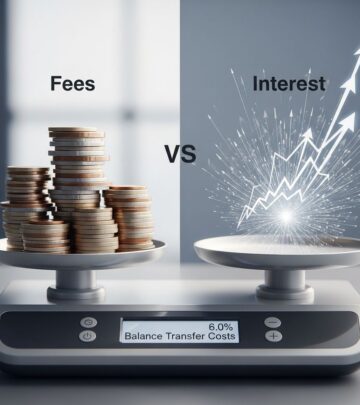
Skip Balance Transfer Fees: Smart Strategies
Discover proven ways to eliminate or minimize balance transfer fees and maximize savings on credit card debt consolidation.

Balance transfer fees can add up quickly, often ranging from 3% to 5% of the transferred amount, turning a debt-saving move into an expensive one. By choosing the right cards, timing transfers perfectly, and exploring fee-free alternatives, you can consolidate debt without extra costs and focus on paying down principal faster.
Understanding Balance Transfer Costs
A balance transfer involves moving debt from one credit card to another, usually to take advantage of a lower or promotional interest rate. However, issuers typically charge a fee for this service, calculated as a percentage of the transferred sum or a flat minimum amount. For instance, shifting $10,000 at 3% incurs $300, while 5% adds $500 to your new balance.
These fees are added directly to the receiving card’s balance, increasing what you owe immediately. While promotional 0% APR periods can offset this by eliminating interest, the upfront cost demands careful evaluation. Recent data shows average fees hold steady at 3%-5%, with minimums around $5-$10.
Why Fees Exist and When They’re Worth It
Issuers impose fees to cover administrative costs and encourage timely use of promotional offers. Not every card charges them—some waive fees for transfers at standard APRs or within intro windows. A fee might be justifiable if it saves substantial interest; for example, transferring $5,000 from a 20% APR card to a 0% promo for 18 months could avoid over $1,500 in interest despite a $250 fee.
Calculate potential savings: Compare your current APR’s monthly interest against the fee plus promo period benefits. Tools on issuer sites help project payoff timelines.
Top Methods to Eliminate Balance Transfer Fees
Avoiding fees entirely requires strategic shopping and planning. Here’s how:
- Seek No-Fee Cards: Rare but available, especially from credit unions or select issuers like certain Capital One products for non-promo transfers. Membership may be required for credit unions.
- Introductory Waivers: Many cards offer 0% or low fees (e.g., 3%) for transfers within 60-120 days of account opening. Act fast to qualify.
- Standard APR Transfers: Some cards skip fees if skipping the promo rate, ideal for short-term needs.
- Credit Union Options: Smaller institutions often provide fee-free transfers; check eligibility based on location or employment.
Comparing Fee Structures Across Cards
Use this table to weigh common scenarios for a $5,000 transfer:
| Fee Type | Fee Amount | Total New Balance | Best For |
|---|---|---|---|
| 3% Fee | $150 | $5,150 | Long promo periods (18+ months) |
| 5% Fee | $250 | $5,250 | High original APR (>20%) |
| No Fee (Promo) | $0 | $5,000 | Quick payoff plans |
| Flat Min $10 | $10 | $5,010 | Small balances |
Data derived from typical issuer terms; always verify current offers. A 3% fee is generally solid, but prioritize 0% where possible.
Step-by-Step Guide to Fee-Free Transfers
- Review Your Debt: List balances, APRs, and minimum payments to identify high-interest targets.
- Check Credit Score: Good scores (670+) unlock better no-fee or low-fee cards.
- Research Issuers: Compare via sites listing balance transfer deals, focusing on fee waivers and promo lengths.
- Apply Strategically: Open the new card first; request transfer during application or soon after.
- Time It Right: Complete within promo windows to avoid higher fees.
- Pay Aggressively: Allocate savings from 0% APR to principal.
Real-World Savings Examples
Consider a $5,000 balance at 22.75% APR (near November 2023 average). Monthly $300 payments take 21 months, costing $1,021 in interest. Transfer to 0% for 21 months with 3% fee ($150): Pay $238/month, total $5,150—no interest. Net savings: $871.
For larger debts, like $12,000 at 3% ($360 fee), savings amplify if promo covers full payoff. Always factor post-promo APRs, which can hit 20%+.
Alternatives to Traditional Balance Transfers
If fees persist, consider these:
- Personal Loans: Fixed-rate loans from banks or credit unions often have lower origination fees than transfer percentages.
- 0% Purchase Cards: Use new card for debt payoff via cash advance (watch fees) or direct payment.
- Debt Management Plans: Nonprofit credit counseling negotiates lower rates without transfers.
- Home Equity Options: HELOCs for homeowners, typically lower rates but secured risk.
Avoid these common errors:
- Applying promo APR to purchases—transfers often have separate rules.
- Missing deadlines for low-fee eligibility.
- New charges on the card, as they may accrue interest immediately.
- Over-transferring beyond credit limits, triggering rejections.
Read terms: Look for annual fees, foreign transaction charges, and late penalties.
Boosting Success with Credit Habits
Maintain utilization under 30% post-transfer. Timely payments preserve scores. Track via free credit reports from annualcreditreport.com. Tools like payoff calculators from issuers aid planning.
Frequently Asked Questions
Is a 3% balance transfer fee considered low?
Yes, 3% is favorable compared to standard 5%; it minimizes costs for promo APR benefits.
Do all cards charge balance transfer fees?
No, though rare—credit unions and select promo cards waive them under conditions.
When is a 5% fee worth paying?
If interest savings exceed the fee during the promo period, e.g., high APR debts with long 0% offers.
Can I transfer to the same issuer?
Usually yes, but check policy—fees apply similarly.
What if I miss the promo window?
Fees jump to standard rates; plan transfers promptly.
Long-Term Debt Freedom Plan
Combine no-fee transfers with budgeting: Cut expenses, boost income, automate payments. Aim to clear promo balances early. Post-promo, refinance if needed. Consistent habits build financial resilience.
References
- When does a Credit Card Balance Transfer Make Sense? — Fifth Third Bank. 2023. https://www.53.com/content/fifth-third/en/financial-insights/personal/credit-cards/when-does-a-credit-card-balance-transfer-make-sense.html
- What Is a Balance Transfer Fee on a Credit Card? — NerdWallet. 2023. https://www.nerdwallet.com/credit-cards/learn/what-is-a-balance-transfer-fee-on-a-credit-card
- What Is a Balance Transfer Fee? — Experian. 2023-11. https://www.experian.com/blogs/ask-experian/what-is-a-balance-transfer-fee/
- What Is a Balance Transfer Fee and How Does It Work? — Credit Karma. 2023. https://www.creditkarma.com/credit-cards/i/what-is-a-balance-transfer-fee
- What are Credit Cards with No Balance Transfer Fees — Citi. 2023. https://www.citi.com/credit-cards/balance-transfer/credit-cards-with-no-balance-transfer-fee
- What is a Balance Transfer on a Credit Card? — U.S. Bank. 2023. https://www.usbank.com/credit-cards/credit-card-insider/managing-credit/what-is-balance-transfer.html
Similar Articles








Read full bio of Sneha Tete