Six Steps to Eliminating Your Debt Painlessly
Discover a straightforward six-step plan to eliminate debt without stress, using proven strategies for lasting financial freedom.
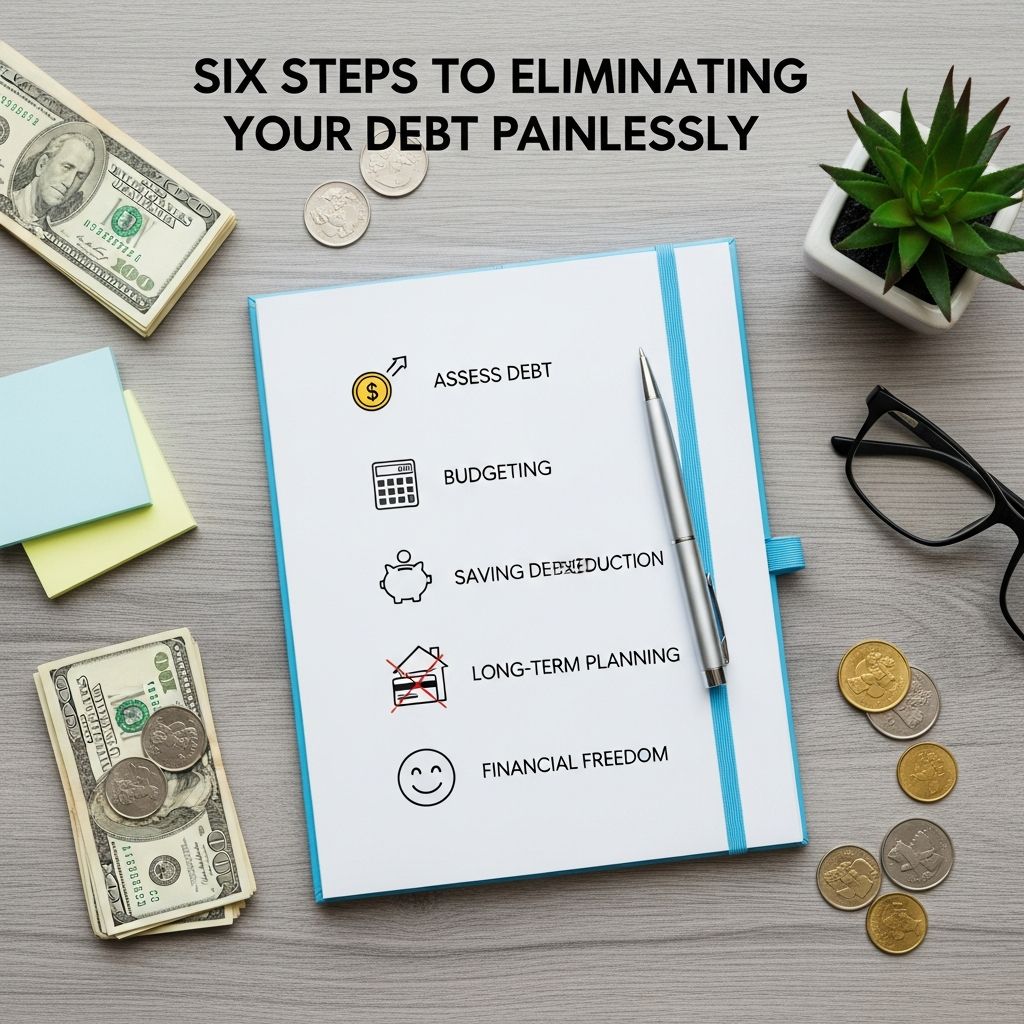
Debt can feel overwhelming, but with a structured approach, you can eliminate it without unnecessary stress. This guide outlines
six proven steps
to tackle debt systematically, drawing from time-tested personal finance principles used by millions to regain control.Step 1: Acknowledge You Have a Debt Problem
The journey to debt freedom begins with acceptance. Many avoid facing their debt, but denial only prolongs the issue. Acknowledging the problem empowers you to act. Start by gathering all financial statements—credit cards, loans, mortgages—and confront the total amount owed.
This step is crucial because it shifts your mindset from avoidance to action. Calculate your total debt, interest rates, and minimum payments. Use a simple spreadsheet to list everything. For example, if you have $25,000 in credit card debt at 18% interest, understanding this motivates change. Research shows that those who track their finances are 30% more likely to pay off debt faster, per financial planning studies.
Assess your net worth too: subtract liabilities from assets. Even if negative, track improvements yearly. Tools like free budgeting apps help visualize this without overwhelm.
Step 2: List All Your Debts
Once acknowledged, compile a comprehensive debt inventory. Decide which debts to prioritize—exclude secured ones like mortgages if focusing on high-interest consumer debt. Gather statements and create a table:
| Creditor | Balance | Interest Rate | Minimum Payment |
|---|---|---|---|
| Visa Card | $5,000 | 19.9% | $150 |
| Mastercard | $3,200 | 17.5% | $100 |
| Personal Loan | $8,000 | 12% | $250 |
This organization reveals the full picture. Rank debts by interest rate or smallest balance first. High-interest debts cost more long-term, so listing clarifies priorities. Spend just 15-30 minutes daily over a week if needed—no rush, just consistency.
Step 3: Stop Charging and Commit to No New Debt
Halting new charges prevents the debt hole from deepening. Cut up cards or freeze them in ice—literally—to curb impulse buys. Switch to cash or debit for daily spending; this enforces discipline.
- Track spending: Log every expense for a week to spot leaks like dining out.
- Build barriers: Remove saved card info from online shops.
- Pay cash only: Allocate weekly allowances in envelopes for categories like groceries.
Stopping charges alone can redirect $200+ monthly toward payoff. Combine with paying more than minimums— even $50 extra shaves years off repayment.
Step 4: Create a Realistic Budget
A budget is your debt-fighting roadmap. List income, expenses, debts, and assets. Aim for the 50/30/20 rule: 50% needs, 30% wants, 20% savings/debt. Free tools like Mint or spreadsheets automate tracking.
Sample Monthly Budget Table:
| Category | Budgeted | Actual |
|---|---|---|
| Income | $4,000 | $4,000 |
| Rent/Utilities | $1,200 | $1,180 |
| Groceries | $400 | $380 |
| Debt Payments | $800 | $850 |
| Savings | $200 | $220 |
| Fun/Other | $400 | $370 |
Trim non-essentials: cancel unused subscriptions, cook more. Pay yourself first—automate savings transfers. Review weekly; adjust as life changes. Budgeting increases financial literacy and control.
Step 5: Choose a Payoff Strategy
Select a method suited to your psychology. Two popular, research-backed approaches:
- Debt Snowball: Pay minimums on all, extra on smallest balance first for quick wins and motivation.
- Debt Avalanche: Target highest interest first to minimize total cost.
Example: With $16,200 debt, snowball clears smallest fast, building momentum. Avalanche saves on interest. Request lower rates—call issuers; success rates hit 70% for polite negotiators. Avoid home equity loans unless rates are drastically lower, as they risk your home.
Hybrid: Blend both, or use savings judiciously. Track progress monthly; apps gamify it.
Step 6: Increase Your Income and Celebrate Milestones
Accelerate payoff by earning more. Side gigs like freelancing, ridesharing, or selling items add $500+/month. Short-term goals (under 2 years) fund quick wins; mid-term (2-5 years) build buffers; long-term secure future.
Celebrate non-spending wins: debt-free dinners at home, vision boards. Every $1,000 paid off is progress—share with an accountability partner. Once debt-free, build an emergency fund (3-6 months expenses) to prevent relapse.
Frequently Asked Questions (FAQs)
Q: How long does it take to pay off $10,000 in credit card debt?
A: At minimum payments, 20+ years. With $300 extra monthly on avalanche, 2-3 years. Use calculators for personalization.
Q: Should I use savings to pay debt?
A: Only if savings earn less than debt interest and you have an emergency fund. Otherwise, pay minimums and rebuild savings.
Q: What’s better, snowball or avalanche?
A: Snowball for motivation via wins; avalanche for math efficiency. Choose what sustains you.
Q: Can I negotiate interest rates?
A: Yes, politely explain hardship; many reduce by 2-5%.
Q: How do I stick to a budget?
A: Automate payments, review weekly, involve family, use apps.
This six-step plan, when followed consistently, transforms debt from burden to backstory. Start today—small actions compound into freedom.
References
- When It’s Time to Destroy Debt, Start With a Goal — Wise Bread. N/A. https://www.wisebread.com/when-its-time-to-destroy-debt-start-with-a-goal
- The 7 Best Credit Card Debt Elimination Strategies — Wise Bread. N/A. https://www.wisebread.com/the-7-best-credit-card-debt-elimination-strategies
- The Fastest Method to Eliminate Credit Card Debt — Wise Bread. N/A. https://www.wisebread.com/the-fastest-method-to-eliminate-credit-card-debt
- 5-Day Debt Reduction Plan: Add It Up — Wise Bread. N/A. https://www.wisebread.com/5-day-debt-reduction-plan-add-it-up
- Nine Ways to Keep New Year’s Financial Resolutions — Truliant Federal Credit Union. N/A. https://www.truliantfcu.org/learn/saving-and-budgeting/nine-ways-to-keep-new-years-financial-resolutions
- Acknowledge You Have a Problem with Debt — Wise Bread. N/A. https://www.wisebread.com/acknowledge-you-have-a-problem-with-debt
Similar Articles








Read full bio of medha deb