Simple Steps to Begin Investing
Unlock your financial future with beginner-friendly strategies to start investing today, no matter your budget or experience level.
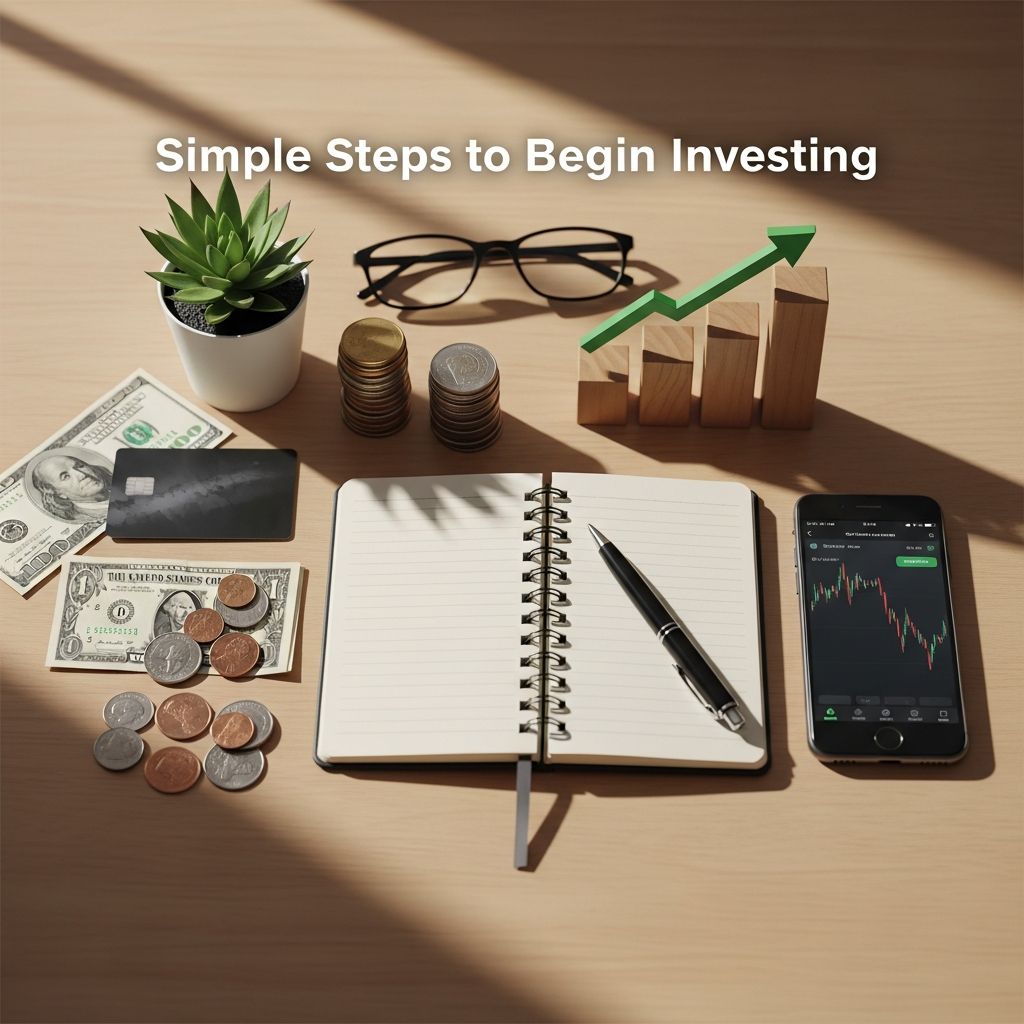
Investing offers a reliable path to grow wealth over time, accessible even to those with limited funds or experience. By following structured approaches, anyone can participate in markets that historically deliver strong returns through diversification and patience.
Establish a Strong Financial Foundation First
Before allocating money to investments, prioritize financial stability. Secure an emergency fund covering 3 to 6 months of living expenses in a high-yield savings account. This buffer protects against unexpected events like job loss or medical bills, preventing the need to liquidate investments at a loss.
Review your budget to identify surplus income for investing. Automate transfers to savings and investment accounts to build habits without relying on willpower. Pay down high-interest debt, such as credit cards exceeding 15% APR, as it erodes potential gains from investments.
- Calculate monthly essentials: housing, food, transportation.
- Track discretionary spending to free up 10-20% of income.
- Build savings incrementally if full emergency fund feels overwhelming.
Clarify Your Financial Objectives
Define specific, time-bound goals to guide choices. Short-term aims like a vacation in 2 years suit low-risk options, while long-term targets like retirement benefit from growth-oriented assets. Your time horizon influences risk tolerance: longer periods allow weathering market dips.
| Goal Type | Time Horizon | Suitable Investments |
|---|---|---|
| Short-term (under 3 years) | Low risk | Savings accounts, CDs |
| Medium-term (3-10 years) | Moderate risk | Bonds, balanced funds |
| Long-term (10+ years) | Higher risk | Stocks, index funds |
Quantify targets: for retirement, use calculators to estimate needed contributions based on desired lifestyle. Reassess goals annually as life changes occur.
Choose the Right Investment Accounts
Select accounts matching your goals and tax advantages. In the U.S., consider Roth IRAs for tax-free growth or 401(k)s with employer matches, effectively doubling contributions. Brokerage accounts offer flexibility without withdrawal penalties.
- Employer-sponsored plans: Free matching boosts returns.
- Individual Retirement Accounts (IRAs): Tax-deferred or tax-free options.
- Taxable brokerage: Immediate access, but gains taxed.
Open accounts via user-friendly platforms like Vanguard or Fidelity, often requiring minimal deposits. Link bank accounts for seamless transfers.
Explore Beginner-Friendly Investment Options
Opt for diversified vehicles reducing single-asset risk. Index funds track market benchmarks like the S&P 500, offering broad exposure at low costs. ETFs provide similar benefits with intraday trading flexibility.
Mutual funds pool investor money professionally managed, though fees can diminish returns. Start with passive strategies outperforming active ones over decades per studies.
- Index Funds: Mirror indices, low fees (0.03-0.10%), historical 7-10% annual returns.
- ETFs: Trade like stocks, high liquidity, expense ratios under 0.20%.
- Target-Date Funds: Auto-adjust risk as retirement nears.
Avoid individual stocks initially due to volatility; diversification via funds mitigates company-specific failures.
Leverage the Power of Compound Growth
Compound interest accelerates wealth: earnings generate further earnings. Starting early amplifies results; $200 monthly at 7% return grows to over $500,000 in 40 years versus $150,000 in 20 years.
Invest consistently via dollar-cost averaging: fixed amounts regardless of market levels, buying more shares when prices dip. Automate to harness this without timing markets, which pros rarely beat consistently.
Minimize Costs to Maximize Returns
Fees compound against you; seek expense ratios below 0.20%. Robo-advisors like Betterment manage portfolios algorithmically for 0.25% annually, ideal for hands-off beginners. Compare platforms:
| Platform Type | Min. Investment | Annual Fee | Best For |
|---|---|---|---|
| Robo-Advisor | $0-$500 | 0.25% | Automated management |
| Discount Broker | $0 | $0 trades | Self-directed |
| Traditional Advisor | $10,000+ | 1% | Personalized advice |
Steer clear of high-commission products; low-cost index funds from Vanguard exemplify efficiency.
Build and Maintain a Diversified Portfolio
Allocate across asset classes: 60-80% stocks for growth, 20-40% bonds for stability, adjusting by age. Rebalance yearly to target ratios, selling outperformers and buying underperformers.
Diversify globally; U.S.-only portfolios miss emerging market gains. Consider ESG funds aligning values with returns.
Adopt Disciplined Habits for Success
Ignore short-term noise; markets fluctuate but trend upward long-term. Avoid selling during downturns; historical recoveries reward patience. Track progress quarterly, not daily.
- Invest windfalls like bonuses or tax refunds immediately.
- Increase contributions with raises to combat lifestyle inflation.
- Educate continuously via free resources from SEC’s Investor.gov.
Common Risks and Mitigation Strategies
Market volatility, inflation, and behavioral errors pose threats. Counter with diversification, long horizons, and systematic investing. Inflation erodes cash; equities historically outpace it at 3-4% annually.
Understand sequence risk for near-retirees: downturns early in withdrawals amplify losses. Bonds cushion this phase.
Tools and Resources for New Investors
Use apps like Acorns rounding purchases to invest change, or M1 Finance for custom pies. Free calculators from Investor.gov project outcomes. Books like “The Little Book of Common Sense Investing” by John Bogle advocate indexing.
Frequently Asked Questions
How much should I start with?
Many platforms require $0-$100; consistency trumps amount. Even $50 monthly compounds significantly.
Is now a good time to invest?
Markets are unpredictable short-term; time in market beats timing. Start via dollar-cost averaging.
What if markets crash?
Hold through dips; S&P 500 recoveries average 1-2 years. Emergency fund covers needs.
Do I need a financial advisor?
Robo-advisors suffice initially; seek fiduciary advisors for complex situations.
Can I invest with bad credit?
Yes; investing separate from credit. Focus on debt reduction alongside.
References
- Introduction to Investing — U.S. Securities and Exchange Commission (Investor.gov). 2023. https://www.investor.gov/introduction-investing
- How to start investing: A guide for beginners — Vanguard. 2024-01-15. https://investor.vanguard.com/investor-resources-education/article/how-to-start-investing
- Investing 101: A Beginner’s Guide to Growing Your Money — Employees Retirement System of Texas (ERS). 2023-05-10. https://www.ers.texas.gov/news/investing-101-a-beginner-s-guide-to-growing-your-money
- Beginners Guide to Investing: Easy Ways to Start Now — Fulton Bank. 2024. https://www.fultonbank.com/Education-Center/Investing/Beginners-Guide-to-Investing
- Investing for beginners — Fidelity Investments. 2025-02-20. https://www.fidelity.com/learning-center/trading-investing/investing-for-beginners
Similar Articles








Read full bio of medha deb